
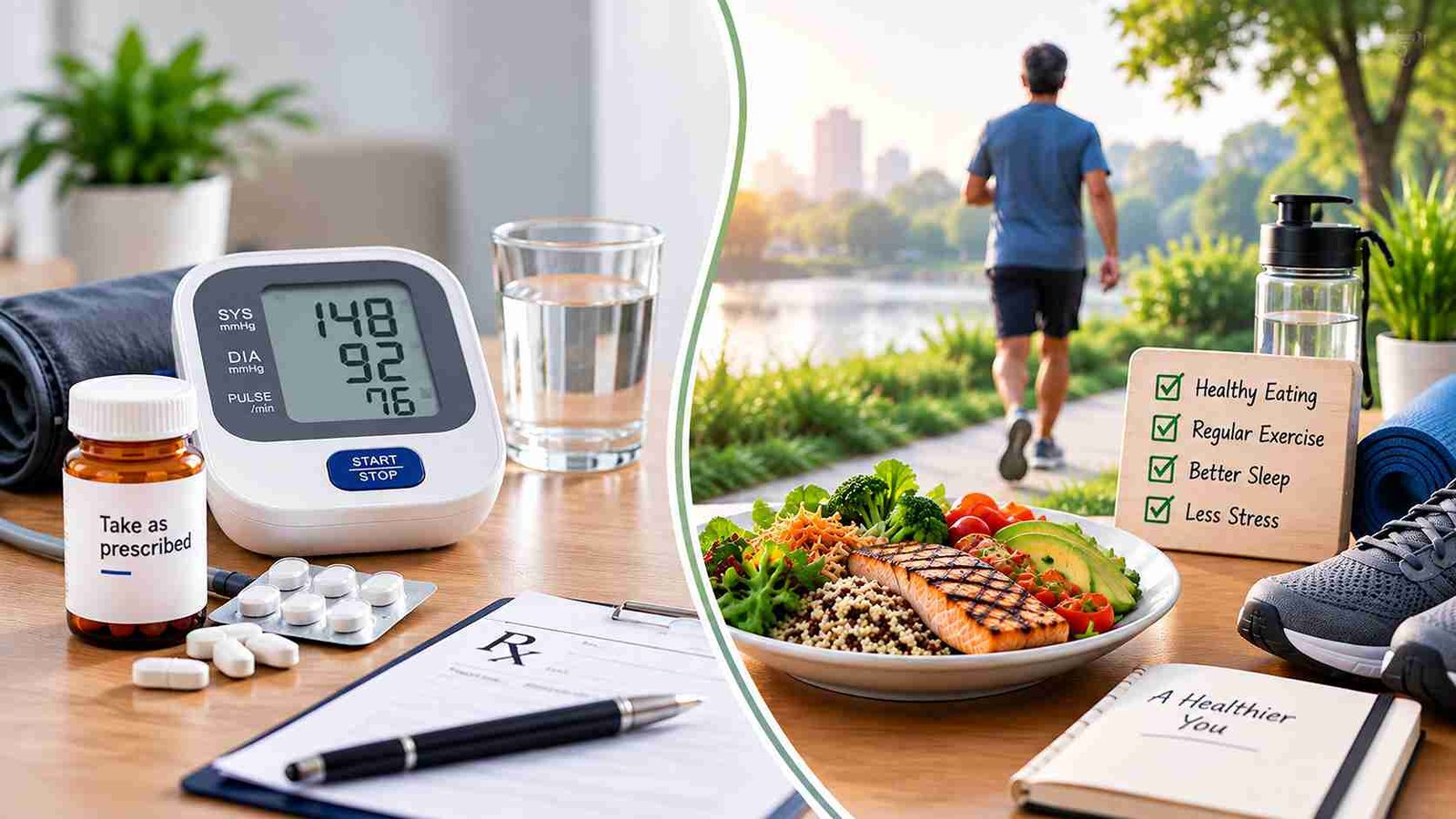
High blood pressure, medically known as hypertension, can stay unnoticed for years, so a diagnosis often makes us wonder whether we need to depend on medicines for the rest of our lives.
We hear this concern often. The honest answer depends on the type of hypertension, its cause and your overall health. Primary hypertension is rarely cured permanently, but it can usually be controlled.
Some people with mildly raised readings may improve through sustained lifestyle changes. Others need medicine to reduce their risk of stroke, heart disease and kidney problems. If another condition is causing the rise, treating that condition may sometimes bring blood pressure back towards a healthier level.
What is Hypertension and What is a Normal Blood Pressure Range?
Hypertension means that the force of blood against the artery walls stays higher than it should. A reading contains two numbers, measured in millimetres of mercury, or mmHg.
The upper number is systolic pressure—the pressure when the heart contracts. The lower number is diastolic pressure—the pressure when the heart relaxes between beats.
For most adults, below 120/80 mmHg is considered a healthy normal blood pressure range. The World Health Organization defines hypertension as 140/90 mmHg or higher, although some guidelines use 130/80 mmHg as the starting point. One raised reading does not confirm hypertension. Doctors usually look at repeated, correctly taken readings and the person’s wider health risks.
What Causes High Blood Pressure?
The causes of high blood pressure fall into two main groups. Identifying the type helps the doctor decide whether the pressure can be reduced by treating another condition or requires long-term control.

Primary (Essential) Hypertension
Primary hypertension has no single identifiable cause and accounts for most cases. It usually develops gradually.
Age, family history, excess weight, high salt intake, low physical activity, tobacco, excess alcohol, poor sleep and long-term stress can all contribute. Several factors may be present together.
Secondary Hypertension
Secondary hypertension has an identifiable cause. It may be linked to kidney disease, narrowing of a kidney artery, obstructive sleep apnoea, thyroid or adrenal gland disorders, pregnancy or certain medicines.
Doctors may investigate further when hypertension begins suddenly, appears at a young age or remains high despite several medicines. Treating the underlying problem may lower the pressure and, in some cases, return it to the normal range.
Is Hypertension Curable? Separating Myth from Medical Fact
Primary hypertension is generally controlled rather than permanently cured. Healthy habits and prescribed medicines can keep readings within the target range, but the tendency for pressure to rise may remain.
This distinction matters. A normal reading while taking medicine usually means the treatment is working; it does not prove that hypertension has disappeared.
Some people who lose excess weight, reduce salt and become more active may eventually need fewer medicines or a lower dose. That decision must be made by a doctor. Secondary hypertension may be reversible if its underlying cause can be treated successfully, but the result varies from person to person.
Can You Manage High Blood Pressure Without Medication?
Managing high blood pressure without medication may be suitable for some people with mildly raised readings and a low risk of cardiovascular disease. It may not be safe when readings are very high or when the person has diabetes, kidney disease, heart disease or a history of stroke.
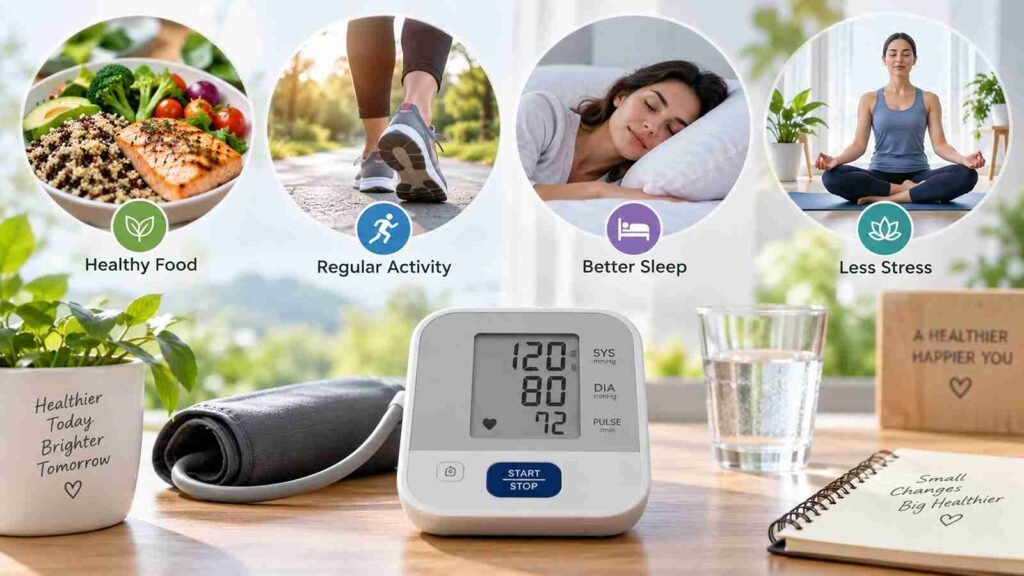
Even when tablets are required, lifestyle measures remain an important part of treatment.
Diet and Exercise for Blood Pressure Control
A practical hypertension diet and exercise plan does not require expensive or unusual food. Choose more vegetables, fruits, pulses, whole grains, unsalted nuts and suitable low-fat dairy products.
Reduce pickles, papad, namkeen, packaged snacks, instant foods, sauces and processed meats. The WHO advises adults to consume less than 5 grams of salt a day, including salt already present in food.
Regular activity also helps. Many adults can gradually work towards 150 minutes of moderate exercise a week through brisk walking, cycling or swimming. Ask your doctor how to begin if you have been inactive or have another medical condition.
Weight, Stress, Sleep and Salt Reduction
Losing some excess weight can make blood pressure easier to control. Regular sleep matters too. Loud snoring, choking during sleep and daytime sleepiness may point to sleep apnoea, a possible cause of raised pressure.
Breathing exercises, yoga, counselling and planned breaks may help manage stress. Avoid tobacco, limit alcohol and measure salt instead of estimating it. These lifestyle changes for blood pressure control work best when they become routine rather than a short-term effort.
When Is Medication Necessary—and What Are the Trade-offs?
Medication may be needed when blood pressure remains high despite lifestyle changes, begins at a high level or is accompanied by greater cardiovascular risk. Needing tablets is not a sign that someone has failed to live healthily.
Doctors may prescribe calcium-channel blockers, ACE inhibitors, angiotensin receptor blockers, diuretics or beta-blockers. The choice depends on age, kidney function, pregnancy status, other conditions and current medicines. Some people require more than one drug.
Common Side Effects and How Doctors Manage Them
Possible blood pressure medication side effects vary by drug. They may include:
- Dizziness or tiredness
- Ankle swelling
- Headache
- Increased urination
- A persistent dry cough
- Changes in potassium or kidney-function results
Many people have no troublesome effects. If a new symptom appears after starting or changing a medicine, tell your doctor. The dose, timing or drug can often be adjusted. Certain medicines also require periodic blood tests.
Why Stopping Medication Abruptly is Risky
Stopping treatment suddenly can allow blood pressure to rise again, sometimes quickly. This may increase the risk of serious complications.
Never reduce, skip or stop prescribed medicine without medical guidance. If side effects, cost or missed doses are a concern, tell your doctor so that a safer solution can be found.
Living with Hypertension: A Long-Term Management Approach
Effective high blood pressure treatment combines healthy habits, medicine when required and regular monitoring.
For a home reading, sit quietly for five minutes, keep both feet on the floor and support your arm at heart level. Use a correctly fitting upper-arm cuff. Keep a record and take it to appointments with your medicine list.
Your doctor may also monitor cholesterol, glucose, kidney function and heart health. Blood pressure targets differ with age, pregnancy and other conditions, so follow the target set for you rather than copying another person’s number.
When Should You See a Doctor for High Blood Pressure?
Understanding when to see a doctor for high blood pressure begins with repeated readings. Arrange an appointment if clinic readings remain around 140/90 mmHg or higher, home readings stay raised, or the numbers have changed noticeably.
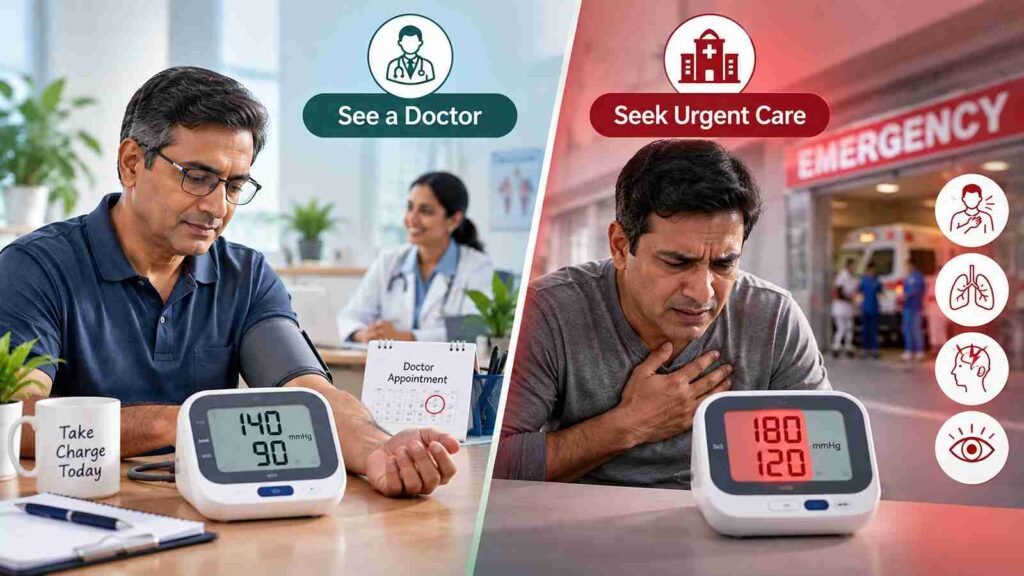
Seek immediate medical attention if a reading reaches 180/120 mmHg or above and is accompanied by chest pressure, breathing difficulty, sudden weakness or numbness, confusion, a severe headache, difficulty speaking or a sudden vision change. Pregnant women with raised readings should contact their maternity team promptly.
Why Consider Expert Hypertension Treatment?
Hypertension is rarely cured like a short-term illness, but it can often be controlled well. For hypertension treatment in Kolkata, we at Samaritan Hospital review your:
- readings,
- symptoms,
- medical history,
- medicines,
- and related health risks before discussing personalised care.
Our multidisciplinary services and in-house diagnostic facilities support detailed evaluation and follow-up.
If your readings remain high or your current treatment isn't working as expected, contact Samaritan Hospital to arrange an assessment. Bring your previous prescriptions, recent reports and home blood pressure record.
What Questions People Have About Hypertension
Can Hypertension disappear after weight loss?
Weight loss can reduce blood pressure and may lower the need for medicine in some people. It does not guarantee a permanent cure, and a doctor should not change your medicine.
Is it okay to stop taking medicine when the reading becomes normal?
No, not without medical advice. A normal reading may mean that the medicine is controlling your blood pressure effectively.
How often should a patient check the blood pressure at home?
The schedule depends on your condition. Your doctor may request morning and evening readings for several days when confirming a diagnosis or adjusting treatment.
Is 140/90 mmHg a medical emergency?
Not usually, but repeated readings at or above this level require medical review. Readings around 180/120 mmHg with warning symptoms need immediate attention.