
GI Bleeding Treatment in Kolkata
Home / Treatments / Gastroenterology / GI bleeding
Quick Answers
Can GI bleeding be treated?
Yes. Treatment depends on the bleeding site, cause, severity, and whether bleeding is ongoing.
Can GI bleeding become serious?
Yes. Significant blood loss can cause anaemia, low blood pressure, shock, or organ complications.
Can GI bleeding happen without visible blood?
Yes. Slow bleeding may only cause dark stools, anaemia, fatigue, or weakness.
When should someone seek medical care?
Seek urgent care for vomiting blood, black stools, heavy bleeding, fainting, or severe weakness.
What Is Gastrointestinal (GI) bleeding?
It refers to bleeding anywhere in the digestive tract, from the oesophagus and stomach to the small or large intestine. It may be visible or hidden and can range from mild blood loss to a medical emergency.
Key points:
- Can occur anywhere in digestion
- May cause visible blood
- Can cause black, tarry stools
- Hidden bleeding may cause anaemia
- Severe bleeding requires urgent treatment
Types of GI Bleeding
Upper GI Bleeding
Occurs in the oesophagus, stomach, or duodenum, above the ligament of Treitz.
Lower GI Bleeding
Originates below the ligament of Treitz, involving the small intestine, colon, rectum, or anus.
Acute GI Bleeding
Begins suddenly and may cause significant blood loss, dizziness, rapid heartbeat, or shock.
Chronic or Occult GI Bleeding
Develops slowly and remains hidden, often causing iron-deficiency anaemia over time.
Obscure GI Bleeding
Persists or recurs despite standard testing, often originating from the small intestine
Symptoms Of GI Bleeding
Common Symptoms
- Vomiting bright red or dark blood
- Passing black, tarry, foul-smelling stools
- Experiencing upper abdominal pain or discomfort
- Passing bright red blood with stools
- Finding blood on toilet paper
- Feeling unusually tired or weak
- Experiencing dizziness or lightheadedness
- Developing shortness of breath
- Having unusually pale skin
Red Flags (When To See A Doctor)
- Vomiting blood or coffee-ground-like material
- Black, tarry, or sticky stools
- Passing large amounts of bright-red blood
- Dizziness, lightheadedness, or fainting
- Difficulty breathing or shortness of breath
- Severe abdominal pain or cramping
- Rapid pulse or fast heartbeat
- Confusion or altered mental state
Why Choose Samaritan Medical Surgical & Critical Care?
At Samaritan Medical Surgical & Critical Care, we provide comprehensive healthcare solutions as per your needs. With a team of expert professionals, we focus on delivering compassionate, patient-centred care for optimal well-being.

NABH Certified
Accredited by NABH, ensuring the highest standards of healthcare quality and patient safety.

Surgical Excellence
Our skilled surgeons offer precision care for a wide range of surgical procedures.

Critical Care Support
Providing round-the-clock critical care with advanced equipment and expert medical teams.
Our Doctors

DR. SOMAK DAS
Qualifications: MBBS, MS(GEN.SURG.) DNB(GASTRO.SURG), MCH
Specialty: GASTRO SURGEON
Fees: Rs. 1,200.00
Available Days: MON, WED & FRI
Available Time: BY APPOINTMENT

DR. D. K. SARKAR
Qualifications: MBBSMS, DNB FRCS, (GOLD), FFSTED
Specialty: GENERAL SURGEON
Fees: Rs. 1,550.00
Available Days: MON, WED,THU & SAT
Available Time: MON WED,THU-16:00 & SAT-15:00

DR. RUDRADEEP BANERJEE
Qualifications: MS.(GEN.SURG), D.N. BMRCS
Specialty: GENERAL SURGEON
Fees: Rs. 1,000.00
Available Days: BY APPOINTMENT
Available Time: BY APPOINTMENT
DR. RANAJOY DUTTA
Qualifications: MBBS, M.S D.N.B
Specialty: GENERAL SURGEON
Fees: Rs. 1,200.00
Available Days: WED, SAT
Available Time: 17:00 - 18:00 PM
DR. ACHINTA KR DAS
Qualifications: MBBS, MS
Specialty: GENERAL SURGEON
Fees: Rs. 1,200.00
Available Days: BY APPOINTMENT
Available Time:BY APPOINTMENT
DR. SAMRIDDHI PODDAR
Qualifications: MBBS(HONS), MS(SURGERY), WBUHS NRSMCH
Specialty: GENERAL SURGEON
Fees: Rs. 1,000.00
Available Days: TUE & WED
Available Time: TUE 16:30-17:30 & WED 18:00-19:00
DR . B . B . BARAI
Qualifications: MBBS, DNB, PG DGM, CCEBDM
Specialty: GENERAL SURGEON
Fees: Rs. 1,200.00
Available Days: MON /FRIDAY
Available Time: 11:00-13:00
DR. SAPTARSHI KUNDU
Qualifications: MBBS, MS (GEN SUR)
Specialty: GENERAL SURGEON
Fees: Rs. 700.00
Available Days: BY APPOINTMENT
Available Time: BY APPOINTMENT
DR. MAINAK PAL
Qualifications: MBBS, MS, FMAS(GEN.SURG)
Specialty: GENERAL SURGEON
Fees: Rs. 1,000.00
Available Days: MON -FRI
Available Time: 17:00-18:00
DR. SUKANTA ROY
Qualifications: MBBS, MS(GASTO)
Specialty: GASTRO SURGEON
Fees: Rs. 1,000.00
Available Days: BY APPOINTMENT
Available Time: BY APPOINTMENT

DR. UDDIPTA DUTTA
Specialty: GASTRO SURGEON
Fees: Rs. 900.00
Available Days: BY APPOINTMENT
Available Time: BY APPOINTMENT
Hear From Our Happy Patients
Very good nursing home.all staff best
I had Laproscopic surgery of gallbladder stone on 23/6/26 & Discharge on 25/6/26. I had wonderful experience in nursing home, Very cooperative staff. Particularly Ms Aditi (Head Sister charge) , she has cooperated very well with Smily face. OT is well equipped with high quality instruments, Dr Mukesh Karia has done wonderful operations.
Very good nursing home
Very Supportive Staff with 24*7 support. Along with Neat and Clean cloths and bed.
Great treatment and recuperation. Doctors nurses and support staff mase it feel like home .
Thakuuuu Samaritan nursing home........and Dr.babuuuu khubbbb valooooo..apnader sakoler babohar khub valo r porisheba khubbb khubbb valo sakol k. Ank ank ank dhannobad ......
Very good nursing home
Very good Treatment here and also staff behaviour has very good
I have admitted my father here twice under Dr Arindam Dutta sir for the DJ stenting and RIRS (Kidney stone) .The entire team of Samaritan was fantastic.Specially Ms Aditi Nandi was so humble and cooperative .She attended us every time and Given all facilities.Through out the admitting time and discharge,all the sisters,brothers,Housekeeping ,ward boy everyone was so polite and well mannered.
Individuals at Highest Risk for GI Bleeding
| Risk Group | Why Risk Is Higher |
|---|---|
| Older Adults | Bleeding risk increases with age. |
| NSAID Users | These medicines can cause ulcers. |
| Blood Thinner Users | Anticoagulants can worsen active bleeding. |
| People With Ulcers | Ulcers can cause significant bleeding. |
| Liver Disease Patients | Portal hypertension can cause variceal bleeding. |
| Previous GI Bleeding | Recurrence risk may remain increased. |
Causes Of GI Bleeding
- Peptic ulcers.
- Oesophageal varices
- Gastritis and esophagitis
- Mallory-Weiss tears
- Medications like NSAIDs and blood thinners
- Diverticular disease
- Haemorrhoids and anal fissures
- Inflammatory bowel disease
- Colonic polyps or tumours
- Angiodysplasia
GI Bleeding Patterns, Diagnosis & Treatment Approach
| Pattern | Type | First-Line Approach | When Advanced Treatment Is Needed | Expected Outcome |
|---|---|---|---|---|
| Vomiting blood | Upper GI bleeding | Stabilisation and endoscopy | Ongoing or severe bleeding | Bleeding control |
| Black, tarry stools | Upper GI bleeding | Evaluation and endoscopy | Significant blood loss | Source-specific treatment |
| Bright-red rectal bleeding | Lower GI bleeding | Stabilisation and investigation | Ongoing or severe bleeding | Bleeding control |
| Hidden blood with anaemia | Occult bleeding | Source investigation | Persistent unexplained blood loss | Cause-specific management |
Procedure & Recovery: What to Expect
Hospital-Based Care
Fluid replacement: IV fluids maintain blood pressure.
Blood tests: Monitor haemoglobin and blood loss.
Blood transfusion: Replaces blood after significant loss.
Close monitoring: Tracks vital signs for changes.
Acid reducers: Reduce acid and support healing.
Treating the Underlying Cause
Ulcer management: Treats ulcers and prevents recurrence.
Medication review: Adjusts medicines increasing bleeding risk.
Variceal treatment: Controls bleeding from swollen veins.
Infection treatment: Treats infection-related inflammation and ulcers.
Inflammatory conditions: Controls conditions such as colitis.
Endoscopic and Procedural Treatments
Endoscopy: Identifies and treats bleeding sources.
Medical clips: Seal actively bleeding blood vessels.
Heat therapy: Seals bleeding tissue effectively.
Injection therapy: Helps control active bleeding.
Emergency surgery: Stops bleeding when other treatments fail.
Recovery & Results Timeline
Days 1–3: Stabilisation and bleeding-source assessment.
Days 3–7: Monitoring confirms treatment response.
Weeks 1–4: Recovery depends on bleeding severity.
Long-Term: Treating the cause reduces recurrence risk.
Available Diagnosis & Tests
Diagnosis identifies the bleeding location, severity, underlying cause, and complications.
Laboratory Evaluation
- Complete Blood Count
- Coagulation Profile
- Liver Function Assessment
- Stool Analysis
Endoscopic Procedures
- Upper Endoscopy
- Colonoscopy
- Flexible Sigmoidoscopy
- Capsule Endoscopy
- Balloon-Assisted Enteroscopy
Imaging Studies
- CT Angiography
- Radionuclide Scan
- Angiography
Available Treatment Options
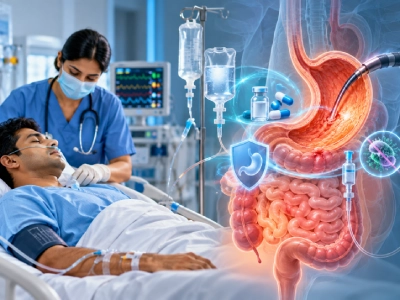
Initial Stabilisation and Medical Care
- Resuscitation
- Acid Suppression
- Medication Adjustments
- Infection Treatment
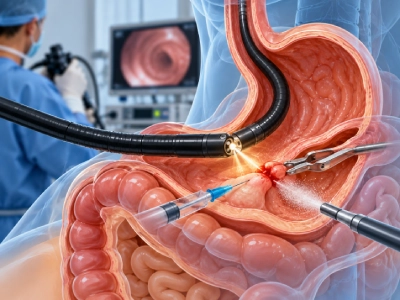
Endoscopic Treatment
- Cauterisation
- Clipping or Banding
- Injection Therapy
- Haemostatic Sprays

Advanced and Surgical Treatment
- Angiographic Embolisation
- TIPS Procedure
- Surgery
Complications if Left Untreated
Acute Complications
- Severe Blood Loss
- Acute Anaemia
- Low Blood Pressure
- Hypovolaemic Shock
- Kidney, Heart, or Brain Dysfunction
Long-Term Complications
- Iron-Deficiency Anaemia
- Persistent Fatigue
- Repeated episodes of digestive tract bleeding
- Repeated Transfusions
- Delayed Diagnosis of Ulcers, polyps, or cancers
Daily Management & Prevention Tips
Daily Nutrition Management
- Maintain adequate fluid intake daily
- Choose nutritious, easily digested foods
- Correct deficiencies with prescribed supplements
- Follow prescribed dietary recommendations carefully
- Avoid foods causing digestive irritation
Prevention and Lifestyle Tips
- Avoid unnecessary ibuprofen or aspirin
- Follow prescribed medication doses carefully
- Review anticoagulants regularly with doctors
- Avoid excessive alcohol consumption
- Report recurrent bleeding symptoms promptly
- Attend follow-ups and recommended screenings
Frequently Asked Questions
Does gastrointestinal bleeding affect younger people
Yes. Crohn’s disease, ulcerative colitis, severe vomiting, and infectious colitis can cause bleeding among adolescents and younger adults.
Does one negative stool test rule out bleeding?
No. Intermittent blood loss may be missed, so persistent weight loss or bowel changes may require further evaluation, including colonoscopy.
Can constipation cause gastrointestinal bleeding?
No. Constipation itself does not cause internal bleeding, but straining can trigger haemorrhoids or anal fissures, causing minor bright-red blood streaks.
Is gastrointestinal bleeding dangerous with liver cirrhosis?
Yes. Cirrhosis can cause enlarged veins that rupture and produce severe blood loss requiring urgent medical treatment.
Can someone eat or drink during active bleeding?
No. Hospitalised patients are usually kept without food or drink when urgent endoscopy or surgery may be required.