
Hearing Loss Treatment in Kolkata
Home / Treatments / ENT/ Hearing loss
Quick Answers
Can hearing loss be treated?
Treatment depends on the cause and severity and may include medicines, hearing aids, or surgery.
Can hearing loss happen suddenly?
Sudden hearing loss requires prompt assessment because early treatment may improve recovery.
Is hearing loss always permanent?
Some causes are reversible, while others require long-term hearing support and rehabilitation.
When to see an ENT specialist for hearing loss?
Seek evaluation for persistent, worsening, one-sided loss, tinnitus, dizziness, or sudden changes.
What Is Hearing Loss?
The partial or total inability to hear sounds clearly in one or both ears. It is one of the most common sensory deficits in humans.
Key points:
- 63 million Indians experience significant hearing loss
- 14.14% of schoolchildren have ear-related disorders
- Severe hearing loss peaks at ages 6–10
- Among India’s most neglected health challenges
Types of Hearing Loss
Sensorineural Hearing Loss
Inner ear or auditory nerve damage commonly causes muffled, unclear sounds.
Conductive Hearing Loss
Outer- or middle-ear problems prevent sound from reaching the inner ear.
Mixed Hearing Loss
Combined inner-ear, nerve, outer-ear, or middle-ear damage causes hearing difficulties.
Central Hearing Loss
Brain hearing-centre problems affect sound processing even when you can hear sounds.
Auditory Neuropathy Spectrum Disorder
Auditory nerve dysfunction disrupts clear signal transmission from the inner ear to the brain.
Sudden Hearing Loss
Rapid hearing reduction, often affecting one ear, requires prompt medical evaluation.
Age-Related Hearing Loss
Gradual hearing reduction with ageing commonly affects speech understanding in noisy environments.
Noise-Induced Hearing Loss
Repeated or intense loud-noise exposure can cause permanent hearing damage.
Symptoms of Hearing Loss
Common Symptoms
- Muffled or unclear sounds
- Difficulty hearing in noisy places
- Frequently asking others to repeat
- Increasing television, radio, or phone volume
- Difficulty hearing high-pitched sounds
- Ringing, buzzing, or hissing in ears
- Feeling fullness or blockage in ears
- Feeling mentally exhausted after conversations
- Difficulty locating where sounds originate
Red Flags (Seek Immediate Medical Care)
- Sudden hearing loss over hours or days in one ear
- Hearing loss with vertigo, spinning, or balance problems
- Severe ear pain with fluid, pus, or blood
- Sudden facial weakness, numbness, or one-sided drooping
- Hearing changes after head injury or loud blast
Why Choose Samaritan Medical Surgical & Critical Care?
At Samaritan Medical Surgical & Critical Care, we provide comprehensive healthcare solutions as per your needs. With a team of expert professionals, we focus on delivering compassionate, patient-centred care for optimal well-being.

NABH Certified
Accredited by NABH, ensuring the highest standards of healthcare quality and patient safety.

Surgical Excellence
Our skilled surgeons offer precision care for a wide range of surgical procedures.

Critical Care Support
Providing round-the-clock critical care with advanced equipment and expert medical teams.
Our Doctors
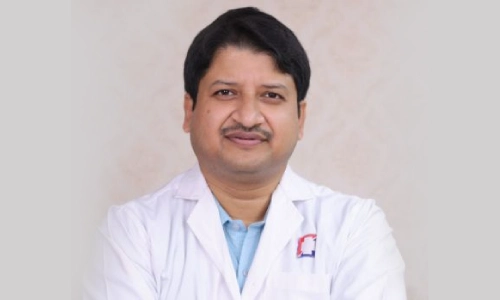
DR. SOMAK DAS
Qualifications: MBBS, MS(GEN.SURG.) DNB(GASTRO.SURG), MCH
Specialty: GASTRO SURGEON
Fees: Rs. 1,200.00
Available Days: MON, WED & FRI
Available Time: BY APPOINTMENT

DR. D. K. SARKAR
Qualifications: MBBSMS, DNB FRCS, (GOLD), FFSTED
Specialty: GENERAL SURGEON
Fees: Rs. 1,550.00
Available Days: MON, WED,THU & SAT
Available Time: MON WED,THU-16:00 & SAT-15:00

DR. RUDRADEEP BANERJEE
Qualifications: MS.(GEN.SURG), D.N. BMRCS
Specialty: GENERAL SURGEON
Fees: Rs. 1,000.00
Available Days: BY APPOINTMENT
Available Time: BY APPOINTMENT
DR. RANAJOY DUTTA
Qualifications: MBBS, M.S D.N.B
Specialty: GENERAL SURGEON
Fees: Rs. 1,200.00
Available Days: WED, SAT
Available Time: 17:00 - 18:00 PM
DR. ACHINTA KR DAS
Qualifications: MBBS, MS
Specialty: GENERAL SURGEON
Fees: Rs. 1,200.00
Available Days: BY APPOINTMENT
Available Time:BY APPOINTMENT
DR. SAMRIDDHI PODDAR
Qualifications: MBBS(HONS), MS(SURGERY), WBUHS NRSMCH
Specialty: GENERAL SURGEON
Fees: Rs. 1,000.00
Available Days: TUE & WED
Available Time: TUE 16:30-17:30 & WED 18:00-19:00
DR . B . B . BARAI
Qualifications: MBBS, DNB, PG DGM, CCEBDM
Specialty: GENERAL SURGEON
Fees: Rs. 1,200.00
Available Days: MON /FRIDAY
Available Time: 11:00-13:00
DR. SAPTARSHI KUNDU
Qualifications: MBBS, MS (GEN SUR)
Specialty: GENERAL SURGEON
Fees: Rs. 700.00
Available Days: BY APPOINTMENT
Available Time: BY APPOINTMENT
DR. MAINAK PAL
Qualifications: MBBS, MS, FMAS(GEN.SURG)
Specialty: GENERAL SURGEON
Fees: Rs. 1,000.00
Available Days: MON -FRI
Available Time: 17:00-18:00
DR. SUKANTA ROY
Qualifications: MBBS, MS(GASTO)
Specialty: GASTRO SURGEON
Fees: Rs. 1,000.00
Available Days: BY APPOINTMENT
Available Time: BY APPOINTMENT

DR. UDDIPTA DUTTA
Specialty: GASTRO SURGEON
Fees: Rs. 900.00
Available Days: BY APPOINTMENT
Available Time: BY APPOINTMENT
Hear From Our Happy Patients
Very good nursing home.all staff best
I had Laproscopic surgery of gallbladder stone on 23/6/26 & Discharge on 25/6/26. I had wonderful experience in nursing home, Very cooperative staff. Particularly Ms Aditi (Head Sister charge) , she has cooperated very well with Smily face. OT is well equipped with high quality instruments, Dr Mukesh Karia has done wonderful operations.
Very good nursing home
Very Supportive Staff with 24*7 support. Along with Neat and Clean cloths and bed.
Great treatment and recuperation. Doctors nurses and support staff mase it feel like home .
Thakuuuu Samaritan nursing home........and Dr.babuuuu khubbbb valooooo..apnader sakoler babohar khub valo r porisheba khubbb khubbb valo sakol k. Ank ank ank dhannobad ......
Very good nursing home
Very good Treatment here and also staff behaviour has very good
I have admitted my father here twice under Dr Arindam Dutta sir for the DJ stenting and RIRS (Kidney stone) .The entire team of Samaritan was fantastic.Specially Ms Aditi Nandi was so humble and cooperative .She attended us every time and Given all facilities.Through out the admitting time and discharge,all the sisters,brothers,Housekeeping ,ward boy everyone was so polite and well mannered.
Individuals at Higher Risk for Hearing Loss
| Groups | Factors |
|---|---|
| Older adults | Age-related inner-ear changes |
| Regularly exposed to loud noise | Noise-related hearing damage |
| Factory or industrial workers | Prolonged occupational noise |
| Musicians and performers | Repeated high-volume sound exposure |
| With recurrent ear infections | Middle-ear inflammation |
| With chronic ear discharge | Persistent middle-ear disease |
| With previous ear trauma | Damage to hearing structures |
| Taking certain ototoxic medicines | Possible inner-ear effects |
| With a family history of hearing loss | Increased susceptibility |
| With diabetes or vascular conditions | Possible effects on hearing structures |
| With persistent earwax blockage | Reduced sound transmission |
Causes of Hearing Loss
Earwax blockage
Ear infections
Eardrum perforation
Ageing
Loud noise
Head or ear injury
Ototoxic medicines
Genetic factor
Inner-ear disorders
Auditory nerve disorders
Hearing Loss Patterns, Diagnosis & Treatment Approach
| Pattern | Condition | Initial Approach | When Is Advanced Treatment Needed? | Expected Outcome |
|---|---|---|---|---|
| Blocked hearing | Earwax obstruction | Ear examination and wax removal | Persistent symptoms after removal | Improved sound transmission |
| Pain with reduced hearing | Ear infection | Medical treatment | Persistent or recurrent disease | Infection control and hearing improvement |
| Persistent ear discharge | Chronic ear disease | ENT assessment and treatment | Structural disease or persistent perforation | Reduced discharge and improved ear health |
| One-sided hearing loss | Unilateral hearing loss | ENT examination and hearing tests | Persistent or unexplained loss | Cause-specific management |
| Gradual hearing loss | Age-related loss | Hearing assessment | Functional hearing difficulty | Hearing rehabilitation |
| Noise-related loss | Sensorineural hearing loss | Hearing evaluation and protection | Significant functional impairment | Better communication with appropriate support |
| Sudden hearing reduction | Sudden hearing loss | Urgent ENT assessment | Based on clinical findings | Outcome depends on cause and treatment timing |
How Is Hearing Loss Evaluated?
Clinical Examinations
- Reviews symptom history, onset, duration and progression.
- Ear canal and Eardrum examination
- Infection assessment
- Hearing history
- Neurological assessment
Diagnostic Tests
- Pure-tone audiometry
- Speech audiometry
- Tympanometry
- Otoacoustic emissions
- Auditory brainstem response
- Imaging
Hearing Loss Treatment: What to Expect?
Before Treatment
- ENT consultation
- Hearing assessment
- Identify type and cause
- Ear examination
- Medical history review
- Review previous ear problems
- MRI or blood tests if needed
During Treatment
- Earwax removal
- Medicines for infection or inflammation
- Steroids for selected sudden hearing loss
- Antibiotics for bacterial infections
- Eardrum repair when required
- Ear tubes for fluid buildup
- Hearing aids when suitable
- Cochlear implants for severe loss
- Surgery for selected conditions
- Hearing rehabilitation
After Treatment
- Follow ear-care instructions
- Attend hearing reassessments
- Protect ears from loud noise
- Keep ears dry when advised
- Maintain hearing devices
- Allow time for sound adaptation
- Continue hearing rehabilitation
- Report worsening or new symptoms
Benefits of Hearing Loss Treatment
- Improved hearing
- Better speech understanding
- Improved communication at home, work and socially.
- Reduced listening effort
- Better awareness of surroundings
- Management of underlying disease
- Improved quality of life
Success Rates For Treatment in India
| Outcome | Rate |
|---|---|
| Cochlear implant success | 85%–98% |
| Children implanted under 3 years | 85%–98% |
| Children implanted at 3–7 years | 75%–90% |
| Adult communication success after implantation | 84% |
| Long-term cochlear implant device survival | 96.5% |
| Middle-ear corrective surgery success | 70%–80% |
| Tympanoplasty hearing restoration success | 70% |
| Sudden hearing loss complete recovery | 58% |
| Overall positive response to steroid treatment | 86% |
| Hearing-aid trial success | 95% |
Recovery After Hearing Loss Treatment
1–3 weeks: Initial hearing improvements may become noticeable
First 2 weeks: Follow-up hearing tests monitor recovery
4–8 weeks: Hearing recovery and treatment may continue
By 2 months: Hearing typically reaches stable levels
Up to 12 months: Rare cases may continue recovering
6–12 months: Tinnitus may gradually fade or adapt to silence
Complications if Hearing Loss Is Left Untreated
- Auditory deprivation may affect brain processing
- Increased risk of cognitive decline and dementia
- Mental fatigue from straining to hear
- Social withdrawal from communication difficulties
- Loneliness, anxiety, low self-esteem, and depression
- Increased stress during everyday communication
- Higher risk of falls and injuries
- Missed alarms or approaching vehicles increase accidents
- Persistent tinnitus may develop or worsen
Post-Treatment Daily Management & Prevention Tips
Management Tips
- Clean hearing aids daily and keep dry
- Check hearing aid batteries regularly
- Face speakers during communication
- Reduce background noise during conversations
- Ask others to speak clearly
- Stay socially active and join support groups
- Take quiet breaks to reduce listening fatigue
Prevention Tips
- Limit loud noise exposure regularly
- Wear earplugs or earmuffs in noisy settings
- Follow the 60:60 rule for headphones
- Take breaks after every listening hour
- Avoid cotton swabs inside the ears
- Protect the eardrum from accidental injury
- Exercise regularly and maintain a balanced diet
- Manage high blood pressure and diabetes
- Review ototoxic medications with your doctor
Frequently Asked Questions
Is tinnitus truly incurable and hopeless?
No. Professional assessment can identify contributing factors. Sound therapy, counselling, amplification, and addressing underlying conditions can reduce symptoms, improve communication, and support everyday quality of life.
Does hearing loss only affect older adults?
No. It can occur during childhood, adolescence, or adulthood. Common contributors include prolonged noise exposure, infections, inherited factors, certain medicines, head injuries, and other medical conditions.
Is hearing loss only an ear-related problem?
No. Reduced auditory input increases listening effort and mental fatigue. Untreated impairment may also affect communication, social participation, cognitive health, emotional wellbeing, and physical safety.
Is mild hearing loss really nothing to worry about?
No. Subtle changes may interfere with conversations, particularly in noisy environments. Early assessment can identify progression, address underlying causes, and determine whether monitoring or intervention is appropriate.
Can hearing aids completely restore normal hearing?
No. These devices amplify and clarify sounds according to individual needs. They cannot recreate natural auditory function, but proper assessment, programming, and follow-up can significantly improve communication.