
Vertigo Treatment in Kolkata
Home / Treatments / ENT/ Vertigo
Quick Answers
What is the most common cause of vertigo?
Benign paroxysmal positional vertigo (BPPV). It occurs when displaced inner-ear crystals trigger brief spinning with movement.
Can vertigo be treated without surgery?
Yes. Many cases improve through repositioning exercises, medication, rehabilitation, or cause-specific treatment.
Does vertigo go away permanently?
Sometimes. Lasting relief is possible when you treat the underlying condition appropriately.
When to see an ENT specialist for vertigo?
Seek evaluation for recurrent episodes, hearing changes, tinnitus, or neurological symptoms.
What Is Vertigo?
A sensation of spinning or moving where you feel like you or your surroundings are in motion when everything is actually still.
Key points:
- 15–20% of Indian adults experience dizziness each year
- 70+ million people affected nationwide
- Women face 2–3× higher risk
- Vertigo isn’t acrophobia; that’s a myth
Types of Vertigo
Peripheral Vertigo: Inner Ear Causes
Problems in the vestibular system often cause spinning, especially with head movement or position changes.
- BPPV
- Ménière’s disease
- Vestibular neuritis
- Labyrinthitis
Central Vertigo: Brain-Related Causes
Brainstem or cerebellum problems can cause vertigo, coordination issues, and spatial disorientation.
- Vestibular migraine
- Stroke or blood vessel disease
- Neurological conditions
- Toxins or medications
Symptoms of Vertigo
Common Symptoms
- Spinning sensation or feeling of movement
- Trouble standing, walking, or staying steady
- Nausea or vomiting during vertigo episodes
- Rapid, uncontrollable eye movements
- Ringing in the ears or muffled hearing
Red Flags (Seek Immediate Medical Care)
- Sudden, severe headache with vertigo
- One-sided weakness, numbness, or tingling
- Slurred speech or difficulty understanding others
- Sudden double vision or vision loss
- Chest pain, rapid heartbeat, or breathing difficulty
- Inability to stand or walk without falling
Why Choose Samaritan Medical Surgical & Critical Care?
At Samaritan Medical Surgical & Critical Care, we provide comprehensive healthcare solutions as per your needs. With a team of expert professionals, we focus on delivering compassionate, patient-centred care for optimal well-being.

NABH Certified
Accredited by NABH, ensuring the highest standards of healthcare quality and patient safety.

Surgical Excellence
Our skilled surgeons offer precision care for a wide range of surgical procedures.

Critical Care Support
Providing round-the-clock critical care with advanced equipment and expert medical teams.
Our Doctors
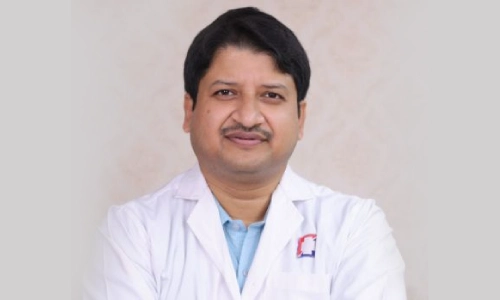
DR. SOMAK DAS
Qualifications: MBBS, MS(GEN.SURG.) DNB(GASTRO.SURG), MCH
Specialty: GASTRO SURGEON
Fees: Rs. 1,200.00
Available Days: MON, WED & FRI
Available Time: BY APPOINTMENT

DR. D. K. SARKAR
Qualifications: MBBSMS, DNB FRCS, (GOLD), FFSTED
Specialty: GENERAL SURGEON
Fees: Rs. 1,550.00
Available Days: MON, WED,THU & SAT
Available Time: MON WED,THU-16:00 & SAT-15:00

DR. RUDRADEEP BANERJEE
Qualifications: MS.(GEN.SURG), D.N. BMRCS
Specialty: GENERAL SURGEON
Fees: Rs. 1,000.00
Available Days: BY APPOINTMENT
Available Time: BY APPOINTMENT
DR. RANAJOY DUTTA
Qualifications: MBBS, M.S D.N.B
Specialty: GENERAL SURGEON
Fees: Rs. 1,200.00
Available Days: WED, SAT
Available Time: 17:00 - 18:00 PM
DR. ACHINTA KR DAS
Qualifications: MBBS, MS
Specialty: GENERAL SURGEON
Fees: Rs. 1,200.00
Available Days: BY APPOINTMENT
Available Time:BY APPOINTMENT
DR. SAMRIDDHI PODDAR
Qualifications: MBBS(HONS), MS(SURGERY), WBUHS NRSMCH
Specialty: GENERAL SURGEON
Fees: Rs. 1,000.00
Available Days: TUE & WED
Available Time: TUE 16:30-17:30 & WED 18:00-19:00
DR . B . B . BARAI
Qualifications: MBBS, DNB, PG DGM, CCEBDM
Specialty: GENERAL SURGEON
Fees: Rs. 1,200.00
Available Days: MON /FRIDAY
Available Time: 11:00-13:00
DR. SAPTARSHI KUNDU
Qualifications: MBBS, MS (GEN SUR)
Specialty: GENERAL SURGEON
Fees: Rs. 700.00
Available Days: BY APPOINTMENT
Available Time: BY APPOINTMENT
DR. MAINAK PAL
Qualifications: MBBS, MS, FMAS(GEN.SURG)
Specialty: GENERAL SURGEON
Fees: Rs. 1,000.00
Available Days: MON -FRI
Available Time: 17:00-18:00
DR. SUKANTA ROY
Qualifications: MBBS, MS(GASTO)
Specialty: GASTRO SURGEON
Fees: Rs. 1,000.00
Available Days: BY APPOINTMENT
Available Time: BY APPOINTMENT

DR. UDDIPTA DUTTA
Specialty: GASTRO SURGEON
Fees: Rs. 900.00
Available Days: BY APPOINTMENT
Available Time: BY APPOINTMENT
Hear From Our Happy Patients
Very good nursing home.all staff best
I had Laproscopic surgery of gallbladder stone on 23/6/26 & Discharge on 25/6/26. I had wonderful experience in nursing home, Very cooperative staff. Particularly Ms Aditi (Head Sister charge) , she has cooperated very well with Smily face. OT is well equipped with high quality instruments, Dr Mukesh Karia has done wonderful operations.
Very good nursing home
Very Supportive Staff with 24*7 support. Along with Neat and Clean cloths and bed.
Great treatment and recuperation. Doctors nurses and support staff mase it feel like home .
Thakuuuu Samaritan nursing home........and Dr.babuuuu khubbbb valooooo..apnader sakoler babohar khub valo r porisheba khubbb khubbb valo sakol k. Ank ank ank dhannobad ......
Very good nursing home
Very good Treatment here and also staff behaviour has very good
I have admitted my father here twice under Dr Arindam Dutta sir for the DJ stenting and RIRS (Kidney stone) .The entire team of Samaritan was fantastic.Specially Ms Aditi Nandi was so humble and cooperative .She attended us every time and Given all facilities.Through out the admitting time and discharge,all the sisters,brothers,Housekeeping ,ward boy everyone was so polite and well mannered.
Individuals at Higher Risk for Vertigo
| Groups | Factors |
|---|---|
| Older adults | Age-related changes in balance systems |
| With previous BPPV | Increased risk of recurrence |
| With previous head injury | Possible inner-ear or neurological effects |
| With migraine | Increased risk of vestibular migraine |
| With inner-ear disorders | Disturbed balance signals |
| With Ménière's disease | Recurrent vestibular episodes |
| With vestibular nerve inflammation | Sudden balance disturbance |
| With previous ear infections | Possible inner-ear involvement |
| Taking certain medicines | Some medicines can affect balance |
| With neurological disorders | Possible central causes of vertigo |
Causes of Vertigo
BPPV
Inner-ear inflammation
Ménière's disease.
Vestibular migraine
Head injury
Medication effects
Age-related changes
Neurological conditions
Other vestibular disorders
Vertigo Patterns, Diagnosis & Treatment Approach
| Pattern | Condition | Initial Approach | When Is Advanced Treatment Needed? | Expected Outcome |
|---|---|---|---|---|
| Brief spinning with head movement | BPPV | Positional assessment and repositioning manoeuvre | Recurrent or persistent symptoms | Often significant symptom relief |
| Prolonged vertigo after vestibular inflammation | Vestibular neuritis | Medical assessment and rehabilitation | Persistent imbalance or symptoms | Gradual balance recovery |
| Vertigo with hearing symptoms | Ménière's disease or labyrinthitis | ENT assessment and hearing evaluation | Recurrent or difficult-to-control episodes | Symptom control and hearing monitoring |
| Vertigo with migraine symptoms | Vestibular migraine | Medical assessment and migraine management | Frequent or disabling episodes | Reduced episode frequency |
| Persistent unexplained dizziness | Vestibular disorder | ENT and balance assessment | Persistent functional impairment | Cause-specific management |
| Vertigo with neurological symptoms | Central cause | Urgent medical evaluation | Depending on underlying condition | Depends on cause and treatment |
How Is Vertigo Evaluated?
Clinical Examinations
- Symptom history
- Positional assessment
- Eye movement examination
- Balance assessment
- Ear examination
- Hearing assessment
Diagnostic Tests
- Dix-Hallpike test
- Head impulse testing
- Audiometry
- Tympanometry
- Vestibular function tests
- MRI or CT
Vertigo Treatment: What to Expect?
Before Treatment
- ENT consultation
- Symptom and trigger assessment
- Medical history review
- Ear and balance examination
- Hearing tests if required
- VNG or posturography if indicated
- Additional tests when needed
During Treatment
- Canalith repositioning for BPPV
- Medicines when appropriate
- Vestibular rehabilitation
- Inner-ear condition treatment
- Migraine management
- Neurological cause treatment
- Temporary nausea or dizziness
After Treatment
- Follow the treatment plan
- Continue prescribed exercises
- Move slowly until stable
- Avoid sudden head movements
- Avoid sudden head movements
- Avoid hazardous activities
- Stay hydrated
- Attend follow-ups
- Report worsening symptoms promptly
Benefits of Vertigo Treatment
- Lower risk of falls and injuries
- Improved vision and gaze stability
- Better posture and body alignment
- Reduced frequency and intensity of spinning
- Relief from nausea, vomiting, headaches, fatigue
- Improved tolerance to movement triggers
- Greater independence in daily activities
- Increased confidence in busy environments
- Reduced anxiety and stress from symptoms
Success Rates for Vertigo Treatment in India
| Outcome | Rate |
|---|---|
| Overall vertigo treatment success | 78%–98% |
| BPPV cases among vertigo clinic patients | 26% |
| Epley manoeuvre overall cure rate | 96% |
| Complete cure after one manoeuvre | 75% |
| Patients requiring second manoeuvre | 15% |
| Combined therapy cure rate | 97%–98% |
| One-month combined treatment success | 78.33% |
| Acute vertigo clinical response | 91.1% |
| Nystagmus improvement or resolution | 99.7% |
| Monthly attack reduction with prevention | 6–7 episodes |
Recovery After Vertigo Treatment
First 24–48 hours: Limit sudden head movements
First 1–2 nights: Sleep with head elevated
1–3 sessions: Simple BPPV cases may resolve
4–6 weeks: Vestibular rehabilitation may improve symptoms
Up to 6 weeks: Residual dizziness may persist
Up to 6 months: Vestibular neuritis may fully recover
Complications if Vertigo Is Left Untreated
- Falls causing fractures or head injuries
- Driving and machinery accidents
- Dehydration from persistent nausea and vomiting
- Permanent inner-ear damage and hearing loss
- Chronic dizziness and persistent unsteadiness
- Progression of underlying neurological conditions
- Anxiety, panic, and depression
- Social isolation and reduced daily activities
- Persistent neck tension, fatigue, and headaches
Post-Treatment Daily Management & Prevention Tips
Management Tips
- Change positions slowly, especially after sleeping
- Sit briefly before standing from bed
- Stay hydrated throughout the day
- Rest in a quiet, dark room
- Avoid sudden head movements and bending
- Elevate your head during sleep
Prevention Tips
- Limit caffeine, alcohol, and high-sodium foods
- Manage stress with relaxation techniques
- Maintain a vertigo symptom diary
- Use non-slip mats and adequate lighting
- Install grab rails for added safety
- Follow prescribed vestibular rehabilitation exercises
Frequently Asked Questions
Is vertigo a disease inherited from parents?
No. It is a symptom caused by disruption within the balance system. Possible causes include inner-ear disorders, neurological conditions, migraines, infections, or circulatory changes.
Is the Epley manoeuvre a universal cure for vertigo?
No. This technique specifically treats BPPV by repositioning displaced calcium crystals. It does not address migraines, infections, neurological disorders, or other underlying causes of dizziness.
Are daily vertigo suppression pills the best permanent cure?
No. These medicines mainly control acute spinning and nausea. Prolonged use may interfere with natural balance compensation, potentially slowing recovery and causing lingering unsteadiness.
Should you completely avoid head movement until vertigo disappears?
No. Rest is appropriate during severe attacks, but prolonged inactivity can delay natural compensation. Gradual, guided movement helps restore balance and reduces long-term unsteadiness.
Does sudden vertigo with neurological symptoms require emergency care?
Yes. Numbness, speech difficulty, severe headache, or similar warning signs can indicate stroke or another serious neurological event requiring immediate hospital evaluation.