
Bladder Problems Treatment in Kolkata
Home / Treatments / Urology / Bladder Problems
Quick Answers
Can dehydration worsen bladder issues?
Yes. Concentrated urine can irritate the bladder, increasing urgency, frequency, or discomfort.
Is it safe to delay urination frequently?
No. Regularly holding urine may overstretch the bladder and affect control.
Do bladder problems affect sleep quality?
Yes. Frequent nighttime urination can disrupt sleep, causing fatigue and reduced daytime functioning.
Can medications for other conditions impact bladder function?
Yes. Some medicines can alter urine production or bladder control, worsening symptoms.
What Are Bladder Problems?
These are medical conditions affecting how the bladder stores, holds, or releases urine. Persistent problems such as frequent urination, sudden urgency, leakage, or discomfort can interfere with daily life. These symptoms may indicate an underlying issue that requires prompt medical attention.
Key points:
- Frequent urination may develop
- A sudden urge to urinate can occur
- Difficulty emptying the bladder is possible
- Urine leakage may occur
Types of Bladder Problems
Urinary Incontinence
Involuntary urine leakage caused by reduced bladder or pelvic muscle control.
Overactive Bladder
Sudden, frequent urges to urinate, sometimes causing involuntary urine leakage.
Bladder Infections
Bladder infections can cause burning, urgency, frequency, and lower abdominal discomfort.
Interstitial Cystitis
A chronic bladder condition causing persistent pain, pressure, and frequent urination.
Urinary Retention
Difficulty completely emptying the bladder, causing discomfort, fullness, or weak urine flow.
Symptoms of Bladder Problems
Common Symptoms
- Frequent urination
- Sudden, urgent need to urinate
- Difficulty starting urination
- Pain or burning during urination
- Urine leakage
- Feeling the bladder remains full
Red Flags (Seek Immediate Medical Care)
- Complete inability to pass urine
- Blood in the urine
- Severe lower abdominal pain
- Fever and chills
- Severe pelvic or lower back pain
- Nausea or vomiting alongside urinary pain
Why Choose Samaritan Medical Surgical & Critical Care?
At Samaritan Medical Surgical & Critical Care, we provide comprehensive healthcare solutions as per your needs. With a team of expert professionals, we focus on delivering compassionate, patient-centred care for optimal well-being.

NABH Certified
Accredited by NABH, ensuring the highest standards of healthcare quality and patient safety.

Surgical Excellence
Our skilled surgeons offer precision care for a wide range of surgical procedures.

Critical Care Support
Providing round-the-clock critical care with advanced equipment and expert medical teams.
Our Doctors
DR. AMLAN CHAKRABORTY
Qualifications: MBBS, MS, FRCS (Urology)
Specialty: Urology
Experience: 23 years
Fees: Rs. 1,700.00
Available Days: TUE,THURS & SAT(BY APPOINTMENT)
Available Time: 12:00 - 13:00 (BY APPOINTMENT)

DR. PRAMOD KUMAR SHARMA
Qualifications: MBBS,MS
Specialty: Urology
Experience: 21 years
Fees: Rs. 1,200.00
Available Days: BY APPOINTMENT
Available Time: By Appointment

DR. NILANJAN MITRA
Qualifications: MBBS, MS (Gen. Surg.), MCh (Urology)
Specialty: Urology
Experience: 19 years
Fees: Rs. 1,200.00
Available Days:TUE & THURS
Available Time: 8:30 - 10:30

DR. SMARANJIT CHATTERJEE
Qualifications: MBBS, MS, DNB, Mch
Specialty: Urology
Experience: 18 years
Fees: Rs. 1,200.00
Available Days: BY APPOINTMENT
Available Time: BY APPOINTMENT

DR. SOUVIK CHATTERJEE
Qualifications: MBBS, MS (Gen. Surg.), DNB, MCh (Urology)
Specialty: Urology
Experience: 16 years
Fees: Rs. 1,000.00
Available Days: WED, SAT
Available Time: WED: 15:00 - 16:00, SAT: 09:30 - 10:30

DR. SUBHOJIT MALAKAR
Qualifications: MBBS, MS (Gen. Surg.), DNB, MCh (Urology)
Specialty: Urology
Experience: 15 years
Fees: Rs. 1,000.00
Available Days: BY APPOINTMENT
Available Time: BY APPOINTMENT
DR. SUNIRMAL CHOWDHURY
Qualifications: MBBS, MS, IPGMER (HOD)
Specialty: Urology
Experience: 20 years
Fees: Rs. 1,200.00
Available Days: BY APPOINTMENT
Available Time: By Appointment
Hear From Our Happy Patients
Very good nursing home.all staff best
I had Laproscopic surgery of gallbladder stone on 23/6/26 & Discharge on 25/6/26. I had wonderful experience in nursing home, Very cooperative staff. Particularly Ms Aditi (Head Sister charge) , she has cooperated very well with Smily face. OT is well equipped with high quality instruments, Dr Mukesh Karia has done wonderful operations.
Very good nursing home
Very Supportive Staff with 24*7 support. Along with Neat and Clean cloths and bed.
Great treatment and recuperation. Doctors nurses and support staff mase it feel like home .
Thakuuuu Samaritan nursing home........and Dr.babuuuu khubbbb valooooo..apnader sakoler babohar khub valo r porisheba khubbb khubbb valo sakol k. Ank ank ank dhannobad ......
Very good nursing home
Very good Treatment here and also staff behaviour has very good
I have admitted my father here twice under Dr Arindam Dutta sir for the DJ stenting and RIRS (Kidney stone) .The entire team of Samaritan was fantastic.Specially Ms Aditi Nandi was so humble and cooperative .She attended us every time and Given all facilities.Through out the admitting time and discharge,all the sisters,brothers,Housekeeping ,ward boy everyone was so polite and well mannered.
Individuals at Highest Risk for Bladder Problems
| Groups | Factors |
|---|---|
| Older Adults | Risk of bladder dysfunction and urinary problems increases with age. |
| Women | Pregnancy, childbirth, and pelvic-floor changes may increase the risk of bladder problems. |
| Men with Prostate Problems | An enlarged prostate may obstruct urine flow and affect bladder function. |
| Recurrent UTI Patients | Repeated urinary infections may contribute to persistent bladder symptoms. |
| Neurological Conditions | Nerve problems can interfere with normal bladder storage and emptying. |
| Smokers | Tobacco exposure is an important risk factor for bladder cancer. |
Causes Of Bladder Problems
- Enlarged prostate (BPH)
- Pelvic floor weakness
- Urinary tract infections
- Obstructions from stones, tumours, or strictures
- Constipation
- Nerve damage
- Brain and spinal conditions (stroke, Parkinson’s, MS, injuries)
- Diet and fluids (caffeine, alcohol, sweeteners)
- Certain medications (diuretics)
- Hormonal shifts (lower estrogen after menopause)
Bladder Problem Patterns, Diagnosis & Treatment Approach
| Pattern | Likely Condition | First-Line Approach | When Advanced Treatment Is Needed | Expected Outcome |
|---|---|---|---|---|
| Frequent urination or urgency | Overactive bladder or urinary infection | Clinical evaluation, urine testing and appropriate medical management | Persistent symptoms despite treatment | Better bladder control and reduced urinary frequency |
| Urine leakage | Urinary incontinence | Assessment, bladder training and appropriate conservative treatment | Persistent or severe leakage | Improved bladder control and reduced leakage |
| Difficulty emptying the bladder | Urinary obstruction or bladder dysfunction | Clinical evaluation and assessment of urinary flow | Persistent or recurrent retention | Improved bladder emptying and urinary function |
| Blood in urine | Bladder or urinary-tract condition | Prompt medical evaluation | Abnormal imaging, cystoscopy or other findings | Outcome depends on the underlying cause |
| Lower abdominal or pelvic pain | Infection, bladder stones or other bladder conditions | Clinical evaluation and appropriate treatment | Persistent pain or abnormal diagnostic findings | Relief depends on treatment of the underlying cause |
Procedures & Recovery Time: What to Expect
Minimally Invasive Procedures
- Cystoscopy for diagnosis or treatment
- Minimally invasive sling surgery
- Small incisions or vaginal approaches
- Same-day or next-day discharge
Surgical
- Cystectomy or bladder augmentation
- Open or robotic surgery
- Temporary urinary catheter during healing
- Bladder reconstruction using bowel tissue
Non-Surgical
- Not applicable to listed procedures
- Procedures involve surgical intervention
- Treatment depends on bladder condition
- Approach varies by underlying problem
Recovery & Results Timeline
First 1–2 weeks: Symptoms may occur
2–6 weeks: Light activities resume
6–12+ weeks: Initial healing
3–6 months: Full activity recovery
Available Diagnosis & Tests
Initial Assessments
- Medical history and symptom review
- Bladder diary
- Physical examination
- Abdominal, pelvic or prostate assessment
Laboratory and Simple Tests
- Urinalysis for infection or blood
- Urine culture for bacterial infection
- Postvoid residual urine measurement
- Ultrasound or catheter assessment
Advanced and Specialised Tests
- Urodynamic testing
- Cystoscopy
- Ultrasound imaging
- X-rays or CT scans
Available Treatment Options
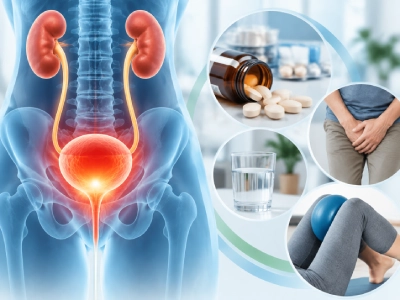
Non-Surgical Treatments
- Bladder training
- Pelvic floor exercises
- Medicines for overactive bladder
- Antibiotics
- Pain-relieving medicines
- Lifestyle and fluid management
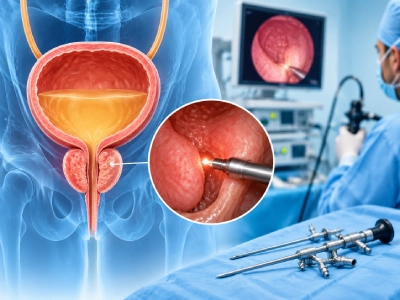
Minimally Invasive Treatments
- Cystoscopy-guided procedures
- Bladder stone removal
- Intravesical treatments
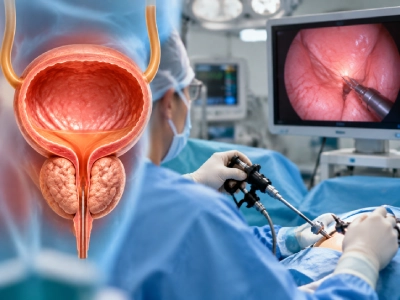
Surgical Treatments
- Bladder stone surgery
- Surgery for urinary obstruction
- Surgical treatment for bladder tumours
- Reconstructive bladder procedures
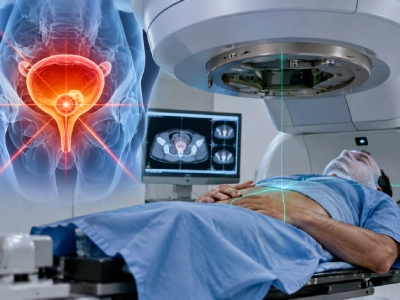
Radiation Treatments
- External beam radiation
- Other radiation treatment when clinically indicated
Benefits of Bladder Problem Treatment
- Better bladder control
- Fewer bathroom trips
- Reduced urinary urgency
- Complete bladder emptying
- Prevention of acute urinary retention
- Protection against bladder and kidney damage
- Reduced recurrent urinary tract infections
- Reduced urine leakage
- Relief from bladder pain
- Control of underlying bladder disease
Complications if Left Untreated
- Acute or chronic urinary retention
- Persistent urinary symptoms
- Recurrent urinary tract infections (UTIs)
- Bladder stones
- Bladder muscle damage
- Blood in the urine (hematuria)
- Urinary obstruction and hydronephrosis
- Disease progression or delayed diagnosis
Daily Management & Prevention Tips
Management Tips
- Urinate regularly every 2–3 hours
- Empty the bladder completely
- Follow a consistent fluid plan
- Track fluid and urination patterns
- Reduce caffeine and alcohol intake
- Avoid spicy and acidic foods
- Practise bladder training when appropriate
- Review medications with your treating doctor
Prevention Tips
- Prevent constipation with high-fibre foods
- Perform regular Kegel exercises
- Quit smoking
- Maintain a healthy weight
- Avoid routinely holding urine
- Treat urinary infections promptly
- Discuss persistent bladder symptoms with doctors
Frequently Asked Questions
Can a small bladder cause frequent urine leakage?
No. Bladder size is not usually the cause. Leakage can result from weak pelvic muscles, infection, nerve damage, prostate problems, medicines, or other conditions.
Are bladder leaks a normal part of ageing?
No. Risk increases with age, but leakage is not an inevitable part of ageing and may result from treatable urinary or prostate conditions.
Do only women experience bladder control problems?
No. Men can also experience leakage, particularly with prostate enlargement, prostate surgery, radiation treatment, nerve damage, or other urinary problems.
Does burning urination always mean a UTI?
No. Infection is one cause, but burning can also occur with bladder pain syndrome, kidney stones, or other urinary tract irritation.
What is the success rate of bladder problem treatment?
Treatment success varies by condition and therapy. For urinary incontinence, studies report cure rates ranging from about 49% with medication to 82% with surgery