
Wisdom Tooth Removal in Kolkata
Home / Treatments / Maxillofacial Surgery / Wisdom tooth removal
Quick Answers
Does every wisdom tooth need removal?
No, healthy, symptom-free teeth usually require monitoring rather than removal.
Is wisdom tooth removal painful?
Anaesthesia prevents pain during treatment; soreness and swelling may follow afterwards.
How long does removal take?
All four teeth usually take 45–60 minutes; single teeth may take 20–30 minutes.
When to see a dentist?
Seek assessment for persistent pain, swelling, infection, or restricted mouth opening.
What Is Wisdom Tooth Removal (Extraction)?
A surgical procedure performed by a dentist or oral surgeon to remove one or more of the four permanent adult teeth located at the back corners of the mouth.
Key points:
- 29% of young adults have them removed.
- Older generations have a 67% removal rate.
- 35% lack one or more wisdom teeth.
- Females have an 8% higher likelihood of extraction.
Types of Wisdom Tooth Removal
Simple Extraction
Fully erupted teeth are loosened and removed without incisions or stitches.
Surgical Extraction
Impacted teeth require incisions and may involve bone removal or sectioning.
Soft Tissue Impaction
Teeth remain beneath gum tissue and require a small incision for access.
Partial Bony Impaction
Partly exposed teeth require bone removal and sometimes sectioning for extraction.
Complete Bony Impaction
Fully encased teeth require bone removal, sectioning, and usually dissolvable stitches.
Symptoms of Wisdom Tooth Problems
Common Symptoms
- Jaw pain around emerging teeth.
- Swollen or tender gum tissue.
- Mild jaw stiffness while chewing.
- Persistent bad breath or taste.
- Soreness around neighbouring teeth.
Red Flags
- Severe facial, cheek, or jaw swelling.
- Difficulty opening your mouth or swallowing.
- Fever or chills with dental symptoms.
- Pus or yellowish gum discharge.
- Severe pain spreading toward the ear.
Why Choose Samaritan Medical Surgical & Critical Care?
At Samaritan Medical Surgical & Critical Care, we provide comprehensive healthcare solutions as per your needs. With a team of expert professionals, we focus on delivering compassionate, patient-centred care for optimal well-being.

NABH Certified
Accredited by NABH, ensuring the highest standards of healthcare quality and patient safety.

Surgical Excellence
Our skilled surgeons offer precision care for a wide range of surgical procedures.

Critical Care Support
Providing round-the-clock critical care with advanced equipment and expert medical teams.
Our Doctors
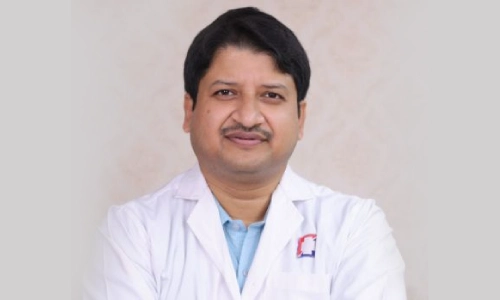
DR. SOMAK DAS
Qualifications: MBBS, MS(GEN.SURG.) DNB(GASTRO.SURG), MCH
Specialty: GASTRO SURGEON
Fees: Rs. 1,200.00
Available Days: MON, WED & FRI
Available Time: BY APPOINTMENT

DR. D. K. SARKAR
Qualifications: MBBSMS, DNB FRCS, (GOLD), FFSTED
Specialty: GENERAL SURGEON
Fees: Rs. 1,550.00
Available Days: MON, WED,THU & SAT
Available Time: MON WED,THU-16:00 & SAT-15:00

DR. RUDRADEEP BANERJEE
Qualifications: MS.(GEN.SURG), D.N. BMRCS
Specialty: GENERAL SURGEON
Fees: Rs. 1,000.00
Available Days: BY APPOINTMENT
Available Time: BY APPOINTMENT
DR. RANAJOY DUTTA
Qualifications: MBBS, M.S D.N.B
Specialty: GENERAL SURGEON
Fees: Rs. 1,200.00
Available Days: WED, SAT
Available Time: 17:00 - 18:00 PM
DR. ACHINTA KR DAS
Qualifications: MBBS, MS
Specialty: GENERAL SURGEON
Fees: Rs. 1,200.00
Available Days: BY APPOINTMENT
Available Time:BY APPOINTMENT
DR. SAMRIDDHI PODDAR
Qualifications: MBBS(HONS), MS(SURGERY), WBUHS NRSMCH
Specialty: GENERAL SURGEON
Fees: Rs. 1,000.00
Available Days: TUE & WED
Available Time: TUE 16:30-17:30 & WED 18:00-19:00
DR . B . B . BARAI
Qualifications: MBBS, DNB, PG DGM, CCEBDM
Specialty: GENERAL SURGEON
Fees: Rs. 1,200.00
Available Days: MON /FRIDAY
Available Time: 11:00-13:00
DR. SAPTARSHI KUNDU
Qualifications: MBBS, MS (GEN SUR)
Specialty: GENERAL SURGEON
Fees: Rs. 700.00
Available Days: BY APPOINTMENT
Available Time: BY APPOINTMENT
DR. MAINAK PAL
Qualifications: MBBS, MS, FMAS(GEN.SURG)
Specialty: GENERAL SURGEON
Fees: Rs. 1,000.00
Available Days: MON -FRI
Available Time: 17:00-18:00
DR. SUKANTA ROY
Qualifications: MBBS, MS(GASTO)
Specialty: GASTRO SURGEON
Fees: Rs. 1,000.00
Available Days: BY APPOINTMENT
Available Time: BY APPOINTMENT

DR. UDDIPTA DUTTA
Specialty: GASTRO SURGEON
Fees: Rs. 900.00
Available Days: BY APPOINTMENT
Available Time: BY APPOINTMENT
Hear From Our Happy Patients
Very good nursing home.all staff best
I had Laproscopic surgery of gallbladder stone on 23/6/26 & Discharge on 25/6/26. I had wonderful experience in nursing home, Very cooperative staff. Particularly Ms Aditi (Head Sister charge) , she has cooperated very well with Smily face. OT is well equipped with high quality instruments, Dr Mukesh Karia has done wonderful operations.
Very good nursing home
Very Supportive Staff with 24*7 support. Along with Neat and Clean cloths and bed.
Great treatment and recuperation. Doctors nurses and support staff mase it feel like home .
Thakuuuu Samaritan nursing home........and Dr.babuuuu khubbbb valooooo..apnader sakoler babohar khub valo r porisheba khubbb khubbb valo sakol k. Ank ank ank dhannobad ......
Very good nursing home
Very good Treatment here and also staff behaviour has very good
I have admitted my father here twice under Dr Arindam Dutta sir for the DJ stenting and RIRS (Kidney stone) .The entire team of Samaritan was fantastic.Specially Ms Aditi Nandi was so humble and cooperative .She attended us every time and Given all facilities.Through out the admitting time and discharge,all the sisters,brothers,Housekeeping ,ward boy everyone was so polite and well mannered.
Individuals at Higher Risk for Wisdom Tooth Problems
| Groups | Factors |
|---|---|
| Impacted teeth | Limited eruption space |
| Partially erupted teeth | Food trapping |
| Recurrent infections | Repeated gum inflammation |
| Poorly positioned teeth | Difficult cleaning |
| Crowded back molars | Increased plaque retention |
| Deep gum pockets | Bacterial accumulation |
| Decayed wisdom teeth | Difficult restoration |
| Nearby tooth damage | Contact with molars |
| Previous pericoronitis | Recurrent inflammation |
| Cyst-associated teeth | Surrounding tissue changes |
Causes of Wisdom Tooth Problems
Limited jaw space
Abnormal tooth angle
Partial eruption
Complete impaction
Food accumulation
Difficult cleaning
Bacterial buildup
Tooth decay
Gum disease
Recurrent pericoronitis
Nearby tooth damage
Cyst formation
Wisdom Tooth Problems, Diagnosis & Treatment Approach
| Pattern | Condition | Initial Approach | Need for Advanced Treatment | Expected Outcome |
|---|---|---|---|---|
| Gum pain | Pericoronitis | Dental examination | Recurrent disease | Infection control |
| Partly erupted tooth | Impaction | Clinical assessment | Persistent problems | Symptom improvement |
| Decayed tooth | Dental decay | Dental examination | Non-restorable tooth | Disease control |
| Nearby tooth damage | Adjacent decay | Dental imaging | Structural damage | Protect nearby tooth |
| Repeated infection | Recurrent pericoronitis | Dental assessment | Recurrent episodes | Reduced recurrence |
| Cyst around tooth | Dental cyst | Imaging assessment | Pathological changes | Disease-specific management |
| Difficult eruption | Impaction | X-ray evaluation | Surgical removal | Improved oral health |
How Is Wisdom Tooth Removal Evaluated?
Review of pain history
Check gum swelling
Assess tooth eruption
Examine adjacent teeth
Check mouth opening
Look for infection
Dental X-ray
Panoramic radiograph
Additional imaging when needed
Wisdom Tooth Removal: What to Expect?
Before Treatment
- Dental consultation
- Clinical examination
- Review medical history
- Assess tooth position
- Dental imaging
- Discuss anaesthesia
- Discuss treatment risks
During Treatment
- Local anaesthesia
- Gum incision if needed
- Bone removal if needed
- Tooth sectioning if needed
- Tooth removal
- Socket cleaning
- Dissolvable stitches if needed
After Treatment
- Follow postoperative instructions
- Use prescribed pain relief
- Choose soft foods
- Maintain careful oral hygiene
- Avoid smoking
- Avoid strenuous activity
- Monitor swelling
- Attend follow-up when advised
Benefits of Wisdom Tooth Removal
- Relieves recurring dental pain
- Controls repeated gum infections
- Removes problematic impacted teeth
- Protects nearby teeth
- Reduces food trapping
- Treats non-restorable decay
- Addresses associated cysts
- Improves local oral hygiene
Success Rates for Treatment in India
| Outcome / Statistic | Rate |
|---|---|
| Overall clinical success | 85%–98% |
| Routine and surgical extraction success | 90%–95% |
| Comfortable with minor surgical extraction | 41.8% |
Recovery After Wisdom Tooth Removal
First 24 hours: Protect the blood clot
Days 1–3: Swelling may increase
Days 3–7: Pain usually improves
First week: Jaw stiffness settles
1–2 weeks: Soft tissues heal
Several weeks: Deeper healing continues
Complications if Wisdom Tooth Problems Are Left Untreated
- Recurrent gum infection
- Worsening dental pain
- Tooth decay
- Nearby tooth damage
- Gum disease
- Dental abscess
- Cyst formation
- Facial swelling
- Difficulty opening mouth
- Spreading oral infection
Post-wisdom tooth removal treatment: Daily Management & Prevention Tips
Daily Management Tips
- Control bleeding with gauze.
- Apply ice packs externally.
- Take prescribed pain medication.
- Choose cool, soft foods.
- Maintain gentle oral hygiene.
Prevention Tips
- Protect the blood clot.
- Avoid hot drinks temporarily.
- Avoid spicy, crunchy foods.
- Avoid touching the extraction site.
- Limit strenuous physical activity.
Frequently Asked Questions
Can an impacted wisdom tooth stay without removal?
Yes. A healthy, symptom-free tooth can often be monitored. Intervention may become necessary if infection, decay, repeated discomfort, damage to nearby structures, or other complications develop.
Can wisdom tooth removal damage nerves?
Rarely, yes. When the roots are close to nearby nerves, the procedure can cause temporary numbness or tingling. Lasting sensory changes are uncommon, with risk varying by anatomy.
How long does swelling last?
Usually around two weeks. The puffiness is usually greatest during the first few days, then gradually settles. Complex procedures can cause symptoms to persist somewhat longer than usual.
When can one return to work?
Many people resume normal duties the following day. Those undergoing complex procedures may need several more days, depending on discomfort, swelling, occupation, and the type of anaesthesia administered.
What is dry socket?
It happens when the protective clot breaks down or does not develop properly. This can lead to worsening pain a few days later and may require professional cleaning and treatment.