

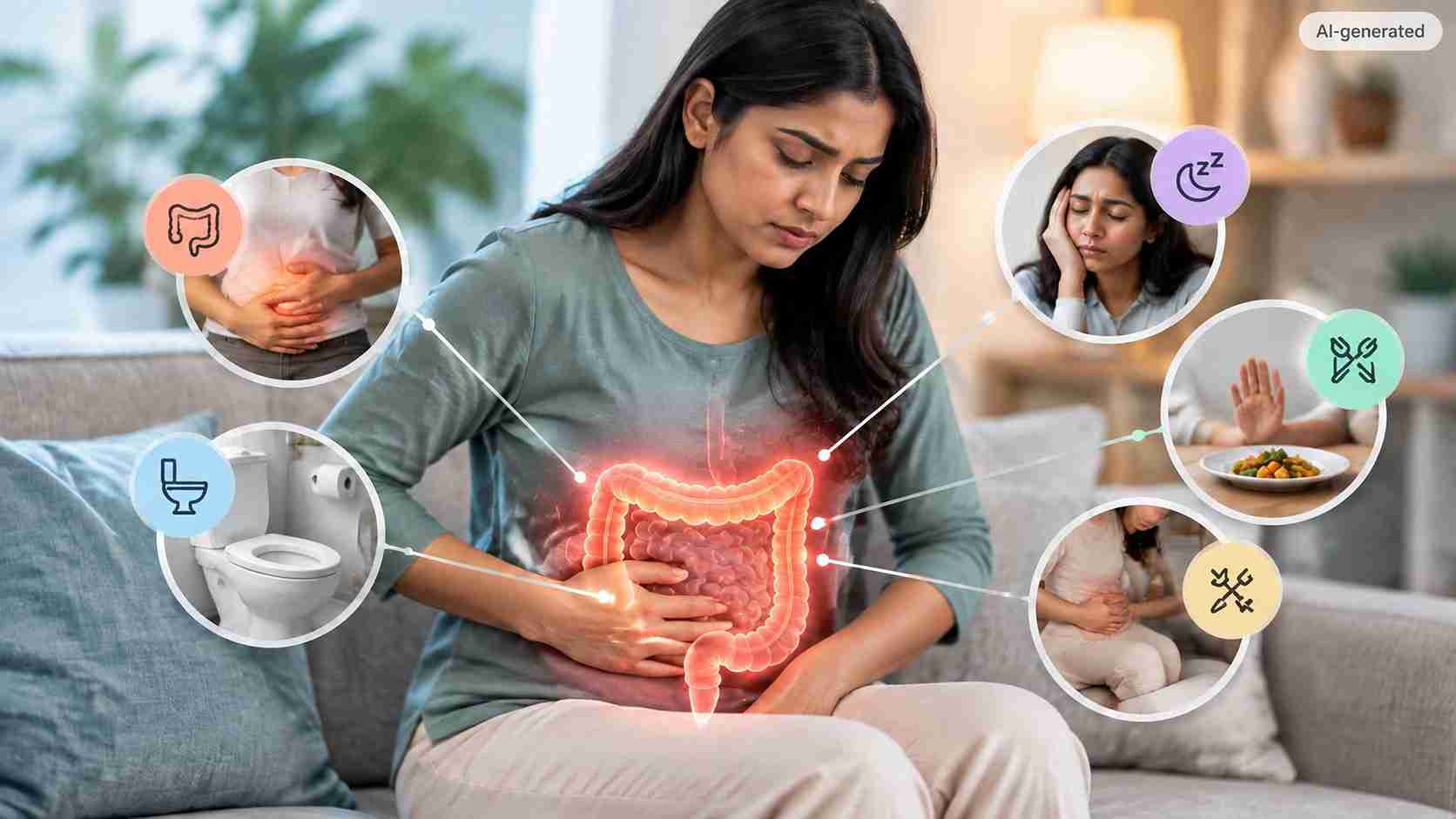
Persistent diarrhoea, blood in stool, frequent urgency to pass stool, and recurring abdominal cramps are early warning signs of ulcerative colitis. These symptoms may develop slowly and can sometimes be mistaken for common digestive problems. However, when bowel changes continue or return repeatedly, proper evaluation becomes important.
For such medical issues, recognising the symptoms early helps patients seek timely care and manage the condition better. So, in this blog we’ve covered:
- The early signs and symptoms of ulcerative colitis
- How ulcerative colitis differs from IBS and other bowel conditions
- Diagnosis, treatment approaches and when specialist support may be needed
What Is Ulcerative Colitis?
Ulcerative colitis is a chronic inflammatory bowel disease (IBD) that affects the inner lining of the colon and rectum. It causes inflammation and small ulcers, which can lead to ongoing bowel symptoms.
Unlike a temporary stomach infection, ulcerative colitis is a long-term condition that requires medical monitoring. Symptoms may improve for periods and return during active phases called flare-ups.
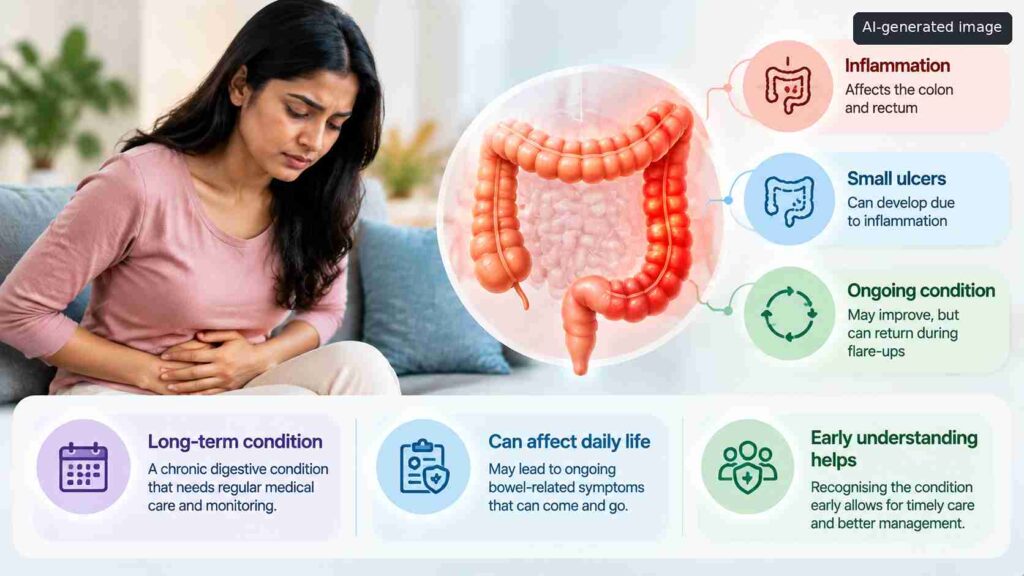
Understanding the condition and recognising warning signs early can help patients get appropriate care in time.
What Are the Early Symptoms of Ulcerative Colitis?
Early signs of ulcerative colitis may appear gradually. Some people first notice changes in bowel habits, while others experience symptoms that affect daily activities.
Common ulcerative colitis symptoms include digestive changes, fatigue and signs of ongoing inflammation.
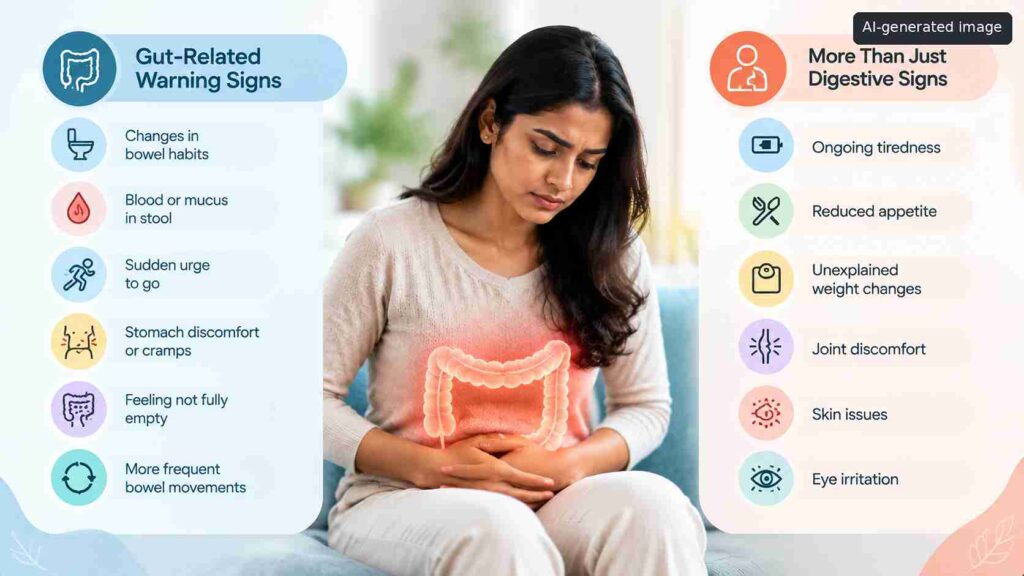
Digestive Symptoms You Shouldn’t Ignore
The common digestive symptoms include:
- Frequent diarrhoea that does not improve
- Blood or mucus in stool
- Sudden urgency to use the toilet
- Abdominal cramps or pain
- Feeling of incomplete bowel emptying
- Increased frequency of bowel movements
Persistent bowel changes should not be ignored, especially when they occur with bleeding, weight loss or worsening abdominal discomfort.
Symptoms Beyond the Gut (Fatigue, Joint Pain, Weight Loss)
Ulcerative colitis can sometimes affect areas beyond the digestive system because of the body’s inflammatory response.
Some patients may experience:
- Persistent tiredness
- Reduced appetite
- Unexplained weight loss
- Joint pain or swelling
- Skin or eye-related symptoms
These symptoms may occur alongside bowel problems or may become noticeable during active disease periods.
What Does Blood in Stool Mean With Ulcerative Colitis?
Blood in stool is a symptom that often causes concern and needs proper evaluation.
Possible causes of blood in stool include conditions such as haemorrhoids, infections, anal fissures and inflammatory bowel diseases like ulcerative colitis.
In ulcerative colitis, bleeding usually happens because inflammation damages the colon lining and causes ulcers. Blood mixed with diarrhoea, mucus, or abdominal cramps can be an important sign that requires medical attention.
Consult a specialist if blood in stool is:
- Repeated or increasing
- Associated with ongoing diarrhoea
- Accompanied by fever or abdominal pain
- Linked with weakness or unexplained weight loss
Identifying the cause of bleeding matters because treatment depends on it.
Ulcerative Colitis vs IBS: How Are They Different?
Many people confuse inflammatory bowel conditions with irritable bowel syndrome (IBS). However, ulcerative colitis and IBS differ significantly in how they affect the digestive system.
IBS can cause abdominal discomfort, bloating and changes in bowel habits. However, it does not cause inflammation or damage to the bowel lining.
Ulcerative colitis causes inflammation in the colon and may show visible changes on tests such as colonoscopy.
Key Differences in Symptoms
| Ulcerative colitis | IBS |
| Causes inflammation in the colon | Does not cause bowel inflammation |
| May cause blood in stool | Bleeding is not a typical symptom |
| Can damage the bowel lining | Does not cause ulcers |
| Requires medical monitoring | Usually managed through symptom control |
Why Getting the Right Diagnosis Matters
Similar symptoms can occur in different digestive conditions. Treating every bowel problem as IBS may delay care if inflammation is present.
A proper diagnosis helps identify the cause and allows doctors to create a suitable treatment plan.
What Causes Ulcerative Colitis?
The exact causes of ulcerative colitis are not completely understood. Research suggests that a combination of immune system changes, genetic factors and environmental influences may contribute.
Immune System and Genetic Factors
Ulcerative colitis occurs when the immune system creates an abnormal inflammatory response in the colon. People with a family history of inflammatory bowel disease may have a higher risk.
However, having a family history does not mean the condition will definitely develop.
Triggers That Can Worsen Symptoms
Certain factors may increase symptom severity or contribute to flare-ups, including:
- Stress
- Certain infections
- Some medicines
- Poor sleep
- Individual food triggers
These factors may worsen symptoms but are not considered the direct cause of ulcerative colitis.
How Is Ulcerative Colitis Diagnosed?
An accurate ulcerative colitis diagnosis depends on symptoms, medical history, and test results.
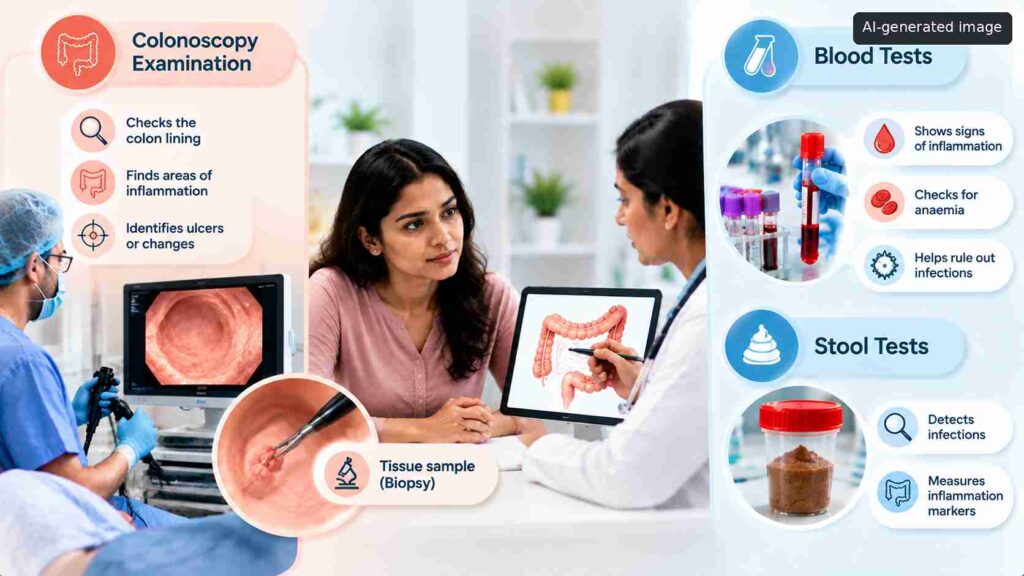
Colonoscopy and Biopsy
A colonoscopy for colitis helps doctors examine the colon's inner lining. During this procedure, a flexible camera identifies inflammation, ulcers, or other changes.
Doctors may also collect small tissue samples through a biopsy. These samples help confirm the diagnosis and rule out other conditions.
Blood and Stool Tests
Blood tests can help identify inflammation, anaemia or signs of infection. Stool tests may help detect infections and measure markers linked with bowel inflammation.
Together, these tests help doctors understand disease activity and plan suitable treatment.
What Triggers an Ulcerative Colitis Flare-Up?
An ulcerative colitis flare-up occurs when symptoms return after a period of improvement.
Triggers vary by person, but understanding your triggers can help you control symptoms better.
Foods and Habits That Trigger Flares
Some people notice worsening symptoms after:
- High-fat meals
- Excess caffeine
- Spicy foods
- Poor sleep
- High stress levels
Tracking symptoms and food habits can help identify possible triggers.
Managing Flares With Diet
No single ulcerative colitis diet suits everyone. During flare-ups, some patients may need smaller meals, adequate fluids and avoidance of foods that worsen symptoms.
Diet plans should focus on maintaining nutrition while reducing discomfort. Guidance from a healthcare professional can be useful, especially during active disease.
What is the Treatment for Ulcerative Colitis?
Treatment aims to reduce inflammation, control symptoms and maintain long-term remission.
Patients looking for ulcerative colitis treatment in Kolkata can consult specialists who evaluate disease severity, symptoms and overall health before recommending treatment.
Our approach focuses on accurate diagnosis, personalised management and regular monitoring. Patients can consult an experienced IBD specialist associated with our critical care unit in Kolkata to understand suitable treatment options.
Medication and Long-Term Management
Medicines commonly control inflammation and prevent flare-ups. The choice depends on symptom severity, the affected bowel area, and response to previous treatments.
Regular follow-ups help monitor the condition and adjust treatment when needed.
When Surgery Becomes Necessary
Most patients do not require immediate surgery. However, surgery may be considered when:
- Medicines fail to control severe symptoms
- Serious complications develop
- There is increased colon cancer risk
- The condition significantly affects quality of life
Surgery usually involves removing the affected colon and may offer a long-term solution for selected patients.
When Should You See a Doctor?
Seek medical advice if bowel symptoms continue, especially when there is blood in stool, frequent diarrhoea, unexplained weight loss, severe abdominal pain or repeated flare-ups.
Early consultation can help identify the cause and prevent complications. Timely evaluation also helps patients understand available treatment options and manage the condition more effectively. So, don’t delay; get a check-up soon if the signs impact your routine!
What People Also Ask
Can ulcerative colitis be cured permanently?
Ulcerative colitis is a chronic inflammatory bowel condition. Medicines can help control inflammation and maintain remission. Surgery to remove the colon may be considered a curative option for selected patients.
Is ulcerative colitis the same as Crohn’s disease?
No. Both conditions belong to inflammatory bowel disease, but they affect the digestive tract differently. Ulcerative colitis mainly affects the colon and rectum, while Crohn’s disease can affect different parts of the digestive system.
Can stress cause an ulcerative colitis flare-up?
Stress does not directly cause ulcerative colitis, but it may worsen symptoms or contribute to flare-ups in some patients.
Is ulcerative colitis linked to colon cancer risk?
Long-term ulcerative colitis may increase colon cancer risk in some patients. Regular monitoring and recommended screening help detect changes early.
What foods should be completely avoided with ulcerative colitis?
There is no fixed list of foods that everyone must avoid. Food triggers vary, so identifying personal triggers with medical guidance is usually more helpful.