

Oral Cancer Treatment in Kolkata
Home / Treatments / Maxillofacial Surgery / Oral cancer surgery
Quick Answers
Can oral cancer be treated?
Yes. Options include surgery, radiation, chemotherapy, immunotherapy, or combined approaches for suitable patients.
Is surgery always needed?
No. Management varies according to tumour characteristics, stage, location, spread, and individual circumstances.
Can oral cancer surgery remove the tumour completely?
Surgery aims to remove the tumour completely with appropriate margins, followed by further treatment when needed.
When to see a specialist?
Persistent ulcers, lumps, bleeding, swallowing problems, or unexplained changes warrant prompt specialist evaluation.
What Is Oral Cancer?
A type of abnormal cell growth that forms in the tissues of the mouth or the oropharynx, the part of the throat located behind the mouth.
Key points:
- Tumours may develop in hidden areas.
- Routine screenings can detect changes early.
- Often develops silently from lesser-known causes.
- OSCC causes over 90% of cases.
Types of Oral Cancer
Squamous Cell Carcinoma (OSCC)
The most common type, beginning in mouth-lining squamous cells.
Verrucous Carcinoma
A rare, slow-growing tumour that resembles warts and spreads only locally.
Minor Salivary Gland Carcinomas
Cancers developing in small saliva-producing glands within the mouth.
Mucosal Melanoma
A rare, aggressive cancer arising from pigment-producing oral cells.
Sarcoma
A rare cancer affecting oral connective tissues, including bone.
Lymphoma
Cancer of lymph tissue affecting tonsils or tongue base.
Basal Cell Carcinoma
Skin cancer affecting the outer lip, often linked to sun exposure.
Symptoms of Oral Cancer
Common Symptoms
- Sores lasting over two weeks
- White or red mouth patches
- Unexplained lumps or thickening
- Difficulty chewing or swallowing
- Restricted jaw or tongue movement
- Speech or voice changes
- Unexplained loose teeth
Red Flags
- Persistent mouth or facial numbness
- Growing lump in neck
- Severe restricted mouth opening
- Persistent severe facial pain
- Unintentional weight loss
Why Choose Samaritan Medical Surgical & Critical Care?
At Samaritan Medical Surgical & Critical Care, we provide comprehensive healthcare solutions as per your needs. With a team of expert professionals, we focus on delivering compassionate, patient-centred care for optimal well-being.

NABH Certified
Accredited by NABH, ensuring the highest standards of healthcare quality and patient safety.

Surgical Excellence
Our skilled surgeons offer precision care for a wide range of surgical procedures.

Critical Care Support
Providing round-the-clock critical care with advanced equipment and expert medical teams.
Our Doctors
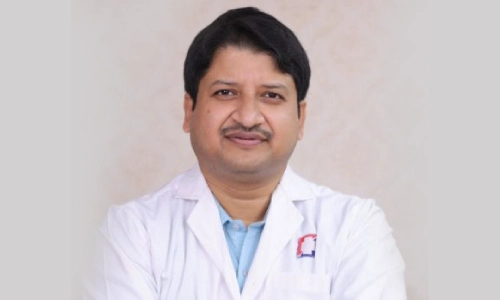
DR. SOMAK DAS
Qualifications: MBBS, MS(GEN.SURG.) DNB(GASTRO.SURG), MCH
Specialty: GASTRO SURGEON
Fees: Rs. 1,200.00
Available Days: MON, WED & FRI
Available Time: BY APPOINTMENT

DR. D. K. SARKAR
Qualifications: MBBSMS, DNB FRCS, (GOLD), FFSTED
Specialty: GENERAL SURGEON
Fees: Rs. 1,550.00
Available Days: MON, WED,THU & SAT
Available Time: MON WED,THU-16:00 & SAT-15:00

DR. RUDRADEEP BANERJEE
Qualifications: MS.(GEN.SURG), D.N. BMRCS
Specialty: GENERAL SURGEON
Fees: Rs. 1,000.00
Available Days: BY APPOINTMENT
Available Time: BY APPOINTMENT
DR. RANAJOY DUTTA
Qualifications: MBBS, M.S D.N.B
Specialty: GENERAL SURGEON
Fees: Rs. 1,200.00
Available Days: WED, SAT
Available Time: 17:00 - 18:00 PM
DR. ACHINTA KR DAS
Qualifications: MBBS, MS
Specialty: GENERAL SURGEON
Fees: Rs. 1,200.00
Available Days: BY APPOINTMENT
Available Time:BY APPOINTMENT
DR. SAMRIDDHI PODDAR
Qualifications: MBBS(HONS), MS(SURGERY), WBUHS NRSMCH
Specialty: GENERAL SURGEON
Fees: Rs. 1,000.00
Available Days: TUE & WED
Available Time: TUE 16:30-17:30 & WED 18:00-19:00
DR . B . B . BARAI
Qualifications: MBBS, DNB, PG DGM, CCEBDM
Specialty: GENERAL SURGEON
Fees: Rs. 1,200.00
Available Days: MON /FRIDAY
Available Time: 11:00-13:00
DR. SAPTARSHI KUNDU
Qualifications: MBBS, MS (GEN SUR)
Specialty: GENERAL SURGEON
Fees: Rs. 700.00
Available Days: BY APPOINTMENT
Available Time: BY APPOINTMENT
DR. MAINAK PAL
Qualifications: MBBS, MS, FMAS(GEN.SURG)
Specialty: GENERAL SURGEON
Fees: Rs. 1,000.00
Available Days: MON -FRI
Available Time: 17:00-18:00
DR. SUKANTA ROY
Qualifications: MBBS, MS(GASTO)
Specialty: GASTRO SURGEON
Fees: Rs. 1,000.00
Available Days: BY APPOINTMENT
Available Time: BY APPOINTMENT

DR. UDDIPTA DUTTA
Specialty: GASTRO SURGEON
Fees: Rs. 900.00
Available Days: BY APPOINTMENT
Available Time: BY APPOINTMENT
Hear From Our Happy Patients
Very good nursing home. All staff good.
A really good hospital with good critical and surgical care. Staffs are very cooperative..
Here the service are very good। Very good hospital
very good nursing home
Nurse didi gulo khub bhalo all staff bhalo 100.90% bhalo
Are good nursing hom varehalp pol anepplamkontak stap vare Good
Good experience All facilities is good
Best hospital Very good facility
Doctors, Nursing staff, other staff are very good, everything is good, only few accommodation issue is not adjustable.
Liked the place...staffs...sisters all helpful...and special thanks to my doctor..Doctor Sukanta Ray...he is next to God to me
Liked the place...staffs...sisters all helpful...and special thanks to my doctor..Doctor Sukanta Ray...he is next to God to me
Individuals at Higher Risk for Oral Cancer
| Groups | Factors |
|---|---|
| Lifestyle | Tobacco use, alcohol consumption, betel quid and gutka |
| Infection | High-risk HPV strains, especially HPV-16 |
| Demographics | Age over 45, male sex |
| Environmental | Prolonged UV exposure, particularly affecting lips |
| Immune and Genetic | Weakened immunity, poor diet, inherited genetic syndromes |
| Previous oral cancer | Recurrence risk |
| Previous radiation | Treatment-related risk |
Causes of Oral Cancer
Tobacco use
Heavy alcohol consumption
High-risk HPV infection
Prolonged ultraviolet exposure
Betel nut and paan chewing
Poor oral hygiene
Poor diet and nutrition
Weakened immune system
Oral Cancer Patterns, Diagnosis & Treatment Approach
| Pattern | Condition | Initial Approach | Advanced Treatment Needed? | Expected Outcome |
|---|---|---|---|---|
| White patch | Potentially malignant | Oral examination | Biopsy when indicated | Pathology-guided care |
| Red patch | Potentially malignant | Specialist assessment | Biopsy when indicated | Pathology-guided care |
| Persistent ulcer | Suspected oral lesion | Clinical examination | Biopsy confirmation | Cause-specific treatment |
| Oral mass | Suspected tumour | Specialist assessment | Cancer staging | Treatment planning |
| Neck lump | Possible nodal disease | Clinical assessment | Imaging and biopsy | Stage-specific treatment |
| Jaw involvement | Advanced local disease | Imaging assessment | Bone resection possible | Disease control |
| Confirmed cancer | Oral malignancy | Staging assessment | Multimodal treatment | Individualised outcome |
How Is Oral Cancer Evaluated?
Visual inspection
Palpation of mouth and neck
Autofluorescence light screening
Toluidine blue dye screening
Tissue biopsy
Cytology through scraping or brushing
CT scans
MRI scans
PET/CT scans
Endoscopy of throat and larynx
Oral Cancer Treatment: What to Expect?
Before
- Complete a thorough dental evaluation.
- Complete cancer staging with imaging.
- Stop smoking and reduce alcohol.
During
- Remove the tumour through surgery.
- Receive radiation or chemotherapy afterwards.
- Maintain gentle oral hygiene.
- Manage mouth sores and dryness.
After
- Continue speech and swallowing rehabilitation.
- Attend regular follow-up examinations and scans.
- Maintain daily dental care.
- Schedule quarterly dental checkups.
Benefits of Oral Cancer Treatment
- Removes visible cancer
- Controls local disease
- Addresses affected lymph nodes
- Supports functional recovery
- Enables reconstruction when needed
- May reduce recurrence risk
- Supports long-term surveillance
- Addresses treatment-related complications
What Affects Treatment Outcome?
| Outcome | Rate | Stage |
|---|---|---|
| Overall 5-Year Survival | 50%–85% | All Stages |
| Early-Stage Survival | 70%–90% | Stages 1–2 |
| Advanced-Stage Survival | 20%–50% | Stages 3–4 |
Recovery After Oral Cancer Treatment
Days 0–7: Hospital monitoring, pain control, nutritional support.
Weeks 1–4: Gradually resume soft foods and activities.
Weeks 1–4: Continue wound care and oral hygiene.
Months 1–6+: Continue speech, swallowing, jaw rehabilitation.
After surgery: Radiation or chemotherapy may follow.
Long-term: Continue follow-ups and monitor for recurrence.
Complications if Oral Cancer Remains Untreated
- Severe pain in the mouth, jaw, and neck
- Dysphagia (difficulty swallowing) and painful chewing
- Speech and articulation difficulties
- Chronic bleeding, tooth loss, and infections
- Jawbone damage from tissue destruction
- Lymph node involvement in the neck
- Metastasis to distant organs
- Lung and liver metastasis
- Lower survival rates with advanced disease
- Severe weight loss and malnutrition
- Physical weakness from systemic decline
- Reduced ability to tolerate treatment
Post-Treatment Daily Management & Prevention Tips
Management Tips
- Brush gently with fluoride toothpaste twice.
- Use alcohol-free saltwater or baking-soda rinses.
- Sip water frequently throughout each day.
- Choose soft, moist, nutritious foods.
Prevention Tips
- Avoid tobacco in every form.
- Limit or avoid alcohol consumption completely.
- Protect lips from prolonged sun exposure.
- Attend regular oncology and dental follow-ups.
Frequently Asked Questions
Is oral cancer really extremely rare?
No. It affects more people than commonly assumed and causes thousands of deaths worldwide annually, while routine dental examinations can identify concerning changes early.
Is a recurring mouth sore just a normal ulcer?
No. Don't dismiss repeated lesions in one location automatically. Lesions that persist beyond two to three weeks require specialist assessment to rule out serious changes.
Does treatment failure mean oral cancer has no cure?
No. Poor outcomes are often linked to delayed diagnosis rather than ineffective therapies. Targeted treatments, radiation, and improved surgical techniques can provide additional options.
Can good oral hygiene completely prevent oral cancer?
No. Regular brushing and flossing support healthier tissues but cannot eliminate every risk. Avoiding tobacco, maintaining a balanced diet, and addressing contributing factors remain important.
Does cured oral cancer never come back?
No. Previous treatment does not eliminate future risk completely. Recurrence or secondary tumours may occur, making continued follow-up appointments and regular examinations important.