

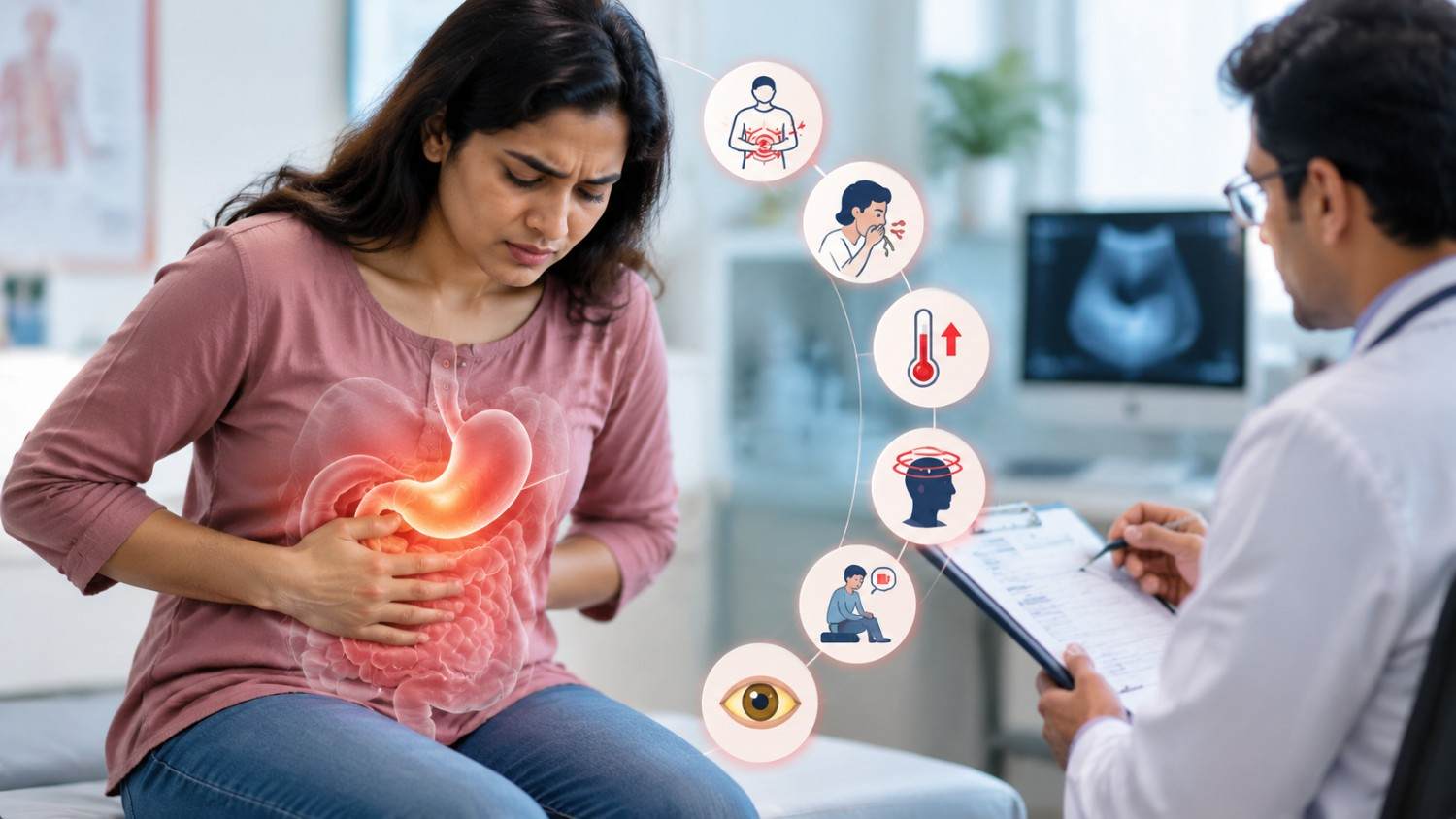
Vomiting fresh or coffee-ground-like blood, black tarry stools, dizziness, abdominal discomfort and unusual tiredness can warn of bleeding in the digestive tract. Bright-red or dark-red blood in the stool may also occur. Anyone noticing these signs needs urgent medical assessment and may require immediate treatment for GI bleeding. The seriousness of the condition cannot be judged by discomfort alone.
This blog explains:
- the signs that need urgent attention;
- common causes of stomach and intestinal bleeding; and
- how doctors locate and treat the source.
What Is Internal Bleeding in the Stomach?
Internal stomach bleeding occurs when an injured area or an abnormal blood vessel releases blood into the digestive tract. The source may be in the oesophagus, stomach or duodenum—the first part of the small intestine.
The gastrointestinal, or GI, tract also includes the rest of the small intestine, colon, rectum, and anus. Bleeding can begin anywhere along this route. What people commonly call internal bleeding in stomach symptoms may, therefore, come from another part of the GI tract.
The main gastrointestinal bleeding causes include ulcers, gastritis, enlarged veins, forceful vomiting, certain medicines and abnormal growths. Some episodes begin suddenly. Others involve slow blood loss that remains hidden until anaemia develops.
Upper GI Bleed vs Lower GI Bleed
Understanding an upper GI bleed vs lower GI bleed helps explain why the appearance of blood may vary.
| Type | Area affected | Common visible signs |
| Upper GI bleeding | Oesophagus, stomach or duodenum | Vomiting blood, coffee-ground-like vomit or black tarry stools |
| Lower GI bleeding | Small intestine, colon, rectum or anus | Bright-red or dark-red blood in or around the stool |
7 Warning Signs You Shouldn’t Ignore
The signs of GI bleeding depend on where the blood loss begins, how quickly it occurs and how much blood is lost. A person may have a clear visible sign or only weakness and breathlessness.
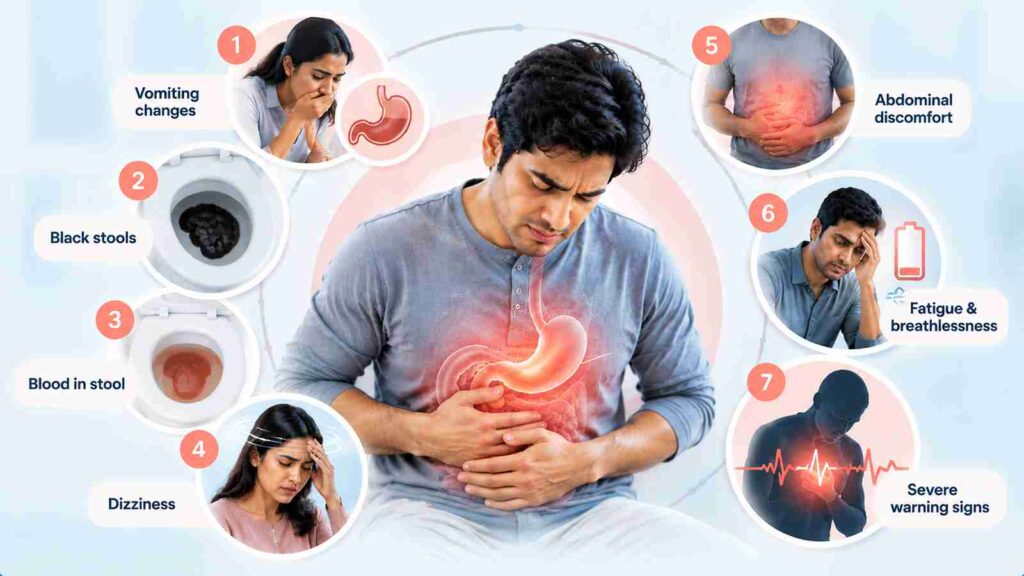
1. Vomiting Blood (Haematemesis)
Blood in vomit may appear bright red or resemble dark coffee grounds. A coffee-ground appearance usually means the blood has remained in the stomach long enough to be partly digested.
Common causes of vomiting blood (hematemesis) include peptic ulcers, gastritis, enlarged veins linked to liver disease and a tear caused by repeated vomiting. Vomiting blood always needs urgent medical attention, even when the amount appears small.
2. Black or Tarry Stools (Melena)
Melena is dark, sticky stool that may have a strong, unpleasant smell. Black stool (melena) often results from blood from the upper digestive tract that has been digested as it moves through the intestine.
Iron tablets, bismuth medicines and some dark foods can also make stools appear black. However, you should not dismiss a new black, tar-like change without medical advice.
3. Red or Maroon Blood in the Stool
Bright-red blood often comes from the lower bowel, rectum or anus. Dark-red or maroon stool may indicate bleeding higher in the colon or small intestine.
The possible causes of blood in stool range from piles and anal fissures to diverticular disease, inflammatory bowel disease, polyps and colorectal tumours. The colour alone cannot identify the cause.
4. Unexplained Dizziness or Fainting
Blood loss can lower the amount of oxygen reaching the brain. This may cause light-headedness, dizziness, blurred vision or fainting, particularly after standing.
Dizziness combined with vomiting blood, black stool or a rapid heartbeat may signal significant blood loss. The person should not drive to the hospital. An ambulance or help from another adult is safer.
5. Persistent Abdominal Discomfort
A bleeding ulcer or gastritis may cause burning, tenderness or discomfort in the upper abdomen. The feeling may worsen when the stomach is empty or sometimes after eating.
Yet GI bleeding can also be painless. The absence of stomach discomfort does not make vomiting blood or black stools less serious.
6. Unusual Fatigue and Breathlessness
Small amounts of blood may be lost gradually without being visible. Over time, this can cause anaemia, leading to tiredness, pale skin, weakness, headaches or breathlessness during routine activity.
Assess recurring fatigue, especially when accompanied by dark stools, unexplained weight loss, or reduced appetite.
7. Signs of Severe Blood Loss or Shock
Heavy bleeding can cause:
- a fast heartbeat;
- cold or sweaty skin;
- rapid breathing;
- confusion;
- severe weakness;
- very little urine; or
- loss of consciousness.
These may be signs of shock, which is life-threatening. The NIDDK advises immediate medical help for acute GI bleeding or symptoms of shock.
What Causes Internal Bleeding in the Stomach?
Several conditions can injure the lining of the upper digestive tract or weaken its blood vessels. Common gastrointestinal bleeding causes include:
- Peptic ulcers: Open sores in the stomach or duodenum, often associated with Helicobacter pylori infection or regular NSAID use.
- Gastritis: Irritation or injury affecting the stomach lining.
- NSAID use: Medicines such as aspirin, ibuprofen and naproxen can increase the risk, especially when used frequently.
- Blood-thinning medicines: These may worsen bleeding from an existing problem.
- Oesophageal or gastric varices: Enlarged veins, usually associated with advanced liver disease.
- Mallory–Weiss tear: A tear near the lower oesophagus after forceful or repeated vomiting.
- Abnormal growths: Polyps and tumours may sometimes bleed.
Typical stomach ulcer bleeding symptoms include black stools, coffee-ground-like vomit, tiredness and upper abdominal discomfort. Some bleeding ulcers cause no discomfort.
Do not stop medicines without medical guidance. Suddenly stopping aspirin, anticoagulants, or other prescribed treatment may create a different health risk.
When Should You See a Doctor Immediately?
Go to an emergency department immediately for:
- vomiting fresh blood or coffee-ground-like material;
- black, sticky stools;
- heavy or repeated blood in the stool;
- fainting, confusion or severe weakness;
- fast heartbeat with cold or pale skin;
- breathing difficulty; or
- abdominal discomfort accompanied by visible bleeding.
Even a small amount of red blood deserves medical review, even if the person otherwise feels well. Repeated minor blood loss can cause anaemia and may indicate a condition that needs treatment.
Do not eat, drink or take pain-relief medicines while waiting for urgent advice unless the medical team provides instructions.
How Is GI Bleeding Diagnosed and Treated?
When a patient reaches Samaritan Hospital, we first assess blood pressure, heart rate, breathing and the severity of blood loss. We stabilise the patient before searching for the cause. Intravenous fluids or a transfusion may be needed in severe cases.
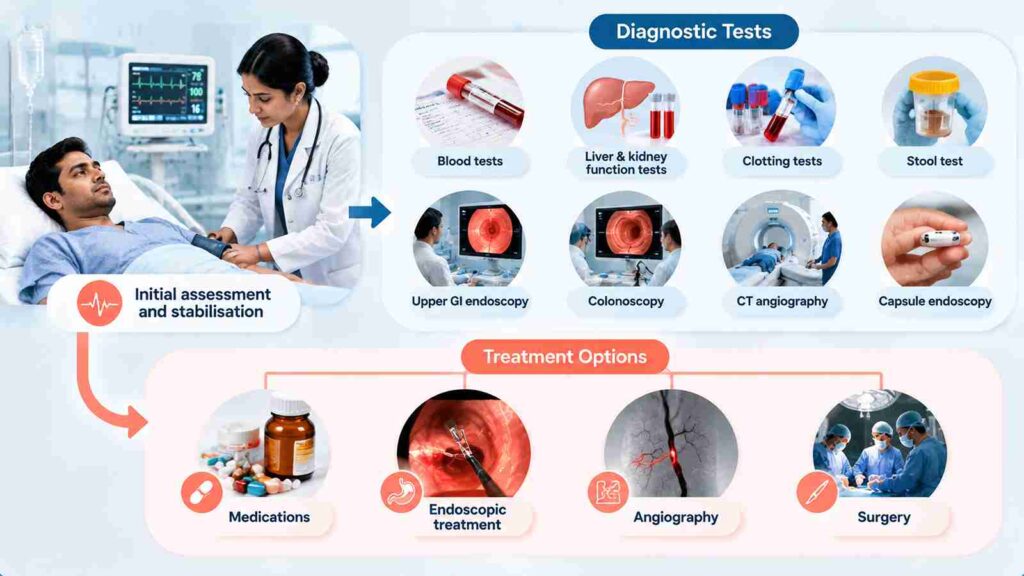
If you’re considering GI bleeding treatment in Kolkata, always remember that the course of action depends on the location, cause and rate of bleeding. It may involve medication, an endoscopic procedure, angiography or surgery.
Diagnostic Tests: Endoscopy, Colonoscopy and Blood Work
The medical team may recommend:
- a complete blood count to check haemoglobin and anaemia;
- kidney and liver tests;
- clotting tests;
- stool testing for hidden blood;
- upper GI endoscopy;
- colonoscopy;
- CT angiography; or
- capsule endoscopy for selected small-bowel cases.
An endoscopy for GI bleeding uses a narrow, flexible camera to examine the oesophagus, stomach and duodenum. It can locate ulcers, enlarged veins and other possible sources. In many cases, the doctor can diagnose and control bleeding during the same procedure.
Treatment Options—Medication, Endoscopic Therapy and Surgery
Treatment may include:
- acid-reducing medicines for ulcer-related bleeding;
- antibiotics when an H. pylori infection is confirmed;
- adjustment of blood-thinning medicines under supervision;
- an injection, clip, band or heat treatment applied through an endoscope;
- angiography to close a bleeding blood vessel; or
- surgery when bleeding is severe or continues despite other treatment.
Samaritan Hospital’s gastroenterology services include upper GI endoscopy and colonoscopy for identifying bleeding sources, with endoscopic treatment available where appropriate.
How to Prevent Internal Stomach Bleeding
Not every episode can be prevented, but several steps can reduce the risk:
- Avoid frequent self-medication with aspirin, ibuprofen or other NSAIDs.
- Ask whether a stomach-protecting medicine is needed when long-term NSAID use is unavoidable.
- Take blood thinners exactly as prescribed.
- Complete treatment for confirmed H. pylori infection.
- Limit alcohol and avoid smoking.
- Follow the treatment plan for ulcers, liver disease or inflammatory bowel disease.
- Report recurring acidity, black stools or unexplained anaemia.
- Attend follow-up appointments after a previous GI bleed.
Never combine several pain-relief medicines without checking their ingredients.
When to Seek Expert Care
Vomiting blood, black tarry stools, red blood in the stool, dizziness, and unusual tiredness should never be ignored. Even slow, hidden blood loss can eventually cause anaemia and weakness.
At Samaritan Hospital, we assess the severity of bleeding, locate its source, and plan treatment based on the underlying cause. Visit our critical care unit in Kolkata without any delay for a consultation regarding GI bleeding treatment if you’re experiencing the symptoms more often.
What People Also Ask
Can internal stomach bleeding heal on its own?
Minor bleeding may sometimes stop temporarily, but the underlying ulcer, injured blood vessel or other cause may remain. Medical assessment is necessary because bleeding can restart or worsen without warning.
What does blood in the stool from GI bleeding look like?
It may appear as black, sticky stool, dark-red or maroon stool, or bright-red blood. Iron supplements, bismuth medicines, and certain foods can also change stool colour, so you may need examination and testing.
Is stomach bleeding always an emergency?
Visible vomiting of blood, black tarry stools, fainting, confusion or signs of shock are emergencies. Small or occasional amounts of blood still require prompt medical assessment, even without other symptoms.
How long does recovery take after GI bleeding treatment?
Recovery depends on the cause, amount of blood lost, and treatment required. Bleeding may be controlled quickly, while an ulcer or anaemia may take several weeks to heal. Follow-up testing helps confirm recovery.
Can stress or acidity cause internal bleeding in the stomach?
Stress and acidity alone do not usually cause major bleeding. However, severe physical illness can contribute to stress-related ulcers, while chronic acid exposure may injure the oesophagus. Ulcers, medicines and other medical conditions are more common causes.