

Bladder Cancer Treatment in Kolkata
Home / Treatments / Urology / Bladder Cancer
Quick Answers
Can bladder cancer develop without symptoms?
Yes. Some cases stay silent at first, with bleeding as an early warning sign.
Is blood in urine always bladder cancer?
No. Infections, stones, prostate problems, and other urinary conditions can cause it.
Does smoking increase bladder cancer risk?
Yes. Toxic substances from tobacco enter urine, potentially damaging the bladder lining.
Can bladder cancer come back after treatment?
Yes. Recurrence is possible, especially with non-muscle-invasive disease, so it requires consistent follow-up.
What is Bladder Cancer?
A condition in which abnormal bladder cells multiply uncontrollably, forming a tumour. It most often presents with blood in the urine (hematuria), along with symptoms like pain or frequent urination. The most common type is urothelial carcinoma, and treatment typically includes surgery, chemotherapy, or immunotherapy.
Key points:
9th most common cancer worldwide
6th most common among men
13th leading cause of cancer death globally
Over 90% five-year survival when detected early in India
Types of Bladder Cancer
Urothelial carcinoma
Most common type, accounting for about 90% of cases.
Squamous cell carcinoma
Rare cancer linked to chronic bladder irritation or infections.
Adenocarcinoma
Very rare cancer arising from mucus-secreting bladder cells.
Small cell carcinoma
Extremely rare, fast-growing cancer from neuroendocrine cells.
Sarcoma
A very rare cancer that develops in muscle or connective tissue.
Non-muscle-invasive bladder cancer
The tumour remains within the bladder lining or connective tissue.
Muscle-invasive bladder cancer
The tumour reaches the bladder muscle and may spread.
Common Symptoms of Bladder Cancer
(Hematuria) blood in urine
- Blood in urine may come and go
- Frequent urination occurs more than usual
- Sudden urgency occurs even with bladder unfilled
- Painful urination may resemble a UTI
- Weak urine flow or difficulty urinating
Red Flags
- Visible blood in urine requires prompt testing
- Recurring bleeding should never be ignored
- UTI symptoms persist despite antibiotic treatment
- Persistent lower back or pelvic pain
- Weight loss, fatigue, incomplete bladder emptying
Why Choose Samaritan Medical Surgical & Critical Care?
At Samaritan Medical Surgical & Critical Care, we provide comprehensive healthcare solutions as per your needs. With a team of expert professionals, we focus on delivering compassionate, patient-centred care for optimal well-being.

NABH Certified
Accredited by NABH, ensuring the highest standards of healthcare quality and patient safety.

Surgical Excellence
Our skilled surgeons offer precision care for a wide range of surgical procedures.

Critical Care Support
Providing round-the-clock critical care with advanced equipment and expert medical teams.
Our Doctors

DR. AMLAN CHAKRABORTY
Qualifications: MBBS, MS, FRCS (Urology)
Specialty: Urology
Experience: 23 years
Fees: Rs. 1,700.00
Available Days: TUE,THURS & SAT(BY APPOINTMENT)
Available Time: 12:00 - 13:00 (BY APPOINTMENT)

DR. PRAMOD KUMAR SHARMA
Qualifications: MBBS,MS
Specialty: Urology
Experience: 21 years
Fees: Rs. 1,200.00
Available Days: BY APPOINTMENT
Available Time: By Appointment

DR. NILANJAN MITRA
Qualifications: MBBS, MS (Gen. Surg.), MCh (Urology)
Specialty: Urology
Experience: 19 years
Fees: Rs. 1,200.00
Available Days:TUE & THURS
Available Time: 8:30 - 10:30

DR. SMARANJIT CHATTERJEE
Qualifications: MBBS, MS, DNB, Mch
Specialty: Urology
Experience: 18 years
Fees: Rs. 1,200.00
Available Days: BY APPOINTMENT
Available Time: BY APPOINTMENT

DR. SOUVIK CHATTERJEE
Qualifications: MBBS, MS (Gen. Surg.), DNB, MCh (Urology)
Specialty: Urology
Experience: 16 years
Fees: Rs. 1,000.00
Available Days: WED, SAT
Available Time: WED: 15:00 - 16:00, SAT: 09:30 - 10:30

DR. KAKOLI CHOWDHURY
Qualifications: MBBS, MD(RADIO THERAPHY)
Specialty: ONCO MEDICINE
Experience: 12 years
Fees: Rs. 1,100.00
Available Days:THU & SAT
Available Time: 13:30-15:00

DR. DEBASISH CHATTERJEE
Qualifications: MBBS, MS - GENERAL SURGERY
Specialty: GENERAL AND ONCO SURGEON
Fees: Rs. 1,200.00
Available Days: THURSDAY & SAT
Available Time: 17:00-18:00

DR. SUBHOJIT MALAKAR
Qualifications: MBBS, MS (Gen. Surg.), DNB, MCh (Urology)
Specialty: Urology
Experience: 15 years
Fees: Rs. 1,000.00
Available Days: BY APPOINTMENT
Available Time: BY APPOINTMENT
DR. SUNIRMAL CHOWDHURY
Qualifications: MBBS, MS, IPGMER (HOD)
Specialty: Urology
Experience: 20 years
Fees: Rs. 1,200.00
Available Days: BY APPOINTMENT
Available Time: By Appointment
DR. RUDRADIP BANERJEE
Qualifications: MS.(GEN.SURG), D.N.B(GEN.SURG) MRCS
Specialty: GENERAL AND ONCO SURGEON
Experience: 8 years
Fees: Rs. 1,000.00
Available Days: BY APPOINTMENT
Available Time: BY APPOINTMENT
DR. PRATIJYOTI GHOSH
Qualifications: MBBS, DNB, CCEPC
Specialty: GENERAL AND ONCO SURGEON
Fees: Rs. 900.00
Available Days: BY APPOINTMENT
Available Time: BY APPOINTMENT
Hear From Our Happy Patients
Very good nursing home.all staff best
I had Laproscopic surgery of gallbladder stone on 23/6/26 & Discharge on 25/6/26. I had wonderful experience in nursing home, Very cooperative staff. Particularly Ms Aditi (Head Sister charge) , she has cooperated very well with Smily face. OT is well equipped with high quality instruments, Dr Mukesh Karia has done wonderful operations.
Very good nursing home
Very Supportive Staff with 24*7 support. Along with Neat and Clean cloths and bed.
Great treatment and recuperation. Doctors nurses and support staff mase it feel like home .
Thakuuuu Samaritan nursing home........and Dr.babuuuu khubbbb valooooo..apnader sakoler babohar khub valo r porisheba khubbb khubbb valo sakol k. Ank ank ank dhannobad ......
Very good nursing home
Very good Treatment here and also staff behaviour has very good
I have admitted my father here twice under Dr Arindam Dutta sir for the DJ stenting and RIRS (Kidney stone) .The entire team of Samaritan was fantastic.Specially Ms Aditi Nandi was so humble and cooperative .She attended us every time and Given all facilities.Through out the admitting time and discharge,all the sisters,brothers,Housekeeping ,ward boy everyone was so polite and well mannered.
Individuals at Highest Risk for Bladder Cancer
People at highest risk for bladder cancer include adults over 55, males, and tobacco smokers. While the exact cause is not always known, major risk factors and contributing factors include the following.
| Group | Factors |
|---|---|
| Older Adults | Most diagnoses occur after age 55; average age is around 70–73 years. |
| Men | Lifetime risk is roughly 1 in 28, compared with 1 in 91 for women. |
| Smokers | Tobacco causes about half of cases; smokers face 2–3 times higher risk. |
| Chemical-Exposed Workers | Rubber, leather, dye, paint, and textile workers face higher exposure risks. |
| Chronic Bladder Issues | Long-term catheter use, repeated infections, or bladder stones increase risk. |
| Family History | Having a parent, sibling, or child affected doubles statistical risk. |
| Past Cancer Treatments | Pelvic radiation or cyclophosphamide exposure increases bladder cancer risk. |
Stages Of Bladder Cancer
Stage 0 and Stage I — Non-Muscle-Invasive
Cancer remains limited to lining or underlying connective tissue.
Stage II — Muscle-Invasive
Cancer has invaded the bladder’s muscular wall layer.
Stage III — Locally Advanced
Cancer spreads into surrounding tissues, reproductive organs, or lymph nodes.
Stage IV — Metastatic
Cancer spreads beyond the pelvis to distant organs or lymph nodes.
Bladder Cancer Patterns, Diagnosis & Treatment Approach
| Pattern | Condition | Initial Approach | When Advanced Treatment Is Needed | Expected Outcome |
|---|---|---|---|---|
| Blood in urine | Possible malignancy | Urine testing, imaging and urological evaluation | Abnormal imaging or cystoscopy findings | Outcome depends on disease stage |
| Tumour identified | Confirmed malignancy | Cystoscopy and tumour assessment | Tissue diagnosis or staging required | Outcome depends on tumour characteristics |
| Superficial tumour | Non-muscle-invasive disease | TURBT with appropriate further treatment | Recurrence, high-risk disease or persistent tumour | Bladder preservation may be possible |
| Muscle invasion identified | Muscle-invasive disease | Staging and multidisciplinary treatment planning | Radical surgery or combined treatment | Outcome depends on stage and response |
| Spread beyond bladder | Advanced or metastatic disease | Staging and systemic treatment planning | Distant or extensive disease | Outcome depends on spread and treatment response |
Procedures & Recovery Time: What to Expect
Minimally Invasive Procedures
- Cystoscopy evaluates the bladder
- TURBT removes visible bladder tumours
- Small instruments enter through the urethra
- Hospital stay may remain brief
Surgical
- Partial cystectomy removes selected bladder
- Radical cystectomy removes the bladder
- Urinary diversion restores urine drainage
- Robotic approaches may reduce invasiveness
Non-Surgical
- Intravesical therapy treats bladder lining
- Systemic medicines treat advanced disease
- Radiation may treat selected cancers
- Treatment depends on cancer stage
Recovery & Results Timeline
First 1–2 weeks: Initial recovery may occur
2–6 weeks: Light activities may resume
6–12+ weeks: Surgical healing continues
3–6 months: Recovery may progress further
Available Diagnosis & Tests
Initial Assessments
- Medical history and symptom review
- Smoking and exposure history
- Physical examination
- Assessment of urinary symptoms
Laboratory and Simple Tests
- Urinalysis
- Urine culture
- Urine cytology
- Kidney function tests
Advanced and Specialised Tests
- Cystoscopy
- TURBT
- CT scans
- MRI
- PET imaging
Available Treatment Options
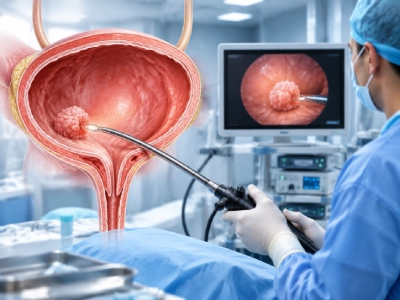
Non-Muscle-Invasive Bladder Cancer
- TURBT
- Intravesical Therapy
- BCG Therapy
- Intravesical Chemotherapy
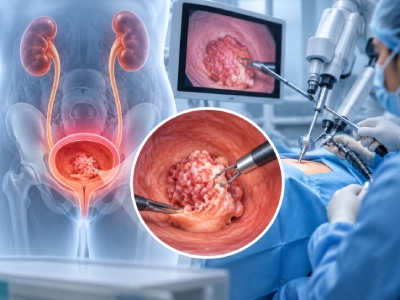
Muscle-Invasive Bladder Cancer
- Radical Cystectomy
- Partial Cystectomy
- Bladder Preservation (Trimodal Therapy)
- Systemic Chemotherapy
- Pelvic Lymph-Node Dissection
- Urinary Diversion
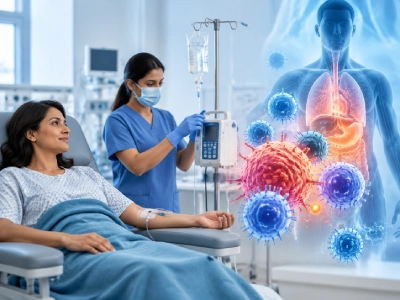
Systemic and Advanced Therapies
- Immunotherapy
- Targeted Therapy
- Antibody-Drug Conjugates (ADCs)
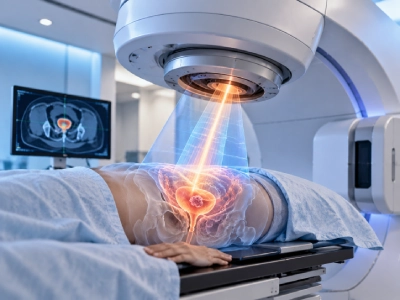
Radiation Treatments
- External Beam Radiation Therapy
- Chemoradiation
Benefits of Bladder Cancer Treatment
- Removes visible tumours
- Reduces progression risk
- Controls recurrent tumours
- May preserve bladder function
- Treats muscle-invasive disease
- Addresses disease beyond bladder
- Reduces urinary symptoms
- Supports long-term disease control
- Enables structured cancer surveillance
- Improves treatment outcomes
Success Rates for Treatment in India
Early-stage treatment success in India exceeds 90% and may reach 100% when detected at the earliest non-muscle-invasive stages
| Stage | Typical Treatment | Reported Outcome / Survival |
|---|---|---|
| 0–1 | TURBT + BCG | 5-year survival: 70–95% |
| 2–3 | Surgery + chemotherapy | Outcomes vary with muscle invasion |
| 4 | Systemic, targeted therapy, or immunotherapy | Generally not curable; disease control possible |
Complications if Left Untreated
- Progressive tumour growth
- Muscle invasion may develop
- Recurrent bleeding may occur
- Blood clots may obstruct urination
- Urinary obstruction may develop
- Reduced kidney function
- Cancer may spread beyond bladder
- Treatment options may become limited
- Severe flank or lower-back pain
- Lung metastases causing breathing problems
- Bone metastases causing pain or fractures
- Liver metastases causing jaundice
- Brain metastases causing seizures
- Anaemia and abnormal calcium levels
- High blood pressure
- Weight loss and appetite loss
- Profound fatigue and weakness
Daily Management & Prevention Tips
Daily Management and Bladder Care
- Stay hydrated with plenty of water
- Empty your bladder every 3–4 hours
- Eat whole grains, fruits, vegetables
- Exercise moderately for around 30 minutes
- Limit bladder irritants when bothersome
Prevention Strategies
- Quit smoking to reduce future risk
- Limit exposure to workplace chemicals
- Follow workplace chemical safety precautions
- Report unexplained blood in urine promptly
- Review risks with your healthcare provider
Frequently Asked Questions
Are women less likely to die from bladder cancer?
No. Although diagnoses are less frequent, women are often identified at more advanced stages. Diagnostic delays contribute to poorer survival compared with men.
Does a negative urine culture rule out tumours?
No. A negative culture only excludes bacterial infection. Persistent burning, frequency, or urgency requires evaluation for other causes, including malignancy.
Is Lynch syndrome linked to bladder cancer?
Yes. People with Lynch syndrome have increased lifetime risk of urothelial cancers because inherited genetic changes can affect urinary tract tissues.
Can contaminated water increase bladder cancer risk?
Yes. Long-term exposure to drinking water containing high arsenic concentrations is associated with increased risk, particularly in areas using contaminated private wells.
Can holding urine cause bladder cancer?
No. Frequent urine retention may irritate the bladder or contribute to urinary infections, but evidence does not show it directly causes cellular mutations or tumours.