
Kidney Cancer Treatment in Kolkata
Home / Treatments / Urology / Kidney Cancer
Quick Answers
Is kidney cancer treatable?
Yes. Treatment may include surgery, surveillance, ablation, targeted therapy, or immunotherapy, depending on the cancer’s characteristics.
Is surgery always required for kidney cancer?
No. Treatment depends on tumour size, stage, location, overall health, and available alternatives.
Can kidney cancer become serious?
Yes. Advanced-stage disease can spread beyond the kidney and affect other organs.
When should someone seek medical care?
Seek medical care for blood in urine, persistent pain, weight loss, lumps, and urinary symptoms.
What is Kidney Cancer
Also known as renal cancer, it is a condition in which abnormal kidney cells grow uncontrollably and form a tumour, most often beginning in the tiny filtering units (tubules).
Key points:
- Blood in the urine may develop
- Persistent side or back pain may occur
- An abdominal lump may be noticeable
- Unexplained weight loss is possible
Types of Kidney Cancer
Renal Cell Carcinoma (RCC)
Most common, accounting for about 85%–90% of adult cases.
- Clear Cell (RCC)
- Papillary (RCC)
- Chromophobe (RCC)
- Collecting Duct and Medullary Carcinomas
Other Malignant Types
- Urothelial Carcinoma
- Wilms Tumour
- Renal Sarcoma
Benign Kidney Tumours
- Angiomyolipoma
- Oncocytoma
Symptoms of Kidney Cancer
Common Symptoms
- Blood in the urine intermittently
- Persistent side or lower-back pain
- Ongoing fatigue despite adequate sleep
- Unexplained weight loss without changes
- Reduced appetite or desire to eat
- Recurring fever without obvious infection
- Heavy sweating during nighttime sleep
Red Flags (Seek Immediate Medical Care)
- Heavy visible blood in urine
- Blood clots causing difficult urination
- Firm abdominal or back lump
- Severe worsening unexplained bone pain
- Persistent breathlessness with chest discomfort
- Sudden severe high blood pressure
- Acute swelling with confusion or fatigue
Why Choose Samaritan Medical Surgical & Critical Care?
At Samaritan Medical Surgical & Critical Care, we provide comprehensive healthcare solutions as per your needs. With a team of expert professionals, we focus on delivering compassionate, patient-centred care for optimal well-being.

NABH Certified
Accredited by NABH, ensuring the highest standards of healthcare quality and patient safety.

Surgical Excellence
Our skilled surgeons offer precision care for a wide range of surgical procedures.

Critical Care Support
Providing round-the-clock critical care with advanced equipment and expert medical teams.
Our Doctors
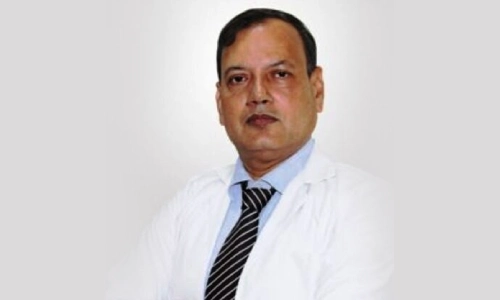
DR. AMLAN CHAKRABORTY
Qualifications: MBBS, MS, FRCS (Urology)
Specialty: Urology
Experience: 23 years
Fees: Rs. 1,700.00
Available Days: TUE,THURS & SAT(BY APPOINTMENT)
Available Time: 12:00 - 13:00 (BY APPOINTMENT)

DR. PRAMOD KUMAR SHARMA
Qualifications: MBBS,MS
Specialty: Urology
Experience: 21 years
Fees: Rs. 1,200.00
Available Days: BY APPOINTMENT
Available Time: By Appointment

DR. NILANJAN MITRA
Qualifications: MBBS, MS (Gen. Surg.), MCh (Urology)
Specialty: Urology
Experience: 19 years
Fees: Rs. 1,200.00
Available Days:TUE & THURS
Available Time: 8:30 - 10:30

DR. SMARANJIT CHATTERJEE
Qualifications: MBBS, MS, DNB, Mch
Specialty: Urology
Experience: 18 years
Fees: Rs. 1,200.00
Available Days: BY APPOINTMENT
Available Time: BY APPOINTMENT

DR. SOUVIK CHATTERJEE
Qualifications: MBBS, MS (Gen. Surg.), DNB, MCh (Urology)
Specialty: Urology
Experience: 16 years
Fees: Rs. 1,000.00
Available Days: WED, SAT
Available Time: WED: 15:00 - 16:00, SAT: 09:30 - 10:30

DR. KAKOLI CHOWDHURY
Qualifications: MBBS, MD(RADIO THERAPHY)
Specialty: ONCO MEDICINE
Experience: 12 years
Fees: Rs. 1,100.00
Available Days:THU & SAT
Available Time: 13:30-15:00

DR. DEBASISH CHATTERJEE
Qualifications: MBBS, MS - GENERAL SURGERY
Specialty: GENERAL AND ONCO SURGEON
Fees: Rs. 1,200.00
Available Days: THURSDAY & SAT
Available Time: 17:00-18:00

DR. SUBHOJIT MALAKAR
Qualifications: MBBS, MS (Gen. Surg.), DNB, MCh (Urology)
Specialty: Urology
Experience: 15 years
Fees: Rs. 1,000.00
Available Days: BY APPOINTMENT
Available Time: BY APPOINTMENT
DR. SUNIRMAL CHOWDHURY
Qualifications: MBBS, MS, IPGMER (HOD)
Specialty: Urology
Experience: 20 years
Fees: Rs. 1,200.00
Available Days: BY APPOINTMENT
Available Time: By Appointment
DR. RUDRADIP BANERJEE
Qualifications: MS.(GEN.SURG), D.N.B(GEN.SURG) MRCS
Specialty: GENERAL AND ONCO SURGEON
Experience: 8 years
Fees: Rs. 1,000.00
Available Days: BY APPOINTMENT
Available Time: BY APPOINTMENT
DR. PRATIJYOTI GHOSH
Qualifications: MBBS, DNB, CCEPC
Specialty: GENERAL AND ONCO SURGEON
Fees: Rs. 900.00
Available Days: BY APPOINTMENT
Available Time: BY APPOINTMENT
Hear From Our Happy Patients
Very good nursing home.all staff best
I had Laproscopic surgery of gallbladder stone on 23/6/26 & Discharge on 25/6/26. I had wonderful experience in nursing home, Very cooperative staff. Particularly Ms Aditi (Head Sister charge) , she has cooperated very well with Smily face. OT is well equipped with high quality instruments, Dr Mukesh Karia has done wonderful operations.
Very good nursing home
Very Supportive Staff with 24*7 support. Along with Neat and Clean cloths and bed.
Great treatment and recuperation. Doctors nurses and support staff mase it feel like home .
Thakuuuu Samaritan nursing home........and Dr.babuuuu khubbbb valooooo..apnader sakoler babohar khub valo r porisheba khubbb khubbb valo sakol k. Ank ank ank dhannobad ......
Very good nursing home
Very good Treatment here and also staff behaviour has very good
I have admitted my father here twice under Dr Arindam Dutta sir for the DJ stenting and RIRS (Kidney stone) .The entire team of Samaritan was fantastic.Specially Ms Aditi Nandi was so humble and cooperative .She attended us every time and Given all facilities.Through out the admitting time and discharge,all the sisters,brothers,Housekeeping ,ward boy everyone was so polite and well mannered.
Individuals at Highest Risk for Kidney Cancer
The exact cause remains unknown in most cases, but certain risk factors can increase the likelihood of developing the condition.
| Group | Factors |
|---|---|
| Older Adults | Most cases occur between ages 60–74 and are uncommon below 45. |
| Men | Men are about twice as likely as women to develop the condition. |
| Smokers | Tobacco use significantly increases risk by damaging kidney tissues. |
| With Obesity | Excess weight may increase risk by up to 80% through hormonal changes and inflammation. |
| With High Blood Pressure | Chronic hypertension puts additional strain on the kidneys and increases risk. |
| With Advanced Kidney Disease | Severe kidney failure, particularly long-term dialysis, is associated with much higher risk. |
| Family History | Having a parent, brother, or sister with the condition may double risk. |
| With Genetic Conditions | Von Hippel-Lindau disease, Birt-Hogg-Dubé syndrome, and tuberous sclerosis carry high risk. |
Stages of Kidney Cancer
Stage I
Tumour measures 7 cm or smaller and remains completely confined within the kidney.
Stage II
Tumour measures more than 7 cm but remains confined entirely within the kidney.
Stage III
Cancer spreads to nearby areas, including lymph nodes, veins, or surrounding kidney fat.
Stage IV
Cancer spreads beyond the kidney to distant organs, lymph nodes, or the adrenal gland.
Kidney Cancer Grading
Cells resemble normal tissue and generally grow slowly.
Cells appear abnormal and tend to grow and spread faster.
Kidney Cancer Patterns, Diagnosis & Treatment Approach
| Clinical Scenario & Presentation | Likely / Possible Condition | First-Line Clinical Approach | When Advanced / Escalated Treatment Is Needed | Expected Clinical Outcome |
|---|---|---|---|---|
| Small Mass (≤ 4 cm, localised) | Localised (Stage I) | Active surveillance, partial nephrectomy, or thermal ablation | Evidence of tumour growth, aggressive features, or patient preference change | Excellent localised control while preserving vital kidney function |
| Large or Complex Mass (> 4 cm, localised) | Localised (Stage I - II) | Radical nephrectomy (complete removal) or partial nephrectomy if feasible | Incomplete surgical margins or high-risk features on final pathology | High rates of localised cure, heavily dependent on tumour grade and margins |
| Locally Advanced Mass (Invasion of local veins/tissue) | Locally Advanced (Stage III) | Surgical removal (nephrectomy with tumour thrombectomy) + specialist staging | Gross residual disease post-surgery or early systemic progression | Variable; outcome depends heavily on success of surgery and risk of recurrence |
| Metastatic Disease (Spread beyond the kidney) | Advanced / Metastatic (Stage IV) | Systemic therapy (Immunotherapy combinations or targeted TKIs) | Disease progression on first-line systemic agents or severe treatment toxicity | Focus shifts to maximising survival, slowing progression, and symptom control |
| Symptom: Blood in urine (Hematuria) | Urinary Tract Infection, Kidney Stones, or Urological Cancer | Urgent clinical evaluation, urinalysis, and diagnostic imaging (CT Urogram / Ultrasound) | Abnormal imaging findings or positive urine cytology indicating malignancy | Excellent if benign; if malignant, outcome depends entirely on the stage |
| Symptom: Persistent side or back pain | Musculoskeletal issue, Stones, or Mass | Clinical examination and appropriate diagnostic imaging (Ultrasound / CT Scan) | Identification of a solid renal mass or suspicious structural changes on imaging | Excellent if benign; if malignant, outcome depends entirely on the stage |
Procedures & Recovery Time: What to Expect
Partial Nephrectomy
- Removes tumour while preserving healthy kidney tissue.
- Uses minimally invasive or open techniques.
- Assesses surrounding tissue during surgery when needed.
- Different infections require different testing methods
- Approach depends on tumour size and location.
Radical Nephrectomy
- Removes the entire affected kidney.
- Removes surrounding tissues or lymph nodes when required.
- Uses open or minimally invasive approaches.
- Depends on tumour size, location, and stage.
Kidney Tumour Ablation
- Uses heat or cold energy to destroy selected tumour tissue.
- Guides specialised instruments into the tumour.
- Generally suits selected smaller tumours.
- Suitability depends on tumour location and patient factors
Recovery Timeline
Ablation: Recovery generally takes 2–3 days.
Partial nephrectomy: Recovery generally takes 2–4 weeks.
Radical nephrectomy: Recovery generally takes 3–6 weeks.
MIS: Recovery is typically 1–2 weeks faster than open surgery.
Available Diagnosis & Tests
Diagnosis involves laboratory tests, detailed imaging scans, and tissue samples to detect, diagnose, and stage.
- Urinalysis
- Complete Blood Count (CBC)
- Blood Chemistry Tests
- Ultrasound
- CT Scan
- MRI
- Bone Scan
- PET Scan
- Renal Mass Biopsy
Available Treatment Options
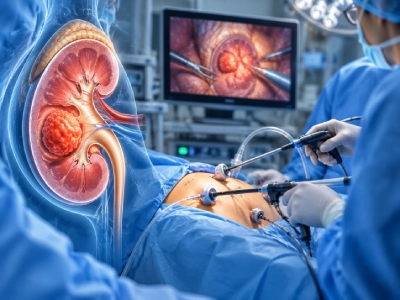
Surgical Treatments
- Partial nephrectomy
- Radical nephrectomy
- Lymph node removal
- Surgery for locally advanced disease
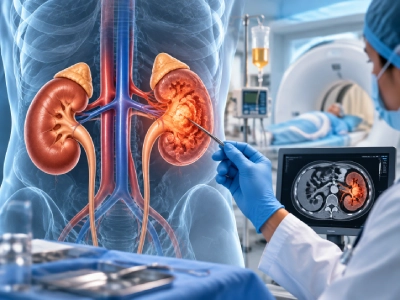
Minimally Invasive Treatments
- Kidney tumour ablation
- Cryoablation
- Radiofrequency ablation
- Laparoscopic partial nephrectomy
- Robotic partial nephrectomy
- Laparoscopic radical nephrectomy
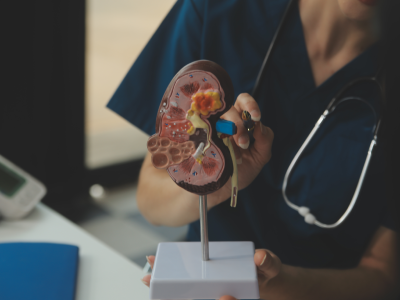
Medical Treatments
- Active surveillance
- Targeted therapy
- Immunotherapy
- Chemotherapy for selected tumours
- Medicines for associated symptoms
- Supportive or palliative treatment
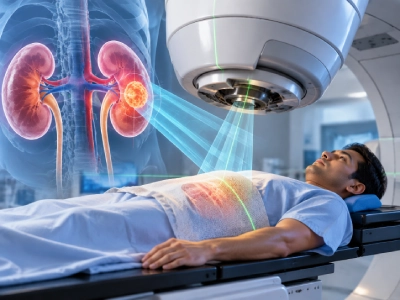
Radiation Treatments
- External beam radiation
- Stereotactic body radiation therapy
- Radiation for selected metastatic disease
- Radiation for symptom relief
Benefits of Kidney Cancer Treatment
- Removal or destruction of the tumour
- Control of localised disease
- Preservation of healthy kidney tissue
- Reduced risk of disease progression
- Reduced risk of disease spread
- Relief from cancer-related symptoms
- Improved urinary health
- Preservation of kidney function
- Improved long-term disease control
- Improved quality of life
Individuals at Highest Risk for Erectile Dysfunction
5-year survival in India ranges from 80% to 90%, depending heavily on early detection and timely intervention.
| Stage at Diagnosis | 5-Year Survival Rate |
|---|---|
| Localised | 93% |
| Regional Spread | 76% |
| Distant Spread | 19% |
Recovery After Kidney Cancer Treatment
- Monitoring during recovery after surgery
- Gradual return to normal activities
- Lifestyle adjustments for long-term health
- Regular follow-ups to detect recurrence early
Complications if Left Untreated
- Progressive Kidney Tumour
- Blood in the Urine
- Persistent Side or Back Pain
- Urinary Symptoms
- Local Spread of Cancer
- Lymph Node Involvement
- Vena Cava Blockage
- Cancer Spread to Other Organs
- Lung Metastasis
- Bone Metastasis
- Brain or Liver Metastasis
- Reduced Kidney Function
- Anaemia
- Hypercalcaemia
- Severe Cancer-Related Wasting
- Systemic Cancer-Related Complications
- Delayed Diagnosis
Daily Management & Prevention Tips
Management Tips
- Stay adequately hydrated throughout the day
- Follow the recommended treatment and monitoring schedule
- Maintain a healthy weight through diet
- Avoid smoking and tobacco exposure
- Review medications with your treating doctor
Prevention Tips
- Maintain a healthy weight through diet
- Exercise regularly throughout the week
- Avoid tobacco exposure
- Manage blood pressure appropriately
- Follow recommended medical screening when indicated
- Discuss persistent urinary symptoms with doctors
Frequently Asked Questions
Can only older people develop kidney cancer?
No. Although risk increases with age, younger adults can also develop it due to smoking, obesity, hypertension, or inherited genetic conditions.
Can kidney cancer be treated without removing the entire kidney?
No. Partial nephrectomy or tumour ablation may be appropriate for selected patients, depending on tumour size, location, stage, and overall health.
Can kidney cancer spread through physical contact?
No. It is not contagious and cannot spread through touching, sharing food, or close contact. It develops from genetic changes within affected cells.
Can kidney cancer spread to other organs?
Yes. It can spread beyond the kidney to lymph nodes or distant organs. The risk depends on the tumour type, stage, and other cancer characteristics.
Do all kidney cancer patients require chemotherapy?
No. Treatment depends on the cancer type and stage. Targeted therapy, immunotherapy, surgery, active surveillance, or other approaches may be considered instead.