

ACL Surgery in Kolkata
Home / Treatments / Orthopedic / ACL Surgery
Quick Answers
When is ACL surgery needed?
It may be advised when instability persists, activity remains restricted, or rehabilitation proves insufficient.
Is surgery needed for every ACL tear?
No. Some injuries can improve with rehabilitation, depending on stability, activity level, and associated damage.
Is ACL reconstruction the only surgical option?
No. Additional procedures may address meniscus or cartilage damage alongside ligament reconstruction when necessary.
How long does ACL surgery recovery take?
Routine activities may resume within weeks, while demanding sports require longer rehabilitation and gradual progression.
What Is ACL Surgery?
Also known as anterior cruciate ligament (ACL) reconstruction, it is a minimally invasive operation that replaces a torn knee ligament with a replacement tissue graft.
Key points:
- Surgeons use an arthroscope and small incisions.
- A tissue graft replaces the torn ligament.
- The graft is secured through bone tunnels.
- Most patients return home the same day.
Types of ACL Surgery
Reconstruction
Rebuilds the torn ligament using a tendon graft for knee stability.
Reconstruction with Meniscus Repair
Combines ligament replacement with meniscus suturing to preserve shock absorption.
Reconstruction with Cartilage Treatment
Treats damaged joint surfaces alongside reconstruction to protect long-term joint health.
Revision Surgery
Replaces a failed or reinjured ACL graft with new tissue.
Primary Repair
Sutures the native ligament together without using a tendon graft.
Bridge-Enhanced Restoration (BEAR®)
Uses a specialised bio-scaffold implant to support ligament regrowth.
Symptoms Indicating the Need For ACL Surgery
Common Symptoms
- Knee instability
- Repeated buckling
- Joint locking
- Persistent swelling
- Activity limitations
- Meniscus damage
- Additional ligament injuries
Red Flags Requiring Immediate Medical Care
- Inability to bear weight
- Severe mechanical locking
- High fever
- Chills
- Worsening pain
- Cloudy wound drainage
- Spreading redness
- Progressive joint damage
Why Choose Samaritan Medical Surgical & Critical Care?
At Samaritan Medical Surgical & Critical Care, we provide comprehensive healthcare solutions as per your needs. With a team of expert professionals, we focus on delivering compassionate, patient-centred care for optimal well-being.

NABH Certified
Accredited by NABH, ensuring the highest standards of healthcare quality and patient safety.

Surgical Excellence
Our skilled surgeons offer precision care for a wide range of surgical procedures.

Critical Care Support
Providing round-the-clock critical care with advanced equipment and expert medical teams.
Our Doctors
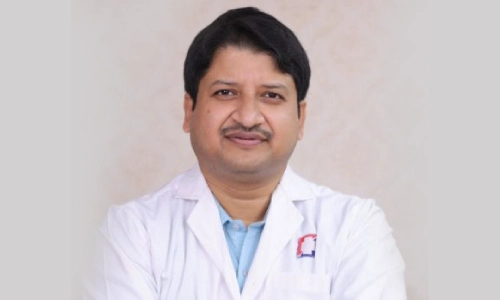
DR. SOMAK DAS
Qualifications: MBBS, MS(GEN.SURG.) DNB(GASTRO.SURG), MCH
Specialty: GASTRO SURGEON
Fees: Rs. 1,200.00
Available Days: MON, WED & FRI
Available Time: BY APPOINTMENT

DR. D. K. SARKAR
Qualifications: MBBSMS, DNB FRCS, (GOLD), FFSTED
Specialty: GENERAL SURGEON
Fees: Rs. 1,550.00
Available Days: MON, WED,THU & SAT
Available Time: MON WED,THU-16:00 & SAT-15:00

DR. RUDRADEEP BANERJEE
Qualifications: MS.(GEN.SURG), D.N. BMRCS
Specialty: GENERAL SURGEON
Fees: Rs. 1,000.00
Available Days: BY APPOINTMENT
Available Time: BY APPOINTMENT
DR. RANAJOY DUTTA
Qualifications: MBBS, M.S D.N.B
Specialty: GENERAL SURGEON
Fees: Rs. 1,200.00
Available Days: WED, SAT
Available Time: 17:00 - 18:00 PM
DR. ACHINTA KR DAS
Qualifications: MBBS, MS
Specialty: GENERAL SURGEON
Fees: Rs. 1,200.00
Available Days: BY APPOINTMENT
Available Time:BY APPOINTMENT
DR. SAMRIDDHI PODDAR
Qualifications: MBBS(HONS), MS(SURGERY), WBUHS NRSMCH
Specialty: GENERAL SURGEON
Fees: Rs. 1,000.00
Available Days: TUE & WED
Available Time: TUE 16:30-17:30 & WED 18:00-19:00
DR . B . B . BARAI
Qualifications: MBBS, DNB, PG DGM, CCEBDM
Specialty: GENERAL SURGEON
Fees: Rs. 1,200.00
Available Days: MON /FRIDAY
Available Time: 11:00-13:00
DR. SAPTARSHI KUNDU
Qualifications: MBBS, MS (GEN SUR)
Specialty: GENERAL SURGEON
Fees: Rs. 700.00
Available Days: BY APPOINTMENT
Available Time: BY APPOINTMENT
DR. MAINAK PAL
Qualifications: MBBS, MS, FMAS(GEN.SURG)
Specialty: GENERAL SURGEON
Fees: Rs. 1,000.00
Available Days: MON -FRI
Available Time: 17:00-18:00
DR. SUKANTA ROY
Qualifications: MBBS, MS(GASTO)
Specialty: GASTRO SURGEON
Fees: Rs. 1,000.00
Available Days: BY APPOINTMENT
Available Time: BY APPOINTMENT

DR. UDDIPTA DUTTA
Specialty: GASTRO SURGEON
Fees: Rs. 900.00
Available Days: BY APPOINTMENT
Available Time: BY APPOINTMENT
Hear From Our Happy Patients
Very good nursing home. All staff good.
A really good hospital with good critical and surgical care. Staffs are very cooperative..
Here the service are very good। Very good hospital
very good nursing home
Nurse didi gulo khub bhalo all staff bhalo 100.90% bhalo
Are good nursing hom varehalp pol anepplamkontak stap vare Good
Good experience All facilities is good
Best hospital Very good facility
Doctors, Nursing staff, other staff are very good, everything is good, only few accommodation issue is not adjustable.
Liked the place...staffs...sisters all helpful...and special thanks to my doctor..Doctor Sukanta Ray...he is next to God to me
Liked the place...staffs...sisters all helpful...and special thanks to my doctor..Doctor Sukanta Ray...he is next to God to me
Individuals at Higher Risk of Advanced ACL Damage Needing Surgery
| Group | Outcome |
|---|---|
| Competitive & Recreational Athletes | Pivoting sports may require restored knee stability for safe movement. |
| Young & Active Adults | Persistent instability can increase the risk of long-term joint damage. |
| Complete Tears & Instability | Repeated giving-way episodes can compromise everyday movement and stability. |
| Secondary Injuries | Meniscus, cartilage, or ligament damage may require additional treatment. |
| Younger Patients with Delayed Treatment | Delayed care can increase the risk of meniscus and cartilage damage. |
ACL Injury Patterns, Diagnosis & Treatment Approach
| Stage / Type | Symptoms | Diagnosis | Approach | Prognosis |
|---|---|---|---|---|
| Mild Sprain (Grade 1) | Mild pain, minimal swelling, and no instability. | Physical exam; X-ray rules out bone avulsion. | RICE and physical therapy. | Usually full recovery without surgery. |
| Partial Tear (Grade 2) | Moderate pain, swelling, and mild instability. | Lachman test and knee MRI. | Physical therapy, bracing, or surgery if instability persists. | Recovery varies with remaining fibres and activity level. |
| Complete Tear (Grade 3) | Pop sensation, immediate swelling, and significant instability. | Lachman/Pivot-shift tests and knee MRI. | Reconstruction for active patients; PT for selected sedentary patients. | Progressive rehabilitation typically takes 6–12 months. |
| ACL + Meniscus Injury | Catching, locking, clicking, and joint-line pain. | McMurray test and knee MRI. | Reconstruction with meniscus repair or debridement. | Recovery may be prolonged with weight-bearing restrictions. |
| ACL + Cartilage Damage | Persistent joint pain and activity-related swelling. | Clinical exam, knee MRI, and weight-bearing X-rays. | Reconstruction with cartilage restoration techniques. | Extended rehabilitation and higher arthritis risk. |
| Failed Reconstruction | Recurrent giving-way, instability, and restricted movement. | X-ray, MRI, and CT scan. | Revision reconstruction and correction of underlying causes. | Complex recovery requiring individualised management. |
How Is ACL Injury Evaluated?
Medical History
Physical Examination
Knee Stability Tests
Range of Motion Assessment
Lachman Test
Anterior Drawer Test
Pivot-Shift Test
Lever Sign Test
X-Ray Examination
MRI Scan
Meniscus and Cartilage Evaluation
Other Ligament Assessment
Activity and Sports History
Previous Treatment History
Arthroscopy
ACL Surgery: What to Expect?
Before
- Complete required preoperative tests
- Follow medication and fasting instructions
- Prepare a safe recovery area
- Wear loose, comfortable clothing
During
- Receive general or regional anaesthesia
- Arthroscopy uses small incisions
- Tissue graft replaces damaged ligament
- Graft secured through bone tunnels
- Usually performed as day-case surgery
After
- Expect temporary pain and swelling
- Use crutches or a knee brace
- Begin guided physical therapy
- Gradually restore movement and strength
- Progress through strength and stability training
- Resume sports after functional recovery
Benefits of ACL Surgery
- Restored knee stability
- Return to sports
- Protected joint health
- Improved mobility
- Smaller cuts and faster recovery
- Reduced hip pain
- Improved walking ability
- Greater movement range
- More daily independence
- Better quality of life
ACL Surgery Success Rate India-Wide
| Procedure | Success Outcome |
|---|---|
| Reconstruction | 90–95% success with standard tissue grafts. |
| Advanced & Robotic Surgery | Success rates can exceed 95% with precision techniques. |
Recovery After ACL Surgery
Weeks 0–2: Control swelling, protect graft, regain extension.
Weeks 2–6: Restore movement, walking, and basic strength.
Weeks 6–12: Build quadriceps, hamstring strength, and stability.
Months 3–6: Begin jogging, agility, and dynamic movements.
Months 6–12+: Progress sport-specific training and return to sports.
Complications If ACL Injury Is Left Untreated
- Chronic knee instability
- Meniscus tears
- Cartilage wear and tear
- Early-onset osteoarthritis
- Long-term disability
- Muscle weakness and loss of conditioning
- Difficulty participating in sports
- Persistent functional limitations
- Increased risk of further knee injury
- Progressive joint degeneration
Post-ACL Surgery Daily Management & Prevention Tips
Management
- Control pain and swelling with ice and elevation.
- Use crutches or braces as advised.
- Keep the surgical wound clean and dry.
- Follow prescribed physical therapy exercises.
Prevention
- Avoid twisting, pivoting, and high-impact movements.
- Perform balance and stability exercises.
- Strengthen the quadriceps, hamstrings, and calves.
- Gradually increase activity after clearance.
Frequently Asked Questions
Can ACL surgery prevent future arthritis?
No. Major knee injuries can increase the likelihood of osteoarthritis, and reconstruction does not eliminate that long-term risk or guarantee protection from additional meniscal damage.
Can someone walk after ACL surgery?
Yes. Many patients begin assisted walking soon after the procedure, using crutches when required. Weight-bearing and progression depend on the reconstruction and any additional procedures performed.
Can ACL surgery prevent future arthritis?
No. Major knee injuries can increase the likelihood of osteoarthritis, and reconstruction does not eliminate that long-term risk or guarantee protection from additional meniscal damage.
Is ACL reconstruction better than physiotherapy?
Neither approach suits every injury. Treatment depends on ligament damage, knee stability, activity requirements, associated injuries, and response to rehabilitation.
Can an ACL reconstruction fail?
Yes. Graft failure, recurrent instability, stiffness, infection, or other complications can occur. Evaluation can identify the cause and determine whether further rehabilitation or revision surgery is appropriate.