
Laparoscopic Gallbladder Removal Surgery in Kolkata
Home / Treatments / General & Laparoscopic Surgery / Gallbladder Removal
Quick Answers
Can gallstones go away on their own?
They rarely disappear on their own and can cause complications or blockages.
Can only overweight, older women get gallstones?
Anyone can develop them, including men, teenagers, and people who are rapidly slimming.
Does laparoscopic gallbladder removal surgery leave large scars?
It typically creates three or four tiny incisions, leaving faint scars.
Can apple cider vinegar dissolve gallstones?
No, natural remedies cannot dissolve hardened cholesterol or pigment stones.
What Is Gallstone Disease?
A condition where hard deposits form inside the gallbladder, commonly from cholesterol or bilirubin. When stones block the gallbladder outlet or bile ducts, they can cause biliary colic, inflammation, infection, jaundice, or pancreatitis.
When symptomatic gallstones require definitive treatment, laparoscopic cholecystectomy removes the gallbladder so bile can flow directly from the liver into the small intestine.
Key points:
- 4%–7.4% of Indian adults are affected.
- Up to 41.6% of cases are asymptomatic.
- Women face 2–3 times higher risk.
- 70%–80% of Indian gallbladder cancer patients have gallstones
Types of Gallbladder Disease
Gallstones (Cholelithiasis)
Hardened cholesterol or bilirubin deposits forming inside the gallbladder.
Biliary Colic
Sudden intense abdominal pain caused by temporary bile duct blockage.
Acute Cholecystitis
Sudden gallbladder inflammation, usually caused by a trapped gallstone.
Chronic Cholecystitis
Long-term irritation causing gallbladder wall thickening and reduced function.
Acalculous Cholecystitis
Gallbladder inflammation occurring without stones, often linked to severe illness.
Choledocholithiasis
A gallstone enters and blocks the common bile duct.
Biliary Dyskinesia
The gallbladder fails to empty bile efficiently despite having no stones.
Gallbladder Polyps
Usually noncancerous growths developing along the organ's inner wall.
Gallbladder Cancer
Rare cancer developing when abnormal cells multiply within gallbladder tissue.
Gallstone Pancreatitis
A stone blocks biliary or pancreatic drainage, triggering pancreatic inflammation.
Symptoms of Gallbladder Disease
Common Symptoms
- Upper-right or central abdominal pain
- Pain after fatty or greasy meals
- Nausea and vomiting
- Bloating, gas, indigestion, or heartburn
- Pale stools and darker urine
Red Flags (Seek Immediate Medical Care)
- High fever and chills
- Yellowing skin or eye whites
- Severe, constant abdominal pain
- Persistent vomiting
These symptoms can indicate complications such as acute cholecystitis, bile duct obstruction, cholangitis, or pancreatitis and require prompt medical assessment.
Why Choose Samaritan Medical Surgical & Critical Care?
At Samaritan Medical Surgical & Critical Care, we provide comprehensive healthcare solutions as per your needs. With a team of expert professionals, we focus on delivering compassionate, patient-centred care for optimal well-being.

NABH Certified
Accredited by NABH, ensuring the highest standards of healthcare quality and patient safety.

Surgical Excellence
Our skilled surgeons offer precision care for a wide range of surgical procedures.

Critical Care Support
Providing round-the-clock critical care with advanced equipment and expert medical teams.
Our Doctors
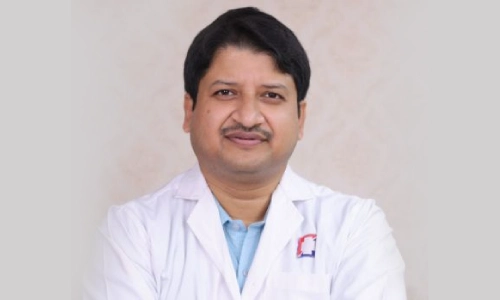
DR. SOMAK DAS
Qualifications: MBBS, MS(GEN.SURG.) DNB(GASTRO.SURG), MCH
Specialty: GASTRO SURGEON
Fees: Rs. 1,200.00
Available Days: MON, WED & FRI
Available Time: BY APPOINTMENT

DR. D. K. SARKAR
Qualifications: MBBSMS, DNB FRCS, (GOLD), FFSTED
Specialty: GENERAL SURGEON
Fees: Rs. 1,550.00
Available Days: MON, WED,THU & SAT
Available Time: MON WED,THU-16:00 & SAT-15:00

DR. RUDRADEEP BANERJEE
Qualifications: MS.(GEN.SURG), D.N. BMRCS
Specialty: GENERAL SURGEON
Fees: Rs. 1,000.00
Available Days: BY APPOINTMENT
Available Time: BY APPOINTMENT
DR. RANAJOY DUTTA
Qualifications: MBBS, M.S D.N.B
Specialty: GENERAL SURGEON
Fees: Rs. 1,200.00
Available Days: WED, SAT
Available Time: 17:00 - 18:00 PM
DR. ACHINTA KR DAS
Qualifications: MBBS, MS
Specialty: GENERAL SURGEON
Fees: Rs. 1,200.00
Available Days: BY APPOINTMENT
Available Time:BY APPOINTMENT
DR. SAMRIDDHI PODDAR
Qualifications: MBBS(HONS), MS(SURGERY), WBUHS NRSMCH
Specialty: GENERAL SURGEON
Fees: Rs. 1,000.00
Available Days: TUE & WED
Available Time: TUE 16:30-17:30 & WED 18:00-19:00
DR . B . B . BARAI
Qualifications: MBBS, DNB, PG DGM, CCEBDM
Specialty: GENERAL SURGEON
Fees: Rs. 1,200.00
Available Days: MON /FRIDAY
Available Time: 11:00-13:00
DR. SAPTARSHI KUNDU
Qualifications: MBBS, MS (GEN SUR)
Specialty: GENERAL SURGEON
Fees: Rs. 700.00
Available Days: BY APPOINTMENT
Available Time: BY APPOINTMENT
DR. MAINAK PAL
Qualifications: MBBS, MS, FMAS(GEN.SURG)
Specialty: GENERAL SURGEON
Fees: Rs. 1,000.00
Available Days: MON -FRI
Available Time: 17:00-18:00
DR. SUKANTA ROY
Qualifications: MBBS, MS(GASTO)
Specialty: GASTRO SURGEON
Fees: Rs. 1,000.00
Available Days: BY APPOINTMENT
Available Time: BY APPOINTMENT

DR. UDDIPTA DUTTA
Specialty: GASTRO SURGEON
Fees: Rs. 900.00
Available Days: BY APPOINTMENT
Available Time: BY APPOINTMENT
Hear From Our Happy Patients
Very good nursing home.all staff best
I had Laproscopic surgery of gallbladder stone on 23/6/26 & Discharge on 25/6/26. I had wonderful experience in nursing home, Very cooperative staff. Particularly Ms Aditi (Head Sister charge) , she has cooperated very well with Smily face. OT is well equipped with high quality instruments, Dr Mukesh Karia has done wonderful operations.
Very good nursing home
Very Supportive Staff with 24*7 support. Along with Neat and Clean cloths and bed.
Great treatment and recuperation. Doctors nurses and support staff mase it feel like home .
Thakuuuu Samaritan nursing home........and Dr.babuuuu khubbbb valooooo..apnader sakoler babohar khub valo r porisheba khubbb khubbb valo sakol k. Ank ank ank dhannobad ......
Very good nursing home
Very good Treatment here and also staff behaviour has very good
I have admitted my father here twice under Dr Arindam Dutta sir for the DJ stenting and RIRS (Kidney stone) .The entire team of Samaritan was fantastic.Specially Ms Aditi Nandi was so humble and cooperative .She attended us every time and Given all facilities.Through out the admitting time and discharge,all the sisters,brothers,Housekeeping ,ward boy everyone was so polite and well mannered.
Individuals at Highest Risk for Gallstones
| Factor | Factors |
|---|---|
| Women | Pregnancy, multiple children, birth control pills, and hormone replacement therapy can increase estrogen and slow bile flow. |
| Geographic Location | Higher rates are seen in certain regions in India. |
| Age | Risk increases with age, with peak incidence commonly occurring after 40 and continuing through the fifth and sixth decades. |
| Obesity and Rapid Weight Loss | High BMI, rapid weight loss, and crash diets can concentrate cholesterol in bile and reduce gallbladder movement. |
| Metabolic Conditions | Diabetes, high cholesterol, and dyslipidemia are associated with significantly higher stone formation risk. |
| Sedentary Habits | Physical inactivity, skipped meals, and prolonged fasting can promote bile stagnation. |
| Family History | Genetic predisposition and a family history of disease can increase individual risk. |
Causes Of Gallstones
- Excess cholesterol.
- Excess bilirubin
- Reduced bile salts
- Poor gallbladder emptying
- Rapid weight loss.
- Obesity
- Certain diseases increase stone formation.
- Family history.
- Pregnancy or hormonal changes
- Certain diets
Gallbladder Disease Patterns, Diagnosis & Treatment Approach
| Pattern | Condition | Initial Approach | When Is Gallbladder Removal Needed? | Outcome |
|---|---|---|---|---|
| Incidental stones without symptoms | Silent gallstones | Observation | Usually not required without symptoms | No treatment often needed |
| Recurrent abdominal attacks | Symptomatic gallstones | Surgical assessment | Recurrent or significant symptoms | Definitive symptom treatment |
| Inflamed gallbladder | Acute cholecystitis | Medical stabilisation and surgical assessment | When surgery is appropriate | Removal treats the source |
| Common bile duct stone | Choledocholithiasis | Bile duct evaluation and treatment | After appropriate duct management | Restored bile drainage |
| Gallstone pancreatitis | Pancreatitis from stones | Treat acute pancreatitis first | Cholecystectomy after stabilisation | Reduces recurrent biliary events |
| Persistent gallbladder symptoms | Chronic cholecystitis | Clinical and imaging assessment | Persistent symptomatic disease | Definitive gallbladder removal |
How Is Gallbladder Disease Evaluated?
Clinical Examination
Pain location: Upper-right abdominal tenderness.
Pain pattern: Meal-related or recurring discomfort.
Tenderness: Localised gallbladder-area tenderness.
Associated symptoms: Fever, nausea, vomiting, jaundice.
Blood Tests
Liver tests: Assess biliary obstruction.
Bilirubin: Helps identify impaired bile drainage.
White-cell count: Supports infection assessment.
Inflammatory markers: Help assess inflammation.
Pancreatic enzymes: Assess possible pancreatitis.
Diagnostic Imaging
Ultrasound: First-line gallstone imaging.
CT scan: Identifies complications when indicated.
MRCP: Evaluates bile duct abnormalities.
HIDA scan: Assesses gallbladder function.
Imaging findings: Guide treatment planning.
Laparoscopic Gallbladder Removal (Cholecystectomy): What to Expect?
Before
- Stop eating and drinking as instructed.
- Review current medicines with your doctor.
- Complete required blood tests beforehand.
- Undergo ultrasound or additional imaging.
- Complete preoperative anaesthesia assessment.
During
- General anaesthesia keeps you asleep.
- Small abdominal incisions provide surgical access.
- Carbon dioxide creates working space.
- A camera provides internal visualisation.
- Instruments separate and remove the gallbladder.
After
- Staff monitor you during recovery.
- Treat pain and nausea appropriately.
- Many uncomplicated cases leave the same day.
- Walking usually begins relatively early.
- Diet advances according to tolerance.
Benefits of Laparoscopic Gallbladder Removal
Minimal Pain: Tiny 0.5–1 cm incisions.
Faster Recovery: Normal activities within 7–10 days.
Shorter Stay: Discharge on the same day or within 24 hours.
Lower Risks: Fewer infections, bleeding, and hernias.
Better Scarring: 3 to 4 tiny marks.
Success Rates for Surgery in India
In India, the surgery has a 95%–98% overall success rate, comparable to global benchmarks.
| Outcome | Rate |
|---|---|
| Overall success rate | 95%–98% |
| Completed laparoscopically | 95% |
| Converted to open surgery | 1.4% |
| Bile duct injury | 0.3% |
| 30-day morbidity | 11.1% |
| 30-day mortality | 0.2% |
Recovery After Gallbladder Removal Surgery
Day 1: Monitoring, walking, oral intake.
Days 1–2: Discharge when clinically appropriate.
Week 1: Gradually resume normal activities.
Weeks 2–4: Increase activity as tolerated.
Complications if Gallbladder Disease Is Left Untreated
- Acute Cholecystitis
- Gallbladder Rupture or Gangrene
- Bile Duct Blockage (Choledocholithiasis)
- Cholangitis
- Pancreatitis
- Sepsis
- Long-Term Risk of Gallbladder Cancer
- Recurrent Painful Gallbladder Attacks
Daily Management & Prevention Tips
Management Tips
- Eat regular meals without fasting.
- Choose smaller, more frequent meals.
- Limit fried and fatty foods.
- Use low-fat cooking methods.
Prevention Strategies
- Increase fibre through whole foods.
- Choose moderate amounts of healthy fats.
- Stay active throughout the week.
- Lose weight gradually, avoiding crash diets.
Frequently Asked Questions
Can gallstones cause back or shoulder pain?
Yes. Gallbladder pain can sometimes spread toward the back or right shoulder, although these symptoms can also occur with other abdominal conditions.
Can eating a vegetarian diet cure or eliminate existing gallstones?
No. A plant-based eating pattern may support digestion but cannot dissolve established stones. Persistent symptoms or complications may require medical treatment or gallbladder removal.
appear before discomfort becomes intense, although symptoms vary between individuals.
Can gallstones cause vomiting and fever?
Yes. Nausea and vomiting can accompany gallbladder attacks. Fever or chills may indicate inflammation or infection and require prompt medical assessment.
Can you live normally without a gallbladder?
Yes. The gallbladder is not essential for normal life. After removal, bile flows directly from the liver into the small intestine instead of being stored in the gallbladder.
Is gallbladder removal needed for every gallstone?
No. Silent gallstones usually do not require treatment. Surgery is generally considered when stones cause symptoms or complications.