
Thyroid Operation in Kolkata
Home / Treatments / General & Laparoscopic Surgery / Thyroid surgery
Quick Answers
When is thyroid surgery recommended?
Thyroid surgery may be recommended for thyroid cancer, suspicious nodules, large goitres causing swallowing or breathing problems, and certain forms of hyperthyroidism.
Is thyroid surgery safe?
Yes. Thyroidectomy is generally considered safe, although possible complications include bleeding, infection, voice changes and low calcium levels.
Can a thyroid nodule be removed without removing the whole gland?
Yes. A thyroid lobectomy removes one lobe, while total thyroidectomy removes the entire gland. The choice depends on the condition and surgical indication.
Will I need thyroid medicine after surgery?
It depends on the operation. After total thyroidectomy, lifelong thyroid hormone replacement is required because no thyroid tissue remains to produce hormones.
What Is Thyroid Surgery?
Thyroid surgery is an operation to remove part or all of the thyroid gland. The thyroid is a butterfly-shaped gland in the lower front of the neck that produces hormones involved in energy use and normal body function.
Surgery may be considered when a thyroid nodule is cancerous or suspicious, when an enlarged thyroid causes pressure symptoms, or for selected cases of hyperthyroidism such as Graves’ disease or a toxic nodule.
Key points:
Lobectomy: One thyroid lobe is removed.
Total thyroidectomy: The entire thyroid is removed.
Cancer surgery: May include lymph node removal.
Goitre surgery: May relieve compression symptoms.
Hyperthyroidism: Selected overactive thyroid conditions require surgery.
Types of Thyroid Surgery
Thyroid Lobectomy
One thyroid lobe is removed, often for selected nodules, some thyroid cancers, or one-sided thyroid disease.
Total Thyroidectomy
The entire thyroid gland is removed. Lifelong thyroid hormone replacement is required after complete removal.
Completion Thyroidectomy
The remaining thyroid tissue is removed after an earlier operation when further surgery becomes necessary.
Thyroidectomy With Lymph-Node Surgery
For selected thyroid cancers, nearby lymph nodes may also need removal depending on disease extent.
Minimally Invasive or Remote-Access Surgery
Selected patients may undergo approaches using smaller or remote incisions, including video-assisted, transoral or robotic techniques.
Symptoms That May Lead to Thyroid Evaluation
Common Indications
- Neck lump or thyroid nodule
- Difficulty swallowing or breathing
- Pressure in the neck
- Hoarseness or voice changes
- Symptoms associated with hyperthyroidism
Red Flags (Seek Prompt Medical Evaluation)
- Rapidly enlarging neck swelling
- New or persistent voice change
- Increasing swallowing difficulty
- Breathing difficulty from neck swelling
- Suspicious thyroid or lymph-node findings
Why Choose Samaritan Medical Surgical & Critical Care?
At Samaritan Medical Surgical & Critical Care, we provide comprehensive healthcare solutions as per your needs. With a team of expert professionals, we focus on delivering compassionate, patient-centred care for optimal well-being.

NABH Certified
Accredited by NABH, ensuring the highest standards of healthcare quality and patient safety.

Surgical Excellence
Our skilled surgeons offer precision care for a wide range of surgical procedures.

Critical Care Support
Providing round-the-clock critical care with advanced equipment and expert medical teams.
Our Doctors
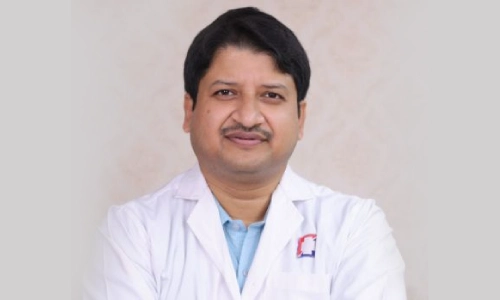
DR. SOMAK DAS
Qualifications: MBBS, MS(GEN.SURG.) DNB(GASTRO.SURG), MCH
Specialty: GASTRO SURGEON
Fees: Rs. 1,200.00
Available Days: MON, WED & FRI
Available Time: BY APPOINTMENT

DR. D. K. SARKAR
Qualifications: MBBSMS, DNB FRCS, (GOLD), FFSTED
Specialty: GENERAL SURGEON
Fees: Rs. 1,550.00
Available Days: MON, WED,THU & SAT
Available Time: MON WED,THU-16:00 & SAT-15:00
DR. RUDRADEEP BANERJEE
Qualifications: MS.(GEN.SURG), D.N. BMRCS
Specialty: GENERAL SURGEON
Fees: Rs. 1,000.00
Available Days: BY APPOINTMENT
Available Time: BY APPOINTMENT
DR. RANAJOY DUTTA
Qualifications: MBBS, M.S D.N.B
Specialty: GENERAL SURGEON
Fees: Rs. 1,200.00
Available Days: WED, SAT
Available Time: 17:00 - 18:00 PM
DR. ACHINTA KR DAS
Qualifications: MBBS, MS
Specialty: GENERAL SURGEON
Fees: Rs. 1,200.00
Available Days: BY APPOINTMENT
Available Time:BY APPOINTMENT
DR. SAMRIDDHI PODDAR
Qualifications: MBBS(HONS), MS(SURGERY), WBUHS NRSMCH
Specialty: GENERAL SURGEON
Fees: Rs. 1,000.00
Available Days: TUE & WED
Available Time: TUE 16:30-17:30 & WED 18:00-19:00
DR . B . B . BARAI
Qualifications: MBBS, DNB, PG DGM, CCEBDM
Specialty: GENERAL SURGEON
Fees: Rs. 1,200.00
Available Days: MON /FRIDAY
Available Time: 11:00-13:00
DR. SAPTARSHI KUNDU
Qualifications: MBBS, MS (GEN SUR)
Specialty: GENERAL SURGEON
Fees: Rs. 700.00
Available Days: BY APPOINTMENT
Available Time: BY APPOINTMENT
DR. MAINAK PAL
Qualifications: MBBS, MS, FMAS(GEN.SURG)
Specialty: GENERAL SURGEON
Fees: Rs. 1,000.00
Available Days: MON -FRI
Available Time: 17:00-18:00
DR. SUKANTA ROY
Qualifications: MBBS, MS(GASTO)
Specialty: GASTRO SURGEON
Fees: Rs. 1,000.00
Available Days: BY APPOINTMENT
Available Time: BY APPOINTMENT

DR. UDDIPTA DUTTA
Specialty: GASTRO SURGEON
Fees: Rs. 900.00
Available Days: BY APPOINTMENT
Available Time: BY APPOINTMENT
Hear From Our Happy Patients
Very good nursing home.all staff best
I had Laproscopic surgery of gallbladder stone on 23/6/26 & Discharge on 25/6/26. I had wonderful experience in nursing home, Very cooperative staff. Particularly Ms Aditi (Head Sister charge) , she has cooperated very well with Smily face. OT is well equipped with high quality instruments, Dr Mukesh Karia has done wonderful operations.
Very good nursing home
Very Supportive Staff with 24*7 support. Along with Neat and Clean cloths and bed.
Great treatment and recuperation. Doctors nurses and support staff mase it feel like home .
Thakuuuu Samaritan nursing home........and Dr.babuuuu khubbbb valooooo..apnader sakoler babohar khub valo r porisheba khubbb khubbb valo sakol k. Ank ank ank dhannobad ......
Very good nursing home
Very good Treatment here and also staff behaviour has very good
I have admitted my father here twice under Dr Arindam Dutta sir for the DJ stenting and RIRS (Kidney stone) .The entire team of Samaritan was fantastic.Specially Ms Aditi Nandi was so humble and cooperative .She attended us every time and Given all facilities.Through out the admitting time and discharge,all the sisters,brothers,Housekeeping ,ward boy everyone was so polite and well mannered.
Individuals at Higher Risk for Thyroid Problems
| Groups | Factors |
|---|---|
| Gender | Women are five to eight times more likely |
| Age | Risk increases, especially after 60 |
| Family History | Parents or siblings with thyroid conditions |
| Pregnancy | Pregnancy and postpartum period up to six months |
| Autoimmune Diseases | Type 1 diabetes, rheumatoid arthritis, celiac disease |
| Radiation Exposure | Previous radiation to head, neck, or chest |
| Iodine Levels | Excessive or insufficient iodine intake, high-iodine medications |
Causes Of Thyroid Conditions
- Hashimoto's disease
- Iodine deficiency
- Thyroid surgery
- Radiation exposure
- Certain medications
- Pituitary gland problems
- Graves' disease
- Thyroid nodules
- Thyroiditis
- Excess iodine
- Excess thyroid medication
- Thyroid cancer
- Suspicious nodules
- Large goitre
- Multinodular goitre
- Compressive disease
- Indeterminate biopsy
- Progressive nodules
Thyroid Conditions, Diagnosis & Treatment Approach
| Pattern | Condition | Initial Approach | When Is Thyroid Surgery Needed? | Outcome |
|---|---|---|---|---|
| Confirmed malignancy | Thyroid cancer | Ultrasound, biopsy and staging | Indicated according to cancer extent | Removal of diseased thyroid tissue |
| Suspicious nodule | Suspicious thyroid nodule | Ultrasound and FNA | Suspicious or malignant biopsy findings | Diagnosis and definitive treatment |
| Indeterminate nodule | Indeterminate cytology | Repeat FNA, molecular testing or assessment | For diagnosis or treatment | Definitive pathological diagnosis |
| Large symptomatic goitre | Enlarged thyroid | Clinical assessment and imaging | Compression causing swallowing or breathing problems | Relief of compressive symptoms |
| Hyperfunctioning disease | Graves’ disease or toxic nodule | Thyroid-function assessment | Selected patients requiring definitive treatment | Control of excess thyroid hormone |
| One-sided disease | Localised thyroid condition | Imaging and clinical assessment | When lobectomy is appropriate | Removal of affected thyroid lobe |
How Is Thyroid Disease Evaluated?
Ultrasound is a key investigation for thyroid nodules, while ultrasound-guided FNA can help determine whether a nodule is benign, malignant or indeterminate.
Clinical Examination
Neck examination: Assesses thyroid enlargement.
Nodule assessment: Checks size and characteristics.
Lymph nodes: Evaluates abnormal neck nodes.
Voice assessment: Identifies pre-existing voice changes.
Blood Tests
TSH: Assesses thyroid function.
T4: Helps evaluate hormone production.
Additional testing: Depends on clinical findings.
Diagnostic Imaging
Ultrasound: Evaluates nodule size and characteristics.
FNA: Examines cells from suspicious nodules.
CT/MRI: May assess extensive disease when required.
Imaging findings: Help determine treatment planning.
Thyroid Operation: What to Expect?
Before
- Complete blood work and ultrasound.
- Fine needle aspiration biopsy may help.
- Undergo physical examination or EKG.
- Review regular medications with surgeon.
- Stop certain medications beforehand if advised.
- Fast from midnight before surgery.
During
- Receive general anaesthesia throughout the procedure.
- A small neck-fold incision is made.
- Part or entire thyroid removed.
- Incision closed with stitches or glue.
After
- Recover in a postoperative recovery room.
- Mild throat and neck soreness.
- Discharge same day or next morning.
- Avoid lifting over five kilograms.
- Avoid strenuous exercise for 10–14 days.
- Drive once neck movement feels comfortable.
- Lifelong levothyroxine follows complete thyroid removal.
Benefits of Thyroid Surgery
- Removes cancerous thyroid tissue completely.
- Provides definitive diagnosis for suspicious nodules.
- Relieves difficulty or pain swallowing
- Improves breathing caused by compression.
- Eases choking or neck tightness.
- Reduces large visible neck swelling.
- Permanently stops excess hormone production.
- Rapidly restores normal thyroid function.
- Prevents recurrent hyperthyroid flare-ups.
- May improve autoimmune disease-related quality
Success Rate for Surgery in India
| Outcome | Rate |
|---|---|
| Overall thyroidectomy success and survival | 90%–98% |
| General/benign conditions: symptom relief | More than 95% |
| Early-stage thyroid cancer: survival and cure | More than 95%–98% |
Recovery After Thyroid Operation
Day 1-3: Mild soreness; soft foods; same-day discharge.
Week 1: Rest, short walks; protect incision.
Weeks 2–3: Light work; driving and activity gradually resume.
Weeks 4–6: Exercise resumes; hormone and calcium checks.
Complications if Left Untreated
- Heart Disease
- Myxedema Coma
- Peripheral Neuropathy
- Goiter
- Mental Health and Cognitive Decline
- Infertility and Pregnancy Risks
- Atrial Fibrillation
- Osteoporosis
- Thyroid Crisis (Thyrotoxicosis)
Daily Management & Prevention Tips
Management Tips
- Follow prescribed pain relief medication directions carefully.
- Keep the incision clean and dry.
- Choose soft, cool, lukewarm foods.
- Take thyroid medication on an empty.
- Take short, gentle indoor walks.
- Drive when neck movement improves
- Report new voice changes promptly.
- Drive when neck movement improves
Prevention Strategies
- Watch for swelling, fever, bleeding.
- Report tingling, numbness, twitching promptly.
- Avoid heavy lifting and strenuous activities.
- Keep the wound protected from water.
- Attend scheduled tests and appointments.
- Follow recommended thyroid ultrasound monitoring.
- Attend evaluation for persistent neck lumps.
- Complete FNA when clinically indicated.
Frequently Asked Questions
Can a thyroid nodule become cancerous?
Most thyroid nodules are benign, but a small proportion are cancerous. Ultrasound and, when indicated, fine-needle aspiration help assess the risk of malignancy.
Will my voice change after thyroid surgery?
Temporary hoarseness can occur when nerves controlling the vocal cords are irritated. Permanent nerve injury is uncommon but recognised as a surgical complication.
Can thyroid surgery cause low calcium?
Yes. Total thyroidectomy can temporarily or permanently affect the parathyroid glands, which regulate calcium levels.
How long does recovery take after thyroid surgery?
Many patients return to work within one to two weeks, although recovery varies by operation and type of work.
Is the entire thyroid always removed?
No. A lobectomy removes one thyroid lobe, while total thyroidectomy removes the entire gland. The appropriate procedure depends on the diagnosis and extent of the disease.