

Fatty Liver Treatment in Kolkata
Home / Treatments / Gastroenterology / Liver disease
Quick Answers
Can liver disease be treated?
Yes. Treatment depends on the cause, severity, and existing liver damage.
Is Fatty liver disease permanently curable?
Yes, in its early stages, But, it becomes permanent and irreversible once it advances to late-stage cirrhosis.
Can liver disease cause serious complications?
Yes. Untreated liver damage may progress to cirrhosis and liver failure.
When should someone get their fatty liver checked?
Testing is recommended if you have elevated enzymes, diabetes, obesity, or discomfort.
What Is Fatty Liver?
Also called Steatotic Liver Disease (SLD), it develops when excess fat accumulates inside liver cells. While some liver fat is normal, fat exceeding 5–10% of total liver weight is considered abnormal and may affect normal liver function.
Key points:
- Metabolic risks commonly contribute.
- Diagnosis requires fat exceeding 5–10%.
- Fatty liver is often a silent condition (with no symptoms).
- Early-stage disease is often reversible.
Types of Fatty Liver
Metabolic Dysfunction-Associated Steatotic Liver Disease (MASLD)
Fatty liver linked to metabolic risk factors.
Simple Fatty Liver
Fat buildup with minimal inflammation.
Metabolic Dysfunction-Associated Steatohepatitis (MASH)
Fat buildup causing inflammation and liver injury.
Alcohol-Associated Liver Disease (ALD)
Fatty liver caused by heavy alcohol use.
Metabolic Dysfunction and Alcohol-Associated Liver Disease (MetALD)
Fatty liver involving metabolic risks and alcohol use.
Symptoms Of Fatty Liver
Common Indications
- Persistent fatigue or low energy.
- Mild discomfort in the upper-right abdomen.
- Unexplained weight gain or weight loss.
- Elevated ALT or AST levels.
Red Flags (Seek Prompt Medical Evaluation)
- Yellowing of the skin or eyes.
- Abdominal or leg swelling from fluid.
- Dark urine with pale stools.
- Confusion or difficulty concentrating.
- Easy bruising or unexplained bleeding.
What Other Liver Diseases Should You Watch For?
- Hepatitis (A, B, C, D, E)
- Toxic Hepatitis
- Alcoholic Hepatitis
- Cirrhosis
- Autoimmune Hepatitis
- Primary Biliary Cholangitis (PBC)
- Primary Sclerosing Cholangitis (PSC)
- Wilson Disease
- Thyroiditis
- Excess iodine
- Excess thyroid medication
- Thyroid cancer
- Hemochromatosis
- Alpha-1 Antitrypsin Deficiency
- Hepatocellular Carcinoma
How Does Liver Disease Progress Through Its Stages?
| Stage | What Happens | Symptoms | Reversibility |
|---|---|---|---|
| Inflammation (Hepatitis) | Liver becomes swollen and irritated | Often no early symptoms | Often reversible with treatment |
| Fibrosis | Scar tissue forms and replaces healthy cells | Usually mild or unnoticeable | Damage can often be halted or reversed |
| Cirrhosis | Severe scarring permanently replaces healthy tissue | Jaundice, itching, fluid buildup, easy bruising | Usually permanent; progression can be slowed |
| End-Stage Liver Disease (ESLD) / Liver Failure | Liver loses vital bodily functions | Confusion, weight loss, vomiting blood | Transplant may be required for survival |
Why Choose Samaritan Medical Surgical & Critical Care?
At Samaritan Medical Surgical & Critical Care, we provide comprehensive healthcare solutions as per your needs. With a team of expert professionals, we focus on delivering compassionate, patient-centred care for optimal well-being.

NABH Certified
Accredited by NABH, ensuring the highest standards of healthcare quality and patient safety.

Surgical Excellence
Our skilled surgeons offer precision care for a wide range of surgical procedures.

Critical Care Support
Providing round-the-clock critical care with advanced equipment and expert medical teams.
Our Doctors
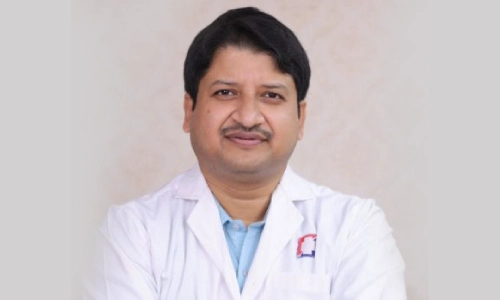
DR. SOMAK DAS
Qualifications: MBBS, MS(GEN.SURG.) DNB(GASTRO.SURG), MCH
Specialty: GASTRO SURGEON
Fees: Rs. 1,200.00
Available Days: MON, WED & FRI
Available Time: BY APPOINTMENT

DR. D. K. SARKAR
Qualifications: MBBSMS, DNB FRCS, (GOLD), FFSTED
Specialty: GENERAL SURGEON
Fees: Rs. 1,550.00
Available Days: MON, WED,THU & SAT
Available Time: MON WED,THU-16:00 & SAT-15:00

DR. RUDRADEEP BANERJEE
Qualifications: MS.(GEN.SURG), D.N. BMRCS
Specialty: GENERAL SURGEON
Fees: Rs. 1,000.00
Available Days: BY APPOINTMENT
Available Time: BY APPOINTMENT
DR. RANAJOY DUTTA
Qualifications: MBBS, M.S D.N.B
Specialty: GENERAL SURGEON
Fees: Rs. 1,200.00
Available Days: WED, SAT
Available Time: 17:00 - 18:00 PM
DR. ACHINTA KR DAS
Qualifications: MBBS, MS
Specialty: GENERAL SURGEON
Fees: Rs. 1,200.00
Available Days: BY APPOINTMENT
Available Time:BY APPOINTMENT
DR. SAMRIDDHI PODDAR
Qualifications: MBBS(HONS), MS(SURGERY), WBUHS NRSMCH
Specialty: GENERAL SURGEON
Fees: Rs. 1,000.00
Available Days: TUE & WED
Available Time: TUE 16:30-17:30 & WED 18:00-19:00
DR . B . B . BARAI
Qualifications: MBBS, DNB, PG DGM, CCEBDM
Specialty: GENERAL SURGEON
Fees: Rs. 1,200.00
Available Days: MON /FRIDAY
Available Time: 11:00-13:00
DR. SAPTARSHI KUNDU
Qualifications: MBBS, MS (GEN SUR)
Specialty: GENERAL SURGEON
Fees: Rs. 700.00
Available Days: BY APPOINTMENT
Available Time: BY APPOINTMENT
DR. MAINAK PAL
Qualifications: MBBS, MS, FMAS(GEN.SURG)
Specialty: GENERAL SURGEON
Fees: Rs. 1,000.00
Available Days: MON -FRI
Available Time: 17:00-18:00
DR. SUKANTA ROY
Qualifications: MBBS, MS(GASTO)
Specialty: GASTRO SURGEON
Fees: Rs. 1,000.00
Available Days: BY APPOINTMENT
Available Time: BY APPOINTMENT

DR. UDDIPTA DUTTA
Specialty: GASTRO SURGEON
Fees: Rs. 900.00
Available Days: BY APPOINTMENT
Available Time: BY APPOINTMENT
Hear From Our Happy Patients
Very good nursing home. All staff good.
A really good hospital with good critical and surgical care. Staffs are very cooperative..
Here the service are very good। Very good hospital
very good nursing home
Nurse didi gulo khub bhalo all staff bhalo 100.90% bhalo
Are good nursing hom varehalp pol anepplamkontak stap vare Good
Good experience All facilities is good
Best hospital Very good facility
Doctors, Nursing staff, other staff are very good, everything is good, only few accommodation issue is not adjustable.
Liked the place...staffs...sisters all helpful...and special thanks to my doctor..Doctor Sukanta Ray...he is next to God to me
Liked the place...staffs...sisters all helpful...and special thanks to my doctor..Doctor Sukanta Ray...he is next to God to me
Who Is at Highest Risk for MASLD and Progressive Liver Damage?
| Risk Factor | How It Can Increase Risk |
|---|---|
| Obesity and Overweight | Increases fat accumulation in the liver |
| Type 2 Diabetes and Prediabetes | Poor blood sugar control increases liver fat |
| Insulin Resistance | Increases fatty acid delivery to liver |
| Metabolic Syndrome | Abnormal blood pressure and fats increase risk |
| High Cholesterol and Dyslipidaemia | Abnormal blood fats can strain liver processing |
| Sleep Apnoea | Low oxygen levels may worsen liver fat |
| Sedentary Behaviour | Low activity can promote fat accumulation |
| Poor Diet | Excess sugar and unhealthy fats increase risk |
| Excessive Alcohol Use | Heavy drinking can accelerate liver damage |
| Rapid Weight Loss | Crash dieting can temporarily strain liver metabolism |
| Advancing Age | Risk increases with advancing age |
| Genetic Predisposition | Inherited traits can increase fatty liver susceptibility |
| Ethnicity | Certain ethnic groups (e.g., Hispanic populations) have a higher susceptibility or prevalence |
Causes Of Fatty Liver Disease
- Excess weight, especially abdominal fat.
- Type 2 diabetes and insulin resistance.
- High triglycerides or bad cholesterol.
- Too much processed food, sugar, and sugary drinks.
- Heavy alcohol consumption.
- Certain genetic changes or family history.
- Rapid weight loss or severe malnutrition.
- Certain medications, including corticosteroids.
- Sleep apnea, hypothyroidism, or PCOS.
What Causes Liver Disease Besides Fatty Liver?
Infection
- HAV can cause infection
- HBV can cause inflammation
- HCV can cause tissue damage
Immune System Conditions
- Autoimmune hepatitis attacks healthy cells
- Primary biliary cholangitis damages small bile ducts
- Primary sclerosing cholangitis scars bile ducts
Genetic Disorders
- Hemochromatosis causes excessive iron buildup
- Wilson's disease causes excessive copper buildup
- Alpha-1 antitrypsin deficiency causes organ damage
Cancer and Other Growths
- Liver cancer develops within liver tissue
- Bile duct cancer affects bile ducts
- Liver adenoma forms noncancerous growths
Other Causes
- Long-term alcohol use can cause damage
- Fat buildup can cause disease
- Certain medicines can cause damage
- Herbal mixtures may harm organ function
- Toxic chemical exposure can cause damage
Fatty Liver Patterns, Diagnosis & Treatment Approach
| Pattern | Type | First-Line Approach | When Advanced Treatment Is Needed | Expected Outcome |
|---|---|---|---|---|
| Liver fat without inflammation | MASL | Lifestyle and metabolic management | Fibrosis risk increases | Reduced liver fat |
| Fat with inflammation | MASH | Weight loss and risk management | Significant fibrosis develops | Reduced disease activity |
| Progressive liver scarring | Fibrosis | Treat metabolic risk factors | Advanced fibrosis develops | Slower disease progression |
| Advanced permanent scarring | Cirrhosis | Specialist monitoring | Liver decompensation occurs | Complication management |
Available Diagnosis & Tests
- Liver Function Tests (LFTs)
- Viral Hepatitis Tests
- Metabolic Markers
- Fibrosis Scores
- Abdominal Ultrasound
- Transient Elastography (FibroScan)
- CT or MRI Scans
- Fibrosis Assessment
- Liver Stiffness Assessment
- Advanced Disease
- Liver Biopsy
Available Treatment Options for Fatty Liver and Other Liver Diseases
- Weight management
- Dietary modification
- Regular physical activity
- Alcohol restriction
- Diabetes and cholesterol management
- Resmetirom for eligible MASH
- GLP-1 medicines for selected patients
- Liver transplantation for advanced cirrhosis
Post-Treatment Recovery Timeline
2–4 Weeks: Inflammation may begin decreasing.
2–3 Months: Grade 1 disease often improves.
3–6 Months: Liver enzymes may normalise.
6–12 Months: Grade 3 disease may improve.
1 Year+: Simple fatty liver may reverse.
2–3 Years: Advanced fibrosis needs longer management.
Complications if Left Untreated
- Steatohepatitis (NASH/MASH)
- Fibrosis
- Cirrhosis
- Liver Failure
- Ascites and Oedema
- Esophageal Varices
- Hepatic Encephalopathy
- Jaundice
- Liver Cancer
- Cardiovascular Disease
- Type 2 Diabetes
- Kidney Disease
Daily Management & Prevention Tips
Management
- Maintain a healthy body weight
- Exercise regularly
- Follow dietary recommendations
- Attend scheduled medical reviews
- Manage diabetes and cholesterol
Prevention
- Maintain a healthy weight
- Stay physically active
- Limit sugary drinks
- Eat balanced meals
- Manage metabolic health risks
Frequently Asked Questions
What Is the Difference Between NAFLD and NASH?
NAFLD involves fat accumulation with little inflammation, whereas NASH is more severe, causing inflammation and liver cell damage.
Does Fatty Liver Disease Affect Sleep Patterns?
Yes. People with fatty liver have higher rates of obstructive sleep apnea, while repeated nighttime oxygen drops may worsen inflammation and accelerate scarring.
Can Fatty Liver Affect Your Heart?
Yes, it can increase the risk of cardiovascular disease, making heart-related complications an important concern alongside liver health.
Why Does Liver Disease Cause Severe Skin Itching?
Advanced disease may cause pruritus when bile salts accumulate in the bloodstream because impaired liver function reduces their normal processing and excretion.
Can a Lean Person Have Fatty Liver?
Yes. People with normal body weight can develop lean NAFLD or MASLD, which accounts for about 7% to 20% of cases.