


Sudden upper abdominal pain that spreads towards the back, nausea, vomiting and fever are some of the first warning signs of pancreatitis. The pain may appear after meals and can quickly become severe. Some people may ignore these symptoms as simple digestive discomfort, but persistent or intense symptoms need medical attention.
We believe that recognising early signs can help patients receive timely care and reduce the risk of complications. This blog covers:
- The early symptoms, causes and types of pancreatitis
- How doctors diagnose and treat pancreatic inflammation
- When pancreatitis becomes an emergency requiring hospital care
What Is Pancreatitis?
Pancreatitis is a condition where the pancreas becomes inflamed. The pancreas is an important organ located behind the stomach that helps with digestion and blood sugar regulation.
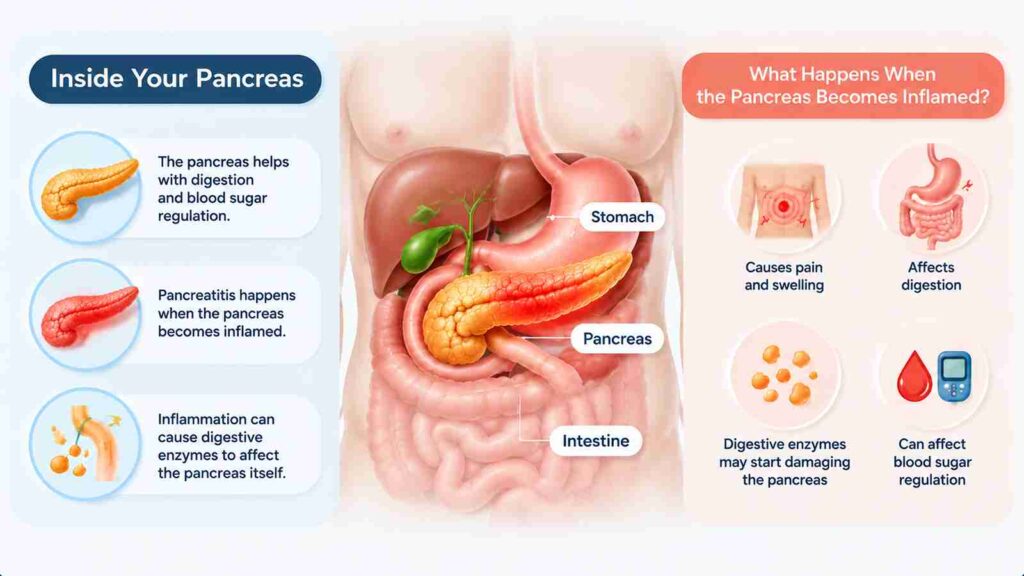
When inflammation affects the pancreas, digestive enzymes may start damaging pancreatic tissue instead of helping break down food. This can cause pain, swelling, and digestive problems.
Pancreatitis can develop suddenly or progress over time. Understanding the type and cause helps doctors decide the most suitable treatment approach.
What Are the Early Symptoms of Pancreatitis?
Recognising pancreatitis symptoms early is important because the condition can worsen quickly in some cases. Symptom patterns and severity may differ depending on whether the inflammation is sudden or long-standing.
Where and How the Pain Typically Starts
The most common symptom is abdominal pain. The typical pancreatitis pain location is the upper abdomen, usually around the centre or left side. The pain may spread to the back and worsen after eating.
Patients often describe the pain as:
- Persistent and intense
- A deep aching sensation
- Worse when lying flat
- Slightly relieved when sitting forward
Severe or continuous upper abdominal pain should not be ignored, especially when it occurs with vomiting or fever.
Other Early Warning Signs
Apart from pain, early symptoms may include:
- Nausea and repeated vomiting
- Fever
- Fast heartbeat
- Abdominal tenderness
- Loss of appetite
- Bloating or discomfort
Some patients may feel generally unwell before diagnosis. Seeking medical advice early can help identify the cause and prevent worsening inflammation.
Acute Pancreatitis vs Chronic Pancreatitis: What’s the Difference?
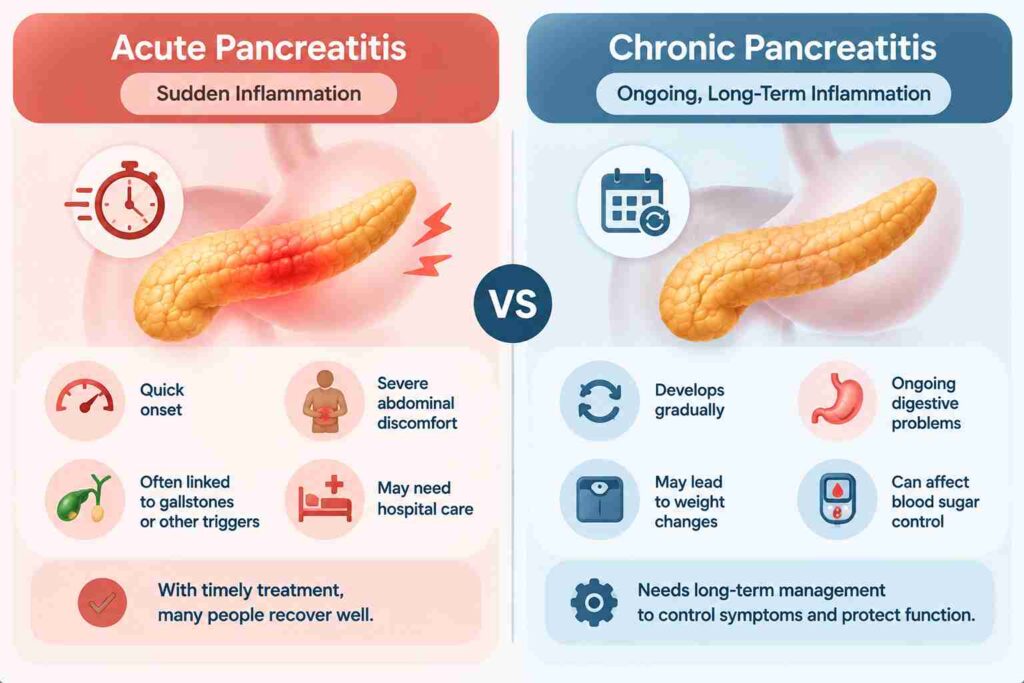
Understanding acute pancreatitis vs chronic pancreatitis helps explain why some people recover completely while others develop long-term problems.
How Does Acute Pancreatitis Develop Suddenly?
Acute pancreatitis develops quickly and causes sudden inflammation of the pancreas. Symptoms may appear within hours and can range from mild discomfort to severe pain that requires hospital care.
Common causes include gallstones, certain medicines, high triglyceride levels and other medical factors. With timely treatment, many patients recover well.
How Chronic Pancreatitis Builds Up Over Time?
Chronic pancreatitis develops gradually due to repeated or ongoing inflammation. Over time, it can cause permanent changes to the pancreas and affect digestion.
People with chronic pancreatitis may experience:
- Recurrent abdominal pain
- Weight loss
- Poor digestion
- Difficulty absorbing nutrients
- Changes in blood sugar control
Long-term management focuses on controlling symptoms, protecting pancreatic function and improving quality of life.
What Causes Pancreatitis?
The causes of pancreatitis can vary from person to person. Identifying the reason behind inflammation is important because treatment depends on the underlying problem.
Gallstones and Alcohol as Leading Causes
Gallstones are one of the most common causes of acute pancreatitis. When a gallstone blocks the passage connecting the pancreas and bile duct, digestive enzymes may build up and trigger inflammation. This is known as gallstone pancreatitis.
Alcohol-related pancreatic injury is another recognised cause, especially with long-term heavy alcohol use.
Other Less Common Causes
Other factors that may contribute include:
- Certain medications
- Very high triglyceride levels
- Genetic conditions
- Autoimmune disorders
- Abdominal injuries
- Some infections
In some cases, doctors may not find a clear cause immediately and may need further evaluation.
How Is Pancreatitis Diagnosed?
A correct pancreatitis diagnosis requires a combination of symptoms, examination findings and medical tests.
Blood Tests for Pancreatic Enzymes
Blood tests help check levels of pancreatic enzymes, including amylase and lipase. Raised enzyme levels may support the diagnosis when combined with typical symptoms.
Doctors may also check:
- Blood sugar levels
- Liver function
- Triglyceride levels
- Signs of infection or inflammation
Imaging Tests (Ultrasound, CT Scan)
Imaging helps doctors understand the condition and identify possible causes.
Common tests include:
- Ultrasound: Helps detect gallstones and changes around the pancreas.
- CT scan: Provides detailed images to assess inflammation and complications.
- MRI-based scans: May be used in selected cases to examine the bile and pancreatic ducts.
These investigations help doctors decide the next step in treatment.
When Does Pancreatitis Become a Medical Emergency?
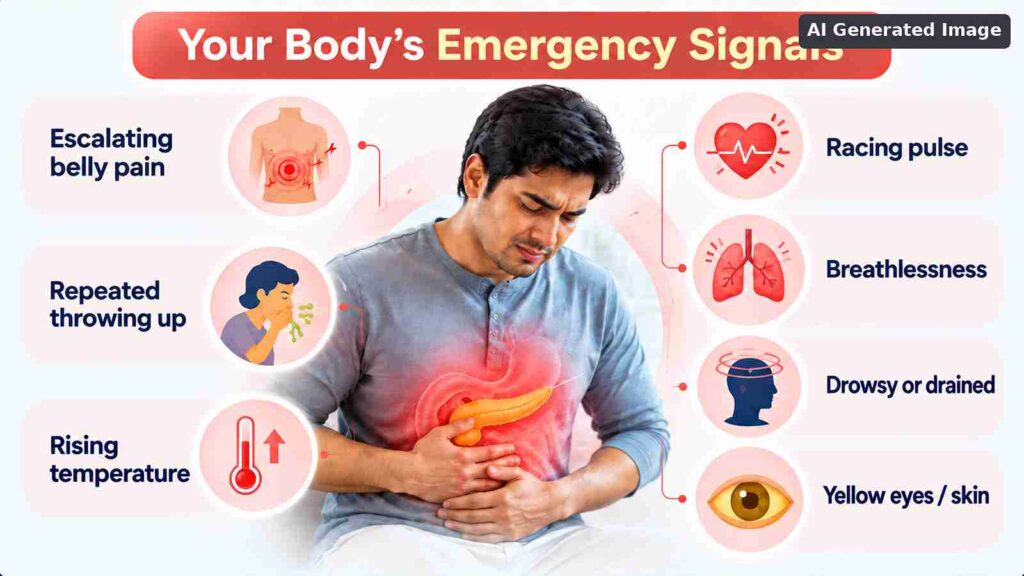
While some cases improve with treatment, severe pancreatitis can become dangerous. Seek medical attention quickly if symptoms become severe or new warning signs appear.
Warning Signs That Need Immediate Hospital Care
Seek emergency care for:
- Severe or worsening abdominal pain
- Persistent vomiting
- Fever with increasing discomfort
- Fast heartbeat
- Difficulty while breathing
- Confusion or extreme weakness
- Yellowing of the eyes or skin
These may indicate serious inflammation or complications requiring urgent treatment.
Long-Term Complications If Left Untreated
Untreated or severe pancreatitis may lead to pancreatitis complications, including:
- Fluid collections around the pancreas
- Infection
- Tissue damage
- Digestive problems
- Poor nutrient absorption
- Diabetes due to reduced pancreatic function
Chronic inflammation may also permanently affect pancreatic health.
What is the Treatment for Pancreatitis?
If you’re considering pancreas treatment options, keep in mind that the type of care depends on the cause, severity, and type of pancreatitis. At Samaritan Hospital, doctors evaluate patients based on symptoms, test results, and overall health before deciding on treatment.
Consultation with an experienced gastroenterologist helps determine whether the patient needs supportive care, medicines, procedures or long-term management.
Hospital Treatment and Pain Management
Treatment for acute pancreatitis often focuses on:
- Pain control
- Fluid support
- Monitoring vital signs
- Managing nausea and vomiting
- Treating the underlying cause
If gallstones, infections or other complications are involved, additional procedures may be needed.
Patients with severe pancreatitis may require close monitoring in a hospital setting.
Diet and Recovery After Pancreatitis
A suitable pancreatitis diet plays an important role during recovery.
Depending on the condition, doctors may recommend:
- Small and frequent meals
- Adequate hydration
- Balanced nutrition
- Avoiding foods that worsen symptoms
Diet plans are usually personalised because nutritional needs differ between acute recovery and chronic pancreatitis.
When Should You See a Doctor?
Do not ignore repeated upper abdominal pain, especially when it spreads to the back or occurs with vomiting, fever or appetite loss.
Early consultation can help identify pancreatitis before complications develop. If symptoms suggest pancreatic inflammation, timely evaluation by a digestive health specialist can help guide the right treatment approach.
Frequently Asked Questions
Can pancreatitis go away on its own?
Mild cases may improve with appropriate medical care, but pancreatitis should not be ignored. Evaluation helps identify the cause and prevent possible complications.
Is pancreatitis pain constant or does it come and go?
Pain patterns vary. Acute pancreatitis often causes persistent severe pain, while chronic pancreatitis may cause recurring episodes of discomfort.
Can pancreatitis be caused by something other than alcohol?
Yes. Gallstones, high triglycerides, certain medicines, genetic factors and other conditions can also cause pancreatitis.
What foods should you avoid after a pancreatitis attack?
Food choices depend on individual recovery and medical advice. Many patients may need to avoid heavy, fatty meals and follow a balanced diet plan.
Can pancreatitis lead to diabetes?
Yes. Chronic pancreatitis can damage insulin-producing cells in the pancreas, which may affect blood sugar control and increase diabetes risk.