
Male Infertility Treatment in Kolkata
Home / Treatments / Urology / Male Infertility
Quick Answers
Is male infertility treatable?
Yes. Many causes respond to medicines, lifestyle changes, procedures, surgery, or assisted reproductive techniques.
Is surgery always required for male infertility?
No. Treatment depends on the underlying cause, severity, test results, and how you respond.
Can male infertility become serious?
Yes. Persistent problems may indicate hormonal, testicular, genetic, or reproductive conditions requiring evaluation.
When should someone seek medical care?
Seek evaluation when conception remains difficult or semen, testicular, or reproductive problems occur.
What Is Male Infertility?
It denotes a man's inability to achieve pregnancy with a fertile female partner after one year of regular, unprotected intercourse. It contributes to approximately 40%–50% of infertility cases among couples. Diagnosis is made when conception does not occur after 12 months of regular, unprotected intercourse.
Key points:
- Low sperm production may occur
- Sperm movement can become reduced
- Abnormal sperm shape may affect fertility
- Sexual or reproductive problems may be present
Types of Male Infertility
Pre-Testicular Causes
- Impaired brain-to-testis signalling
- Kallmann syndrome (reduced GnRH production)
- Disrupted reproductive hormone balance
- Suppressed natural testosterone production
Testicular Causes
- Varicocele (enlarged scrotal veins affecting sperm production)
- Genetic disorders (impaired sperm production)
- Undescended testicles (abnormal testicular development)
- Testicular damage affecting sperm production
Post-Testicular Causes
- Blocked sperm transport pathways
- Ejaculatory dysfunction (abnormal semen release)
- Immune-related sperm impairment
Sperm and Semen Abnormalities
- Azoospermia (complete absence of sperm)
- Oligozoospermia (low sperm concentration)
- Asthenozoospermia (reduced sperm motility)
- Teratozoospermia (abnormal sperm morphology)
- Aspermia (absence of sperm)
Symptoms of Male Infertility
Common Symptoms
- Difficulty achieving pregnancy
- Changes in sexual function
- Reduced sexual desire
- Testicular pain or swelling
- Decreased facial or body hair
- Persistent fatigue or mood changes
- Often no noticeable symptoms
Red Flags (Seek Immediate Medical Care)
- Sudden severe testicular pain
- Rapid testicular swelling
- Severe pain after injury
- Blood in semen
- New testicular lump
- Severe pelvic or groin pain
Why Choose Samaritan Medical Surgical & Critical Care?
At Samaritan Medical Surgical & Critical Care, we provide comprehensive healthcare solutions as per your needs. With a team of expert professionals, we focus on delivering compassionate, patient-centred care for optimal well-being.

NABH Certified
Accredited by NABH, ensuring the highest standards of healthcare quality and patient safety.

Surgical Excellence
Our skilled surgeons offer precision care for a wide range of surgical procedures.

Critical Care Support
Providing round-the-clock critical care with advanced equipment and expert medical teams.
Our Doctors
DR. AMLAN CHAKRABORTY
Qualifications: MBBS, MS, FRCS (Urology)
Specialty: Urology
Experience: 23 years
Fees: Rs. 1,700.00
Available Days: TUE,THURS & SAT(BY APPOINTMENT)
Available Time: 12:00 - 13:00 (BY APPOINTMENT)

DR. PRAMOD KUMAR SHARMA
Qualifications: MBBS,MS
Specialty: Urology
Experience: 21 years
Fees: Rs. 1,200.00
Available Days: BY APPOINTMENT
Available Time: By Appointment

DR. NILANJAN MITRA
Qualifications: MBBS, MS (Gen. Surg.), MCh (Urology)
Specialty: Urology
Experience: 19 years
Fees: Rs. 1,200.00
Available Days:TUE & THURS
Available Time: 8:30 - 10:30

DR. SMARANJIT CHATTERJEE
Qualifications: MBBS, MS, DNB, Mch
Specialty: Urology
Experience: 18 years
Fees: Rs. 1,200.00
Available Days: BY APPOINTMENT
Available Time: BY APPOINTMENT

DR. SOUVIK CHATTERJEE
Qualifications: MBBS, MS (Gen. Surg.), DNB, MCh (Urology)
Specialty: Urology
Experience: 16 years
Fees: Rs. 1,000.00
Available Days: WED, SAT
Available Time: WED: 15:00 - 16:00, SAT: 09:30 - 10:30

DR. SUBHOJIT MALAKAR
Qualifications: MBBS, MS (Gen. Surg.), DNB, MCh (Urology)
Specialty: Urology
Experience: 15 years
Fees: Rs. 1,000.00
Available Days: BY APPOINTMENT
Available Time: BY APPOINTMENT
DR. SUNIRMAL CHOWDHURY
Qualifications: MBBS, MS, IPGMER (HOD)
Specialty: Urology
Experience: 20 years
Fees: Rs. 1,200.00
Available Days: BY APPOINTMENT
Available Time: By Appointment
Hear From Our Happy Patients
Very good nursing home.all staff best
I had Laproscopic surgery of gallbladder stone on 23/6/26 & Discharge on 25/6/26. I had wonderful experience in nursing home, Very cooperative staff. Particularly Ms Aditi (Head Sister charge) , she has cooperated very well with Smily face. OT is well equipped with high quality instruments, Dr Mukesh Karia has done wonderful operations.
Very good nursing home
Very Supportive Staff with 24*7 support. Along with Neat and Clean cloths and bed.
Great treatment and recuperation. Doctors nurses and support staff mase it feel like home .
Thakuuuu Samaritan nursing home........and Dr.babuuuu khubbbb valooooo..apnader sakoler babohar khub valo r porisheba khubbb khubbb valo sakol k. Ank ank ank dhannobad ......
Very good nursing home
Very good Treatment here and also staff behaviour has very good
I have admitted my father here twice under Dr Arindam Dutta sir for the DJ stenting and RIRS (Kidney stone) .The entire team of Samaritan was fantastic.Specially Ms Aditi Nandi was so humble and cooperative .She attended us every time and Given all facilities.Through out the admitting time and discharge,all the sisters,brothers,Housekeeping ,ward boy everyone was so polite and well mannered.
Individuals at Highest Risk for Male Infertility
| Groups | Factors |
|---|---|
| Older Adults | Fertility may decline with age because of changes in sperm quality and reproductive function. |
| Family History | Certain inherited conditions may affect sperm production or reproductive development. |
| Men with Varicocele | Enlarged testicular veins may affect testicular temperature and sperm production. |
| Hormonal Disorders | Abnormal hormone levels may interfere with sperm production and reproductive function. |
| Previous Testicular Problems | Injury, infection, or surgery involving the testicles may affect sperm production. |
| Lifestyle Risk Factors | Smoking, excessive alcohol use, obesity, and prolonged heat exposure may affect sperm quality. |
Causes Of Male Infertility
- Low sperm production
- Varicocele
- Hormonal disorders
- Genetic conditions
- Reproductive tract blockages
- Previous testicular injury or infection
- Certain medicines and medical treatments
- Lifestyle and environmental factors
Male Infertility Patterns, Diagnosis & Treatment Approach
| Pattern | Likely Condition | Initial Treatment | Escalation | Outcome |
|---|---|---|---|---|
| Low sperm count | Sperm production disorder or hormonal condition | Clinical evaluation, semen analysis and appropriate medical management | Persistently low count or abnormal findings | Improved fertility potential when the underlying cause is treated |
| Reduced sperm movement | Sperm motility disorder | Evaluation, lifestyle management and appropriate treatment | Persistent poor motility despite treatment | Improved sperm quality or fertility options |
| Testicular pain or swelling | Varicocele or other testicular condition | Clinical examination and imaging when required | Persistent symptoms or abnormal fertility findings | Outcome depends on the underlying cause |
| Difficulty achieving pregnancy | Male fertility factor | Fertility evaluation and semen testing | Abnormal reproductive findings or failure of conservative treatment | Improved chances of conception when the cause is addressed |
| No sperm in semen | Azoospermia or reproductive tract obstruction | Hormonal assessment, semen analysis and further evaluation | Persistent absence of sperm or suspected obstruction | Treatment depends on sperm production and underlying cause |
Procedures & Recovery Time: What to Expect
Varicocele Repair
- Enlarged veins around the testicle are treated
- The procedure aims to improve blood flow around the testicle
- Microsurgical or minimally invasive techniques may be used
- The approach depends on the individual condition
Testicular Sperm Extraction
- Small samples of testicular tissue are collected
- The procedure is used to retrieve sperm when required
- Local or other appropriate anaesthesia may be used
- Retrieved sperm may be used for assisted reproduction
Vasectomy Reversal
- The reproductive ducts are surgically reconnected
- Microsurgical techniques may be used for precise reconstruction
- The procedure aims to restore sperm passage
- Success depends on the previous vasectomy and individual factors
Recovery Timeline
Sperm Retrieval (TESE): Light activities within 2–3 days.
Varicocele Repair: Light work 1–2 days; strenuous exercise 2–4 weeks.
Vasectomy Reversal: Desk work 3–4 days; avoid lifting and sex 2–4 weeks.
Hospital Stay: Same-day discharge for most procedures; some require overnight stay.
Available Diagnosis & Tests
- Semen Analysis
- Hormone Testing
- Scrotal Ultrasound
- Transrectal Ultrasound
- Post-Ejaculation Urinalysis
- Genetic Tests
- Testicular Biopsy
- Sperm DNA Fragmentation Test
Available Treatment Options

Non-Surgical
- Medicines for hormonal disorders
- Antibiotics for reproductive infections
- Lifestyle modification and weight management
- Antioxidant therapy when clinically indicated
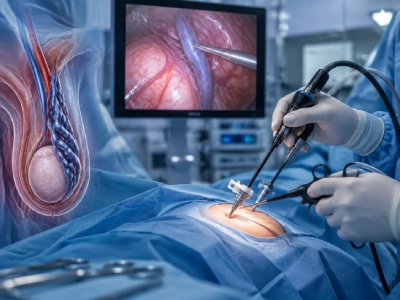
Minimally Invasive
- Varicocele embolisation
- Sperm retrieval procedures
- Image-guided reproductive procedures
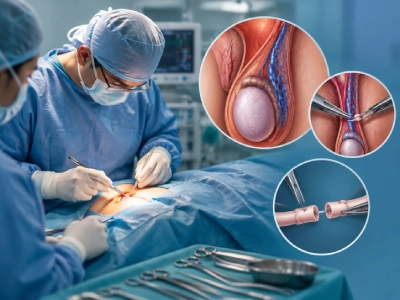
Surgical
- Azoospermia treatment
- Varicocele surgical correction
- Vasectomy reversal
- Surgical treatment of reproductive tract obstruction
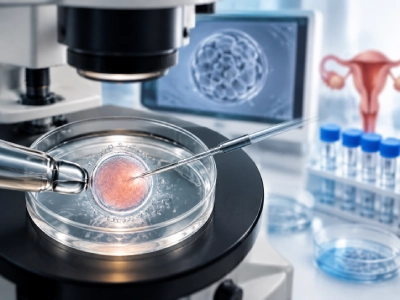
Assisted Reproductive
- Surgical sperm retrieval techniques
- Micro-TESE, TESA, and PESA procedures
- Intrauterine insemination (IUI)
- In vitro fertilisation (IVF)
- Intracytoplasmic sperm injection (ICSI)
Benefits of Male Infertility Treatment
- Improved sperm production
- Better sperm motility
- Improved sperm quality
- Treatment of reproductive tract blockages
- Correction of varicocele
- Improved reproductive function
- Increased fertility potential
- Access to assisted reproductive options
- Improved chances of conception
- Treatment of underlying reproductive conditions
Male Fertility Treatment Success Rates
| Severity / Case | Treatment / Approach | Expected Outcome / Success Rate |
|---|---|---|
| Mild Male Infertility | Medication or lifestyle correction | Improvement often within 3–6 months |
| Moderate Male Factor Infertility | Medical therapy or IUI | 10–20% success per cycle |
| Severe Male Factor Infertility | IVF or ICSI | 40–60%fertilisation success rate |
Complications if Left Untreated
- Persistent Difficulty Conceiving
- Reduced Sperm Quality
- Progressive Reproductive Problems
- Untreated Varicocele
- Hormonal Imbalance
- Reproductive Tract Obstruction
- Underlying Testicular Disease
- Delayed Diagnosis of Genetic Conditions
- Delayed Treatment of Testicular Problems
- Continued Fertility Difficulties
- Linked Chronic Diseases
- Psychological Distress
- Progressive Testicular Damage
Daily Management & Prevention Tips
Management Tips
- Eat whole foods, fruits, vegetables, leafy greens
- Exercise moderately and avoid overtraining
- Manage stress through deep breathing, mindfulness
- Keep cool; avoid laptops, tight underwear
- Limit caffeine to under 300 milligrams daily
- Stay adequately hydrated throughout the day
Prevention Tips
- Quit smoking, vaping, tobacco, and cannabis
- Cut back on alcohol heavily
- Maintain a healthy BMI for fertility
- Avoid anabolic steroids, testosterone supplements, and recreational drugs
- Prevent STIs, including chlamydia and gonorrhoea
- Limit heavy metals, pesticides, industrial chemical exposure
Frequently Asked Questions
Why isn't my partner getting pregnant despite regular sex?
This may indicate an underlying fertility issue in either partner. In men, common causes include low sperm count, poor motility, or hormonal imbalance. A semen analysis is the first step for evaluation.
What does low semen volume mean in men?
It may be related to reduced seminal fluid production, ejaculatory problems, hormonal changes, or a blockage affecting the reproductive tract. Persistent changes warrant medical evaluation.
Can testicle pain or swelling affect fertility?
Not necessarily, but it can signal conditions such as varicocele, infection, inflammation, or injury that may affect reproductive function. A urological assessment can identify the cause.
Why has my sperm count suddenly dropped?
Temporary changes can follow fever, illness, significant stress, certain medications, heat exposure, or lifestyle changes. Because production takes time, repeat testing may help confirm whether the reduction persists.
Can erection problems make it harder to conceive?
It can make conception harder by preventing satisfactory intercourse or ejaculation. It does not necessarily mean sperm production is impaired, and the underlying cause should be assessed.