
IBS & Ulcerative Colitis Treatment in Kolkata
Home / Treatments / Gastroenterology / IBS & colitis
Quick Answers
Can IBS and colitis be treated?
Yes. Treatment depends on whether symptoms arise from IBS, ulcerative colitis, or another bowel condition.
Are IBS and ulcerative colitis the same?
No. IBS affects bowel function, while ulcerative colitis causes inflammation and ulcers in the colon.
Can colitis become a long-term condition?
Yes. Ulcerative colitis is chronic and may cause recurring flare-ups requiring ongoing management.
When should someone seek medical care?
Seek medical care for persistent diarrhoea, rectal bleeding, severe pain, weight loss, or fever.
What Is IBS & Colitis?
IBS and colitis are different bowel conditions that can cause abdominal pain, altered bowel habits, bloating, or diarrhoea. IBS does not cause intestinal inflammation. It is a functional gut disorder. While conditions such as ulcerative colitis cause colon inflammation and may damage the colon’s lining.
Key points:
- IBS affects bowel function
- Colitis involves intestinal inflammation
- Symptoms can overlap considerably
- Persistent symptoms need evaluation
Types of IBS & Colitis
IBS With Constipation (IBS-C)
Most bowel movements are hard, lumpy, and difficult to pass.
IBS With Diarrhoea (IBS-D)
Most bowel movements are loose, watery, and occur with urgency.
IBS With Mixed Bowel Habits (IBS-M)
Bowel movements alternate between hard, lumpy stools and loose, watery stools.
Unsubtyped IBS (IBS-U)
Symptoms meet IBS criteria but do not fit other subtypes.
Ulcerative Colitis
Chronic inflammation causes swelling and ulcers throughout the colon and rectum.
Infectious Colitis
Bacterial, viral, or parasitic infections cause inflammation inside the colon.
Ischaemic Colitis
Reduced blood flow to the colon causes sudden intestinal inflammation.
Microscopic Colitis
Hidden colon inflammation is identified only through microscopic tissue examination.
Symptoms Of IBS & Ulcerative Colitis
Common Symptoms of Irritable Bowel Syndrome
- Abdominal pain and cramping
- Diarrhoea, constipation, or alternating between the two
- Gas and bloating
- White or clear mucus in stools
- A sensation that the bowel has not emptied completely
Common Symptoms of Ulcerative Colitis
- Rectal bleeding
- Bloody or watery diarrhoea
- Severe bowel urgency
- Fever, fatigue, nausea, vomiting, weight loss
- Joint and skin problems due to inflammatory colitis
Red Flags For Both (When To See A Doctor)
Go right away if you experience persistent heavy bleeding, severe pain, high fever, or dehydration.
- Blood in stool or dark, tarry stools
- Diarrhoea or severe pain that wakes you
- Weight loss without dietary changes
- Fever or chills above 38°C (100.4°F) with digestive symptoms
- Unexplained fatigue, weakness, or paleness
- New bowel changes after age 50
Why Choose Samaritan Medical Surgical & Critical Care?
At Samaritan Medical Surgical & Critical Care, we provide comprehensive healthcare solutions as per your needs. With a team of expert professionals, we focus on delivering compassionate, patient-centred care for optimal well-being.

NABH Certified
Accredited by NABH, ensuring the highest standards of healthcare quality and patient safety.

Surgical Excellence
Our skilled surgeons offer precision care for a wide range of surgical procedures.

Critical Care Support
Providing round-the-clock critical care with advanced equipment and expert medical teams.
Our Doctors
DR. SOMAK DAS
Qualifications: MBBS, MS(GEN.SURG.) DNB(GASTRO.SURG), MCH
Specialty: GASTRO SURGEON
Fees: Rs. 1,200.00
Available Days: MON, WED & FRI
Available Time: BY APPOINTMENT

DR. D. K. SARKAR
Qualifications: MBBSMS, DNB FRCS, (GOLD), FFSTED
Specialty: GENERAL SURGEON
Fees: Rs. 1,550.00
Available Days: MON, WED,THU & SAT
Available Time: MON WED,THU-16:00 & SAT-15:00

DR. RUDRADEEP BANERJEE
Qualifications: MS.(GEN.SURG), D.N. BMRCS
Specialty: GENERAL SURGEON
Fees: Rs. 1,000.00
Available Days: BY APPOINTMENT
Available Time: BY APPOINTMENT
DR. RANAJOY DUTTA
Qualifications: MBBS, M.S D.N.B
Specialty: GENERAL SURGEON
Fees: Rs. 1,200.00
Available Days: WED, SAT
Available Time: 17:00 - 18:00 PM
DR. ACHINTA KR DAS
Qualifications: MBBS, MS
Specialty: GENERAL SURGEON
Fees: Rs. 1,200.00
Available Days: BY APPOINTMENT
Available Time:BY APPOINTMENT
DR. SAMRIDDHI PODDAR
Qualifications: MBBS(HONS), MS(SURGERY), WBUHS NRSMCH
Specialty: GENERAL SURGEON
Fees: Rs. 1,000.00
Available Days: TUE & WED
Available Time: TUE 16:30-17:30 & WED 18:00-19:00
DR . B . B . BARAI
Qualifications: MBBS, DNB, PG DGM, CCEBDM
Specialty: GENERAL SURGEON
Fees: Rs. 1,200.00
Available Days: MON /FRIDAY
Available Time: 11:00-13:00
DR. SAPTARSHI KUNDU
Qualifications: MBBS, MS (GEN SUR)
Specialty: GENERAL SURGEON
Fees: Rs. 700.00
Available Days: BY APPOINTMENT
Available Time: BY APPOINTMENT
DR. MAINAK PAL
Qualifications: MBBS, MS, FMAS(GEN.SURG)
Specialty: GENERAL SURGEON
Fees: Rs. 1,000.00
Available Days: MON -FRI
Available Time: 17:00-18:00
DR. SUKANTA ROY
Qualifications: MBBS, MS(GASTO)
Specialty: GASTRO SURGEON
Fees: Rs. 1,000.00
Available Days: BY APPOINTMENT
Available Time: BY APPOINTMENT

DR. UDDIPTA DUTTA
Specialty: GASTRO SURGEON
Fees: Rs. 900.00
Available Days: BY APPOINTMENT
Available Time: BY APPOINTMENT
Hear From Our Happy Patients
Very good nursing home.all staff best
I had Laproscopic surgery of gallbladder stone on 23/6/26 & Discharge on 25/6/26. I had wonderful experience in nursing home, Very cooperative staff. Particularly Ms Aditi (Head Sister charge) , she has cooperated very well with Smily face. OT is well equipped with high quality instruments, Dr Mukesh Karia has done wonderful operations.
Very good nursing home
Very Supportive Staff with 24*7 support. Along with Neat and Clean cloths and bed.
Great treatment and recuperation. Doctors nurses and support staff mase it feel like home .
Thakuuuu Samaritan nursing home........and Dr.babuuuu khubbbb valooooo..apnader sakoler babohar khub valo r porisheba khubbb khubbb valo sakol k. Ank ank ank dhannobad ......
Very good nursing home
Very good Treatment here and also staff behaviour has very good
I have admitted my father here twice under Dr Arindam Dutta sir for the DJ stenting and RIRS (Kidney stone) .The entire team of Samaritan was fantastic.Specially Ms Aditi Nandi was so humble and cooperative .She attended us every time and Given all facilities.Through out the admitting time and discharge,all the sisters,brothers,Housekeeping ,ward boy everyone was so polite and well mannered.
Individuals at Highest Risk for Both Conditions
| Risk Factor | IBS | Ulcerative Colitis |
|---|---|---|
| Age | Symptoms commonly begin in the teens through early 40s. | Often begins in younger adults, especially before age 30. |
| Family history | A close relative with IBS increases risk. | Family history and genetics may increase susceptibility. |
| Gender | Diagnosed more often in women than men. | Can affect people of any gender. |
| Mental health | Anxiety, depression, and PTSD may increase susceptibility. | Not a primary established risk factor. |
| Infections | Severe gastroenteritis can increase IBS risk. | Not a primary established risk factor. |
| Trauma | Physical, sexual, or emotional trauma may increase susceptibility. | Not a primary established risk factor. |
| Ancestry | No specific ancestry-related risk established. | Ashkenazi Jewish ancestry carries higher risk. |
| Immune-related conditions | Not a primary risk factor. | Immune dysfunction may contribute to susceptibility. |
| Smoking history | Not a primary risk factor. | Risk patterns may differ in former smokers. |
Causes Of Fatty Liver Disease
IBS and colitis have different causes. IBS involves altered gut-brain interactions, while ulcerative colitis is linked to abnormal immune responses, genetic susceptibility, gut microbiome changes, and environmental influences.
Why IBS Develops
- Gut-brain signalling problems
- Abnormal intestinal contractions
- Previous gut-related bacterial or viral infections
- Gut microbiome changes
- Early-life/childhood stress
Why Ulcerative Colitis Develops
Immune malfunction: Attacks the colon lining
Genetic predisposition: Family history raises IBD risk
Environmental triggers: Diet, stress, microbes may contribute
IBS & Colitis Patterns, Diagnosis & Treatment Approach
| Pattern | Type | First-Line Approach | When Advanced Treatment Is Needed | Expected Outcome |
|---|---|---|---|---|
| Abdominal pain with bowel changes | IBS | Diet and symptom management | Persistent or severe symptoms | Improved symptom control |
| Rectal inflammation | Ulcerative proctitis | Local anti-inflammatory treatment | Persistent inflammation | Symptom control and remission |
| Left-sided inflammation | Left-sided colitis | Anti-inflammatory medication | Moderate or severe disease | Reduced inflammation |
| Extensive inflammation | Extensive colitis | Medical disease control | Severe or refractory disease | Remission or advanced management |
Procedure & Recovery: What to Expect
For severe ulcerative colitis, surgery may remove the colon and rectum, followed by J-pouch creation or ileostomy, while IBS does not require surgery and is managed medically
Surgical Options for Colitis
Proctocolectomy: Removes the entire colon and rectum.
J-Pouch (IPAA): Creates an internal pouch using small intestine.
Stoma/Ileostomy: Diverts stool through an abdominal opening.
Minimally Invasive Surgery: Uses laparoscopic or robotic techniques.
IBS Management
Non-surgical treatment: Lifestyle, diet changes, and medicines.
Symptom control: Fibre, antispasmodics, and stress management help.
Recovery & Results Timeline
| Timeline | Colitis Surgery Recovery | IBS Management |
|---|---|---|
| Days 1–7 | Hospital monitoring, fluids, gradual diet, early walking | Managing acute bloating, cramps, and stool changes |
| Weeks 1–2 | Wound healing, rest, fatigue, loose or frequent stools | Identifying triggers, hydration, dietary adjustments |
| Weeks 3–6 | Gradual activity, light work, improving stool consistency | Stabilising routines and targeted dietary approaches |
| Weeks 6–12+ | Returning to exercise after surgical clearance, expanding diet | Maintaining symptom control through ongoing management |
| Long term | Bowel adaptation and gradually reduced stool frequency | Managing triggers, lifestyle factors, and recurring symptoms |
Available Diagnosis & Tests
IBS diagnosis relies on symptom criteria and ruling out other diseases. Colitis requires visual and tissue confirmation of inflammation.
Tests for IBS
Blood tests: Check coeliac disease and inflammation markers.
Stool tests: Detect infections, parasites, and malabsorption.
Breath tests: Identify lactose intolerance or SIBO.
Tests for Colitis
Faecal calprotectin: Detects active intestinal inflammation.
Colonoscopy: Examines the colon and obtains tissue biopsies.
Imaging scans: CT or MRI detects deeper inflammation.
Available Treatment Options
Managing IBS and ulcerative colitis requires consistent dietary habits, trigger tracking, and stress management to reduce flare-ups and ease symptoms.
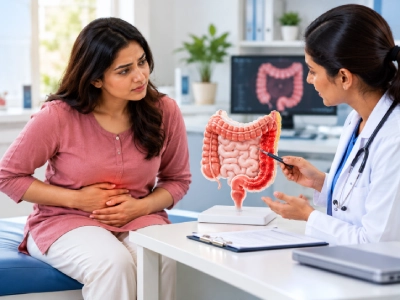
Ulcerative Colitis Treatment
- Aminosalicylates reduce intestinal inflammation.
- Corticosteroids control active flare-ups.
- Immunomodulators support maintenance treatment.
- Biologics target inflammatory immune pathways.
- Small-molecule medicines suppress immune signals.
- Surgery treats selected severe disease.
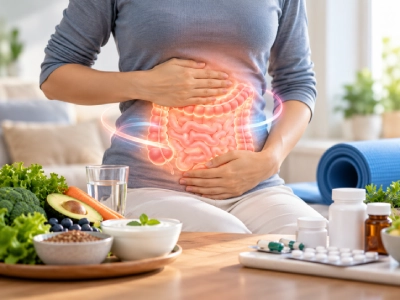
IBS Treatment
- Dietary management identifies symptom triggers.
- Fibre adjustment supports bowel regularity.
- Antispasmodics may reduce abdominal cramping.
- Laxatives may treat constipation-predominant IBS.
- Antidiarrhoeals may control diarrhoea.
- Stress management may reduce symptom severity.

Lifestyle Adjustments
- Avoid identified food triggers.
- Maintain adequate fluid intake.
- Follow prescribed treatment plans.
- Maintain regular meal patterns.
- Exercise regularly as tolerated.
- Avoid unnecessary NSAID use.
Complications if Left Untreated
Complications of Ulcerative Colitis
- Toxic megacolon
- Colon perforation
- Severe bleeding and anaemia
- Colorectal cancer
- Blood clots
- Osteoporosis
- Joint inflammation
- Skin inflammation
- Eye inflammation
Complications of IBS
- Persistent abdominal pain
- Chronic bloating
- Ongoing diarrhoea or constipation
- Reduced quality of life
- Emotional distress
Daily Management & Prevention Tips
Daily Dietary Habits
- Choose five to six smaller meals daily.
- Drink 1.5–2 litres of water daily.
- Increase soluble fibre slowly during treatment.
- Record meals and identify personal triggers.
Foods to Limit or Avoid
- Onions, garlic, wheat, apples, pears.
- Fried, greasy, spicy foods, caffeine.
- Artificial sweetener
- Alcohol and carbonated drinks
Frequently Asked Questions
Is blood in the stool a common symptom of both conditions?
No. Bloody stools commonly indicate colonic inflammation and ulceration. With IBS, bleeding usually has another cause, such as haemorrhoids, and requires medical evaluation.
Can food poisoning or a stomach bug turn into IBS?
Yes. Severe gastroenteritis can trigger post-infectious IBS by altering gut microbes, increasing nerve sensitivity, and causing lasting low-grade immune changes.
Can you have both IBS and colitis at the same time?
Yes. Bloating, cramping, and unpredictable bowel habits may persist despite complete tissue healing during clinical remission.
Is it true that people with colitis or IBS must completely avoid all fibre?
No. Soluble fibre, including oats and psyllium, can regulate bowel patterns, while raw insoluble fibre may aggravate symptoms during active inflammation.
Can natural remedies like lifestyle changes or diets cure colitis?
No. Lifestyle changes and dietary measures can ease IBS symptoms but cannot cure colitis, which requires medical treatment to control inflammation and prevent bowel damage.