

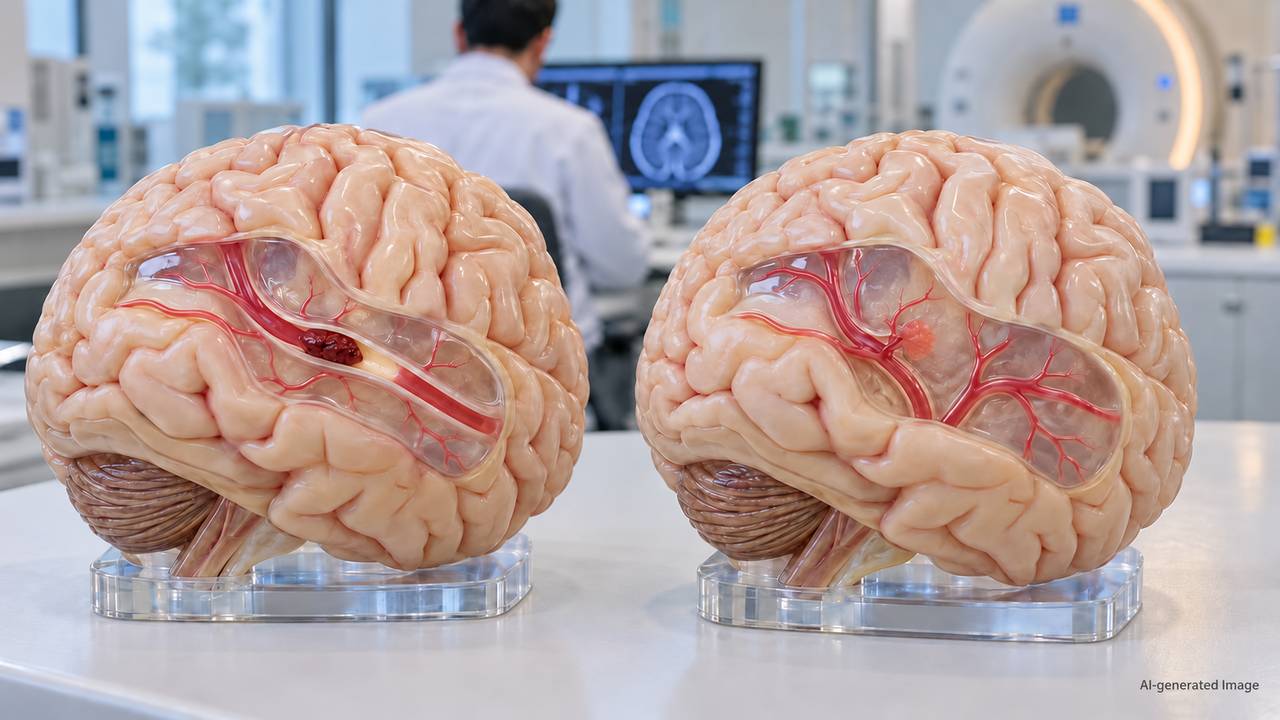
A stroke is like a pipe problem inside the brain. In one type, the pipe becomes blocked. In the other, it leaks or bursts.
An ischemic stroke occurs when a clot blocks blood flow to part of the brain. A hemorrhagic stroke occurs when a blood vessel ruptures and causes bleeding. Their treatments are very different. A medicine that helps a blockage could worsen a bleed, so rapid brain imaging is essential. If stroke signs appear, call emergency services immediately rather than trying to identify the type at home.
What Are the Main Types of Stroke?
The two main types of stroke are ischemic stroke, caused by blocked blood flow, and hemorrhagic stroke, caused by bleeding in or around the brain.
A study reports that approximately 87% of strokes are ischemic (Source). However, a 2023 review found that Indian studies reported ischemic stroke in 65%–84% of cases and intracerebral bleeding in 1%1–35%, suggesting that bleeding strokes form a larger share in some Indian populations (Source).
A transient ischemic attack, or TIA, causes temporary stroke-like symptoms. Often called a mini-stroke, it is an urgent warning even when the symptoms disappear.
Ischemic Stroke: When a Blood Vessel Is Blocked?
An ischemic stroke happens when a clot or narrowed artery stops blood from reaching brain tissue. Without oxygen, brain cells begin to become damaged.
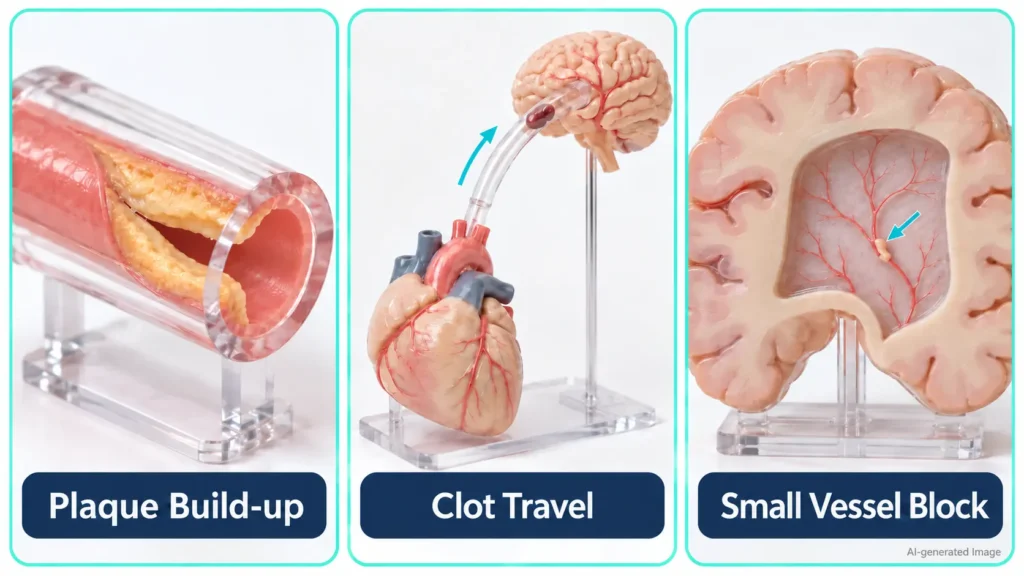
The usual causes of stroke involving a blockage include:
- Narrowed arteries: Fatty deposits build up inside an artery and restrict blood flow.
- A travelling clot: A clot forms elsewhere, often in the heart, and travels to the brain. Atrial fibrillation—an irregular heartbeat—is a common cause.
- Small-vessel blockage: Tiny vessels deep inside the brain become narrowed or blocked.
Common stroke risk factors include high blood pressure, diabetes, high cholesterol, smoking, excess body weight, physical inactivity and atrial fibrillation. High blood pressure remains the leading modifiable risk factor.
Hemorrhagic Stroke: When a Blood Vessel Bursts?
A hemorrhagic stroke occurs when a weakened vessel ruptures. This may cause a brain bleed (intracerebral haemorrhage) within brain tissue or bleeding around the brain, called a subarachnoid haemorrhage.
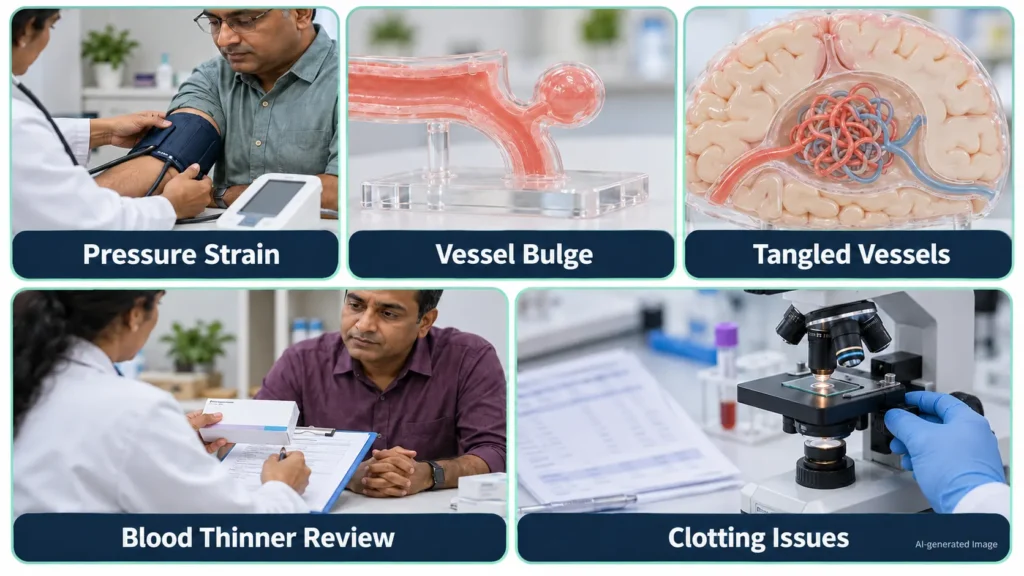
Possible causes include:
- uncontrolled high blood pressure;
- an aneurysm, which is a weakened bulge in a blood vessel;
- an abnormal tangle of vessels called an arteriovenous malformation;
- bleeding made more likely or severe by blood-thinning medicines; and
- certain blood-vessel or clotting disorders.
A head injury can also cause bleeding in the skull, although this is usually classified as traumatic bleeding rather than a spontaneous stroke. High blood pressure is a major cause of both blocked and bleeding strokes.
Can You Tell the Difference from Symptoms?
No. The stroke symptoms of a blockage and a bleed often look the same, so the type cannot be identified reliably without a brain scan.
Use FAST to recognise the main warning signs:
- F – Face: One side of the face droops.
- A – Arms: One arm becomes weak or numb.
- S – Speech: Speech becomes slurred, unusual or difficult.
- T – Time: Call emergency services immediately.
Sudden loss of balance, vision changes, or confusion can also occur. A severe headache, vomiting, seizure or loss of consciousness may be more common with a brain bleed, but these signs do not confirm it.
Why a Brain Scan Decides the Treatment
A brain scan is needed because symptoms alone cannot show whether the “pipe” is blocked or bleeding. A non-contrast CT scan can quickly detect bleeding and help doctors rule out a hemorrhagic stroke.
CT angiography may locate a blocked or damaged blood vessel. An MRI can provide more detail in selected cases. This distinction matters because clot-dissolving medicines may help an eligible ischemic stroke patient but could make active bleeding worse.
Ischemic vs Hemorrhagic Stroke: How Treatment Differs?
The main difference between ischemic and hemorrhagic stroke treatment is its goal. Ischemic stroke care restores blood flow, while hemorrhagic stroke care controls bleeding and pressure.
| Treatment point | Ischemic stroke | Hemorrhagic stroke |
| Main problem | Blocked vessel | Ruptured or leaking vessel |
| Immediate goal | Restore blood flow | Stop bleeding and limit pressure |
| Possible emergency care | Thrombolysis or thrombectomy | Blood-pressure control, reversal medicines or surgery |
| Key decision | Location and size of blockage | Location, cause and size of bleed |
Treatment for Ischemic Stroke
Ischemic stroke treatment aims to reopen the blocked vessel as soon as possible. Clot-busting treatment (thrombolysis) uses medicine to dissolve a clot. For eligible patients, it is commonly given within 4.5 hours of symptom onset or the last known well time.
Mechanical thrombectomy removes a large clot through a thin catheter passed into an artery. It is used for selected large-vessel blockages, often within six hours and sometimes up to 24 hours when scans show that brain tissue may still be saved. The 2026 American Heart Association guidelines stress rapid, individual eligibility assessment.
After emergency care, doctors may prescribe antiplatelet or anticoagulant medicines and manage blood pressure, blood sugar and cholesterol.
Treatment for Hemorrhagic Stroke
Hemorrhagic stroke treatment aims to control bleeding, reduce pressure and protect the brain. Care may include careful blood-pressure reduction and medicines that reverse blood thinners when required.
Some patients may need surgery to remove a large blood collection or relieve pressure. A ruptured aneurysm may be sealed using clipping or coiling. Close monitoring in an intensive care or specialised stroke unit is often required.
Emergency Stroke Treatment: What to Do Right Now?
Call an ambulance and reach a hospital with 24-hour emergency care and brain-scanning facilities. Do not wait to see whether the symptoms disappear.
- Note the time: Record when symptoms started or when the person was last known to be well. This affects treatment decisions.
- Give nothing by mouth: Do not give food, water, aspirin or any other medicine unless a doctor advises it. Aspirin may worsen a bleeding stroke.
- Keep the person safe: Support the head and shoulders slightly. If the person is vomiting or unconscious but breathing, turn them onto their side and monitor breathing.
In India, dial 112 for emergency assistance. West Bengal government portals also list 102 for ambulance service.
For sudden symptoms, seek emergency care rather than waiting for a routine appointment. For follow-up, risk assessment or preventive consultation, patients seeking stroke treatment in Kolkata can consult a neurology team after the immediate emergency has been addressed.
Answers to Frequently Asked Questions
Which is more dangerous: ischemic or hemorrhagic stroke?
Both can be life-threatening. Hemorrhagic stroke often has a higher risk of early deterioration, while ischemic stroke is much more common. The danger depends on the affected brain area, stroke size, general health and how quickly treatment begins.
Can ischemic stroke turn into hemorrhagic stroke?
Yes, occasionally. Damaged tissue after an ischemic stroke may begin bleeding, a complication called hemorrhagic transformation. It can occur naturally or after blood-flow-restoring treatment. Hospital teams assess this risk through scans, clinical findings and medical history.
How soon must stroke treatment start?
Immediately. Eligible patients may receive thrombolysis within about 4.5 hours, while selected large-vessel blockages may qualify for thrombectomy later. These are not waiting periods—the earlier a patient reaches a stroke-ready hospital, the better.
What are the most common causes of stroke?
High blood pressure is a leading cause. Ischemic strokes commonly result from narrowed arteries or clots linked to atrial fibrillation. Hemorrhagic strokes are often associated with uncontrolled blood pressure, aneurysms or abnormal blood vessels.
Can a stroke be treated without surgery?
Yes. Many ischemic strokes are treated with medicines or catheter-based thrombectomy rather than open surgery. Some hemorrhagic strokes can also be managed with intensive medical care. Surgery is reserved for selected patients based on the scan and clinical condition.