
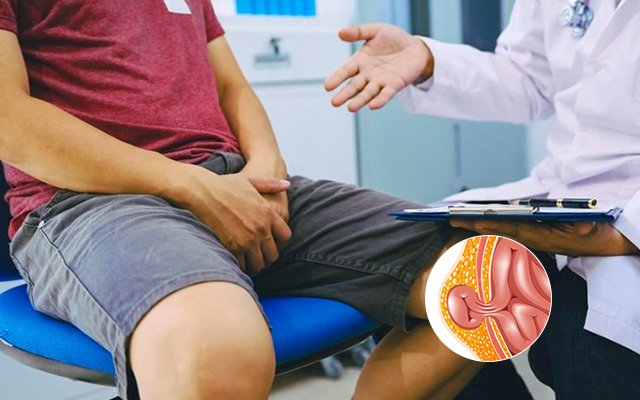
One fine day, you might notice a lump in your groin after coughing — one that seems to disappear when you lie down. In medical terms, this might be an inguinal hernia. At first, it may seem harmless, but if ignored, part of the bowel can become trapped, turning a routine consultation into an emergency inguinal hernia surgery. Early diagnosis is critical, as it allows time for planned treatment and recovery before complications develop.
To explain things from scratch, this blog covers:
- What is an inguinal hernia
- The early signs
- Common causes
- When to consult a doctor, and more
What is an Inguinal Hernia and Where Does It Develop?

An inguinal hernia develops when fat or part of the intestine pushes through a weakness in the abdominal wall and enters the inguinal canal near the groin. It creates a one-sided bulge and may extend into the scrotum in men.
As per a source, this medical condition is very common, accounting for 3 out of 4 cases. Additionally, it is categorised into two types as explained below.
Difference between Direct and Indirect Inguinal Hernias
A direct hernia pushes through a weakened abdominal wall, often after years of ageing and pressure.
An indirect hernia enters through the natural opening of the inguinal canal, commonly because it did not fully close during development. Only a surgeon can confirm the type during assessment.
Is a Lump in the Groin Always an Inguinal Hernia?
No. A groin lump may also be a swollen lymph node, lipoma, hydrocele, femoral hernia or another soft-tissue condition. Appearance alone cannot confirm the cause. So, a lump in your lower abdomen, don’t make blind guesses.
If you are experiencing the same issue, consult an expert first. Based on the specialist's recommendations, decide on inguinal hernia surgery.
How an Inguinal Hernia Lump Typically Behaves
A typical lump in the groin becomes more visible when you cough, stand, strain, or lift. A groin swelling that disappears when lying down is often a reducible hernia. If it stops going back, it may be an irreducible hernia. Trapped tissue is called an incarcerated hernia and needs prompt assessment.
What Are the Early Symptoms of an Inguinal Hernia?
Take a look at the early signs as mentioned below:
Common Symptoms Patients Notice First
- A soft groin bulge while coughing or standing
- Heaviness, pressure or pulling in the groin
- Burning or aching during bending, lifting or walking
- Groin pain while lifting heavy objects
- A bulge that grows by evening
- Scrotal swelling or discomfort in men
Symptoms in men may become more pronounced during manual work, exercise, or prolonged standing.
Can an Inguinal Hernia be Present Without Pain?
Yes. A small reducible lump may cause no pain. However, a painless swelling still deserves the right consultation.
What Causes an Inguinal Hernia?
Most of these cases develop when a weak area in the lower abdominal wall is repeatedly exposed to increased abdominal pressure. Over time, this pressure can push fat or part of the intestine through the weakened tissue, creating a noticeable bulge in the groin.
Conditions and Activities that Increase Abdominal Pressure
Risk may rise with chronic coughing, constipation, straining to pass urine due to an enlarged prostate (BPH), obesity, pregnancy, ageing and repeated heavy lifting. Smoking may contribute to a persistent cough and poorer tissue health. The weakness may be present from birth or develop over time.
Can Heavy Lifting or Gym Exercise Cause an Inguinal Hernia?
Heavy lifting may reveal or worsen an existing weakness, but it is rarely the only cause. Sudden force or poor lifting technique can sharply raise abdominal pressure.
When Groin Pain After Exercise Needs Evaluation
Consider visiting a specialist when pain is accompanied by a new lump, persistent tenderness, scrotal discomfort, or swelling that returns with effort. A muscle strain usually improves with rest. A bulge often reappears when you cough, stand or tighten your abdomen.
How Is an Inguinal Hernia Diagnosed?
Inguinal hernia diagnosis often needs no complicated testing. Here’s how you’re diagnosed.
What Happens During a Physical Examination?
The surgeon examines your groin while you stand and may ask you to cough or strain. They check the lump’s location, size, tenderness and whether it can be reduced. The scrotum is checked if swelling extends downwards.
Do You Need an Ultrasound, CT Scan or MRI?
A groin ultrasound may be advised when symptoms come and go, no lump is visible, or another condition must be excluded. CT or MRI is generally reserved for unclear, recurrent or complex cases.
Can an Inguinal Hernia Heal Without Surgery?
No, you can’t recover from this medical condition simply through diet, exercise, medicines and support belts. They may ease the discomfort, but only surgery repairs the opening.
When May Watchful Waiting be Considered?
Watchful waiting may be appropriate for selected adult men with a small, reducible bulge causing little or no discomfort. It means planned monitoring, not ignoring the problem. Increasing pain, enlargement or difficulty reducing the lump should be reported. Symptomatic and groin hernias in women usually need more proactive assessment.
When Is Inguinal Hernia Surgery Recommended?
Surgery is considered when the benefit of recovery outweighs the risks of continued observation. Even mild cases deserve the right diagnosis and consequent treatment to avoid future distress.

Signs that Planned Surgery May be Considered
Repair may be advised when the hernia is painful, growing, limiting work or exercise, extending into the scrotum, becoming difficult to reduce or returning after an earlier operation. Your health and preferences also matter.
What Are the Treatment Options for an Inguinal Hernia?
The choice depends on the hernia, your health, previous operations, anaesthesia suitability and the surgeon’s experience.
| Option | When considered | Key point |
| Watchful waiting | Selected men with minimal symptoms (not for women) | Does not cure |
| Open hernia repair | One-sided or larger hernias | One groin incision |
| Laparoscopic hernia repair | Bilateral or recurrent cases | Small incisions |
| Robotic hernia surgery | Selected cases | Not automatically better |
| Emergency hernia surgery | Trapped or strangulated tissue | Cannot wait |
Both open and minimally invasive repairs are established approaches. The most suitable operation depends on the patient, the hernia and the surgeon’s expertise.
Is Mesh Always Used During Inguinal Hernia Surgery?
Many types of surgery use hernia mesh to reinforce the weak area and reduce tension. Open and minimally invasive repairs commonly use it. Selected non-mesh repairs may be discussed when mesh is unsuitable or declined, but they require specific expertise.
What Happens If an Inguinal Hernia Is Left Untreated?
The consequences of not treating this particular issue may vary. It may remain stable. But if it grows and becomes painful, your distress will only increase, hampering your daily activities.
Incarcerated and Strangulated Hernia Complications
An incarcerated hernia contains trapped tissue. If the bowel becomes blocked, bowel obstruction may cause pain, swelling, vomiting and inability to pass stool or gas. A strangulated lump cuts off the blood supply to the trapped tissue and requires emergency hernia surgery.
Which Inguinal Hernia Symptoms Require Emergency Care?
Seek urgent hospital care for sudden or worsening groin pain, a hard, tender lump, red or darkened skin, vomiting, fever, abdominal swelling, or inability to pass stool or gas. These may be signs of a strangulated inguinal hernia. Do not repeatedly force a painful lump back inside. Rather, you must consider emergency surgical care.
What Is Recovery Like After Inguinal Hernia Surgery?
Many uncomplicated repairs are performed as day-care procedures. Walking usually starts soon after surgery; mild bruising, pulling or swelling may follow.
Return to work depends on the operation and your job. Desk work may be possible sooner than manual labour. Follow your surgeon’s advice on wound care, driving, exercise and lifting. Treating constipation and chronic coughing also reduces strain.
When Should You Consult a Surgeon for a Groin Lump?
Don’t let the symptoms worsen. If you’re suffering from a recurring bulge, lifting-related discomfort, scrotal swelling or a lump, consider an early evaluation. This allows for a calm discussion of monitoring or repair.
Patients considering inguinal hernia surgery in Kolkata, get in touch with our specialists for an evaluation-led recovery plan rather than waiting for an emergency.
Connect with our experts today!
What People Commonly Ask For
Does an inguinal hernia always cause a visible lump?
No. Small or hidden hernias may cause pressure or pain without a clear bulge. Examination and imaging, when needed, can confirm the cause.
Can an inguinal hernia cause testicular pain?
Yes. A hernia extending towards the scrotum may cause heaviness, swelling or aching. Sudden severe testicular pain needs urgent assessment because other emergencies can feel similar.
Can constipation make an inguinal hernia worse?
Repeated straining raises abdominal pressure and may make the bulge or discomfort more noticeable. Treating constipation reduces strain, but it cannot repair the hernia.
Can a hernia come back after undergoing surgery?
Yes, hernia recurrence is possible. You must follow your doctor’s instructions to avoid any relapse. Tissue quality, surgical technique, infection, smoking, chronic cough and repeated straining can influence the risk.