

A sudden fever during the rainy season can feel like an ordinary viral illness—until the headache intensifies, the body aches deepen, or new symptoms appear. The difficult part is that early dengue can resemble flu, typhoid and other infections.
Symptoms alone cannot confirm dengue. Still, recognising the pattern matters because warning signs may appear just as the fever begins to fall. Timely testing, fluids and medical monitoring can prevent dangerous delays.
This blog explains:
- Which early changes deserve attention
- Why days 4–7 need closer monitoring
- When home care is no longer enough
What is Dengue Fever and Why is It Common in Kolkata?
Dengue is a viral infection spread mainly through infected Aedes mosquitoes. It does not normally spread through coughing, touching or sharing food.
The humid weather and monsoon rain can leave water standing in buckets, flowerpot trays, tyres and uncovered tanks. These become mosquito-breeding sites. Aedes mosquitoes are most active during the day.
Risk often rises during and after the monsoon. Recognising dengue fever symptoms becomes especially important when fever appears with severe body ache, headache, nausea or a rash.
Early Symptoms of Dengue Fever (Days 1–3)
According to WHO, the early signs of dengue usually begin 4–10 days after an infected mosquito bite. Some infections cause no noticeable illness.
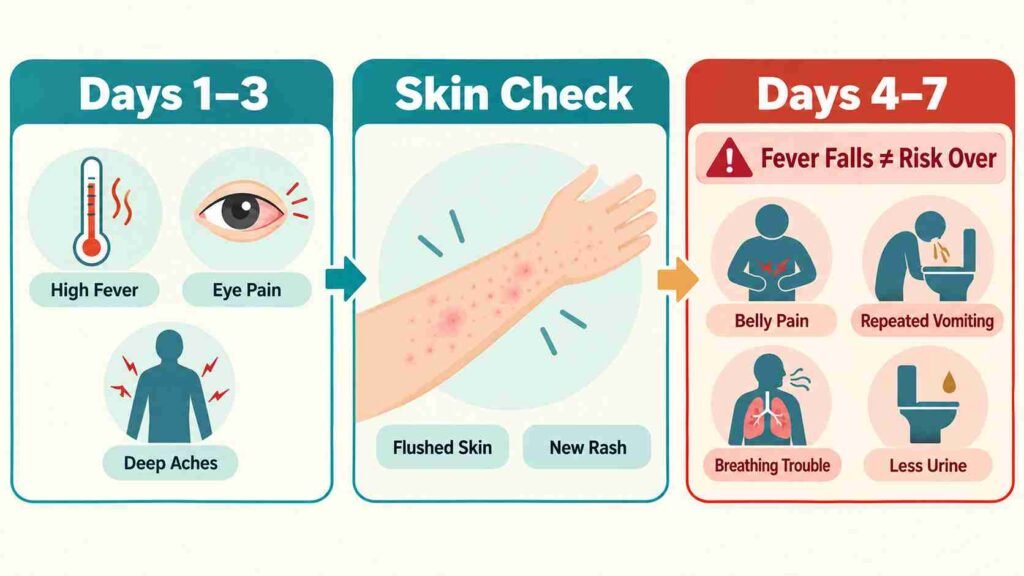
During the first three days, watch for high fever, headache, pain behind the eyes, severe body aches, nausea, reduced appetite and unusual tiredness.
Sudden High Fever and Chills
Dengue can cause a sudden high fever, sometimes approaching 40°C, with chills.
Dengue fever causes are four related dengue viruses carried by infected Aedes mosquitoes. Fever and chills occur as the immune system responds to the virus; they are not caused by rain or cold weather.
Severe Headache and Pain Behind the Eyes
A strong headache and pain behind the eyes are recognised symptoms.
Similar symptoms occur with flu, COVID-19 and other illnesses. They may raise suspicion but cannot confirm dengue.
Muscle, Joint and Bone Pain (“Breakbone Fever”)
Dengue is sometimes called “breakbone fever” because muscle, joint and bone aches can be intense.
When comparing dengue vs viral fever, remember that dengue is itself a viral infection. “Viral fever” is a broad term, not a diagnosis. Sudden fever, pain behind the eyes, marked body aches and rash may suggest dengue, but testing is necessary.
Skin-Related Symptoms to Watch for
Flushed skin may appear early. A red or blotchy rash can develop after the first few days, sometimes across the chest, arms or legs.
Other dengue rash symptoms include tiny red spots caused by minor bleeding under the skin. Not everyone develops a rash, and other conditions can look similar.
A rash with persistent fever, repeated vomiting, severe weakness or bleeding from the nose or gums needs prompt medical review.
Warning Signs That Indicate Worsening Dengue (Days 4–7)
Days 4–7 can be deceptive. The fever may fall, and the person may appear better, yet this is when the critical phase can begin.
Seek urgent care for:
- Severe abdominal pain or tenderness
- Persistent vomiting
- Bleeding from the nose or gums
- Blood in vomit or stool
- Extreme tiredness, restlessness or confusion
- Breathing difficulty
- Cold, clammy skin or reduced urination
A falling dengue platelet count is common, but the number alone does not measure severity. Doctors also check the rate of decline, bleeding, blood pressure, urine output and haematocrit—the proportion of red blood cells. A rising haematocrit with a rapid platelet fall may indicate fluid leakage.
Dengue Haemorrhagic Fever Symptoms
“Dengue haemorrhagic fever” is an older term. Current guidance classifies serious illness as dengue with warning signs or severe dengue.
The phrase dengue hemorrhagic fever symptoms generally refers to mucosal bleeding, severe abdominal pain, persistent vomiting, marked weakness and circulatory failure. Severe dengue may involve major bleeding, plasma leakage causing shock or organ involvement.
Do not wait for visible bleeding. Other warning signs may appear first.
How is Dengue Diagnosed?
A doctor considers the symptoms, day of illness and examination findings before selecting a dengue test.
During the first seven days, an NS1 antigen test or RT-PCR may detect the virus. IgM antibodies usually become detectable from around day four or five and are more useful later. A single IgG result may reflect an older infection and cannot reliably confirm a current case.
A complete blood count monitors white cells, haematocrit and platelets, but low platelets alone do not confirm dengue. When arranging a dengue test in Kolkata or any other location, state exactly when the fever began because timing affects test selection.
When to See a Doctor or Go to Hospital?
Arrange a same-day assessment when sudden fever occurs with severe headache, pain behind the eyes, marked body aches, rash, vomiting or unusual weakness—particularly during dengue season.
Seek emergency care for severe abdominal pain, repeated vomiting, breathing difficulty, bleeding, faintness, confusion, cold hands and feet or reduced urination. These signs can appear after the fever falls.
Children, older adults, pregnant women and people with diabetes, kidney disease, heart disease or reduced immunity should seek advice early. For dengue treatment in Kolkata or anywhere in India, timely examination and planned monitoring are safer than waiting for platelets to fall.
Home Care vs Hospital Care for Dengue
Mild dengue may be managed at home under medical guidance. Rest, drink frequent fluids and use oral rehydration solution if advised. Monitor urine output and watch for warning signs.
Be cautious with dengue home remedies. Papaya-leaf products have not been proven to cure dengue or prevent severe illness. They must not replace medical care.
Paracetamol may be used for fever when advised and taken correctly. Avoid aspirin, ibuprofen, diclofenac and similar medicines because they can increase bleeding risk. Antibiotics do not treat dengue.
Hospital care may be needed when a person cannot drink, develops warning signs, has significant bleeding or requires careful fluid and oxygen monitoring. Admission is based on the complete clinical picture, not one platelet result.
How to Prevent Dengue Fever?
Useful dengue prevention tips focus on removing breeding sites and avoiding bites:
- Empty and scrub water containers every week
- Cover tanks and storage vessels
- Clear water from coolers, trays, tyres and rooftops
- Use mosquito repellent as directed
- Wear clothing that covers the arms and legs
- Fit screens to doors and windows where possible
- Use nets for anyone sleeping during the day
Someone with dengue should avoid mosquito bites during the first week of illness. This helps prevent another mosquito from picking up and spreading the virus.
Get the Right Dengue Care in Kolkata
Dengue can begin like an ordinary viral fever, but the illness may change as the temperature falls. Early assessment, correct test timing, hydration and careful monitoring matter more than watching the platelet count alone.
Searching for a suitable critical care unit providing consultations on dengue treatment? At Samaritan Hospital in Kolkata, we assess your symptoms, day of illness, hydration, vital signs and test results before planning care. Our in-house pathology and multidisciplinary facilities support monitoring.
Connect with us at the earliest if warning signs are present; seek urgent hospital care without waiting.
What People Also Ask About Dengue
How many days does it take for dengue symptoms to appear after a mosquito bite?
Symptoms usually begin 4–10 days after the bite. Some infected people do not develop noticeable symptoms.
What is considered a dangerously low platelet count in dengue?
No single count defines severe dengue. Below 10,000 per microlitre is extremely low, but bleeding, rate of decline, haematocrit, blood pressure and the person’s condition also guide treatment. Indian guidance notes that platelet transfusion is not decided from the count alone.
Can dengue fever be treated at home, or is hospitalisation always required?
Mild dengue can often be managed at home with medical guidance, fluids and monitoring. Warning signs, dehydration, pregnancy, significant bleeding or severe illness may require admission.
How is dengue different from typhoid or a common viral fever?
Dengue often starts suddenly with strong body aches, headache, pain behind the eyes or rash. Typhoid may cause more gradual fever and digestive symptoms. Because they can overlap, laboratory tests are needed.
How soon after symptoms start should a patient get a dengue test done?
Seek medical advice as soon as dengue is suspected. NS1 or RT-PCR is useful during the first week, while IgM becomes more useful from around day four or five.