


Key Takeaways
- Feeling better does not mean the jaw is ready for hard foods, strenuous exercise or contact sports.
- Fracture complexity, treatment, nutrition, smoking and medical conditions can influence recovery speed.
- Follow dietary and oral-care instructions, attend reviews and report a changing bite or worsening symptoms promptly.
A broken jaw generally needs six to eight weeks for the bone to heal. Returning to a normal diet and full jaw movement may take 8–12 weeks, while complete recovery can take three months or longer. The timeline depends on the fracture, treatment method and overall health.
During recovery, everyday activities such as eating, speaking, sleeping and cleaning the mouth can feel difficult. Knowing what to expect makes this period easier to manage.
How Long Does a Broken Jaw Take to Heal?
The average recovery time for a broken jaw is about six to eight weeks. However, the fracture may take longer to become strong enough for unrestricted chewing or contact sports. Expected jaw fracture healing time also depends on whether the fracture was treated with wires, elastic bands, plates, or screws.
A general recovery timeline looks like this:
- Bone healing: Usually 6–8 weeks
- Gradual return to a normal diet: Often 8–12 weeks, after medical clearance
- Full strength and comfortable movement: Up to three months or longer
These are broad estimates. Age, nutrition, diabetes, smoking and the complexity of the injury can all affect progress. The treating surgeon’s advice should always come first.
Broken Jaw Healing Stages: Week-by-Week Timeline
Broken jaw healing stages aren't identical for everyone. A simple, well-aligned fracture may recover faster than a displaced fracture involving several parts of the jaw. Surgery, infection and injury to nearby teeth can also change the timeline.
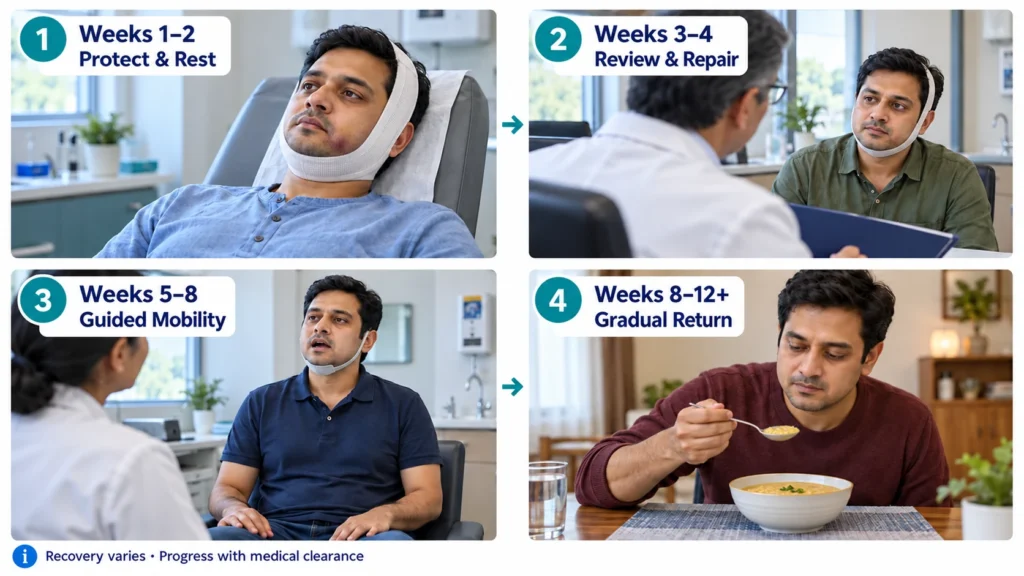
Weeks 1–2: Swelling, Pain and Stabilisation
Pain, swelling and bruising are usually strongest during the first few days. Your face may feel tight, your bite may seem unusual, and opening your mouth can be difficult.
The jaw is stabilised with plates, screws, wires or elastic bands when required. Medicines help control pain and prevent or treat infection. Keeping the head raised while resting may reduce swelling.
Weeks 3–4: Early Bone Healing
Swelling and bruising should begin to settle. New tissue forms around the fracture and starts holding the bone ends together, although the jaw is not yet strong enough for normal chewing.
A liquid or soft diet usually continues. The doctor may check the bite, mouth opening, and jaw stability. Follow-up imaging may also be planned to assess alignment and healing.
Weeks 5–8: Bone Strengthening and Gentle Movement
The healing bone becomes firmer during this stage. Pain should be much lower, although stiffness, numbness or mild discomfort may remain.
Wires or elastics may be adjusted or removed if the fracture and bite are stable. Gentle jaw exercises may begin under professional guidance. Hard foods, heavy exercise and any activity that could injure the face must still be avoided.
Weeks 8–12 and Beyond: Return to Normal Function
Many people can gradually introduce firmer foods once the surgeon confirms that the bone is stable. Jaw movement, speech and facial comfort should continue to improve.
Some stiffness or altered sensation can last longer, particularly after a complex fracture. Physiotherapy or guided jaw exercises may help restore movement. Resume contact sports only after specific medical clearance.
What Affects Broken Jaw Recovery Time?
Several factors influence mandible fracture recovery. Two people with similar injuries may therefore recover at different speeds.
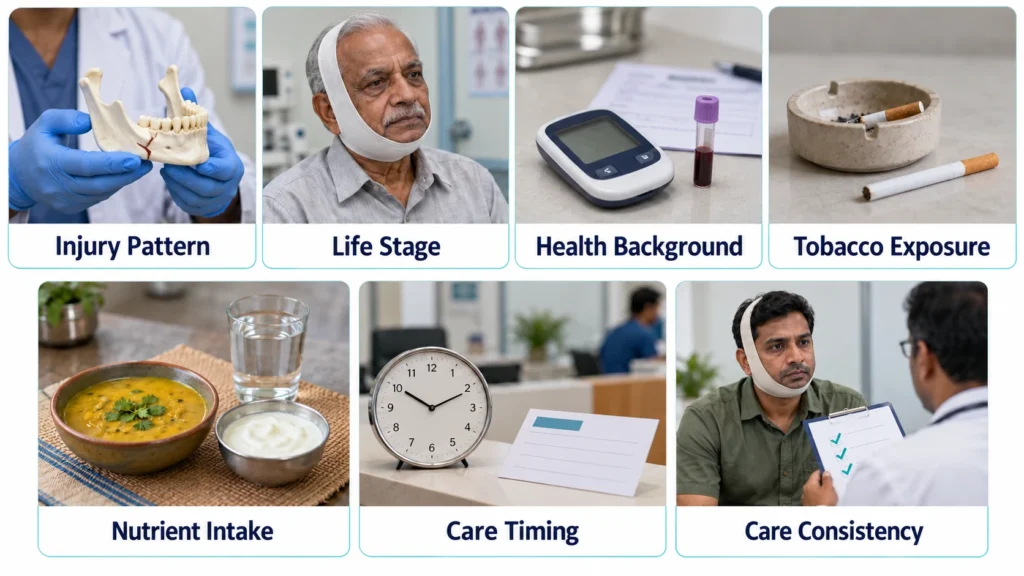
- Type of fracture: Multiple, displaced or open fractures usually need more treatment and healing time.
- Age: Bone healing may be slower in older adults.
- Medical conditions: Diabetes, anaemia and poor immunity can delay tissue repair.
- Smoking: Tobacco reduces blood flow and raises the risk of infection or poor bone healing.
- Nutrition: Too little protein, energy or fluid can slow recovery.
- Delayed treatment: An untreated or poorly aligned fracture may develop complications.
- Aftercare: Missing appointments or chewing too early can disrupt healing.
Does Surgery Change Healing Time?
Treatment method affects daily recovery, but the bone still needs time to heal. Recovery time for a jaw wired shut is commonly around four to six weeks, although some people need fixation longer. During this period, food must be taken in liquid or very soft form. The precise duration is decided from the fracture’s stability and follow-up findings.
During broken jaw surgery recovery, plates and screws may hold the bone securely enough to permit earlier controlled movement. This can reduce prolonged stiffness, but it does not make the fracture heal instantly. Patients must still follow dietary restrictions, maintain oral hygiene and avoid further facial injury.
What to Eat and How to Care for Your Jaw While It Heals?
Knowing what to eat with a broken jaw matters because the body needs adequate calories and protein to rebuild bone and tissue. Choose foods that require little or no chewing, according to the diet stage prescribed by the surgical team.
Suitable options may include:
- blended dal, khichdi and vegetable soups;
- curd, lassi and milk-based drinks;
- smoothies without seeds or hard pieces;
- mashed potato, soft paneer and pureed vegetables;
- soft eggs or finely blended chicken;
- prescribed nutrition supplements, if needed.
Useful broken jaw recovery tips include:
- clean the teeth and mouth exactly as instructed;
- rinse after meals if the surgeon recommends it;
- take medicines on schedule;
- sleep with the head slightly raised during early recovery;
- avoid smoking, alcohol and hard or sticky food;
- attend every follow-up appointment; and
- avoid driving or contact sports until medically cleared.
Signs Your Broken Jaw Is Healing Properly and Warning Signs
Common signs of broken jaw healing properly include:
- steadily decreasing pain and swelling;
- a stable bite when the teeth come together;
- improving mouth movement;
- no new bleeding, discharge or bad taste; and
- a gradual return of comfort while speaking and eating.
When to See a Specialist for Jaw Fracture Treatment?
Seek medical care after a facial injury if there is severe jaw pain, swelling, bleeding, loose teeth, numbness or difficulty opening the mouth. An altered bite or a jaw that appears out of position also needs prompt assessment. Breathing or swallowing difficulty requires emergency care.
Early treatment helps restore jaw alignment and lowers the risk of infection, long-term pain and chewing problems. We assess facial injuries and plan care according to the type and severity of the fracture. Patients seeking jaw fracture treatment in Kolkata can visit us for a specialist evaluation.
What People Also Ask
Can a broken jaw heal on its own?
Whether a broken jaw heals on its own depends on the injury. A small, stable fracture may heal with close medical supervision and dietary restriction. A displaced fracture can heal in the wrong position, affecting the bite, speech and chewing. Every suspected fracture needs assessment.
How long does a broken jaw stay wired shut?
The jaw may remain wired or supported with elastics for about four to six weeks. The duration depends on the fracture’s position, stability and healing. Never cut or remove wires unless instructed, except during an emergency under the care team’s guidance.
How long can’t you eat solid food with a broken jaw?
Most patients need liquids or very soft food during early healing. You may gradually introduce firmer foods after about six weeks, but only with the surgeon's approval. Complex fractures or delayed healing may require a soft diet for longer.
How long should you stay off work or school with a broken jaw?
Some people return to desk work or school within two to three weeks. Jobs involving physical effort, machinery, or injury risk require a longer break. Pain levels, medicines, surgery and the ability to maintain nutrition also influence the decision.
How do you know if a broken jaw is healing properly?
Pain and swelling should gradually fall, while jaw movement and comfort improve. The teeth should meet stably. Clinical examinations and follow-up X-rays provide stronger evidence that the bone is healing in the correct position.