

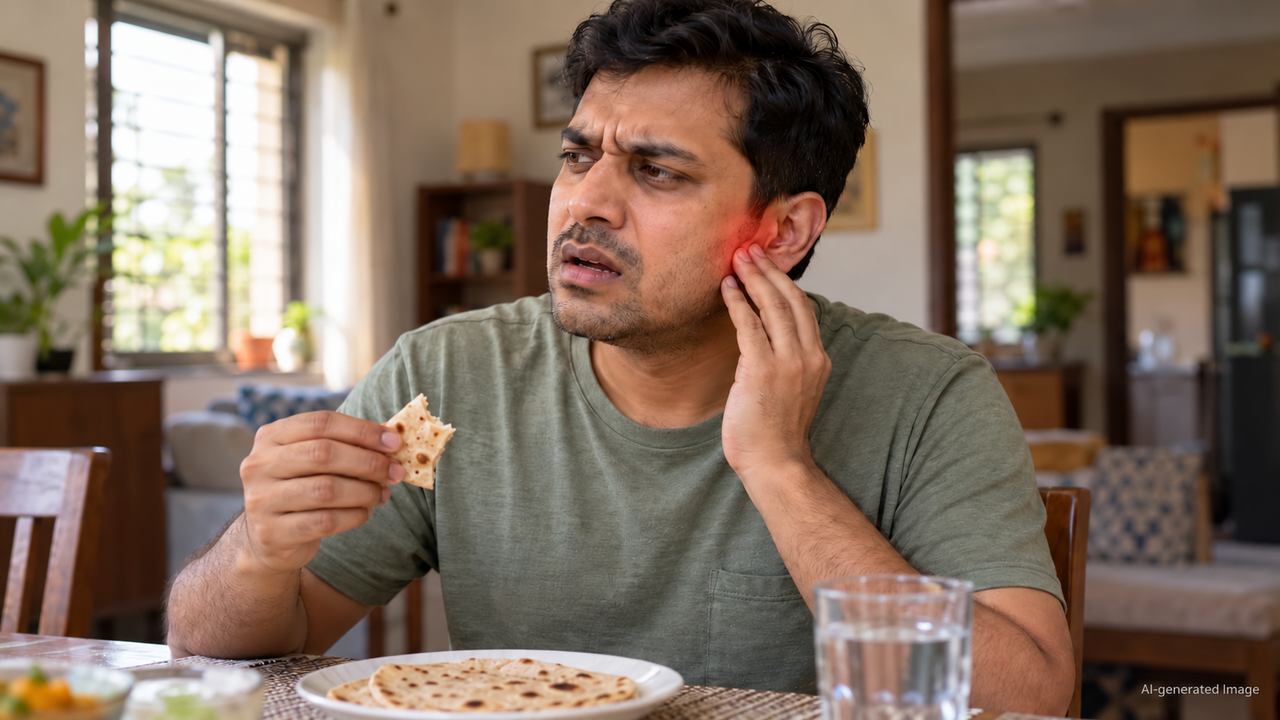
You wake up, try to yawn or take a bite of roti, and your jaw simply will not open properly.
Restricted mouth opening can result from jaw muscle spasm, a temporomandibular joint problem, dental infection or injury. A jaw stuck open may indicate dislocation. Mild stiffness can settle, but sudden, severe or repeated locking needs a proper medical or dental assessment. This guide explains the common causes, home remedies, and when to seek medical care!
Why Is It Not Possible to Open the Mouth Wide?
If you can’t open your mouth wide, the jaw muscles or temporomandibular joint may not be moving normally. Pain, spasm, inflammation, infection or a displaced joint disc can limit movement.
Doctors call restricted mouth opening trismus. People often call it lockjaw, although that term also refers specifically to jaw spasms caused by tetanus. A jaw can become:
- Stuck closed: The mouth cannot open normally.
- Stuck open: The mouth cannot close, often because of a dislocation.
Both problems need prompt assessment if they are severe, sudden, or persistent.
What’re the Common Causes of a Locked Jaw?
Possible causes of jaw locking range from temporary muscle tightness to conditions that need urgent treatment. The symptoms around the locking often provide useful clues.
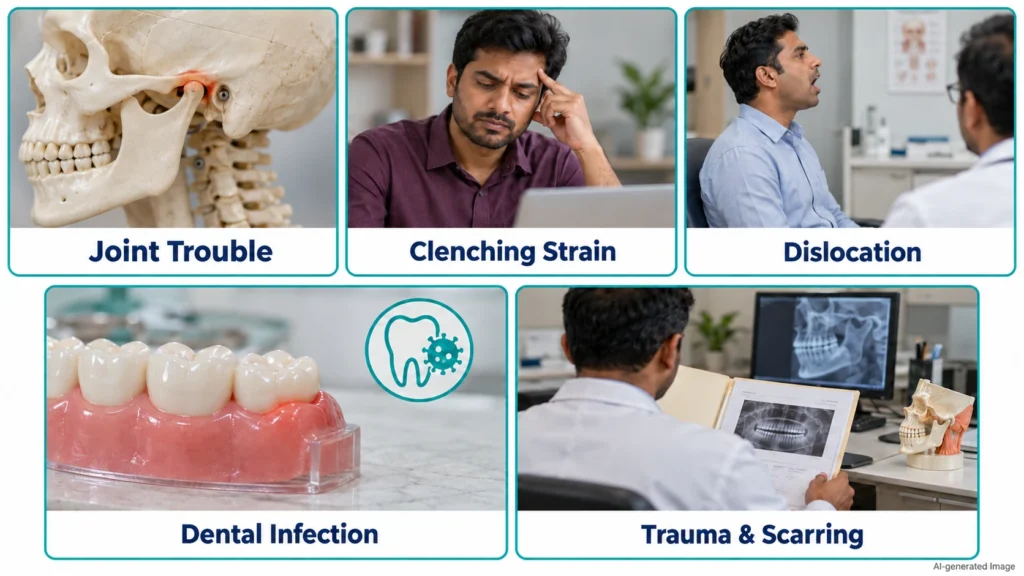
TMJ Disorder and Joint Problems
A TMJ disorder affects the temporomandibular joint, the hinge connecting the jaw to the skull. A small disc inside this joint can shift and restrict movement. You may hear clicking before your jaw locks. Other signs include stiffness, pain near the ear and jaw pain when opening the mouth.
Jaw Muscle Spasm, Teeth Grinding and Stress
Jaw muscles can tighten after prolonged clenching, night-time grinding or a lengthy dental procedure. Stress may make clenching worse without the person noticing. The jaw often feels stiff on waking, tired while chewing or sore around the cheeks and temples. Movement usually remains possible but feels restricted.
Dislocated Jaw (Jaw Stuck Open)
A dislocated jaw occurs when the lower jaw moves out of its normal joint position. The mouth may become stuck open after a wide yawn, laugh, large bite or dental procedure. Speaking and swallowing may become difficult. A clinician must reposition it safely; do not attempt this at home.
Infection or Wisdom Tooth Problems
An infected tooth, dental abscess or inflamed wisdom tooth can cause pain, swelling and muscle spasm. The restriction may worsen as swelling increases. Fever, an unpleasant taste, facial swelling or pain around the last tooth suggests that infection may be involved and needs prompt dental or medical treatment.
Injury, Surgery or Other Medical Causes
A facial injury or jaw fracture can cause pain, swelling and reduced movement. Scarring after facial surgery or radiotherapy may also produce trismus. Rarely, tetanus causes severe jaw spasms, body stiffness, or swallowing difficulty. Assess trauma-related locking rather than treating it with home exercises.
How to Unlock Your Jaw Safely at Home?
Gentle measures may ease a mild muscle spasm, but they don't cure every cause. Try them only if you can close your mouth, have had no recent facial injury and have no fever, marked swelling, or swallowing or breathing difficulty.
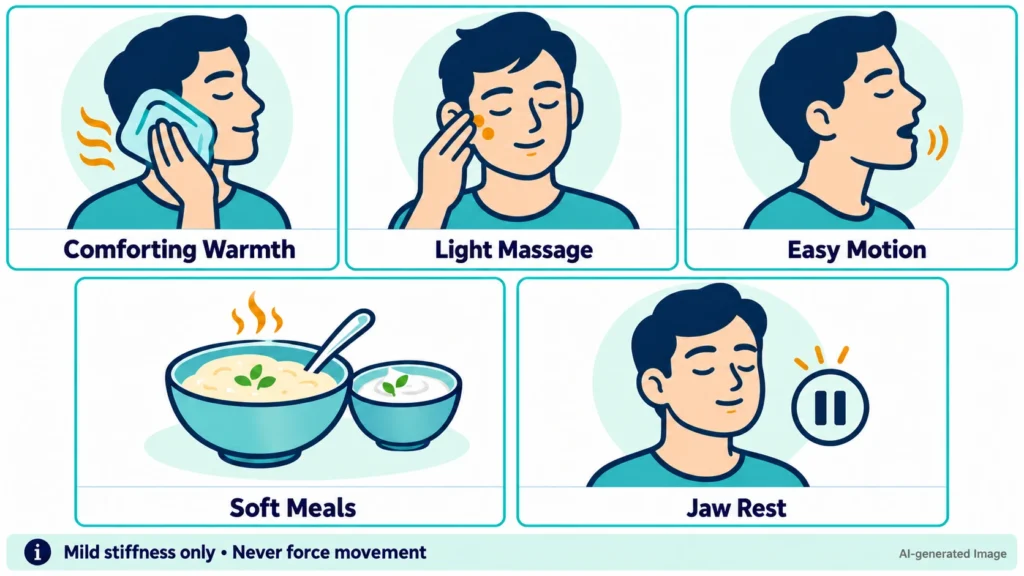
If you are searching for how to unlock jaw stiffness or manage a mildly stuck jaw, follow these steps:
- Apply gentle warmth: Hold a warm compress against the jaw for 10–15 minutes. It should feel comfortable, not hot.
- Massage the muscles: Use clean fingertips to make small circles over the cheeks and temples.
- Practise small movements: Open and close the mouth slowly within a pain-free range. Stop if pain or locking increases.
- Choose soft food: Eat dal, soft rice, curd, soup or mashed vegetables. Take small bites.
- Rest the jaw: Avoid chewing gum, biting an apple, wide yawning and tough food.
Please note: Do not force the mouth open, insert objects between the teeth or try to reposition a dislocated jaw. Home steps are suitable only for mild symptoms and do not replace medical advice. Conservative measures such as soft food, heat and gentle exercises are commonly recommended for mild jaw-joint symptoms.
When a Stuck Jaw Needs Urgent Care?
A severely restricted or open jaw needs urgent care when it affects breathing, swallowing or normal jaw position. Do not wait for home care to work if any of these signs appear:
- fever, dental pain or increasing facial swelling;
- difficulty swallowing, breathing or managing saliva;
- the jaw is stuck open and cannot close;
- locking began after a fall, accident or facial impact;
- sudden major restriction in mouth opening;
- widespread muscle stiffness or spasms; or
- mild restriction shows no improvement within two to three days.
Go to the nearest emergency or trauma centre if you notice these. A jaw stuck open becomes harder to reposition if treatment is delayed.
How Doctors Diagnose and Treat a Locked Jaw?
Treatment depends on the cause, so diagnosis comes first. The doctor or dentist checks how far the mouth opens, where it hurts, how the teeth meet and whether there is swelling, injury or infection.
Tests may include:
- Dental or jaw X-ray: Checks the teeth, jaw bones and joint position.
- CT scan: Gives a detailed view of fractures, dislocation or bone changes.
- MRI scan: Shows the joint disc and other soft tissues.
Treatment may involve:
- prescribed medicines for pain, inflammation or muscle spasm;
- dental treatment and antibiotics when infection is present;
- gentle exercises or physiotherapy to improve movement;
- a night guard or splint for selected clenching-related cases;
- joint injections for certain persistent joint conditions;
- safe repositioning by a doctor for a dislocation; or
- surgery when a severe structural problem does not improve with simpler care.
Not every clicking jaw requires treatment. However, pain, locking or changing bite alignment should be assessed before exercises or appliances are recommended.
When to See a Specialist for TMJ Treatment?
If your jaw repeatedly locks, clicks painfully, or becomes difficult to move, have it checked early. Delaying care can let stiffness, inflammation, or the underlying dental problem worsen.
Looking for a critical care unit providing TMJ treatment in Kolkata? We assess jaw movement, joint symptoms, facial injuries and related maxillofacial concerns. Don’t delay; contact or visit us for a consultation.
What People Also Ask
Can a locked jaw go away on its own?
Sometimes. Mild stiffness from muscle strain or temporary clenching may settle with rest, soft food, and gentle warmth. Sudden, severe or repeated locking should not be ignored, especially when the jaw cannot close or symptoms follow an injury.
What is the difference between trismus and lockjaw?
Trismus is the medical term for restricted mouth opening from any cause. Lockjaw is commonly used to describe the same symptom, but medically it may refer to the painful jaw spasms associated with tetanus.
Can stress or anxiety cause a locked jaw?
Yes. Stress and anxiety can increase unconscious clenching, particularly during sleep. This may tire the jaw muscles and cause morning stiffness or limited movement. Persistent locking still needs assessment because stress may not be the only cause.
How long does a locked jaw last?
There is no single timeline. Mild muscle tightness may improve within a few days, while infection, joint-disc displacement, injury or post-surgical scarring can last longer. Seek medical advice if symptoms are severe, recurring or not improving.
Which doctor should patients consult if they’re unable to open the mouth wide?
Start with a dentist, oral and maxillofacial surgeon, or doctor experienced in jaw-joint conditions. Facial swelling or tooth pain may require urgent dental care. Breathing difficulty, trauma or a jaw stuck open requires emergency assessment.