


Yes. Enlarged tonsils can narrow the airway behind the mouth, leading to snoring, noisy breathing, mouth breathing and disturbed sleep. In some children, the airway repeatedly closes during sleep, causing obstructive sleep apnea. An ENT specialist should assess persistent snoring, breathing pauses, or swallowing difficulty. When symptoms are significant, a tonsil operation may be considered.
This blog covers:
- how enlarged tonsils affect breathing and sleep;
- signs that need an ENT assessment; and
- when medicines, observation or tonsil surgery may help.
What Are Enlarged Tonsils and Why Do They Grow Bigger?
Tonsils are two pads of immune tissue located at the back of the throat. They help recognise germs entering through the mouth and nose. Tonsils are naturally larger in many children and usually become smaller with age. Viral or bacterial illnesses may also make them temporarily bigger.
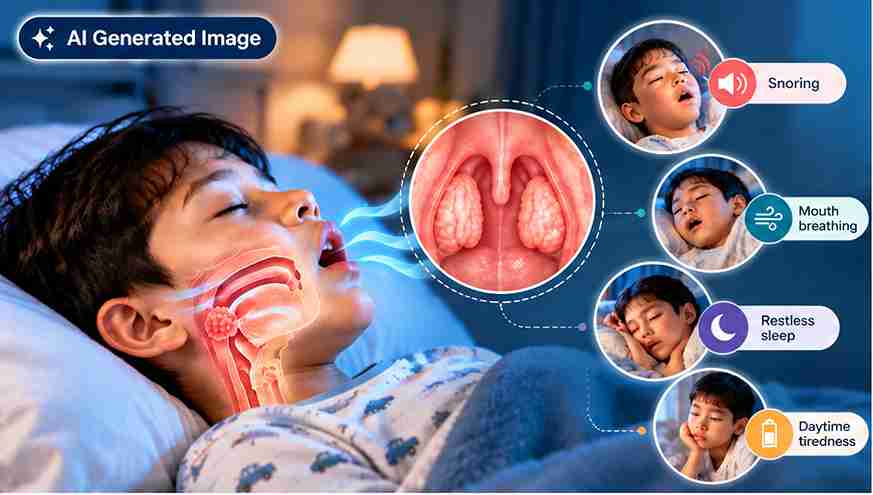
Common symptoms of enlarged tonsils include snoring, mouth breathing, restless sleep, swallowing difficulty, and a muffled voice. Some people have large tonsils without any symptoms, while others develop breathing problems even with moderate enlargement.
Tonsillitis vs Simply Enlarged Tonsils
The difference between tonsillitis and enlarged tonsils is active irritation or infection. Tonsillitis often causes a sore throat, fever, tender neck glands and discomfort while swallowing. It may be viral or bacterial.
Enlarged tonsils may remain large without fever or an active sore throat. Their main effect may be physical blockage, causing snoring, swallowing difficulty or disturbed sleep. However, recurrent tonsillitis can also leave the tonsils persistently enlarged.
How Enlarged Tonsils Affect Breathing and Sleep
Air normally passes through the nose or mouth and then moves behind the tongue into the throat. Large tonsils occupy space in this narrow passage. During sleep, throat muscles relax, making the airway even tighter.
This blockage can cause anything from mild snoring to repeated pauses in breathing. Enlarged adenoids behind the nose may add to the obstruction, particularly in children.
Snoring and Noisy Breathing
Snoring occurs when air struggles to move through a narrowed airway and makes nearby tissue vibrate. Parents may notice tonsils causing snoring when the sound is loud, occurs most nights, or worsens when the child lies on their back.
Occasional snoring during a cold is common. Regular snoring accompanied by gasping, pauses in breathing, or restless sleep needs assessment.
Sleep Apnea in Children
Obstructive sleep apnea causes the airway to partly or completely close several times during sleep. Enlarged tonsils and adenoids are among the common causes of sleep apnea in children. Obesity, facial structure and muscle or nerve conditions can also contribute.
Possible signs include:
- pauses in breathing;
- gasping or choking sounds;
- restless or unusual sleeping positions;
- frequent waking;
- bedwetting;
- morning headaches;
- poor concentration; and
- irritability or hyperactive behaviour.
Mouth Breathing and Its Long-Term Effects
Mouth breathing in children may develop when the nose or throat remains partly blocked. Children may sleep with their mouth open, wake with a dry mouth or sound nasal while speaking.
Persistent mouth breathing can disturb sleep and cause dry lips, unpleasant breath and daytime tiredness. Because nasal allergies and enlarged adenoids can produce similar signs, assess the full airway.
Other Signs Enlarged Tonsils Need Attention
Breathing problems are not the only reason to seek advice. Enlarged tonsils can affect eating, speech, sleep quality and general wellbeing.
Look for:
- difficulty swallowing due to tonsils;
- slow eating or avoidance of solid food;
- repeated throat infections;
- a muffled or altered voice;
- unpleasant breath;
- poor weight gain in a child;
- daytime sleepiness;
- reduced school performance; or
- one tonsil becoming noticeably larger than the other.
Adenoid and tonsil enlargement can occur together. While tonsils are visible through the mouth, adenoids sit behind the nose and usually require nasal examination or endoscopy.
What Causes Enlarged Tonsils Besides Infection?
Tonsils may remain large because of natural childhood growth or repeated immune activity. Some children simply have larger tonsils than others. Structural features of the jaw, tongue and throat may make the resulting airway narrowing more noticeable.
Other contributing factors include:
- recurrent viral or bacterial illnesses;
- long-term throat irritation;
- nasal allergies that worsen airway blockage;
- enlarged adenoids;
- exposure to cigarette smoke;
- excess body weight, which can narrow the airway further; and
- reflux that repeatedly irritates the throat.
Allergies and reflux do not automatically mean enlarged tonsils. An ENT examination is needed to separate tonsil enlargement from nasal blockage, adenoid problems and other causes of snoring.
When Should You See an ENT Specialist?
Arrange an ENT consultation when snoring occurs most nights, breathing repeatedly pauses during sleep or swallowing becomes difficult. Poor growth, daytime behaviour changes, repeated throat illnesses and ongoing mouth breathing also deserve assessment.
Seek urgent medical help if a child or adult:
- struggles to breathe while awake;
- cannot swallow liquids;
- develops drooling with severe throat discomfort;
- becomes unusually sleepy or difficult to wake;
- develops rapidly increasing throat swelling; or
- shows blue or grey colouring around the lips.
The decision about when to remove tonsils depends on symptom severity, examination findings and the effect on breathing, sleep or daily life—not tonsil size alone.
How Are Enlarged Tonsils Diagnosed and Treated?
We begin with a review of snoring, breathing pauses, swallowing, throat illnesses and daytime symptoms. The ENT specialist examines the mouth, tonsils, nose and neck. Nasal endoscopy may be used to check the adenoids, while a sleep study may be recommended when obstructive sleep apnea is suspected, or the diagnosis is uncertain.

Treatment depends on whether the main problem is infection, nasal allergy, airway blockage or a combination. For patients seeking tonsil operation in Kolkata, our ENT team first assesses whether observation or medical care is still appropriate before discussing surgery.
Non-Surgical Management
Large tonsils without troublesome symptoms may only need observation, as tonsils often shrink as children grow. Treatment may address related problems rather than tonsil size itself.
Options may include:
- antibiotics for confirmed bacterial tonsillitis;
- medicines or nasal sprays for allergies;
- saline nasal rinses when advised;
- management of reflux or asthma;
- weight management when relevant; and
- planned follow-up to monitor breathing and sleep.
Medicines may treat infection or nasal swelling, but they do not permanently shrink significantly enlarged tonsils.
When a Tonsil Operation Becomes Necessary
Tonsillectomy removes the tonsils under general anaesthesia. Adenoids may be removed during the same procedure when both are contributing to airway obstruction.
An operation may be recommended for:
- confirmed or strongly suspected obstructive sleep apnea;
- persistent sleep-disordered breathing with enlarged tonsils;
- repeated, well-documented episodes of tonsillitis;
- swallowing difficulty affecting nutrition or growth;
- complications around the tonsils; or
- concerning one-sided enlargement.
Guidelines commonly consider recurrent tonsillitis significant when there are seven documented episodes in one year, five per year for two years or three per year for three years. Individual factors may justify a different approach.
What to Expect During Recovery after Tonsil Surgery
The usual tonsillectomy recovery time is around 10 to 14 days, although adults may take longer. Throat discomfort can also feel like ear discomfort because the throat and ears share nerve pathways. Symptoms may fluctuate and sometimes feel worse several days after the operation.
Recovery care generally includes:
- taking prescribed medicines on schedule;
- drinking fluids frequently;
- eating suitable foods as advised;
- resting at home;
- avoiding strenuous activity;
- following all discharge instructions; and
- attending the planned follow-up.
ENT Health notes that discomfort commonly lasts 7–10 days and may continue for up to two weeks. Fresh bleeding from the mouth or nose, breathing difficulty or inability to drink requires immediate medical advice.
When to Seek Expert Care
Enlarged tonsils can cause snoring, mouth breathing, swallowing difficulty and obstructive sleep apnea. Don't dismiss regular snoring as harmless if it comes with breathing pauses, restless sleep, daytime behavioural changes, or poor growth.
We assess tonsil size, adenoids, nasal health and sleep-related symptoms before recommending treatment. To discuss tonsil operation provided at our critical care in Kolkata, book an appointment today!
What People Also Ask
At what age is tonsil removal considered safe for children?
There is no fixed age. The ENT specialist considers the child’s symptoms, overall health, body weight and breathing during sleep before recommending surgery.
Can enlarged tonsils shrink without surgery?
Yes. Tonsils often become smaller as children grow. Observation may be suitable when breathing, sleep, swallowing, and growth are unaffected.
Does snoring in children always mean enlarged tonsils?
No. Allergies, enlarged adenoids, excess weight and nasal blockage can also cause snoring. Frequent snoring with breathing pauses needs assessment.
How painful is tonsillectomy, and how long does discomfort last?
Throat and referred ear discomfort are common for 7–10 days and may continue for two weeks. Medicines, fluids and suitable foods support recovery.
Can adults undergo a tonsil operation?
Yes. Adults may need tonsillectomy for repeated tonsillitis, airway obstruction or sleep-related breathing problems. Recovery may take longer than it does in children.