
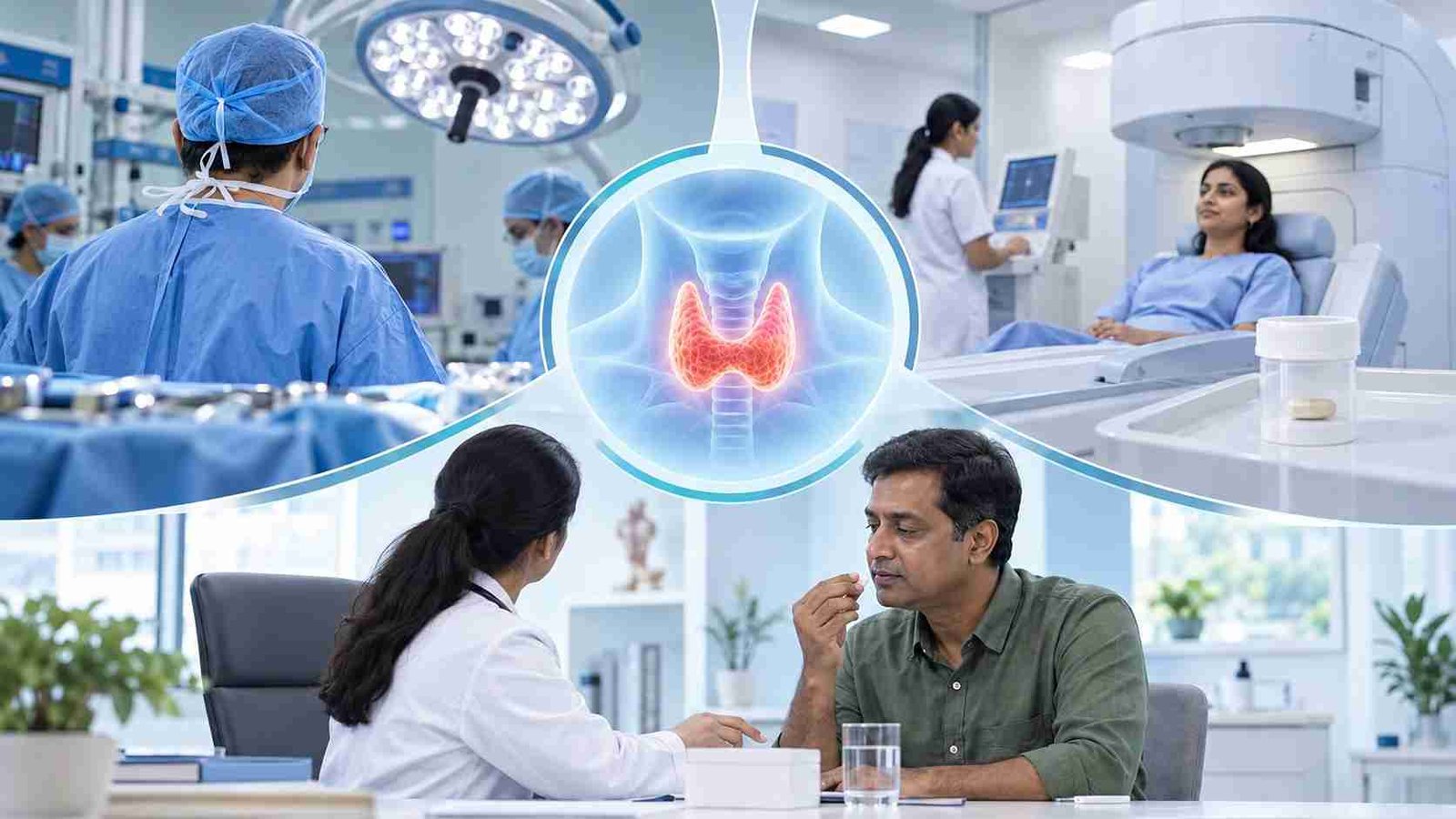
Not every thyroid disorder requires the same treatment for every person. Some people may need medicines to control hormone levels, while others may benefit from radioactive iodine therapy or an operation. The right approach depends on several factors, including the type of thyroid problem, its function, age, symptoms, test results, and overall health.
When thyroid hormone levels become abnormal, the goal is not only to manage symptoms but also to restore balance and prevent future complications. Conditions such as an overactive thyroid, underactive thyroid, nodules, goitre, or cancer may require different treatment pathways. To minimise the confusion, this article centres on these conditions; our blog explains:
- How medication, radioactive iodine therapy, and surgery work for thyroid conditions
- When a thyroid operation may become the preferred choice
- What factors doctors consider before deciding on a treatment approach
Understanding the Three Main Thyroid Treatment Pathways
The thyroid gland plays an important role in controlling metabolism, energy levels, body temperature, and many other functions. When it produces too much or too little hormone, doctors plan treatment based on the specific problem.
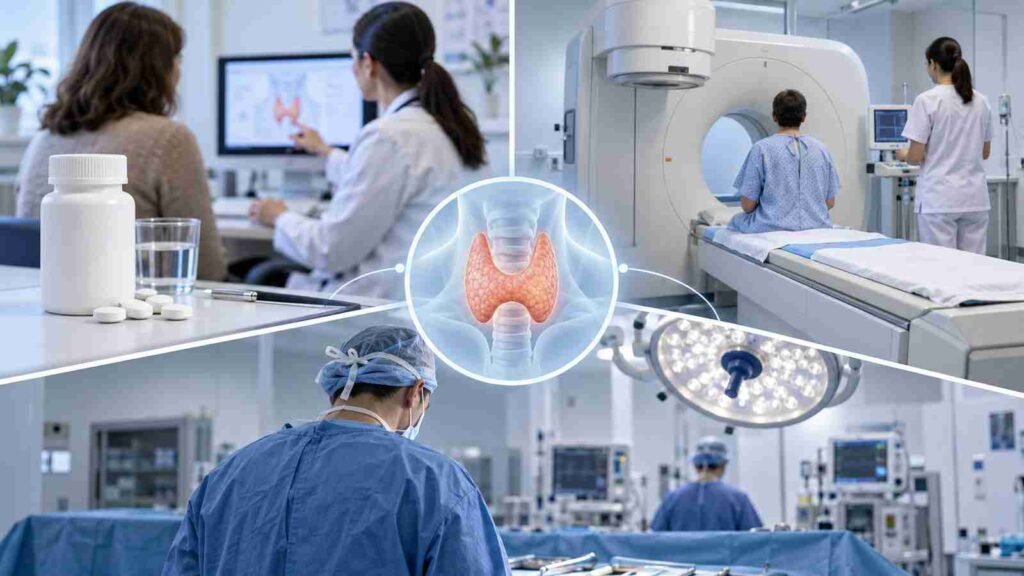
The three main treatment options include:
- Medication: Doctors often start with medication for many thyroid hormone-related conditions. It helps regulate hormone production or replace hormones the body doesn't produce adequately.
- Radioactive iodine therapy: This treatment uses a controlled dose of radioactive iodine to reduce the activity of overactive tissue. It is commonly considered for certain cases of hyperthyroidism.
- Thyroid surgery: Also known as a thyroidectomy, this procedure involves removing part or all of the thyroid gland when medicines or other treatments may not be enough, or when there is a structural concern.
For example, patients with thyroid nodules may need treatment based on whether the nodule is harmless, producing excess hormones, or showing suspicious features. Similarly, people with an underactive thyroid usually require long-term hypothyroidism medication to replace the hormones their body cannot produce adequately.
The best treatment depends on the cause.
When Doctors Recommend Medication First?
Medication is often the first approach when doctors can control the thyroid condition without removing the tissue.
For an underactive thyroid, hypothyroidism medication such as levothyroxine replaces the thyroid hormone that the body lacks. It helps restore normal hormone levels and usually needs regular monitoring through blood tests.
For an overactive thyroid, doctors may consider different hyperthyroidism treatment options, including medicines that reduce thyroid hormone production. Antithyroid drugs can help control conditions such as Graves’ disease by reducing the gland’s activity.
Doctors may also prescribe beta-blockers for some patients with hyperthyroidism. These medicines do not correct the problem itself but can help control symptoms like rapid heartbeat, shaking and anxiety while other treatments begin working.
Medication may be suitable when:
- The thyroid enlargement is small
- Hormone levels respond well to medicines
- There is no suspicious thyroid nodule
- The patient prefers a non-surgical approach where appropriate
However, medicines are not always a permanent solution for every condition.
What is Radioactive Iodine Therapy and Who Needs It?
Radioactive iodine therapy uses a small amount of radioactive iodine to reduce the activity of overactive thyroid tissue.
The thyroid naturally absorbs iodine to produce hormones. During this treatment, thyroid cells take up radioactive iodine, which gradually reduces their ability to produce excess hormones.
Doctors may recommend radioactive iodine therapy for conditions such as:
- Graves’ disease
- Toxic multinodular goitre
- Toxic thyroid nodules
It may be preferred over surgery in some patients because it avoids an operation. However, it is not suitable for everyone.
Radioactive iodine may not be recommended in certain situations, such as during pregnancy or breastfeeding. Some patients may also prefer surgery because they want a faster solution or have a large thyroid swelling causing pressure symptoms.
When is a Thyroid Operation the Right Choice?
A thyroid operation becomes important when removing part or all of the gland offers the safest and most effective solution. A thyroidectomy procedure may be recommended when doctors evaluate whether thyroid surgery is necessary based on factors such as:
- A suspicious or confirmed thyroid cancer
- A large goitre causing difficulty swallowing or breathing
- Nodules with concerning features
- Hyperthyroidism that does not respond well to other treatments
- Patient preference after discussing available options
- Situations where radioactive iodine is not suitable
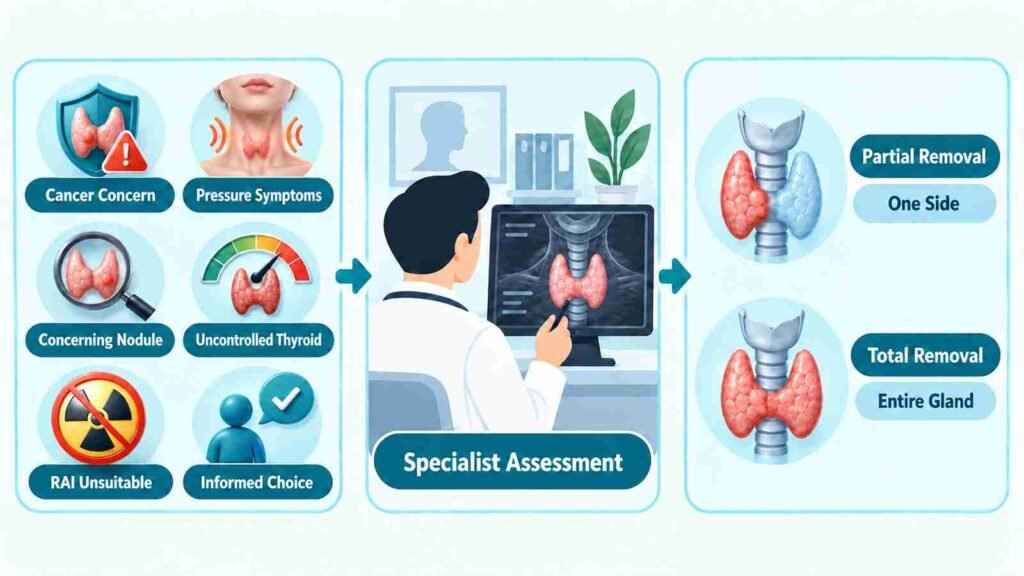
Unlike medication, surgery directly removes the thyroid tissue causing the problem. This makes it an important option when there is a concern about cancer or when enlargement creates physical symptoms.
Types of Thyroidectomy — Partial vs. Total Removal
The type of thyroidectomy procedure depends on how much of the thyroid gland needs to be removed.
Hemithyroidectomy (partial thyroid removal):
In this procedure, the surgeon removes one side or part of the thyroid gland. Consider this when a single nodule is suspicious, but the remaining gland appears healthy.
Total thyroidectomy:
This involves removing the entire thyroid gland. It is commonly performed for certain thyroid cancers, large goitres involving both sides or conditions where complete removal is beneficial.
Thyroid Cancer Surgery — A Special Consideration
When a thyroid nodule is confirmed or strongly suspected to be cancerous, surgery is usually the preferred treatment. Unlike some conditions that can be managed with medicines or radioactive iodine, cancer often requires removal of the affected tissue.
The extent of surgery depends on factors such as cancer type, tumour size, spread beyond the thyroid and lymph node involvement. Some patients may need removal of part of the thyroid, while others may require total thyroidectomy with lymph node evaluation.
For patients considering thyroid operation in Kolkata for thyroid cancer, our critical care unit provides surgical planning that is important to balance effective cancer treatment with the preservation of voice function and calcium regulation.
Key Factors That Guide a Doctor’s Final Decision
Choosing between medication, radioactive iodine and surgery requires more than looking at the diagnosis alone. Doctors usually consider:
- Age and overall health: Younger patients, elderly patients and those with other medical conditions may require different approaches.
- Thyroid function test results: Hormone levels help determine whether the gland is overactive or underactive.
- Size and nature of thyroid nodules: Larger nodules or suspicious findings may require surgery.
- Fine needle aspiration cytology (FNAC) results: This test helps evaluate whether a nodule may be cancerous.
- Lifestyle and personal preferences: Some patients prefer avoiding lifelong medicines, while others prefer avoiding surgery.
- Other health conditions: Heart problems, pregnancy plans and other medical factors influence treatment choices.
A personalised approach helps avoid unnecessary procedures while ensuring serious conditions are treated at the right time.
What to Expect Before and After Thyroid Surgery
Before surgery, doctors usually perform blood tests, thyroid function tests, imaging and FNAC if required. These evaluations help plan the safest surgical approach.
Doctors generally perform the operation under general anaesthesia. The procedure time varies depending on whether part or all of the thyroid is removed and whether additional lymph node surgery is required.
After surgery, patients may need monitoring for:
- Calcium level changes
- Voice changes related to nearby nerve irritation
- Wound healing
- Need for thyroid hormone replacement
The gland is located close to important structures, including the nerves that control the voice and the parathyroid glands that regulate calcium. This is why choosing an experienced surgical team matters.
Let’s Take The Next Step Towards Better Health!
Living with a thyroid condition can feel confusing when multiple treatment options are available. A proper evaluation helps you understand whether medication, radioactive iodine therapy or surgery is the most suitable choice for your condition.
At Samaritan Hospital, we offer patients the following:
- Evaluation and treatment guidance for thyroid-related concerns
- This includes nodules, swelling and other conditions requiring surgical management
- Advanced methods for treatment
- Round-the-clock service for any medical urgency
- Proper planning and guidance post-treatment
If you are looking for a hospital that treats thyroid and is rated among the best in Kolkata, consult an experienced team to understand your options and decide based on your health needs.
What People Also Ask
Can thyroid problems be treated with medication alone without surgery?
Yes, many thyroid conditions can be managed with medicines. However, surgery may be needed when there are suspicious nodules, cancer, large goitres causing pressure symptoms or when medicines do not provide adequate control.
How do doctors know if a thyroid nodule needs to be operated on?
Doctors consider the nodule's size, ultrasound findings, thyroid function tests, and FNAC results. Suspicious or cancerous nodules often require surgical removal for proper treatment.
Is radioactive iodine therapy safe, and when is it preferred over surgery?
Radioactive iodine is considered a well-established treatment for many cases of overactive thyroid. It may be preferred for conditions like Graves’ disease or toxic nodules when surgery is not required or suitable. However, pregnancy, breastfeeding and certain clinical situations may affect its use.
What are the risks of a thyroid operation, and how long is the recovery?
Possible risks include bleeding, infection, calcium imbalance and temporary or permanent voice changes due to nerve-related issues. Recovery varies, but many patients gradually return to normal activities after appropriate follow-up and care.