
Piles can make sitting, using the toilet and managing daily routines difficult. For an older adult or someone with diabetes, the bigger concern is whether a procedure will be safe and how smoothly recovery may progress.
Patients searching for laser piles treatment may also encounter terms such as painless piles treatment and internal piles treatment. These phrases can oversimplify the decision. Laser care may cause less postoperative pain than conventional removal in selected patients, but no procedure is completely painless or risk-free. Age or diabetes alone does not decide suitability; overall health, pile grade, glucose control and anaesthesia fitness matter.
This guide explains:
- how laser treatment works;
- what elderly and diabetic patients need assessed; and
- what recovery, precautions and cost may involve.
What is Laser Treatment for Piles?
Piles, medically called haemorrhoids, are enlarged vascular cushions inside or around the anus. Internal piles develop within the rectum, while external piles form under the surrounding skin.
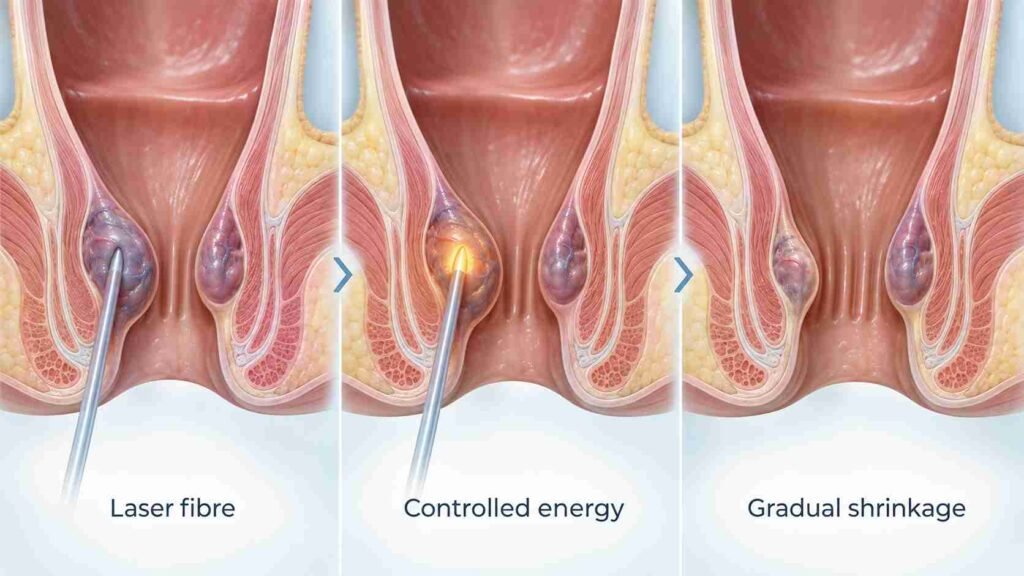
During laser treatment for piles, a surgeon directs controlled energy at the haemorrhoidal tissue. In laser haemorrhoidoplasty, a surgeon usually introduces a fine laser fibre into an internal pile. The heat seals small blood vessels, causing the tissue to shrink gradually.
It is minimally invasive, but it remains a procedure. It may not suit large external piles, advanced prolapse or another condition causing similar symptoms. Examination is essential because rectal bleeding can also occur with fissures, polyps or bowel disease. The NHS also advises medical assessment when piles symptoms persist or change.
Why Elderly and Diabetic Patients Need Special Consideration
Age or diabetes does not automatically rule out treatment. The medical team must first identify risks that could affect anaesthesia, healing and medication management.
Common Concerns with Traditional Piles Surgery in Older Adults
Conventional haemorrhoidectomy removes the affected tissue and remains useful for large or advanced piles. However, it creates an excisional wound and may involve more postoperative pain and a longer recovery than minimally invasive methods.
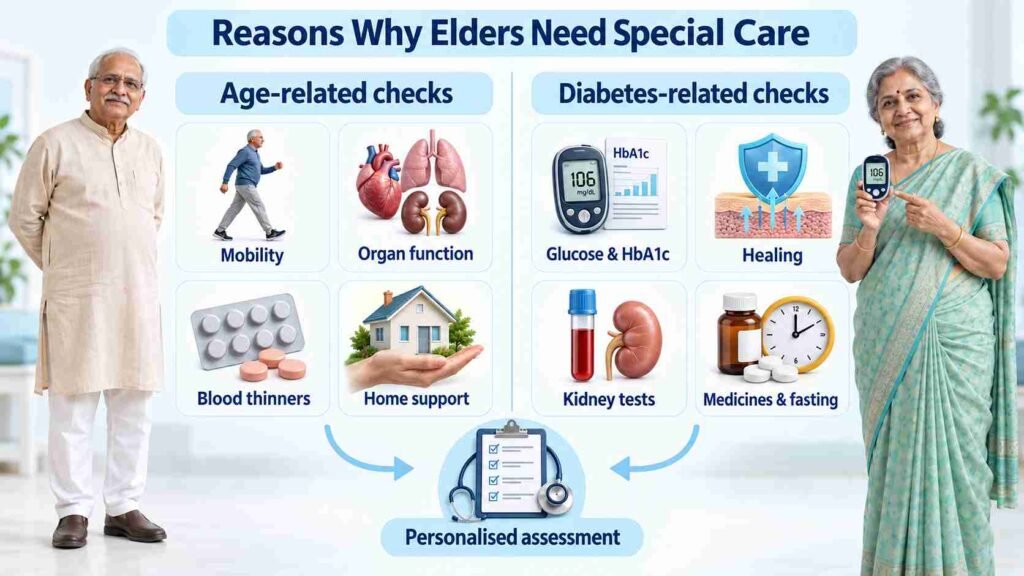
Before piles surgery for elderly patients, doctors may assess:
- frailty and mobility;
- heart, lung and kidney function;
- blood-thinning medicines and anaesthesia risk; and
- support available after discharge.
The safest approach depends on this assessment, not age alone.
Why Diabetes Complicates Wound Healing
Persistently high glucose can affect immune function and tissue repair, increasing the likelihood of delayed healing and infection. Surgery and fasting can also disturb glucose levels. National Library of Medicine states that perioperative medical guidance links high glucose with infection and delayed wound healing.
Safe piles treatment for diabetic patients may require recent glucose readings, HbA1c, kidney tests and a complete medicine list. The surgical and anaesthesia teams should plan fasting and insulin or medication use. Patients should not change diabetes treatment without medical advice.
Is Laser Piles Treatment Safe for Elderly Patients?
Laser treatment can suit some older adults when the haemorrhoid type and general health permit it. Because laser haemorrhoidoplasty treats tissue from within, studies have reported shorter operating times, less short-term pain, lower bleeding and earlier return to activity than conventional removal in selected patients.
It is not automatically the safest choice. Frailty, uncontrolled heart or lung disease, kidney problems, anticoagulants and pile grade may favour another approach. Conventional surgery or an office procedure may sometimes provide a more suitable result.
Anyone in Kolkata or nearby looking for a piles doctor with strong patient reviews should look beyond promotional labels. Relevant experience, careful diagnosis, anaesthesia support, hospital facilities and follow-up arrangements are better measures.
Is Laser Piles Treatment Safe for Diabetic Patients?
A patient with controlled diabetes may undergo laser treatment after assessment. Avoiding a large excisional wound may reduce tissue trauma, but it cannot remove the infection or healing risks associated with diabetes.
Before laser internal piles treatment, the team may:
- review glucose readings and HbA1c;
- check kidney function and other complications;
- plan medicines around fasting; and
- monitor glucose before and after the procedure.
Conservative measures should come first when suitable. Non-surgical piles treatment may include fibre, fluids, stool-softening medicine and better toilet habits. Rubber-band ligation or injection treatment may also suit certain internal piles. Laser treatment is minimally invasive, not truly non-surgical.
Benefits of Laser Treatment over Conventional Piles Surgery
The comparison below shows common patterns, not promised outcomes. Results depend on pile grade, technique and individual health.
| Factor | Laser haemorrhoidoplasty | Conventional haemorrhoidectomy |
| Tissue treatment | Shrinks piles from within | Removes haemorrhoidal tissue |
| Operative wound | Usually smaller | Larger excisional wound |
| Blood loss | Often lower | May be higher |
| Postoperative pain | Often less, but not absent | Usually more pronounced |
| Hospital stay | Frequently day care or short stay | May be longer |
| Return to routine | Often earlier | Usually more gradual |
| Recurrence | May be higher in some studies | Often lower for advanced piles |
Comparative research suggests better short-term comfort after laser haemorrhoidoplasty, but some trials report a greater need for repeat treatment than after excisional surgery. The term painless piles treatment should therefore mean pain-reducing care, not zero pain.
Discuss likely piles surgery recovery time individually, not in an advertisement.
What to Expect during Recovery after Laser Piles Treatment
Many selected patients leave the hospital the same day or after a short observation. Some soreness, spotting or urgency may occur, and recovery may be slower with age or diabetes.
Aftercare commonly includes:
- taking prescribed pain relief and stool-softening medicine;
- drinking enough water and eating fibre-rich foods;
- avoiding straining, heavy lifting and long toilet visits;
- walking gently and keeping the area clean as instructed; and
- attending scheduled follow-ups.
Some patients resume light activity within a few days. However, piles surgery recovery time depends on the procedure, general health and type of work. Seek advice for fever, increasing pain, heavy bleeding, difficulty passing urine or markedly abnormal glucose readings.
Precautions for Elderly and Diabetic Patients before and after Laser Surgery
Careful preparation can reduce avoidable risks.
Before treatment:
- Share all illnesses, previous operations and allergies.
- Bring glucose records, reports and a medicine list.
- Mention aspirin, anticoagulants and supplements.
- Follow the fasting and medicine instructions given.
After treatment:
- Monitor glucose and take medicines as advised.
- Prevent constipation with the recommended diet and fluids.
- Avoid self-starting antibiotics or herbal remedies.
- Report concerning symptoms promptly.
Laser Piles Treatment Cost in Kolkata
The final piles treatment cost in Kolkata varies between Rs. 45,000-80,000. It depends on the pile type and grade; the procedure and anaesthesia; tests, medicines, and consumables; room category and length of stay; and other illnesses, follow-up, and insurance coverage.
Also, laser treatment is not automatically safer simply because it uses a laser. It may suit selected elderly and diabetic patients after a detailed medical and surgical assessment. Here, we assess:
- symptoms,
- pile grade,
- general health,
- and available treatment choices before recommending care.
Connect with us or visit our hospital in Kolkata to better understand your care plan for laser piles treatment.
What People Also Ask About Piles
Is laser treatment for piles safe for patients above 60 years of age?
It can be safe for selected patients. Doctors must first assess frailty, heart and lung health, medications, pile grade, and anaesthesia fitness.
Can diabetic patients undergo laser piles surgery without complications?
Diabetic patients can undergo it when suitable, but no procedure is free from possible complications. Good glucose control, medication planning, and close monitoring help reduce risk.
How long is the hospital stay for laser piles treatment?
Many procedures involve day care or a short stay. Observation may be longer when glucose is unstable, or other medical concerns are present.
Does laser piles treatment require general anaesthesia?
Not always. Local, regional or general anaesthesia may be used depending on the technique, pile grade, comfort and medical fitness.
How soon can elderly or diabetic patients resume normal activity after laser piles treatment?
Light activity may be possible within a few days. Glucose control, procedure type, recovery and the physical demands of work determine the safe timing.