

A yellow tint in the eyes can be easy to dismiss, especially when there is no pain. Yet jaundice is not an illness by itself. It is a visible sign that bilirubin has built up in the body, and its cause may range from a short-lived problem to a serious disorder of the liver or bile ducts.
We advise treating new jaundice in an adult as a reason for prompt medical assessment, not as something to watch at home. Early testing can show what is interrupting the body’s normal handling of bilirubin.
This guide explains:
- the symptoms and possible causes of jaundice;
- warning signs that require urgent care; and
- how doctors diagnose and treat the underlying condition.
What is Jaundice and Why Does It Happen?
Jaundice is the yellow discolouration of the skin and the whites of the eyes. It develops when bilirubin, a yellow pigment produced as old red blood cells break down, accumulates in the blood.
Normally, the liver processes bilirubin and sends it into bile. Bile travels through ducts into the intestine, allowing bilirubin to leave mainly through stool.
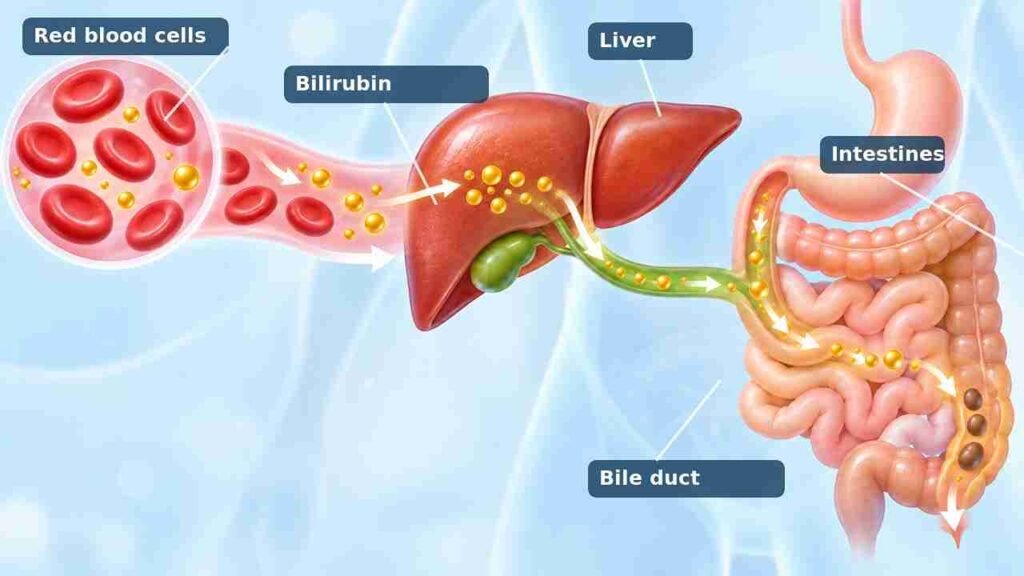
The principal causes of high bilirubin levels are excessive red-cell breakdown, poor processing by the liver or blocked bile drainage. Medicines, infections and inherited conditions can also be responsible. One bilirubin result, therefore, cannot explain the cause.
Common Symptoms of Jaundice You Shouldn’t Ignore
The clearest sign is yellowing of the skin and eyes. On brown or black skin, it may be easier to notice in the whites of the eyes. Dark urine, pale or clay-coloured stool and widespread itching commonly occur alongside it. National Health Service UK recommends urgent assessment for new yellowing.
Depending on the cause, a person may also experience:
- tiredness or weakness;
- loss of appetite;
- nausea or vomiting;
- fever;
- pain or swelling in the upper-right abdomen;
- unexplained weight loss; or
- easy bruising.
These jaundice symptoms and causes do not follow one fixed pattern. Fever and pain may suggest infection or obstruction, whereas painless jaundice also needs investigation.
Is Jaundice Always Linked to a Liver Problem?
No. The original problem may begin before bilirubin reaches the liver, within the liver or after it leaves.
Pre-hepatic jaundice occurs when red blood cells break down faster than the liver can cope. Haemolytic anaemia, malaria and certain inherited blood conditions are examples.
Hepatic jaundice starts within the liver. Viral hepatitis, alcohol-related injury, certain medicines, autoimmune disease and cirrhosis can disrupt bilirubin processing. Gilbert’s syndrome may cause mild, intermittent jaundice without serious liver damage.
Post-hepatic jaundice, also called obstructive jaundice, develops when bile cannot drain. Gallstones, inflammation, a narrowed bile duct, or a growth in the bile duct or pancreas may cause the blockage.
Thus, jaundice may accompany liver disease symptoms, but it can also arise from a blood disorder or obstruction. That distinction determines the treatment.
Jaundice in Newborns vs Adults
The distinction between newborn vs adult jaundice matters. Many babies develop it because their liver is not yet clearing bilirubin efficiently. Most recover without treatment, but bilirubin needs checking when jaundice is marked, or the baby is sleepy and feeding poorly.
Some babies require phototherapy. Very high bilirubin levels can harm the brain, although this complication is rare when the condition is recognised and treated. The NHS explains that most newborn jaundice improves without treatment.
In adults, new jaundice is not normal. It requires prompt investigation.
Serious Liver Conditions That Cause Jaundice
Hepatitis and jaundice are closely linked because hepatitis inflames liver cells. Viruses, autoimmune disease, alcohol and certain medicines may cause it. Fever, nausea, fatigue, dark urine, pale stool and right-sided abdominal discomfort can occur. The World Health Organization lists jaundice among the possible symptoms of viral hepatitis.
Cirrhosis is advanced scarring caused by long-term liver injury. Liver cirrhosis symptoms may include jaundice, itching, easy bruising, swollen legs or abdomen, muscle loss and confusion. Vomiting blood or passing black stool can indicate internal bleeding and is an emergency. These are recognised warning signs of advanced cirrhosis.
Fatty liver disease is often silent. Jaundice is more likely after inflammation and scarring have progressed, so it should not be dismissed as “just fatty liver”.
Liver cancer may cause jaundice, unexplained weight loss, poor appetite, fatigue or a lump on the right side of the abdomen. These symptoms require investigation, but they do not automatically mean cancer.
When Should You See a Doctor for Jaundice?
An adult or older child with newly yellow eyes or skin should receive urgent medical advice. Do not wait for the colour to deepen. Seek assessment sooner if dark urine, pale stool, itching, fever, abdominal pain, vomiting or weight loss appears too.
Go to an emergency department if jaundice occurs with:
- confusion, unusual sleepiness or fainting;
- severe or worsening abdominal pain;
- fever with chills or shivering;
- repeated vomiting or inability to drink;
- vomiting blood or passing black stool;
- new abdominal swelling; or
- unusual bleeding.
Parents should seek prompt paediatric advice if a jaundiced newborn is hard to wake, feeds poorly, becomes increasingly yellow, or has dark urine or pale stool.
If you need a gastroenterologist or liver specialist in Kolkata, choose a hospital that coordinates consultations, laboratory testing, and advanced imaging seamlessly. When searching for the right specialist, look beyond promotional marketing labels. Instead, focus on the doctor's qualifications, the hospital's diagnostic support, the quality of follow-up care, and the patient’s individual needs
How is Jaundice Diagnosed?
Doctors may use the following steps and tests to identify the cause of jaundice:
- Medical history: The doctor asks about symptoms, medicines, supplements, alcohol intake, recent travel, infection exposure, gallstones and family history.
- Physical examination: The doctor checks the abdomen, skin, and eyes for yellowing, swelling, tenderness, and other signs.
- Liver function tests: A liver function test is a panel of blood tests that commonly measures:
- total and direct bilirubin;
- ALT and AST;
- ALP and GGT; and
- albumin.
- Additional blood tests: Clotting tests, a complete blood count, hepatitis tests and tests for red-cell breakdown may help narrow the cause. NIDDK notes that bilirubin and liver-enzyme results can help doctors assess liver disease.
- Interpreting bilirubin: Whether arranging a liver function test in Kolkata or elsewhere, bilirubin alone cannot confirm the diagnosis. Doctors interpret it alongside other test results.
- Imaging tests: An abdominal ultrasound may show gallstones, enlarged bile ducts, liver changes or a mass. CT, MRI or MRCP may be advised for a closer examination.
- Specialised procedures: ERCP can diagnose and treat certain bile-duct blockages. A liver biopsy may be recommended in selected cases.
Jaundice Treatment Options in Kolkata
No single medicine cures every case of jaundice. Effective care treats the cause of bilirubin accumulation.
Some acute viral infections mainly require fluids, nutrition, rest and monitoring. Other forms of hepatitis may need antiviral treatment. A blocked bile duct may require an endoscopic procedure or surgery. Haemolysis, autoimmune disease and bacterial infection each need different care, while cirrhosis requires long-term monitoring. A newborn may need phototherapy, depending on age and bilirubin level.
Avoid herbal mixtures, unprescribed supplements and leftover medicines. Some products can injure the liver or interfere with treatment. Do not stop a prescribed medicine without speaking to the treating doctor.
People who live in the city or can travel there may consider jaundice treatment in Kolkata at Samaritan Medical Surgical & Critical Care. Our gastroenterology service covers liver and digestive conditions.
Let’s Wrap Up
Jaundice can be the first visible clue to hepatitis, cirrhosis, a blocked bile duct or another serious condition. It can also result from red-cell breakdown or a less harmful inherited disorder. Appearance alone cannot reveal the cause.
If you notice yellow eyes or skin, dark urine or pale stool, arrange medical assessment promptly. Early blood tests and imaging can guide the right treatment before complications develop. To discuss your symptoms with Samaritan, connect with us or step into our hospital soon!
People Also Ask For
Is jaundice always a sign of liver disease?
No. It may also result from rapid red-cell breakdown, blocked bile flow, inherited bilirubin-processing conditions or the temporary immaturity of a newborn’s liver. Adult jaundice still needs prompt assessment.
What are the early warning signs of liver damage with jaundice?
Look for yellow eyes or skin, dark urine, pale stool, itching, tiredness, poor appetite, nausea and discomfort under the right ribs. Abdominal swelling, confusion, easy bleeding, vomiting blood or black stool require emergency care.
Can jaundice be cured completely?
It depends on the cause. Some infections and removable bile-duct blockages can resolve fully. Chronic conditions such as cirrhosis may not be reversible, but treatment can slow further damage, manage complications and improve quality of life.
What tests confirm the cause of jaundice?
Doctors may use total and direct bilirubin, a liver panel, complete blood count, clotting tests, hepatitis tests and tests for red-cell breakdown. Ultrasound is often the first scan. CT, MRI, MRCP, ERCP or liver biopsy may be required in selected cases.