
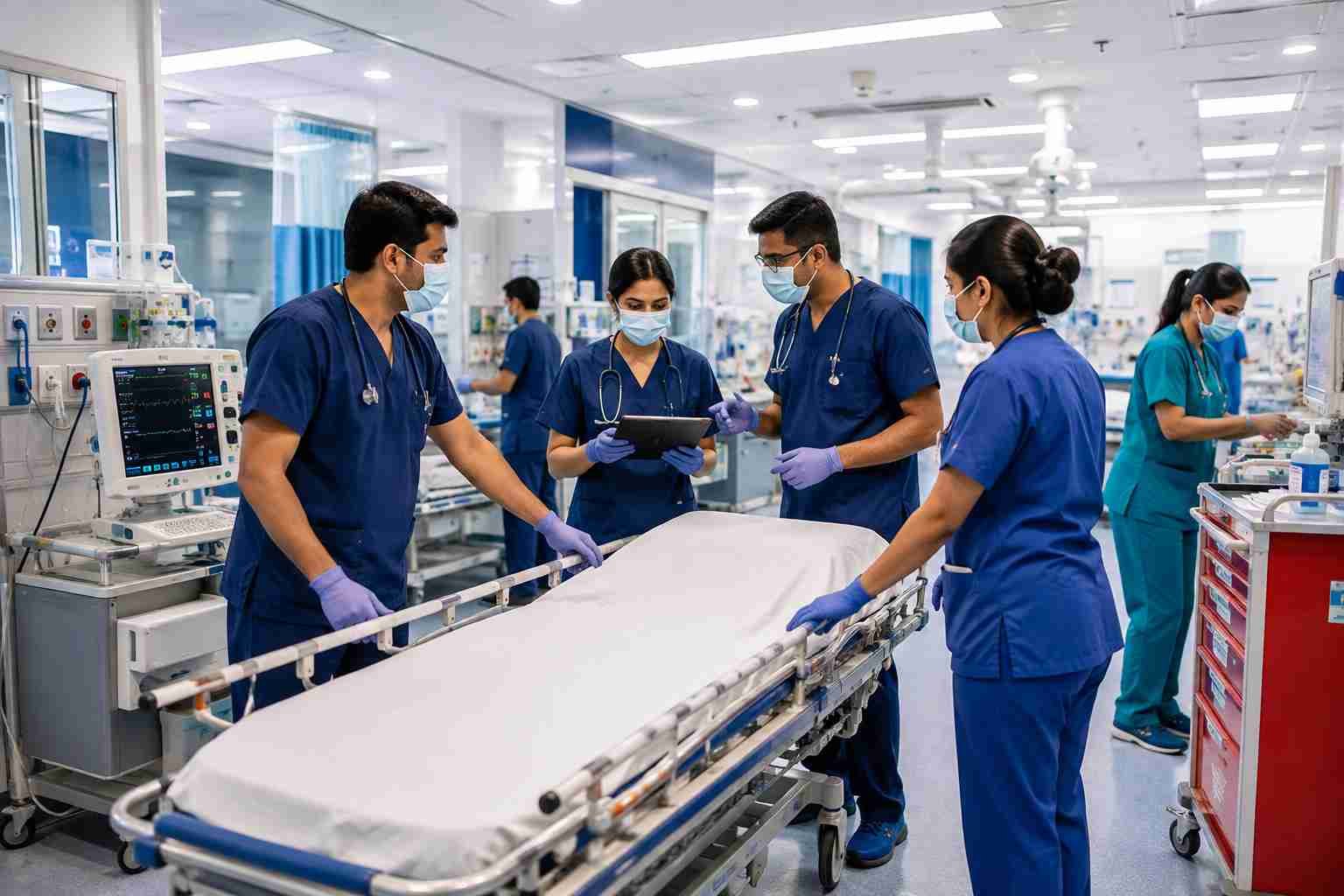
A medical emergency rarely gives you time to compare hospitals. When chest pain, breathing difficulty, a serious fall or sudden loss of consciousness happens, hospital emergency readiness can shape how quickly assessment and treatment begin.
That is why choosing the right hospital should not be only about checking the location, room facilities, and list of doctors. An emergency-ready hospital needs trained people, functional systems and essential services working together to provide timely care — whether it is day or night, weekdays or holidays.
So, what should you actually look for before an emergency happens? This blog explains the key things to check about a hospital’s emergency readiness and why it matters.
Why Emergency Readiness Matters More Than You Think
Emergency care runs on time. A patient may need assessment, oxygen, an ECG, blood tests, imaging, critical care monitoring or an urgent procedure within a short window.
A hospital that depends heavily on outside laboratories, delayed specialist availability or arranging equipment after admission can lose valuable time. Strong critical care infrastructure brings the necessary services closer together so that one step can move quickly into the next.
Readiness is therefore not just about having an emergency room. It is about whether the hospital can assess the patient, recognise deterioration and move to the next level of care without unnecessary delay.
That brings us to the signs patients and families can actually check.
Key Signs of a Hospital’s Emergency Preparedness
Good emergency preparedness is visible in how a hospital functions around the clock. The following areas are especially important.

24×7 Availability of Doctors and Emergency Medical Team
An emergency department needs trained doctors, nurses and support staff who can begin assessment as soon as the patient arrives. Equally important is a smoother system to reach out to specialists when the condition demands cardiology, surgery, orthopaedics, neurology or another speciality.
In other words, emergency medical team availability should mean more than someone being present at the reception desk. There should be clinical staff capable of triage, stabilisation, monitoring and escalation.
Well-Equipped ICCU and Trauma Care Unit
Some emergencies can deteriorate within minutes. Severe chest pain, dangerous heart rhythm changes, breathing problems or unstable blood pressure may require close monitoring and intensive treatment.
An ICCU (Intensive Coronary Care Unit) provides specialised monitoring and support for patients with serious cardiac conditions. Similarly, a trauma care unit or organised trauma service should be prepared to assess injuries, control immediate threats and coordinate surgical or critical care when required.
The important question is not simply, “Does the hospital have an ICU?” Ask what level of monitoring, staffing and emergency support is actually available.
Rapid Ambulance and Emergency Response Systems
An ambulance is often the first link in emergency care. Its role is not limited to transport.
Depending on the type of ambulance and clinical situation, trained staff may begin basic monitoring and stabilisation while the patient is being transferred. A reliable emergency ambulance response system should also communicate with the receiving hospital so that the emergency team knows a critical patient is arriving.
When comparing hospitals, check whether ambulance services operate round the clock and whether critical-care transport is available for seriously ill patients.
In-house Diagnostics, Pathology, and Blood Support
Emergency decisions frequently depend on test results. Chest pain may require an ECG and blood tests. Trauma may need imaging. Infection may require urgent laboratory investigations. Kidney problems may require electrolyte and renal function testing.
That makes in-house diagnostics and pathology an important part of emergency readiness. Having these services within the hospital can reduce dependence on outside centres and help the treating team make decisions sooner.
Hospitals should have access to blood and its components, such as red blood cells, platelets and plasma, when clinically required, either through an in-house facility or reliable authorised blood-bank support.
But emergency readiness is not only about having these facilities available. It also depends on whether the hospital follows standardised processes, maintains patient-safety practices and delivers consistent quality during critical situations. This is where accreditation becomes important.
Why NABH Accreditation Matters in Emergency Care
NABH (National Accreditation Board for Hospitals & Healthcare Providers) evaluates hospitals against structured standards focused on patient safety, clinical processes, infection control, staff competency and continuous quality improvement.
For patients, choosing an NABH-accredited hospital can provide additional confidence that the hospital follows recognised healthcare practices and maintains organised systems for patient care.
NABH accreditation matters in emergency care because it supports:
- Standardised emergency protocols: Hospitals follow defined processes for handling critical situations, helping teams respond more cohesively.
- Patient safety practices: Accreditation focuses on systems that reduce risks related to medication, infection control, documentation and clinical care.
- Trained and qualified healthcare teams: Hospitals are assessed on staff competency, roles and responsibilities to ensure appropriate care delivery.
- Quality monitoring and improvement: Accredited hospitals follow review processes to identify gaps and improve patient-care standards over time.
- Better coordination between departments: Emergency care often requires collaboration between doctors, nurses, diagnostics, ICU teams and other specialists. Structured systems help improve this coordination.
However, accreditation is only one factor when choosing emergency care. Hospitals may differ in their specialities, infrastructure, technology and emergency capabilities, so choose one that meets your specific needs.
How Infrastructure and Technology Impact Emergency Outcomes
A hospital may have advanced equipment, but it also depends on how effectively its systems, staff, and services work together. A well-planned emergency setup connects bedside monitoring, oxygen support, diagnostic services, operating theatres and intensive-care facilities, helping patients receive timely care without unnecessary delays.
This critical care infrastructure becomes particularly important when a patient needs rapid escalation from emergency assessment to an ICCU, dialysis unit or operating theatre. The availability of trained teams, round-the-clock diagnostics and functional support systems can significantly influence how quickly treatment begins during a critical situation.
Questions to Ask Before Choosing a Hospital for Emergencies
Before choosing a hospital, consider asking:
- Are emergency services available 24×7?
- Check whether doctors, nurses and emergency staff are available round the clock.
- Is critical care support available?
- Ensure the hospital has an ICCU or critical-care unit for continuous monitoring.
- Are diagnostics and pathology available within the hospital?
- Quick access to essential tests can help doctors make faster decisions.
- How quickly can specialists be involved?
- Emergency cases may require coordination between multiple departments.
- Is ambulance support available?
- Check whether the hospital provides emergency ambulance services with appropriate medical support.
- Can complex cases be managed under one roof?
- A multi-speciality hospital emergency care setup helps coordinate treatment across departments when patients need combined care.
A truly emergency-ready hospital is not just one that is open 24×7; it is one with the right teams, systems and services to provide timely care when it matters most.
How Samaritan Ensures 24×7 Emergency Readiness
If you’re comparing options for the best hospital in Kolkata, Samaritan Medical Surgical & Critical Care in Bhawanipore offers several services relevant to round-the-clock emergency and critical care.
As a NABH-certified/accredited hospital, we offer:
- 24×7 emergency services and critical-care support
- 24×7 in-house dialysis unit and automated pathology department
- ICCU ambulance
- Specialised OT and ICCU infrastructure
- In-house oxygen plant
- Trauma care

These connected facilities matter because an emergency patient may need more than one service during the same episode of care.
If you are looking for a 24×7 emergency hospital in Kolkata, the important question is therefore not simply whether its doors remain open at night. Check whether the services needed after arrival are available too.
Choosing a Hospital That’s Ready When It Matters
A hospital proves its emergency readiness through what happens after a patient reaches its doors: how quickly the patient is assessed, whether trained teams are available, whether tests can be performed promptly and whether critical care, ambulance and surgical support can be activated when needed.
These are the key factors to consider when choosing a hospital for yourself or your family — preferably before an emergency makes the decision for you.
To learn more about emergency, critical-care or specialist services at Samaritan Hospital, connect with our experts today!
People Also Ask For
1) What are the key signs that a hospital is emergency-ready?
Look for round-the-clock emergency medical staff, critical-care facilities, ambulance support, in-house diagnostic services, access to specialists and the ability to escalate patients to intensive care or an operating theatre when necessary.
2) Why is 24×7 ICCU support important during a medical emergency?
Some cardiac and critically ill patients need continuous monitoring and rapid intervention if their condition changes. A functioning ICCU allows such patients to receive close observation and specialised support without waiting for another facility.
3) How does NABH accreditation affect the quality of emergency care?
NABH standards focus on patient safety, quality systems and standardised healthcare processes. Its emergency-care framework also addresses protocols and trained, credentialed clinical staff. Accreditation is a useful quality indicator, although patients should still check the hospital's specific emergency services.
4) What should you check about a hospital’s ambulance and response time?
Ask whether the ambulance operates 24×7, what level of medical support is available during transport, how the ambulance contacts the receiving hospital and whether critical-care transportation is available. Actual response time can vary with distance, traffic and ambulance availability.
5) Is Samaritan equipped to handle emergency and trauma cases in Kolkata?
We provide round-the-clock emergency and critical-care services and lists trauma care among its clinical services. Our current facilities also include a 24×7 ICCU ambulance, in-house dialysis, automated pathology and specialised OT/ICCU infrastructure.