


Vertigo and regular dizziness may feel similar, but they feel different. Vertigo creates a false sensation that you or your surroundings are moving, often like spinning. Regular dizziness is a broader feeling of lightheadedness, imbalance or unsteadiness without movement. Since vertigo may be linked to inner ear or neurological causes, identifying the reason is important for proper treatment.
At our critical care unit, we focus on identifying the cause of balance-related symptoms and guiding patients toward suitable care. In this blog, we explain what vertigo is and how it differs from common dizziness, along with possible approaches for effective vertigo management.
What Exactly Is Vertigo?
Vertigo is a sensation where you feel that you or your surroundings are spinning, tilting or moving even when you are still. These vertigo symptoms occur when the brain receives conflicting signals from the balance system, including the inner ear, eyes and nerves.
Many cases involve the vestibular system, which controls balance and body position. This is why inner ear problems and balance are closely connected.
How the Inner Ear Controls Your Balance?
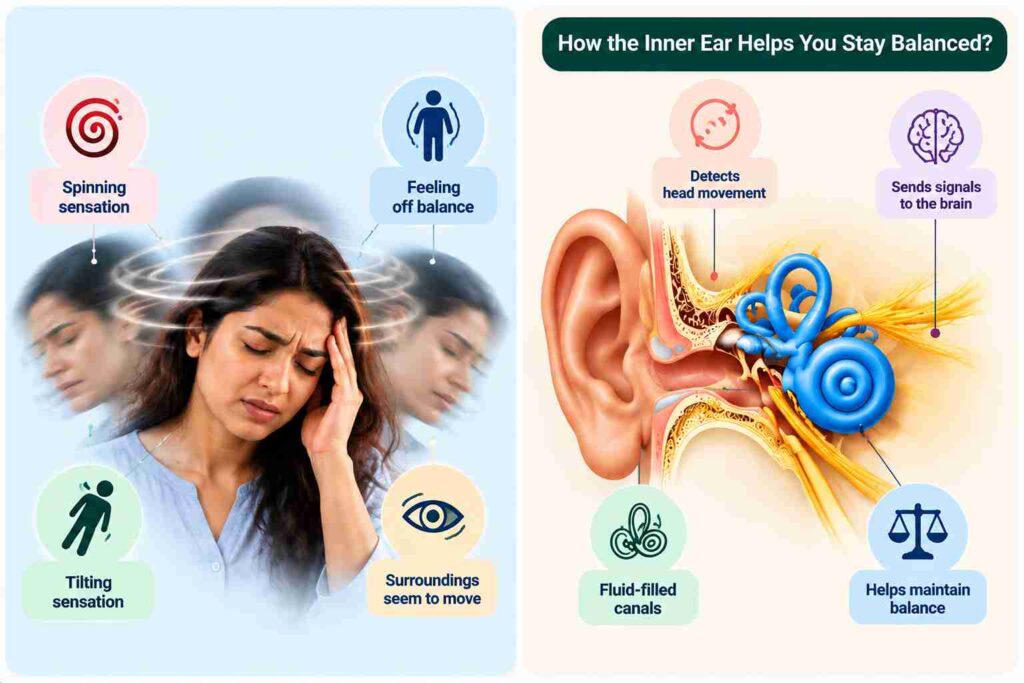
The inner ear contains fluid-filled structures called semicircular canals that detect head movement and send balance signals to the brain.
When these signals are disrupted, the brain may receive incorrect movement information, leading to dizziness, imbalance, or a spinning sensation.
What Is Regular Dizziness?
Regular dizziness is a general feeling of lightheadedness, weakness, imbalance or unsteadiness. Unlike vertigo, it usually doesn't create a sensation that you or your surroundings are moving. Common dizziness causes include:
- Dehydration
- Low blood pressure
- Low blood sugar
- Stress or anxiety
- Certain medications
Understanding vertigo vs lightheadedness helps identify the right cause and treatment approach.
What is the Difference Between Vertigo and Dizziness?
Although these terms are often used interchangeably, vertigo and dizziness differ in important ways.
The Spinning Sensation vs. Feeling Faint
| Vertigo signs | Dizziness signs |
| The room spinning | Feeling faint |
| Feeling like you are rotating | A feeling of weakness |
| Feeling pulled towards one side | Feeling unstable |
Head Movement vs. Standing Up Quickly
| What triggers vertigo? | What triggers dizziness? |
| Turning the head suddenly | Standing quickly |
| Getting up from bed | Drinking less water |
| Looking upward | Skipping meals |
Nausea, Nystagmus and Hearing Changes
Vertigo may occur with symptoms such as:
- Nausea or vomiting
- Eye movements called nystagmus
- Ringing in the ears
- Hearing changes
- Balance problems
These additional symptoms provide important clues during diagnosis.
What Causes Vertigo?
Vertigo can result from problems in the inner ear, balance nerves, or, less commonly, the brain. The cause determines the most suitable treatment.
BPPV, Meniere’s Disease and Other Inner Ear Conditions
BPPV (benign paroxysmal positional vertigo) is one of the most common causes of vertigo. It occurs when tiny calcium crystals in the inner ear move into areas that affect balance signals. Studies suggest BPPV is more common with age and may affect around 3.4% of adults over 60 years, making evaluation important for repeated positional dizziness.
Other causes include:
- Ménière’s disease, which may cause vertigo with hearing changes and ear pressure
- Vestibular neuritis, affecting the balance nerve
- Labyrinthitis, causing inflammation of inner ear structures
- Migraine-related vertigo
These conditions may cause different vestibular disorder symptoms depending on the affected part of the balance system.
What are the Common Vertigo Triggers?
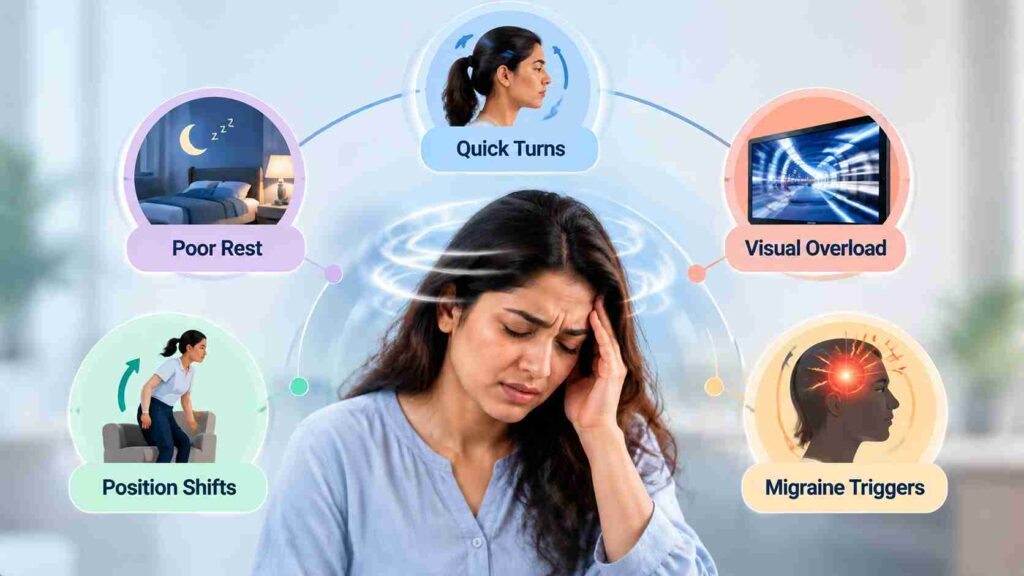
Common vertigo triggers include:
- Sudden head movements
- Stress and poor sleep
- Certain visual patterns
- Position changes
- Migraine-related factors
Identifying personal triggers can help reduce repeated episodes.
When Should You See an ENT Specialist?
Not every episode of dizziness needs urgent medical attention, but certain symptoms require evaluation. Consult an ENT specialist if vertigo is recurrent, affects daily activities, or occurs with hearing changes, ringing in the ears, or balance problems.
Seek prompt medical care if vertigo appears with severe headache, slurred speech, weakness, difficulty walking or sudden hearing loss. These symptoms may require evaluation to rule out neurological causes.
How Is Vertigo Diagnosed and Treated?
Identifying the cause is important because treatment depends on the type of vertigo and the underlying condition. At Samaritan Hospital in Kolkata, a vertigo treatment evaluation begins with an assessment of symptoms, medical history, and balance-related concerns.
Doctors may recommend vertigo diagnosis tests such as the Dix-Hallpike test for BPPV, balance assessments, hearing tests and imaging in selected cases. These evaluations help identify whether vertigo is related to inner ear problems, vestibular disorders or other causes.
Non-Surgical Treatments — Repositioning Manoeuvres and Medication
Many vertigo conditions improve with non-surgical treatment. For BPPV (benign paroxysmal positional vertigo), repositioning techniques such as the Epley manoeuvre help move displaced calcium crystals back to their normal position.
Medicines may be advised in selected cases to manage symptoms like nausea, vomiting or severe dizziness. The treatment plan depends on the cause, severity and frequency of episodes.
Vestibular Rehabilitation Therapy
Vestibular rehabilitation therapy uses specific exercises to improve balance and reduce dizziness. It helps the brain adapt better to changes in the balance system.
This therapy may benefit people with repeated vertigo episodes, vestibular nerve problems or ongoing imbalance after an inner ear condition. Regular practice and follow-up can improve confidence during daily movements.
When Should You Consider Expert Care?
Vertigo and regular dizziness may feel similar but often have different causes. While dizziness may result from dehydration, low blood pressure or other factors, vertigo usually involves a false sensation of movement linked to balance-related conditions.
If you’re searching for vertigo treatment in Kolkata, visit our critical care unit for evaluation and guidance based on your health condition. Our specialists assess the underlying cause and recommend suitable treatment based on individual symptoms and health needs.
What People Also Ask
Can vertigo go away on its own without treatment?
Some mild vertigo episodes may improve without treatment, especially when caused by temporary conditions. However, repeated episodes need evaluation to identify the cause and prevent recurrence.
Is vertigo a sign of a serious neurological condition like a stroke?
Most vertigo cases involve inner ear problems. However, sudden vertigo with weakness, speech difficulty, severe headache or loss of coordination requires urgent medical attention.
What foods or habits trigger vertigo episodes?
Triggers vary between individuals. Lack of sleep, stress, dehydration, excessive caffeine and certain migraine-related factors may worsen symptoms in some people.
How long does a typical vertigo episode last?
The duration depends on the cause. BPPV episodes may last seconds to minutes, while other conditions can cause symptoms lasting hours or longer.
Can anxiety or stress cause vertigo-like symptoms?
Stress and anxiety may not cause true vertigo but can contribute to dizziness, imbalance or worsen existing symptoms.