

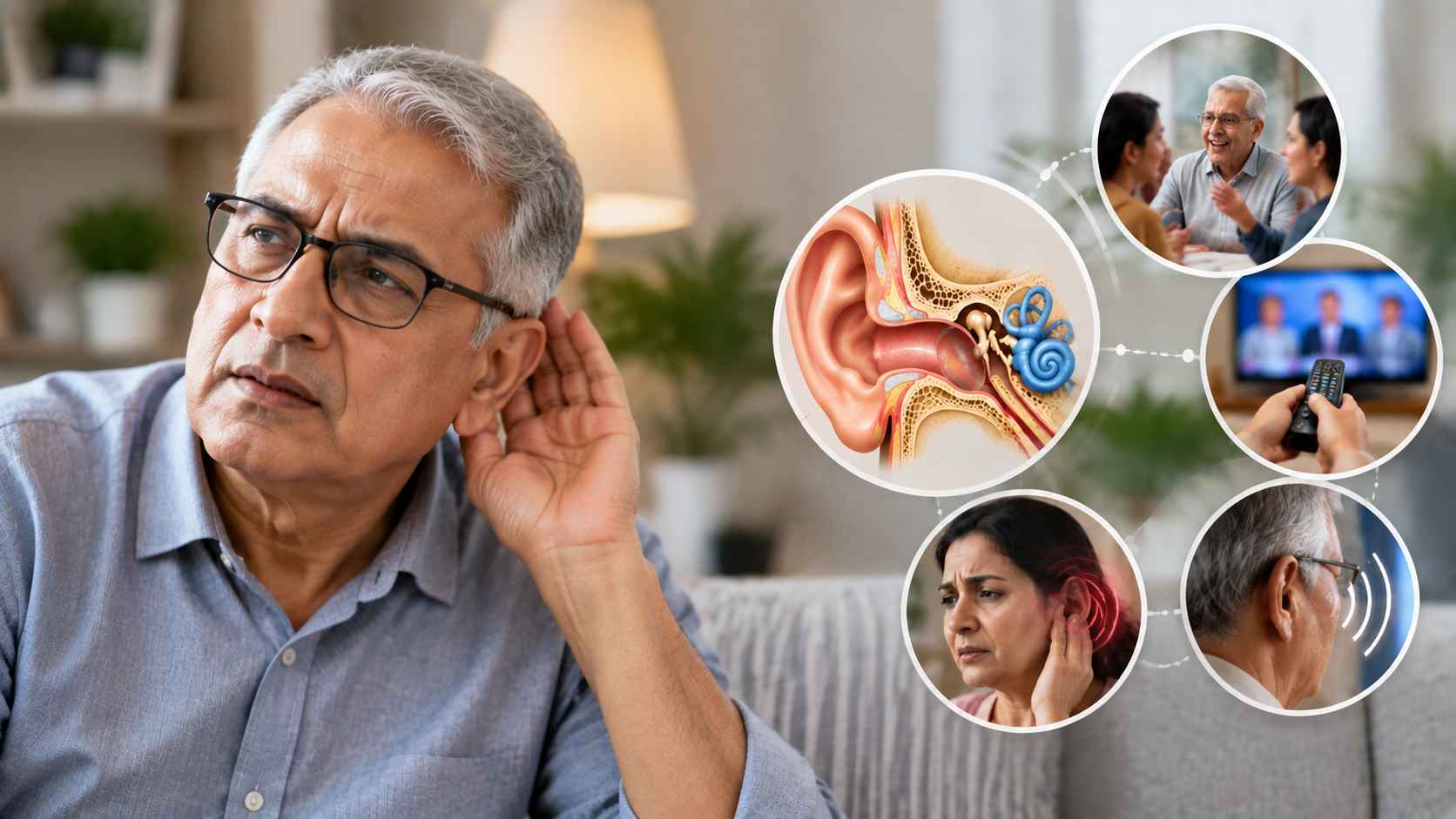
Age-related hearing loss, also known as presbycusis, is usually not reversible because it results from gradual changes in the inner ear and hearing nerves. However, the right evaluation and treatment can manage it effectively.
WHO states that globally, about 30% of people over 60 live with hearing loss. At our critical care unit, we help identify the cause of hearing difficulty and guide patients toward suitable solutions. This blog explains:
- Why hearing declines with age and the signs you should notice
- Whether hearing loss can improve naturally or needs treatment
- Available options such as hearing aids, cochlear implants and medical care
What Is Age-Related Hearing Loss (Presbycusis)?
Age-related hearing loss (presbycusis) is a gradual decline in hearing ability that develops with ageing and usually affects both ears over time. It is a growing health concern in India, with studies estimating that around 6.3% of the Indian population experiences significant hearing impairment, with age-related hearing changes being a major concern among older adults.
Unlike sudden hearing loss, presbycusis develops slowly and may go unnoticed until daily conversations become difficult or people frequently ask others to repeat themselves. The causes of hearing loss with ageing mainly involve changes in the inner ear and hearing nerves rather than problems in the outer ear.
Why Does Hearing Loss Happen With Age?
Tiny hair cells in the inner ear convert sound vibrations into signals sent to the brain. Over time, these delicate cells can become damaged due to ageing, long-term noise exposure and other health factors.
Unlike some body cells, damaged inner-ear hair cells generally do not grow back. Changes in the hearing nerve and the brain’s ability to process sounds may also contribute to reduced hearing clarity.
What Are the Signs That You or a Loved One May Be Losing Hearing?
The signs of hearing loss in elderly people are not always obvious. Many people adjust their habits slowly and may not realise their hearing has changed. Recognising early signs can support timely evaluation and better communication.
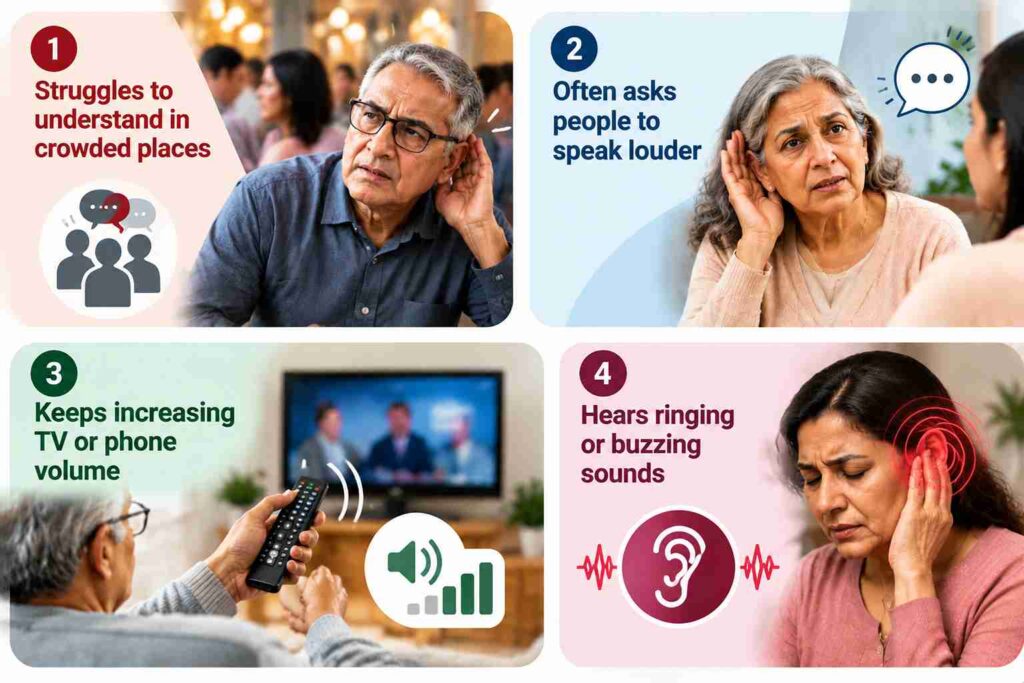
Difficulty Following Conversations in Noisy Places
A common early sign is difficulty understanding conversations in crowded places such as restaurants, family gatherings or social events. Many people can hear someone speaking but struggle to understand the words, especially with background noise.
Frequently Asking Others to Repeat Themselves
Repeatedly asking people to speak louder or repeat sentences may indicate reduced hearing ability. Family members often notice this change before the person experiencing issues with hearing.
Turning Up the TV or Phone Volume
Regularly increasing the television, mobile phone, or radio volume can be another warning sign. If sounds feel unclear even at higher volumes, the issue may not be volume but reduced sound processing ability.
Ringing or Buzzing in the Ears (Tinnitus)
Some people experience ringing, buzzing or humming sounds even when there is no external noise. Tinnitus and hearing loss often overlap because both can result from changes in the inner ear. Evaluate persistent tinnitus, especially if it affects sleep or daily activities.
Is Age-Related Hearing Loss Reversible?
So, can hearing loss be cured completely? In most cases of age-related hearing issues, the answer is no because the damaged inner-ear structures cannot naturally repair themselves.
However, not every hearing difficulty is permanent. Some hearing problems may improve when caused by treatable conditions such as:
- Earwax blockage
- Middle ear fluid
- Certain infections
- Some medication-related effects
That is why a proper evaluation matters before assuming hearing changes are only due to ageing.
Sensorineural vs. Conductive Hearing Loss — Why the Difference Matters
Understanding the difference between sensorineural vs conductive hearing loss helps identify whether hearing difficulty is likely to improve with treatment or requires long-term management.
| Feature | Sensorineural Hearing Loss | Conductive Hearing Loss |
| What it affects | Inner ear or hearing nerve | Outer ear or middle ear |
| Common reason | Damage to inner-ear hair cells or changes in hearing nerve function | Blockage or problems that prevent sound from travelling properly |
| Age-related connection | Age-related problems to hear is usually sensorineural | Less commonly linked with ageing |
| Common causes | Ageing, long-term noise exposure and nerve-related changes | Earwax blockage, fluid buildup, infections or eardrum problems |
| Can it improve? | Usually permanent, but hearing support can improve communication | Often improves when the underlying cause is treated |
| Common management options | Hearing aids, cochlear implants or hearing rehabilitation | Medicines, removal of blockage or treatment of the underlying condition |
A detailed hearing evaluation helps identify the type of hearing problem and guides the most suitable treatment approach. A hearing test (audiometry) often helps determine hearing levels and plan further care.
When Should You See an ENT Specialist?
Hearing changes should not always be considered a normal part of ageing. An ENT specialist evaluation is important if you notice:
- Sudden issues with hearing in one or both ears
- Hearing difficulty affecting only one ear
- Hearing problems with dizziness or balance problems
- Persistent ear pain or discharge
- Rapid worsening of hearing ability
Sudden hearing changes need prompt medical attention because some causes respond better to early treatment.
How Is Hearing Loss Diagnosed and Treated?
The first step towards effective care is understanding the type, severity and cause of hearing loss. At Samaritan Hospital in Kolkata, a hearing loss evaluation begins with understanding symptoms, medical history, and hearing ability through appropriate tests.
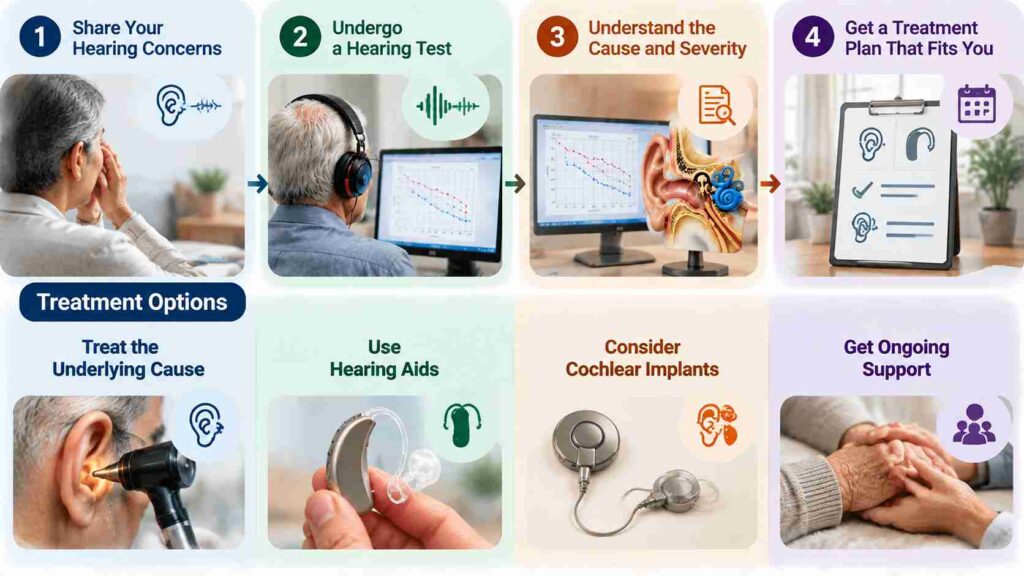
A hearing test (audiometry) measures how well you hear different sounds and frequencies. Based on the results, doctors can suggest suitable treatment options.
Treatment depends on the cause and may include:
- Removal of earwax or treatment of ear infections
- Hearing support devices
- Surgical options in selected cases
- Hearing rehabilitation and communication support
Hearing Aids — Who They Help Most
Hearing aids are commonly recommended for people with mild to severe problems to hear, including many cases of age-related hearing difficulty. Modern hearing aids don't restore natural hearing, but they amplify sounds and improve clarity.
When selected to match individual hearing needs, they can make conversations, television, and daily communication easier. The right hearing aid depends on hearing levels, lifestyle requirements and comfort.
Cochlear Implants — When Hearing Aids Aren’t Enough
For people with severe hearing loss who get limited benefit from hearing aids, cochlear implants may be considered. Unlike hearing aids, which amplify sound, cochlear implants use an electronic system to stimulate the hearing nerve directly.
Suitability depends on hearing test results, nerve function, and specialist assessment. When comparing hearing aids and cochlear implants, the right choice depends on the type and severity of hearing loss, not age alone.
Can You Prevent or Slow Down Age-Related Hearing Loss?
You can't always prevent age-related hearing changes, but protecting your ears and maintaining overall health can reduce avoidable hearing damage.
Preventing age-related hearing loss includes:
- Protecting ears from loud sounds
- Using hearing protection in noisy environments
- Avoiding prolonged exposure to loud music
- Managing conditions such as diabetes and high blood pressure
- Getting regular hearing checks when changes are noticed
Hearing health is linked with overall wellbeing. Some studies suggest that unmanaged hearing issues may be associated with a higher risk of cognitive decline, making early evaluation and hearing support important.
When to Seek Expert Care?
Age-related hearing loss is usually permanent, but it does not mean that people have to accept difficulty communicating as an unavoidable part of ageing.
Timely assessment can identify the type of hearing loss and help determine whether hearing aids, medical treatment or other options may improve daily hearing ability.
At our critical care unit in Kolkata, we provide evaluation and guidance on hearing concerns, including hearing loss treatment.
Get in touch with us at 9836292167!
What People Also Ask
At what age does hearing loss typically start?
Age-related hearing changes may begin gradually in middle age, but the timing varies by individual. Factors such as genetics, noise exposure and overall health can influence when hearing difficulty becomes noticeable.
Can hearing loss lead to memory problems or dementia?
Research suggests that untreated hearing loss may be associated with cognitive decline in some people. Managing hearing difficulties and staying socially engaged may support overall wellbeing.
How much does a hearing aid cost, and is it a one-time investment?
Hearing aid costs vary depending on the type, technology and features. They may require adjustments, maintenance and replacement over time.
Can sudden hearing loss in one ear be treated if caught early?
Yes, some causes of sudden hearing loss may respond better when evaluated and treated quickly. Anyone experiencing sudden hearing changes should seek medical attention promptly.
Is a hearing test painful?
No. A hearing test (audiometry) is a safe and painless procedure. It involves listening to different sounds and responding when you hear them.