

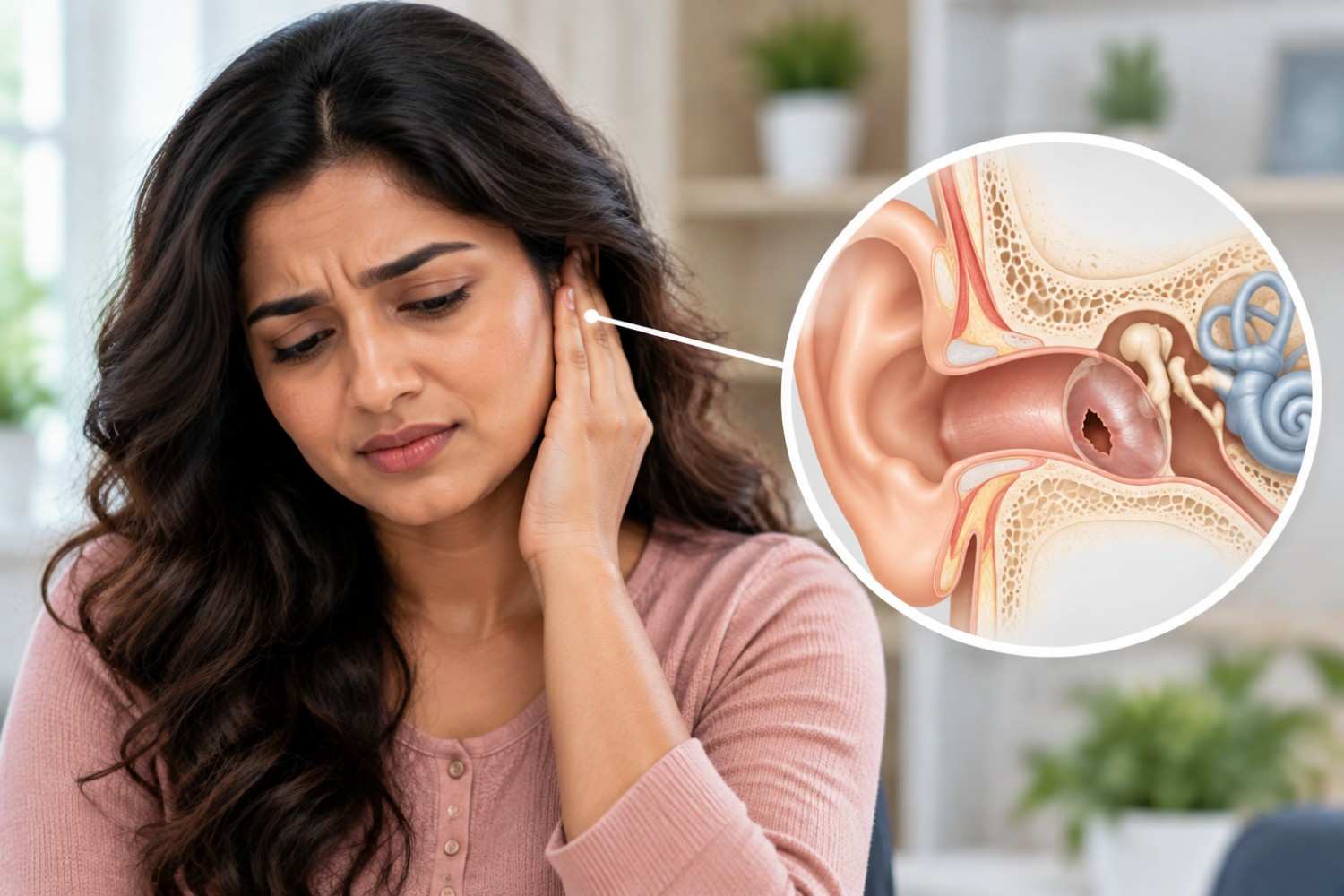
Yes, ear infections can sometimes lead to a perforated eardrum when infected fluid builds pressure behind the eardrum and causes it to tear. This rupture may bring sudden relief from intense ear pain, followed by symptoms like ear discharge, muffled hearing and discomfort.
Chronic or repeated ear infections are a common reason behind long-lasting eardrum problems. When left untreated, ongoing inflammation may affect hearing and increase the risk of complications.
While many small perforations heal naturally, persistent holes may require medical treatment or eardrum repair surgery. Here, we focus on early diagnosis and appropriate treatment to help protect your ear health.
This blog explains:
- How ear infections damage the eardrum and cause perforation
- The symptoms, causes and diagnosis of a perforated eardrum
- When medicines are enough and when tympanoplasty may be needed
How Does an Ear Infection Cause a Perforated Eardrum?
The eardrum is a thin membrane between the outer ear and middle ear. It moves when sound waves reach it, allowing you to hear clearly.
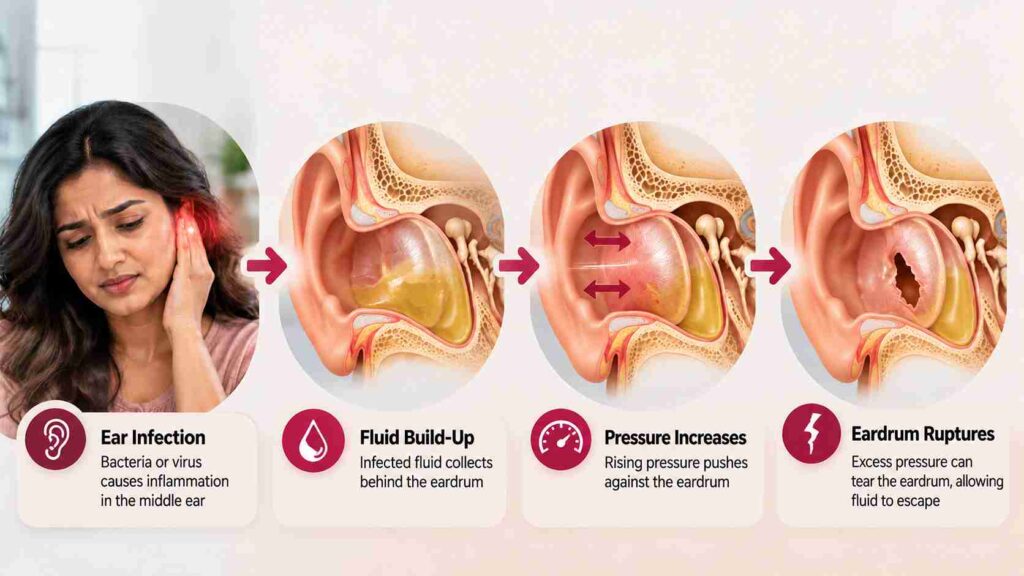
During an ear infection, fluid and infected material can collect behind the eardrum. As this fluid builds up, pressure increases inside the middle ear. In some cases, the pressure becomes strong enough to tear or puncture the eardrum.
This is one of the common ear infection causes of eardrum perforation, especially when infections are severe, repeated or not treated properly.
The Link Between Pressure Buildup and Eardrum Rupture
Normally, the middle ear maintains a pressure balance that helps the eardrum function properly. When infection blocks normal drainage, fluid starts accumulating behind the eardrum.
As pressure rises, the eardrum may rupture to release the trapped fluid. This explains why some people experience sudden pain relief followed by fluid discharge.
Repeated infections may also weaken the eardrum over time, increasing the risk of long-term eardrum damage.
Signs of a Perforated Eardrum
Perforated eardrum symptoms can vary depending on the hole's size and cause. Some people notice symptoms suddenly, while others experience gradual changes.
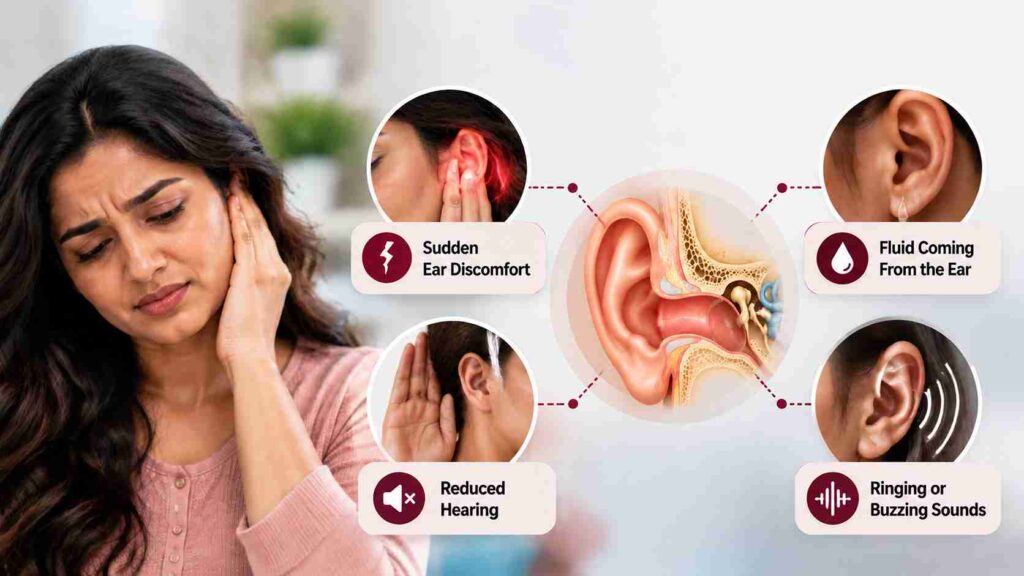
Sudden Ear Pain Followed by Relief
A sharp ear pain is often one of the first symptoms. When pressure inside the middle ear is released after the eardrum tears, the pain may reduce quickly.
However, this relief does not mean the problem has resolved. The opening in the eardrum may still allow infection to continue and should be evaluated by an ENT specialist.
Fluid or Pus Discharge From the Ear
Ear discharge may occur when infected fluid passes through the perforation.
Several causes of ear discharge include infections, injuries, and other ear conditions. Persistent or foul-smelling discharge should not be ignored, as it may indicate ongoing inflammation.
Hearing Loss or Muffled Sounds
A perforated eardrum can affect how sound vibrations travel through the ear. This may lead to muffled hearing or difficulty understanding sounds.
The level of hearing reduction depends on the size and location of the hole and whether other middle ear structures are affected.
Ringing in the Ear (Tinnitus)
Some people experience ringing, buzzing or unusual sounds after eardrum damage. This happens because changes in the eardrum can affect normal sound transmission.
Other Causes of a Perforated Eardrum Besides Infection
Although infections are common, several other factors can damage the eardrum.
Common ruptured eardrum causes include:
- Injury caused by inserting objects into the ear canal
- Sudden loud sounds or explosions
- Rapid pressure changes during flying or diving
- Direct trauma to the ear
In these situations, hearing changes may occur because eardrum damage can cause hearing loss. The extent of hearing problems depends on the injury's severity and whether deeper ear structures are involved.
When Should You See an ENT Specialist?
A small perforation may heal on its own, but certain symptoms require medical evaluation.
Consult an ENT specialist if you experience:
- Persistent ear discharge
- Hearing reduction that does not improve
- Repeated ear infections
- Severe ear pain
- Dizziness or balance problems
Patients with recurring infections may require proper chronic ear infection treatment to prevent repeated inflammation and further eardrum damage.
Early assessment helps determine whether the eardrum can heal naturally or needs additional treatment.
How Is a Perforated Eardrum Diagnosed and Treated?
Diagnosis usually begins with an ear examination using an otoscope. This allows doctors to check the size, position and condition of the perforation.
Doctors may also recommend hearing tests to see whether the eardrum damage has affected hearing. Treatment depends on the size of the hole, the cause, infection status and the possibility of natural healing.
Can a Perforated Eardrum Heal on Its Own?
Yes, many small perforations heal naturally over time. Eardrum healing time depends on factors such as the size of the tear, the presence of infection, and overall ear health.
During healing, patients are usually advised to:
- Keep the ear dry
- Avoid inserting anything inside the ear
- Follow prescribed medicines
- Attend follow-up appointments
If the hole remains open for a long period, further treatment may be required.
When Tympanoplasty (Eardrum Repair Surgery) Is Needed
When the eardrum does not heal naturally, doctors may recommend tympanoplasty surgery.
This procedure repairs the hole using a tissue graft to restore the eardrum and improve its function.
Tympanoplasty may be considered when:
- The perforation remains open for several months
- Hearing loss continues
- Ear discharge keeps returning
- Repeated infections affect daily life
Patients looking for an eardrum hole operation in Kolkata can consult an ENT specialist to determine whether surgery suits their condition.
How to Prevent Ear Infections and Eardrum Damage
Some simple steps can help protect your ears:
- Keep ears dry during infections and after treatment
- Avoid inserting cotton buds or objects inside the ear
- Treat ear infections early
- Manage allergies that affect ear drainage
- Seek medical advice for repeated ear discharge
Early attention to ear problems can reduce the risk of long-term hearing issues.
When to Seek Expert Care
A perforated eardrum can develop when infection-related pressure damages the thin membrane inside the ear. While some small holes heal naturally, don't ignore ongoing discharge, hearing changes, or repeated infections.
We evaluate ear conditions carefully and recommend treatment based on the cause, severity and healing potential. If you are considering an eardrum hole operation in Kolkata, our ENT specialists can help you understand the diagnosis, suitable treatment options and recovery process.
What People Also Ask
Is a perforated eardrum a medical emergency?
A perforated eardrum is not always an emergency, as many small holes heal naturally. However, severe pain, heavy discharge, dizziness, fever or sudden hearing changes require prompt medical attention.
Can you fly or swim with a perforated eardrum?
Avoid swimming until the eardrum heals because water entry can increase infection risk. Flying may be possible in some cases, but consult an ENT specialist before travelling.
How long does it take for a perforated eardrum to heal naturally?
Healing time varies depending on the size of the perforation, infection status and overall ear health. Small holes may heal within weeks, while larger perforations may need additional treatment.
Does a perforated eardrum cause permanent hearing loss?
Most perforations cause temporary hearing changes that improve after healing or treatment. Permanent hearing loss is less common and depends on the extent of damage.
Is the eardrum repair surgery painful, and what is the recovery like?
Tympanoplasty is performed under anaesthesia, so the procedure itself is not painful. Recovery depends on individual healing, but keeping the ear protected and attending follow-up visits are important for proper healing.