

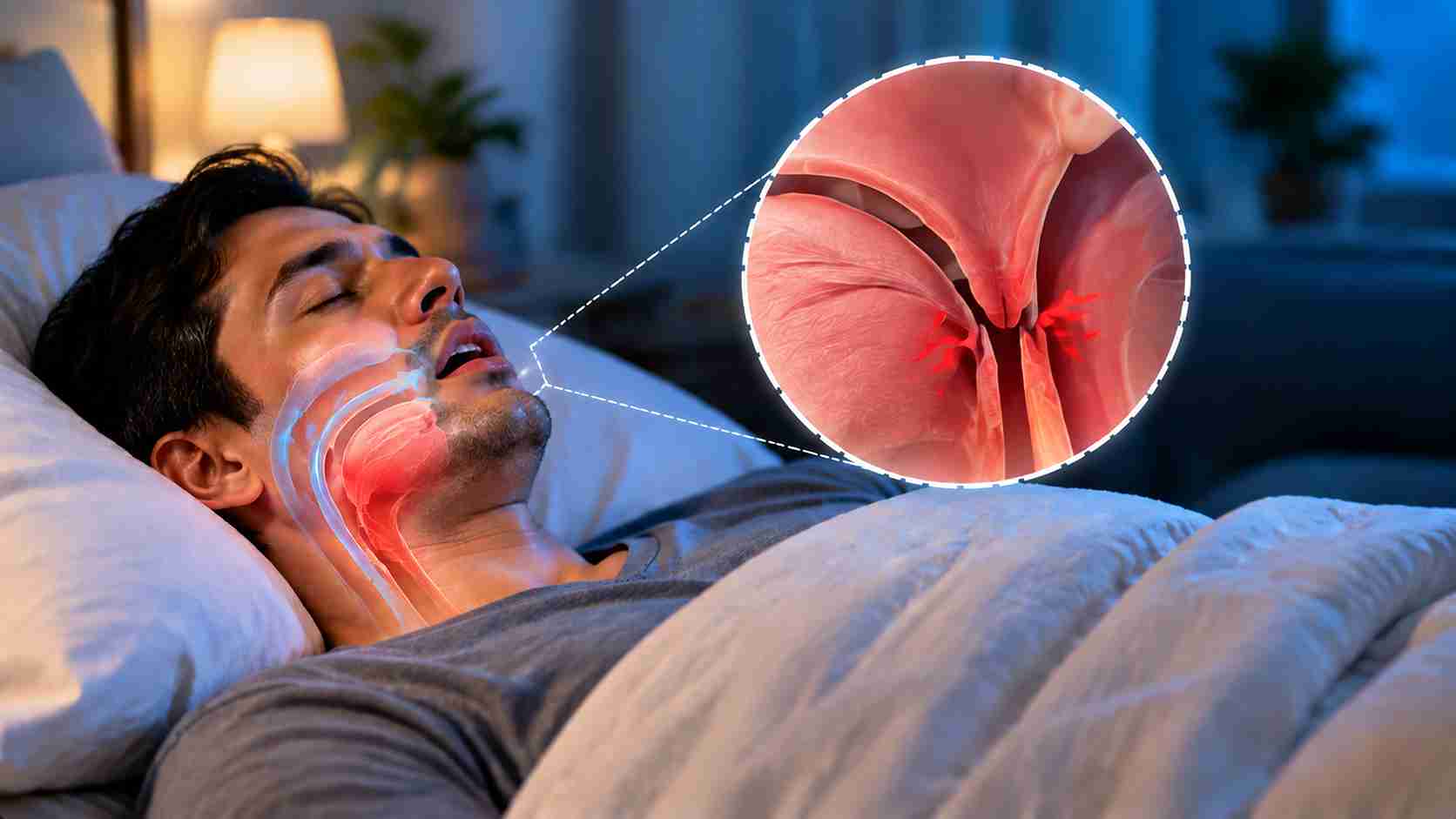
During a sleep apnea episode, the airway narrows or becomes completely blocked, causing breathing to stop for 10 seconds or longer. As oxygen levels fall, the brain briefly wakes the body to reopen the airway and restart breathing. These interruptions may happen many times every night, often without the person remembering them. Repeated episodes can affect your overall health if left untreated.
Understanding what happens inside the body during these episodes helps identify warning signs and the need for timely evaluation. In this blog, we’ve explained sleep apnea in depth, how it impacts your body during an episode and how the right treatment can manage this condition.
What Is Sleep Apnea?
Sleep apnea is a condition in which breathing repeatedly pauses and resumes during the night, affecting sleep quality and the body's oxygen supply. These interruptions occur when the airway becomes blocked, or the brain temporarily fails to send proper breathing signals.
The most common type is Obstructive Sleep Apnea (OSA), where relaxed throat muscles reduce airflow. A global study published in The Lancet Respiratory Medicine estimated that around 936 million adults aged 30–69 years have mild-to-severe obstructive sleep apnea (OSA), highlighting the scale of this often underdiagnosed condition.
Common sleep apnea symptoms include loud snoring, breathing pauses, disturbed sleep, and daytime tiredness.
| Type of Sleep Apnea | What Happens | Common Causes |
| Obstructive sleep apnea | The airway becomes narrow or blocked while you’re not awake | Throat muscle relaxation, airway structure and weight-related factors |
| Central sleep apnea | The brain temporarily fails to send signals that control breathing | Conditions affecting breathing control signals |
| Mixed sleep apnea | Features of both obstructive and central sleep apnea occur | Combination of airway blockage and breathing control problems |
What Causes the Airway to Collapse?
In obstructive sleep apnea, throat muscles naturally relax during sleep. In some people, this relaxation partially or completely blocks the airway.
The common obstructive sleep apnea causes are excess weight, a naturally narrow airway, enlarged tonsils, tongue size and certain jaw or throat structures.
What Happens in Your Body During an Episode?
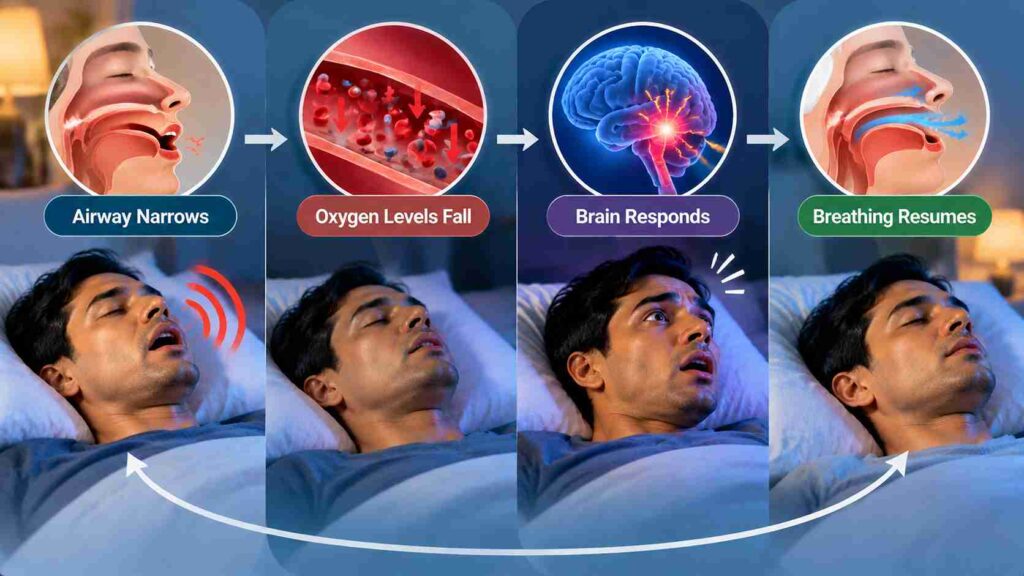
A sleep apnea episode follows a repeated cycle that affects airflow, oxygen levels and sleep quality. Most people do not remember these episodes because they happen while they are asleep. These interruptions often show up as snoring and breathing pauses during sleep, especially for a partner.
| Stage of Episode | What Happens Inside the Body |
| Airway narrows or closes | Relaxed throat muscles reduce or block airflow |
| Oxygen levels fall | Blood oxygen decreases while carbon dioxide increases |
| Brain responds | A brief awakening helps reopen the airway |
| Breathing resumes | Airflow returns with a gasp, snort or deep breath |
The Airway Narrows or Closes
After you go to bed at night, muscles supporting the throat relax. In people with obstructive sleep apnea, this relaxation can narrow the airway and reduce airflow to the lungs.
When airflow becomes restricted, snoring may occur. In some cases, the airway closes completely, causing breathing to pause.
Oxygen Levels Drop, and Carbon Dioxide Builds Up
When breathing stops, blood oxygen levels begin to fall. At the same time, carbon dioxide increases because the body cannot remove it properly.
Repeated oxygen drops during sleep can put stress on the heart and blood vessels, especially when these episodes occur frequently.
The Brain Triggers a Micro-Awakening
As oxygen levels change, the brain detects that breathing has stopped. It briefly activates the body, causing a micro-awakening that helps reopen the airway.
These awakenings are usually too short to remember but repeatedly interrupt deep sleep.
Breathing Resumes, Often With a Gasp or Snort
Once the airway opens, breathing starts again. Some people may gasp, snort or take a deep breath before returning to sleep.
This cycle can repeat many times throughout the night, preventing proper rest even when sleep duration appears adequate.
How Sleep Apnea Affects Your Heart and Brain Over Time
Repeated episodes do more than disturb sleep. Frequent oxygen changes and stress responses can gradually affect different body systems.
The effects of sleep apnea on your heart health include:
- increased strain on the cardiovascular system,
- higher blood pressure,
- and greater workload on the heart.
Poor sleep quality can also affect concentration, memory and daytime alertness.
Signs You May Be Having Sleep Apnea Episodes Without Knowing It
Many people do not realise they stop breathing while sleeping because the episodes happen while they are unconscious. Often, a partner or family member notices the warning signs first.
Common signs include:
- Loud or persistent snoring
- Witnessed breathing pauses
- Waking up gasping or choking
- Morning headaches
- Difficulty staying alert during the day
People often ignore persistent tiredness, but daytime fatigue may stem from disrupted sleep caused by untreated sleep apnea.
What Increases the Risk of Sleep Apnea?
Sleep apnea can affect anyone, but certain health conditions, lifestyle factors and physical features can increase the likelihood of developing the condition. Identifying these sleep apnea risk factors can help people recognise their risk early and seek evaluation when symptoms appear.
This medical condition is also a growing concern in India. Research estimates that around 104 million working-age Indians may have obstructive sleep apnea, with approximately 47 million experiencing moderate-to-severe OSA, highlighting the importance of timely diagnosis and management. Common risk factors include:
- Being overweight or obese
- Increasing age
- Family history of sleep apnea
- Smoking or alcohol use
- Certain facial or airway structures
- High blood pressure
When Should You See a Specialist?
Occasional snoring does not always indicate sleep apnea, but you should not ignore certain warning signs. Consult a specialist if you or a family member notices repeated breathing pauses after you fall asleep, choking or gasping episodes, excessive daytime sleepiness, or difficulty staying alert.
People with high blood pressure, heart conditions or multiple sleep apnea risk factors should also consider an evaluation, especially when symptoms affect daily activities or sleep quality.
How Is Sleep Apnea Diagnosed and Treated?
The right treatment starts with identifying the type and severity of sleep apnea. A detailed evaluation helps doctors understand breathing patterns, oxygen changes, and the cause of airway interruptions.
What is a Sleep Study?
A sleep study (polysomnography) measures how often breathing interruptions occur and how they affect the body while sleeping. During the test, doctors assess:
- Breathing patterns
- Oxygen levels
- Heart rate
- Sleep stages
- Body movements
The findings help determine whether symptoms are related to OSA or another sleep disorder.
CPAP and Other Treatment Options
CPAP therapy is one of the most commonly recommended treatments for OSA. It delivers continuous air pressure through a mask, helping prevent airway collapse when you’re asleep.
| Treatment Option | How It Helps | Usually Considered For |
| Lifestyle changes | Helps reduce factors that contribute to airway narrowing | Mild cases or supportive management |
| CPAP therapy | Uses continuous air pressure to keep the airway open after you fall asleep at night | Moderate to severe obstructive sleep apnea |
| Oral appliances | Helps improve airflow by adjusting jaw or tongue position | Selected mild to moderate cases |
| Surgery | Corrects specific structural problems affecting airflow | Patients with certain anatomical causes |
If you are considering sleep apnea treatment in Kolkata, a proper diagnosis can help determine whether CPAP, lifestyle changes, or other treatment options suit your condition.
When Should You Reach Out to an Expert?
Sleep apnea episodes may seem like simple snoring, but repeated breathing interruptions can affect oxygen levels, sleep quality, and overall health. Since many people do not remember these episodes, recognising warning signs through family observations and daytime symptoms becomes important.
At our critical care setup in Kolkata, we provide sleep apnea treatment through timely evaluation and appropriate management of sleep-related breathing problems. Our specialists help identify the cause and guide you towards the right treatment approach.
Frequently Asked Questions About Sleep Apnea
How many times can a person stop breathing in one night with sleep apnea?
The number of breathing pauses varies depending on the severity of this ailment. Some people may experience several interruptions per hour, while severe cases can have frequent episodes throughout the night.
Can sleep apnea be fatal if left untreated?
If untreated, it can increase the risk of serious health problems over time, including high blood pressure, heart-related complications and other cardiovascular concerns. Early diagnosis and appropriate treatment can help reduce these risks.
Is snoring always a sign of sleep apnea?
No. Many people snore without having sleep apnea. However, loud snoring combined with breathing pauses, gasping while being asleep or daytime tiredness may require medical evaluation.
Can losing weight cure sleep apnea?
Weight loss can improve sleep apnea symptoms in people where excess weight contributes to airway narrowing. However, it may not fully resolve the condition for everyone, and additional treatments may still be needed.
Is CPAP the only treatment option, or is surgery sometimes needed?
CPAP therapy is a common treatment for OSA, but it is not the only option. Depending on the cause, doctors may recommend oral appliances, lifestyle changes or surgery to address structural airway problems.