


Wisdom teeth are often blamed for front-tooth crowding, but the relationship is more complex. In some cases, these third molars may contribute to pressure or changes, especially when they are impacted or don't have enough space to develop properly. However, teeth can also shift due to natural changes, bite forces, and other factors. A proper dental evaluation helps determine whether wisdom tooth removal is actually needed.
What Does the Evidence Say About Wisdom Teeth and Crowding?
Wisdom teeth develop at the back of the mouth, usually during late teenage years or early adulthood. Because they appear after most permanent teeth are already in place, many people assume they push other teeth forward and cause crowding.
However, research does not show a simple cause-and-effect relationship. While wisdom teeth crowding teeth is a commonly discussed concern, front teeth can also shift because of changes in jaw growth, tooth movement over time, bite patterns, and loss of dental stability.
Removing wisdom teeth does not always prevent future crowding. Dentists usually consider factors such as tooth position, available space, symptoms and overall oral health before recommending removal.
Can Wisdom Teeth Affect Teeth Alignment After Braces?
Some people notice teeth becoming slightly uneven years after orthodontic treatment and wonder whether wisdom teeth are responsible. However, orthodontic relapse usually stems from multiple factors, including natural tooth movement, changes in jaw structure, and inconsistent retainer use.
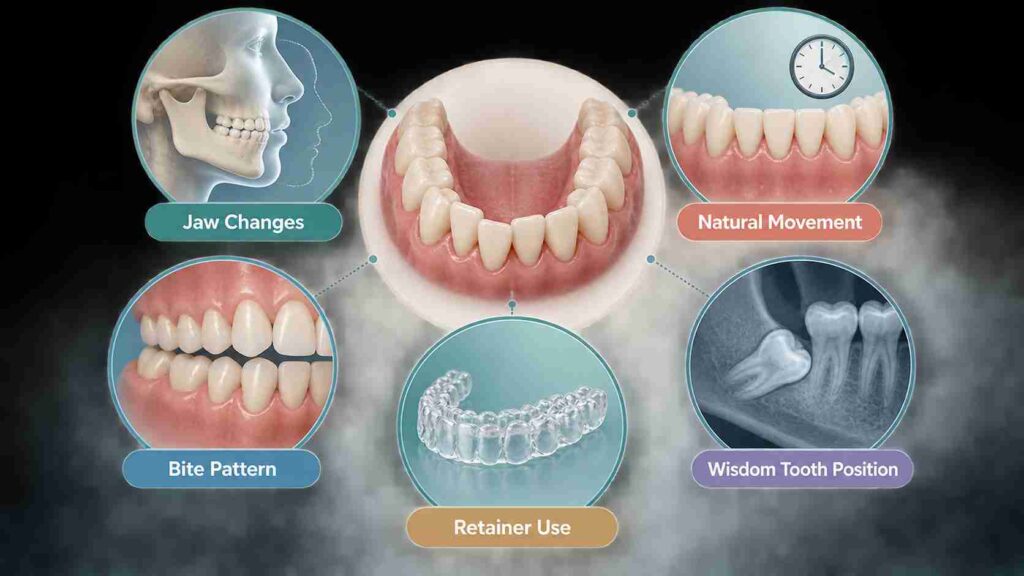
Wisdom teeth may be a factor in some cases, especially when they are impacted or causing pressure. However, removing them alone cannot guarantee that teeth will remain perfectly aligned after braces.
What Problems Can Wisdom Teeth Cause Nearby?
Wisdom teeth don't always cause problems. Some grow normally and remain healthy without needing removal. Problems usually occur when there is not enough space for them to emerge properly. This can lead to impacted wisdom teeth symptoms, where the tooth remains partially or completely trapped under the gum or bone.
Common problems linked with impacted wisdom teeth include:
| Problem | How It Can Affect Oral Health |
| Gum inflammation | Food and bacteria can collect around a partially erupted tooth |
| Pain and swelling | Pressure and infection may cause discomfort |
| Damage to nearby teeth | An impacted tooth may affect the second molar |
| Difficulty cleaning | The back area can be harder to brush properly |
The wisdom teeth that cause these problems are usually related to a lack of space, an incorrect tooth angle, or incomplete eruption.
When Should You Have a Wisdom Tooth Checked?
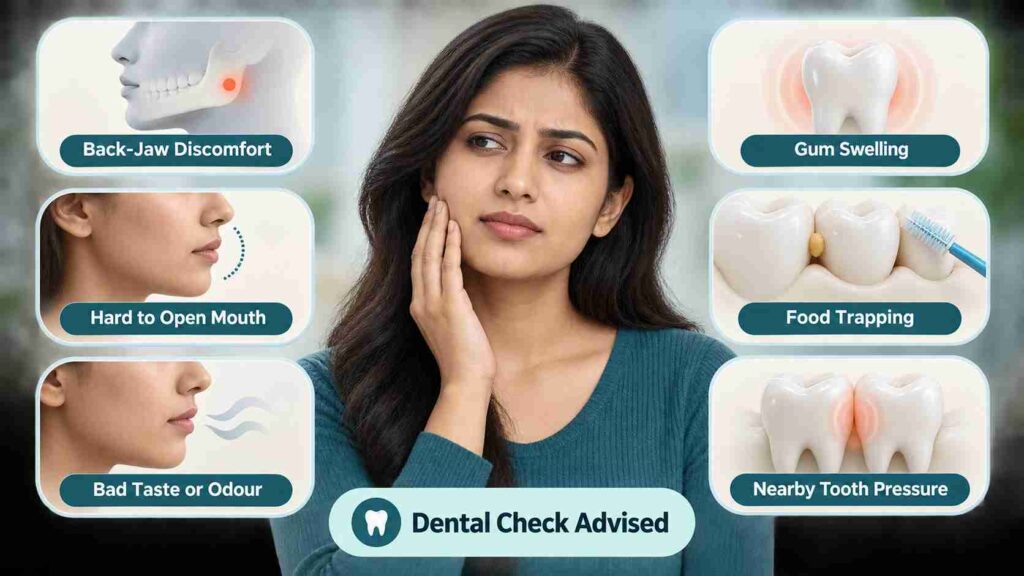
Not every wisdom tooth needs removal. However, certain symptoms suggest you need a dental examination. Common signs include:
- Repeated pain at the back of the jaw
- Swelling around the gums near the wisdom tooth
- Difficulty opening the mouth
- Food getting trapped around the tooth
- Bad taste or unpleasant mouth odour
- Pressure or discomfort near nearby teeth
These impacted wisdom teeth symptoms may indicate inflammation, infection or pressure on surrounding structures.
Word of caution: If pain keeps returning or swelling becomes frequent, delaying evaluation may allow the problem to worsen. A specialist may recommend an exam and imaging to determine the tooth's exact position.
Does a Wisdom Tooth Need to Be Removed?
A wisdom tooth does not always need removal simply because it has appeared or because teeth have started shifting. The decision depends on factors such as tooth position, available space, symptoms, the risk of damage to nearby teeth, and overall oral health.
Wisdom tooth removal often happens in the late teens or early twenties, when the tooth roots may be less developed, and recovery may be easier. However, age alone does not decide whether removal is required. Some adults keep healthy wisdom teeth without any problems.
Before recommending removal, a dentist may perform a clinical examination and use dental X-rays to check the tooth angle, root position and impact on nearby structures.
| Situation | Possible Approach |
| Wisdom tooth is healthy and properly positioned | Regular monitoring may be enough |
| Tooth is impacted or causing repeated problems | Removal may be recommended |
| Tooth affects nearby teeth or gums | Treatment may be needed to prevent complications |
| No symptoms but higher risk of future problems | Evaluation helps decide whether monitoring or removal is suitable |
Understanding the Wisdom Tooth Extraction Procedure
The wisdom tooth extraction procedure depends on whether the tooth has fully erupted or remains impacted. A simple extraction may be possible when the tooth is visible, while impacted teeth may require a surgical approach.
During the procedure, the dentist or maxillofacial surgeon may use local anaesthesia to keep you comfortable. The tooth is carefully removed after assessing its position and surrounding structures.
What Should You Do if Your Front Teeth Are Shifting?
If your front teeth appear to be moving, do not assume wisdom teeth are the only reason. Teeth can shift because of natural changes over time, bite changes, gum health issues, or problems with retainer use after orthodontic treatment.
A dental or orthodontic evaluation at Samaritan Hospital can identify the actual cause. An expert may check your bite, tooth alignment, and orthodontic history before suggesting treatment. Removing a wisdom tooth without addressing the real cause may not prevent further shifting.
Making the Right Decision About Wisdom Tooth Removal
Wisdom teeth can contribute to dental problems, especially when they are impacted, poorly positioned, or cause repeated discomfort. However, removal is not automatically required for everyone.
If you notice pain, swelling, repeated infections or changes in tooth alignment, an evaluation can help determine the right approach. For those seeking wisdom tooth removal in Kolkata, a specialist in our critical care unit can assess whether monitoring or extraction is needed.
What People Also Ask
Do wisdom teeth push other teeth forward?
Wisdom teeth may cause crowding in some cases, especially when they are impacted or there isn't enough space. However, tooth shifting can also happen for other reasons, including natural movement and orthodontic changes.
Can wisdom teeth cause orthodontic relapse?
Wisdom teeth are considered one possible factor, but they are not the only cause of orthodontic relapse. Retainer use, natural tooth movement and changes in bite can also contribute to teeth shifting after braces.
Is it okay to remove wisdom teeth if they aren’t hurting?
Not necessarily. Healthy wisdom teeth that are properly positioned may only need regular monitoring. Removal is usually considered when there is a risk of infection, damage to nearby teeth or other complications.
What is the best wisdom tooth pain relief?
Temporary wisdom tooth pain relief may include cold compresses, maintaining oral hygiene and using medicines recommended by a healthcare professional. However, recurring pain usually requires evaluation to identify the underlying cause.
How long does wisdom tooth extraction recovery take?
Recovery from wisdom tooth extraction varies depending on the procedure's complexity. Many people return to normal activities within a few days, while surgical extractions may require a longer recovery period with proper aftercare.