

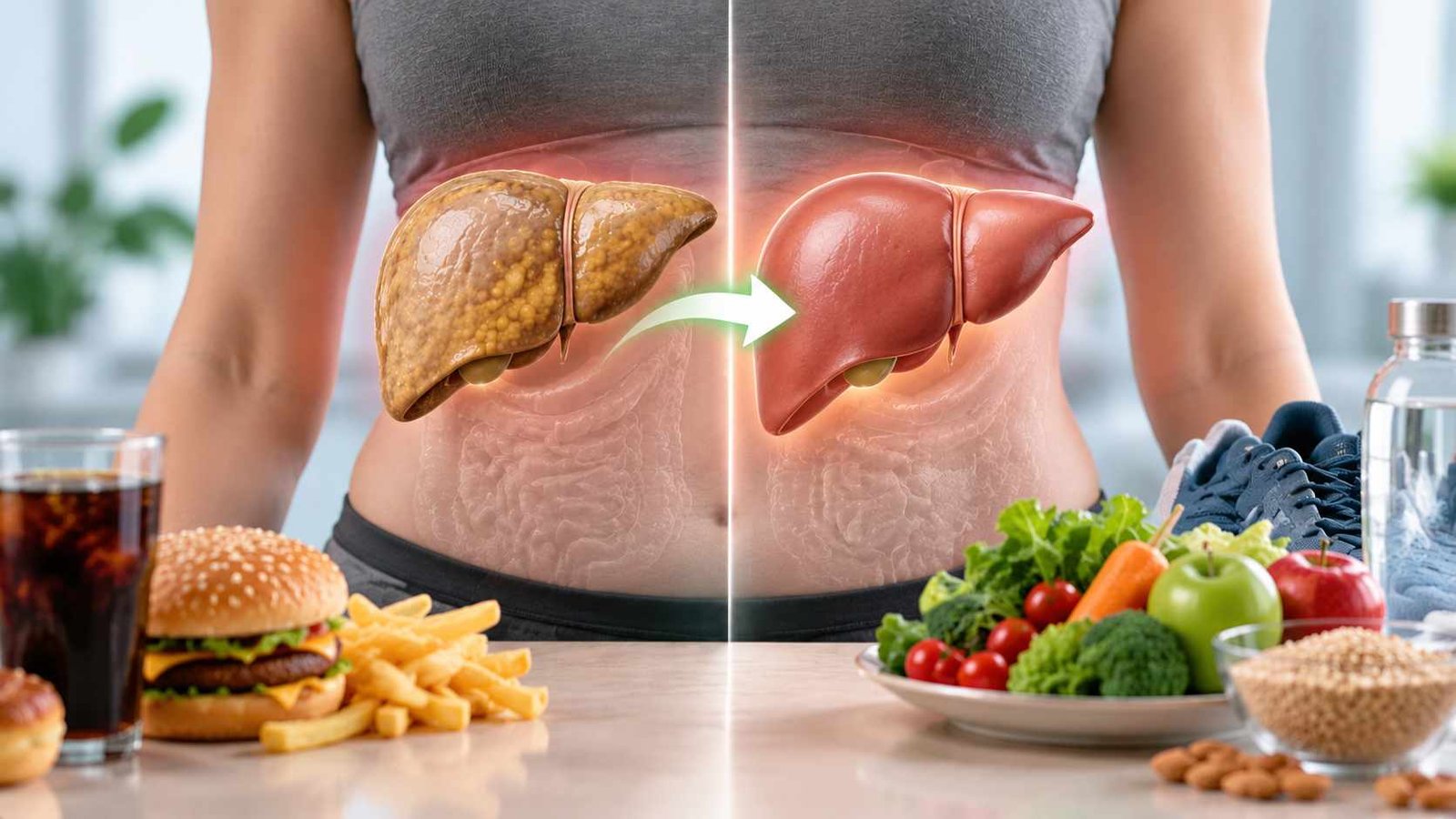
Yes, early fatty liver disease can often be reversed. Gradual weight loss, regular activity, a balanced diet and good control of diabetes, cholesterol and blood pressure can reduce liver fat. Inflammation and early scarring may also improve, but established cirrhosis is rarely fully reversible. Results depend on the cause and stage.
To clear all doubts, this blog explains:
- symptoms and stages that should not be overlooked;
- dietary changes and medical treatment; and
- tests used to assess liver fat and scarring.
What is Fatty Liver Disease?
Fatty liver disease means that excess fat has collected inside the liver cells. The liver normally contains a small amount of fat. A larger build-up, however, can interfere with its work and may eventually cause inflammation or scarring.
The condition associated with excess weight, insulin resistance and other metabolic problems was previously called NAFLD (non-alcoholic fatty liver disease). Its newer medical name is metabolic dysfunction-associated steatotic liver disease, or MASLD. Many patients and medical reports still use NAFLD.
This medical condition is often silent because it may cause no discomfort for years. Sometimes, doctors discover it only through routine blood tests or an abdominal ultrasound.
What Are the Symptoms of Fatty Liver Disease?
Most people experience few or no fatty liver disease symptoms during the early stage.
Early and Silent Symptoms You Might Miss
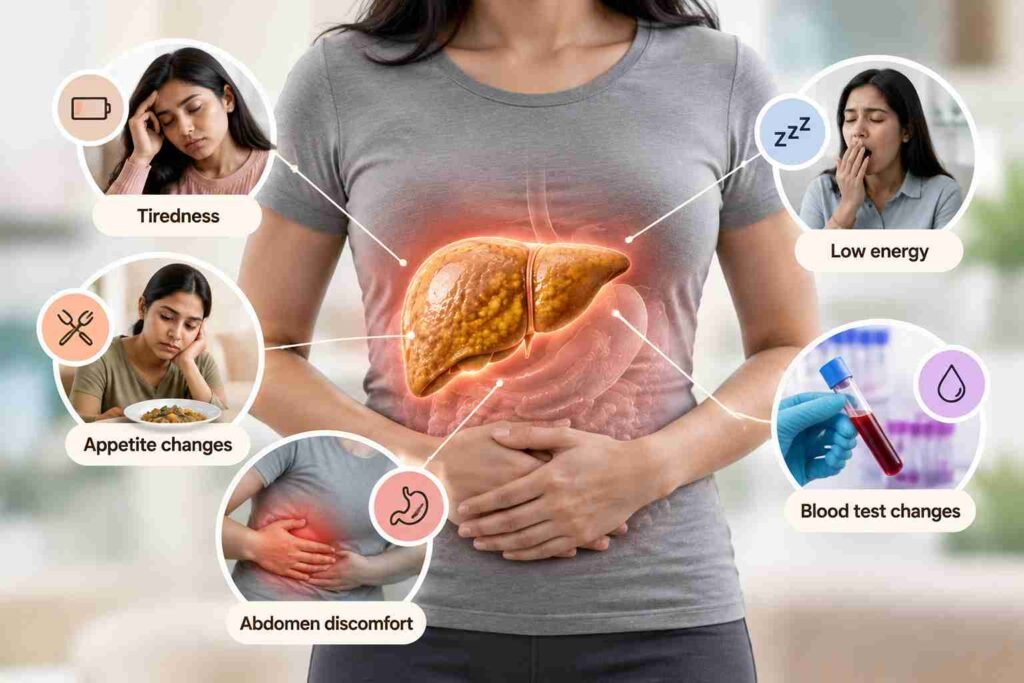
When early symptoms occur, they can be vague. People often mistake them for the effects of poor sleep, stress, or a demanding routine.
Possible symptoms include:
- persistent tiredness;
- reduced energy;
- mild discomfort or heaviness in the upper-right abdomen;
- poor appetite; and
- unexpected changes in liver blood-test results.
These signs do not confirm this condition. A medical assessment is needed to identify the cause.
Advanced Symptoms that Need Immediate Attention
Advanced liver damage may produce clearer warning signs, such as:
- yellowing of the skin or eyes;
- swelling in the abdomen or legs;
- easy bruising or bleeding;
- dark urine or pale stools;
- severe itching;
- muscle loss;
- confusion or unusual sleepiness;
- vomiting blood; or
- black, tar-like stools.
What Causes Fatty Liver Disease?
The main causes of fatty liver disease are metabolic health problems and excessive alcohol consumption.
Lifestyle and Dietary Causes
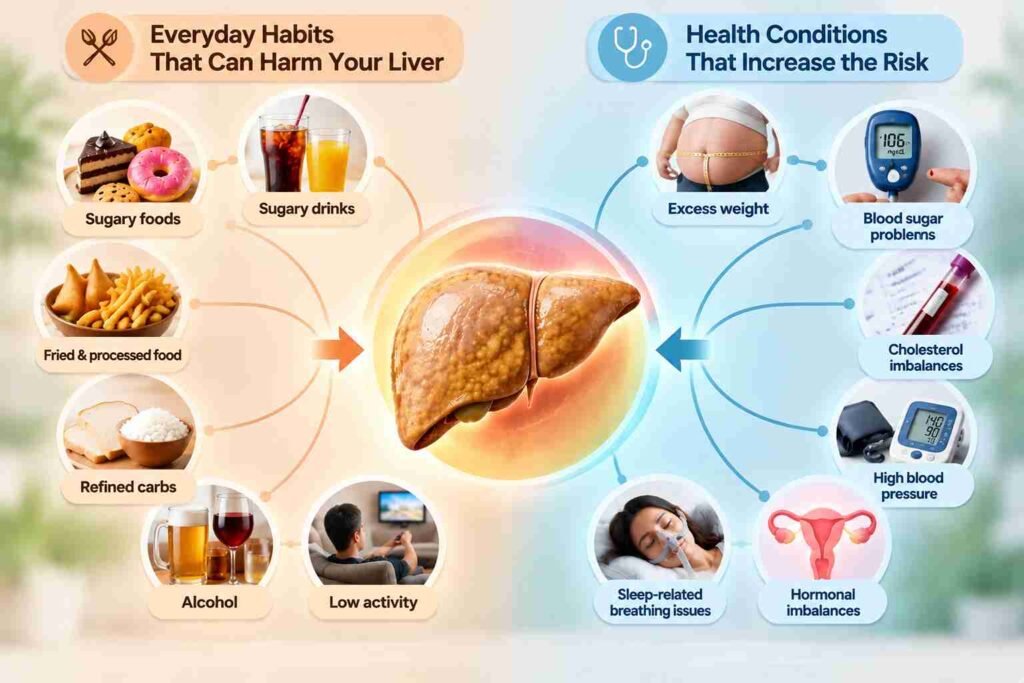
Consistently consuming more energy than the body uses can cause the liver to store fat. Common contributing factors include:
- sugary drinks and packaged fruit juices;
- frequent sweets, desserts and bakery products;
- oversized meals;
- refined carbohydrates such as maida-based foods;
- heavily fried or ultra-processed food;
- very little physical activity; and
- excessive alcohol consumption.
Not everyone with this condition has an unhealthy lifestyle. Genetics, age, body-fat distribution and other health conditions also influence the risk.
Medical Conditions Linked to Fatty Liver
This condition is commonly associated with:
- overweight or obesity, particularly excess fat around the waist;
- insulin resistance;
- prediabetes or type 2 diabetes;
- high triglycerides or abnormal cholesterol;
- high blood pressure;
- obstructive sleep apnoea; and
- polycystic ovary syndrome.
What Are the Stages of Fatty Liver Disease?
Ultrasound grades and disease stages are not the same. Reports describing fatty liver grade 1, 2, 3 indicate how much fat is visible on imaging. They do not directly measure inflammation or liver scarring.
Grade 1, 2 and 3 Fatty Liver Explained
| Ultrasound grade | What it usually means | What it does not confirm |
| Grade 1 | Mild fat accumulation | Inflammation or fibrosis |
| Grade 2 | Moderate fat accumulation | The exact stage of liver damage |
| Grade 3 | Marked fat accumulation | Cirrhosis by itself |
A person with Grade 1 fatty liver may still need fibrosis assessment when diabetes or other strong risk factors are present. Similarly, Grade 3 fatty liver does not automatically mean that cirrhosis has developed.
When Fatty Liver Progresses to Cirrhosis
Fatty liver disease may progress through four broad stages:
- Simple steatosis: Fat is present with little or no liver-cell injury.
- MASH: Fat is accompanied by inflammation and liver-cell damage. This was previously called NASH.
- Fibrosis: Scar tissue begins to develop.
- Cirrhosis: Extensive scarring changes the liver’s structure and affects how it works.
The risk of fatty liver cirrhosis is higher in people with ongoing liver inflammation, type 2 diabetes, obesity or significant fibrosis. Progression is not inevitable. Timely treatment can slow or stop further damage.
How is Fatty Liver Disease Diagnosed?
Diagnosis begins with a review of the patient’s medical history, alcohol intake, medicines, supplements, weight and related health conditions. No single test provides the complete answer.
Blood Tests and Liver Function Tests
A liver function test (LFT) is a panel of blood tests, not a single test. It may measure:
- ALT and AST;
- bilirubin;
- albumin;
- ALP; and
- other markers of liver health.
Raised liver enzymes may suggest liver irritation. However, normal liver enzymes do not always rule out fatty liver, inflammation or fibrosis.
Doctors may also recommend:
- fasting glucose or HbA1c;
- cholesterol and triglyceride tests;
- a complete blood count;
- hepatitis tests; and
- calculations such as FIB-4 to estimate the risk of advanced fibrosis.
Ultrasound and Imaging for Fatty Liver
An abdominal ultrasound can detect moderate or severe liver fat and help rule out some other abdominal conditions. It cannot reliably confirm liver inflammation or measure early fibrosis.
Further assessment may include:
- elastography or FibroScan to estimate liver stiffness;
- CT or MRI in selected cases;
- blood-based fibrosis scoring; or
- a liver biopsy when other results are unclear or advanced disease is suspected.
A biopsy is not required for every patient with fatty liver.
Can Fatty Liver Disease Be Reversed with Diet?
A carefully planned fatty liver diet can reduce liver fat, especially when combined with physical activity and gradual weight loss. The diet does not need to be extreme, expensive or based on unfamiliar foods.
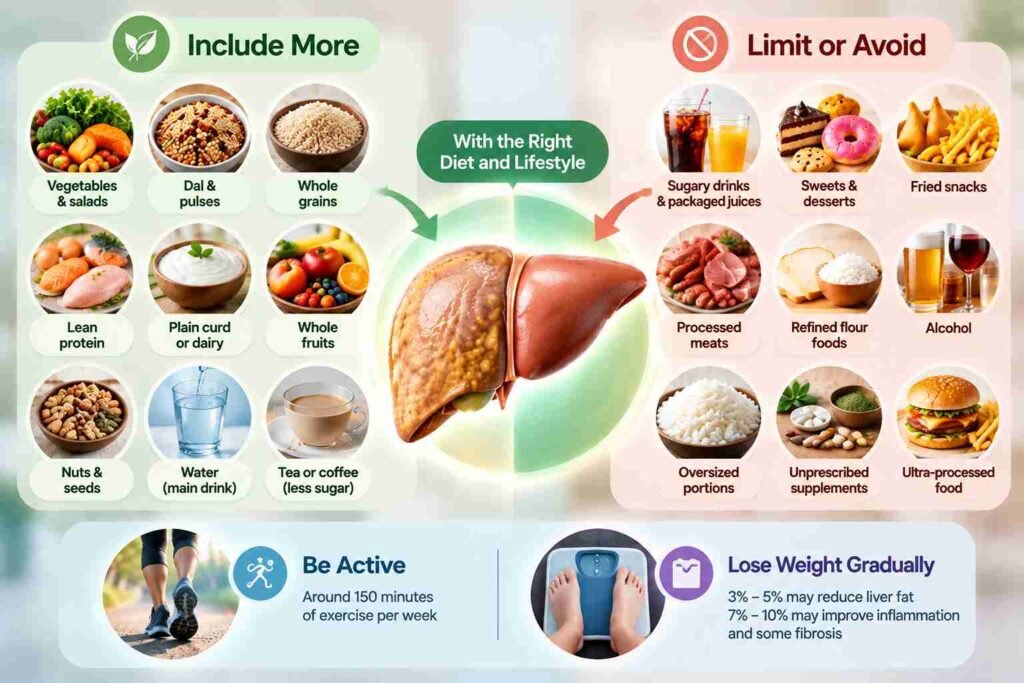
For people who are overweight, losing around 3%–5% of body weight may reduce liver fat. Losing roughly 7%–10% may be needed to improve inflammation and some fibrosis. Weight should be lost gradually, as crash dieting can make liver health worse.
Foods that Help Reverse Fatty Liver
A practical Indian meal plan may include:
- seasonal vegetables and salads;
- dal, beans and other pulses;
- whole grains in controlled portions;
- eggs, fish, skinless chicken or another suitable lean protein;
- plain curd or unsweetened dairy;
- whole fruit instead of fruit juice; and
- small portions of nuts and seeds.
Water should be the main drink. Tea and coffee should contain little or no added sugar.
Regular physical activity also matters. Brisk walking, cycling, swimming or another suitable exercise for about 150 minutes per week can support liver and heart health. Strength exercises may provide additional benefits.
Foods and Habits to Avoid
Common foods to avoid with fatty liver include:
- sugar-sweetened drinks;
- packaged fruit juices;
- sweets and desserts;
- frequent fried snacks;
- processed meats;
- foods made mainly with refined flour;
- alcohol should be avoided or limited in case of inflammation or fibrosis;
- and oversized portions of white rice or other refined carbohydrates.
Unprescribed herbal mixtures, supplements and liver detox products are not reliable treatments. Some of these products can injure the liver or interact with regular medicines.
What is the Medical Treatment for Fatty Liver?
Medical treatment depends on the cause, metabolic risk factors and level of liver scarring. It is not based on the ultrasound grade alone.
The main treatment goals are to:
- reduce fat stored in the liver;
- prevent or slow fibrosis;
- manage related medical conditions; and
- reduce the risk of cirrhosis and cardiovascular disease.
When Diet Alone Isn’t Enough
Medical care may include:
- treatment for diabetes or insulin resistance;
- medicines to manage cholesterol and triglycerides;
- blood pressure control;
- supervised weight-management support;
- assessment and treatment of sleep apnoea;
- a review of medicines that may affect the liver; and
- specialist treatment for selected patients with MASH and fibrosis.
Why Choose a Specialist for Fatty Liver Treatment?
A gastroenterologist or liver specialist can distinguish simple fat accumulation from active inflammation, fibrosis and cirrhosis. This prevents unnecessary fear while ensuring that higher-risk disease receives timely attention.
For people considering fatty liver treatment in Kolkata, access to gastroenterology consultation, laboratory testing, imaging and follow-up care within one hospital can simplify long-term management.
When Should You See a Doctor for Fatty Liver Disease?
Arrange a medical assessment if:
- an ultrasound reports fatty liver;
- liver enzymes remain abnormal;
- diabetes, obesity or high triglycerides are present;
- tiredness or upper-right abdominal discomfort persists;
- unexplained weight loss occurs; or
- a family history of liver disease raises concern.
Seek prompt medical attention for jaundice, increasing abdominal swelling, easy bleeding or unusual sleepiness. Confusion, vomiting blood and black stools require emergency care.
People searching for a hospital reviewed as one of the best for liver treatment in Kolkata should look beyond promotional claims. Consider whether the hospital offers experienced gastroenterology specialists, appropriate liver tests, imaging, emergency support and planned follow-up.
Connect with us for an individual assessment instead of waiting for symptoms to become severe.
What People Also Ask
Is fatty liver disease dangerous if left untreated?
It can be. Many cases remain mild, but some progress to inflammation, fibrosis, cirrhosis or liver cancer. Fatty liver is also closely linked to diabetes and cardiovascular disease, so managing overall health is important.
Can fatty liver disease be completely cured?
Early fat accumulation can often be reversed when you control the underlying cause. Inflammation and some fibrosis may also improve. Established cirrhosis is usually permanent, although treatment can slow further damage and manage complications.
What foods should be eaten every day to reduce fatty liver?
Choose vegetables, pulses, whole fruit, controlled portions of whole grains and suitable lean protein. Water should replace sugary drinks. The overall eating pattern and portion sizes matter more than any single food.
Does fatty liver cause weight gain, or is it the other way around?
Weight gain, particularly around the waist, commonly increases the risk of fatty liver. Fatty liver itself does not usually cause weight gain. However, both conditions can result from insulin resistance and related metabolic changes.
How often is a liver function test needed with fatty liver?
The testing schedule depends on liver-enzyme levels, diabetes, fibrosis risk and treatment progress. Some patients need testing every few months, while stable, low-risk cases may be tested less frequently. The treating doctor should decide the appropriate interval.