
Laparoscopic Hernia Repair Surgery in Kolkata
Quick Answers
Can a hernia increase in size over time?
Yes, untreated hernias may gradually enlarge and cause increasing swelling, discomfort, or pressure during movement and physical activity.
Do all hernias require surgery?
Some small hernias may be monitored initially, but surgery is often recommended when symptoms worsen or complications develop.
Can a hernia become dangerous if ignored?
Yes, untreated hernias may lead to trapped tissue, restricted blood supply, or intestinal obstruction requiring emergency treatment.
Is laparoscopic hernia repair minimally invasive?
Yes, laparoscopic hernia repair uses small incisions and camera-guided surgical techniques designed for reduced pain and faster recovery.
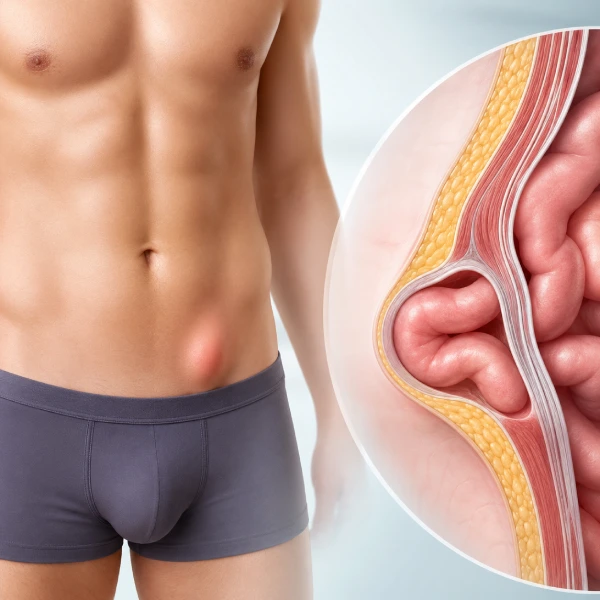
Understanding Hernia & Laparoscopic Treatment
A hernia develops when internal tissue pushes through a weakened area of the abdominal or groin muscle wall. The condition may gradually cause visible swelling, pressure, heaviness, or discomfort during coughing, lifting, bending, or prolonged standing.
Laparoscopic hernia repair is a minimally invasive surgical procedure performed to reposition the protruding tissue and, when required, to strengthen the weakened muscle wall using laparoscopic techniques and mesh reinforcement.
Early Hernia Symptoms Patients Often Ignore
Visible swelling in the groin or abdomen
Heaviness during standing or walking
Pain while lifting heavy objects
Burning or pulling sensation near the swelling
Discomfort during coughing or bending
Swelling that becomes more noticeable during strain
Pressure around the lower abdomen
Intermittent groin discomfort

Our Doctors

DR. D. K. SARKAR
Qualifications: MBBSMS, DNB FRCS, (GOLD), FFSTED
Specialty: GENERAL SURGEON
Fees: Rs. 1,550.00
Available Days: MON, WED, THURS & SAT
Available Time: MON, WED & THURS-16:00, SAT-15:00

DR. RANAJOY DUTTA
Qualifications: MBBS, MS, DNB
Specialty: GENERAL SURGEON
Fees: Rs. 1,200.00
Available Days: WED, SAT
Available Time: 17:00 - 18:00 PM

DR. SAPTARSHI KUNDU
Qualifications: MBBS, MS (GEN SUR)
Specialty: GENERAL SURGEON
Fees: Rs. 700.00
Available Days: BY APPOINTMENT
Available Time: BY APPOINTMENT
DR. RUDRADEEP BANERJEE
Qualifications: MS (Gen. Surg.), DNB, MRCS
Specialty: GENERAL SURGEON
Fees: Rs. 1,000.00
Available Days: BY APPOINTMENT
Available Time: BY APPOINTMENT
DR. ACHINTA KR DAS
Qualifications: MBBS, MS
Specialty: GENERAL SURGEON
Fees: Rs. 1,200.00
Available Days: BY APPOINTMENT
Available Time:BY APPOINTMENT
DR. SAMRIDDHI PODDAR
Qualifications: MBBS(HONS), MS(SURGERY), WBUHS NRSMCH
Specialty: GENERAL SURGEON
Fees: Rs. 1,000.00
Available Days: TUE & WED
Available Time: TUE 16:30-17:30 & WED 18:00-19:00
DR . B . B . BARAI
Qualifications: MBBS, DNB, PG DGM, CCEBDM
Specialty: GENERAL SURGEON
Fees: Rs. 1,200.00
Available Days: MON /FRIDAY
Available Time: 11:00-13:00
DR. MAINAK PAL
Qualifications: MBBS, MS, FMAS(GEN.SURG)
Specialty: GENERAL SURGEON
Fees: Rs. 1,000.00
Available Days: MON -FRI
Available Time: 17:00-18:00
Hear From Our Happy Patients
Very good nursing home.all staff best
I had Laproscopic surgery of gallbladder stone on 23/6/26 & Discharge on 25/6/26. I had wonderful experience in nursing home, Very cooperative staff. Particularly Ms Aditi (Head Sister charge) , she has cooperated very well with Smily face. OT is well equipped with high quality instruments, Dr Mukesh Karia has done wonderful operations.
Very good nursing home
Very Supportive Staff with 24*7 support. Along with Neat and Clean cloths and bed.
Great treatment and recuperation. Doctors nurses and support staff mase it feel like home .
Thakuuuu Samaritan nursing home........and Dr.babuuuu khubbbb valooooo..apnader sakoler babohar khub valo r porisheba khubbb khubbb valo sakol k. Ank ank ank dhannobad ......
Very good nursing home
Very good Treatment here and also staff behaviour has very good
I have admitted my father here twice under Dr Arindam Dutta sir for the DJ stenting and RIRS (Kidney stone) .The entire team of Samaritan was fantastic.Specially Ms Aditi Nandi was so humble and cooperative .She attended us every time and Given all facilities.Through out the admitting time and discharge,all the sisters,brothers,Housekeeping ,ward boy everyone was so polite and well mannered.
What Hernia Symptoms Usually Indicate
Inguinal Hernia
Inguinal hernias commonly cause groin swelling, heaviness, discomfort during movement, and visible bulging near the lower abdominal region.
Umbilical Hernia
Umbilical hernias may appear as a swelling near the belly button and can enlarge during coughing or abdominal straining.
Incarcerated Hernia
An incarcerated hernia occurs when protruding tissue becomes trapped and cannot return to the abdominal cavity normally.
Strangulated Hernia
Strangulated hernias may cut off blood supply to trapped tissue and increase the risk of severe pain, tissue damage, and emergency surgical complications.
Who Is at Higher Risk of Hernia Development?
Repeated heavy lifting
Chronic coughing or respiratory strain
Obesity and excess abdominal pressure
Previous abdominal surgery
Weak abdominal wall muscles
Chronic constipation and straining
Pregnancy-related abdominal pressure
Age-related muscle weakening
Physically demanding occupational activity
Recurrent abdominal strain

How We Evaluate Hernia Conditions
Swelling & Physical Examination
Doctors assess visible bulging, abdominal wall weakness, groin swelling, tenderness, and discomfort during movement or coughing.
Ultrasound & Imaging Assessment
Ultrasound or imaging studies help identify hernia size, tissue protrusion, trapped abdominal contents, and defects in the surrounding muscle wall.
Complication & Obstruction Evaluation
Additional assessment may be required to identify restricted blood flow, intestinal obstruction, or complications of a strangulated hernia.
Why Choose Samaritan Medical Surgical & Critical Care?
At Samaritan Medical Surgical & Critical Care, we provide comprehensive healthcare solutions as per your needs. With a team of expert professionals, we focus on delivering compassionate, patient-centred care for optimal well-being.

NABH Certified
Accredited by NABH, ensuring the highest standards of healthcare quality and patient safety.

Surgical Excellence
Our skilled surgeons offer precision care for a wide range of surgical procedures.

Critical Care Support
Providing round-the-clock critical care with advanced equipment and expert medical teams.
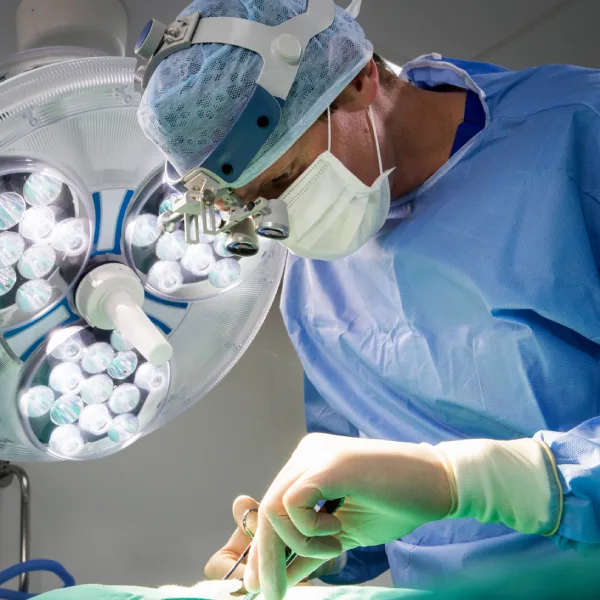
What Happens During Laparoscopic Hernia Repair Surgery?
General anaesthesia keeps the patient unconscious
Small ports are created in the abdominal wall
Carbon dioxide improves surgical visibility
A laparoscopic camera guides the procedure
Protruding tissue is repositioned carefully
The weakened muscle wall is reinforced
Surgical mesh may be placed for added support
Dissolvable sutures close the incision sites
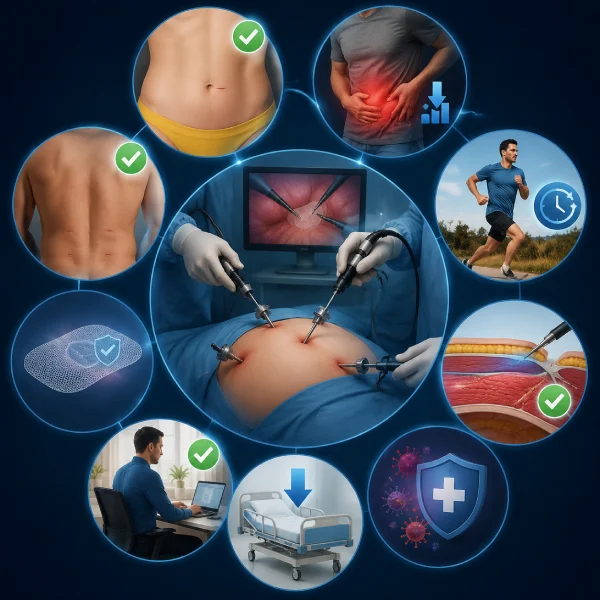
Benefits of Laparoscopic Hernia Repair
Smaller surgical incisions with minimal visible scarring
Reduced pain compared to open hernia surgery
Faster healing and earlier mobility recovery
Reduced abdominal wall tissue disruption
Lower risk of wound infection and bleeding
Earlier return to daily activities and work
Shorter hospital stay in many patients
Reduced risk of hernia recurrence with mesh reinforcement
Recovery After Laparoscopic Hernia Repair
Faster recovery compared to open hernia surgery
Early walking and light movement after surgery
Gradual return to routine physical activity
Temporary abdominal tightness during healing
Follow-up monitoring for wound healing
Activity restrictions during early recovery
Recovery guidance based on surgical progress
Improved abdominal support after healing
What Happens If a Hernia Is Not Treated in Time?
Gradual increase in hernia size and swelling
Increasing abdominal discomfort during activity
Higher risk of trapped abdominal tissue
Restricted blood supply to the protruding tissue
Increased risk of intestinal obstruction
Severe pain requiring emergency surgery
Greater surgical complexity after complications develop
Increased recovery duration after emergency intervention
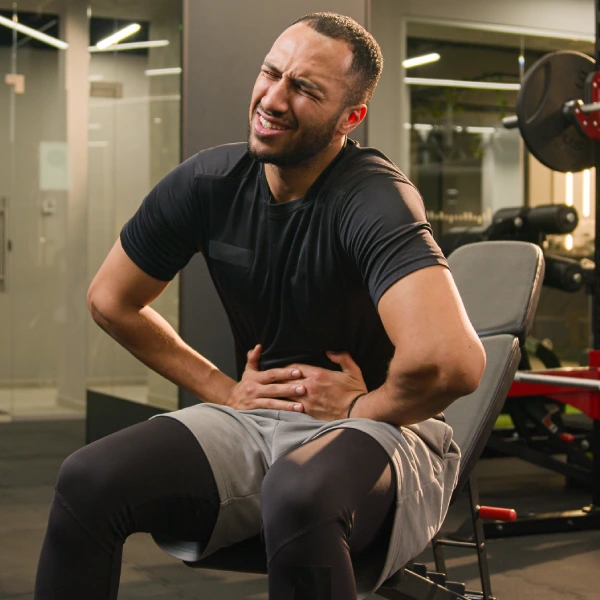
Treatment Decision Guide
| Symptom Pattern | Likely Condition | First-Line Treatment | When Surgery May Be Needed |
|---|---|---|---|
| Groin swelling during strain | Inguinal hernia | Monitoring and support | Increasing discomfort |
| Belly button swelling | Umbilical hernia | Clinical observation | Enlargement or pain |
| Persistent abdominal heaviness | Abdominal wall weakness | Lifestyle modification | Worsening protrusion |
| Severe pain with trapped swelling | Strangulated hernia | Emergency stabilisation | Immediate surgical intervention |
Daily Habits That Support Hernia Prevention

Avoid excessive heavy lifting
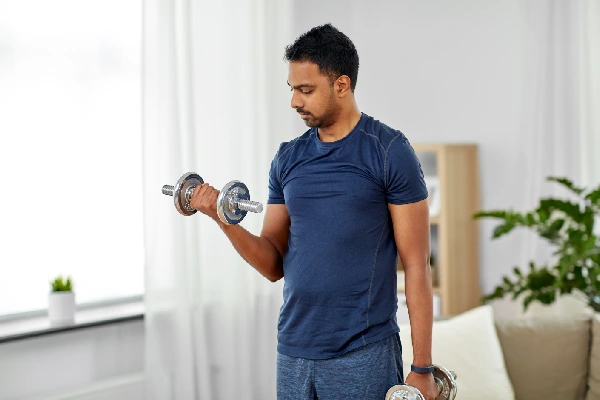
Maintain a healthy body weight
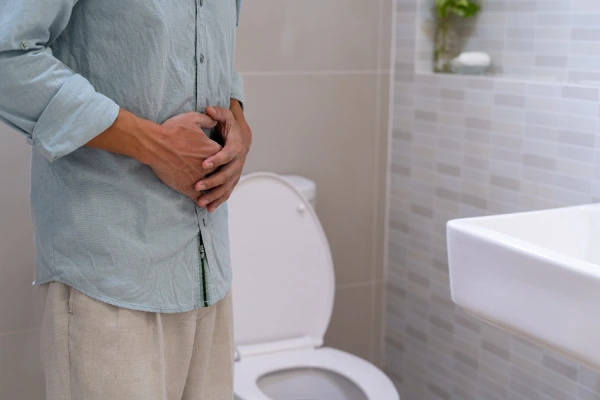
Prevent chronic constipation and straining

Strengthen core muscles safely

Seek early evaluation for visible swelling
Frequently Asked Questions
Find answers to common questions to help you better understand the condition and general concerns.
Why does a hernia sometimes produce a gurgling sensation?
Movement of intestinal contents near the weakened area may occasionally create bubbling or gurgling sensations beneath the skin. These sensations can vary depending on digestion and body position.
Can hernias create a feeling of internal fullness?
Some individuals experience unusual internal fullness or localised abdominal occupancy caused by shifting tissue within the weakened opening. The sensation may feel different from ordinary bloating.
Why can hernia-related sensations become noticeable after large meals?
Increased digestive volume after eating may temporarily expand the internal space, making underlying tissue displacement more perceptible in certain individuals.
Can nerve irritation develop around a hernia site?
Pressure on nearby soft tissues may occasionally irritate surrounding nerves and cause unusual tingling, dull aching, or localised sensitivity.
Why do some hernias feel softer at certain times?
Changes in internal tissue positioning and muscle relaxation may temporarily alter the firmness or texture of the protruding area at different times of day.