

Uterus Fibroid Operation in Kolkata
Home / Treatments / Gynaecology & Obstetrics / Fibroids
Quick Answers
Is hysterectomy the only treatment for fibroids?
No. Medication, myomectomy, uterine artery embolisation, and focused ultrasound may help.
Can fibroids turn into cancer?
No. These growths are usually benign and rarely indicate a malignant tumour.
Can you get pregnant with uterine fibroids?
Yes. Many women conceive naturally, although location and size may affect fertility.
Do all fibroids cause pain and heavy bleeding?
No. Many cause no symptoms, while others may cause pressure, urinary problems, or bowel issues.
What Are Uterine Fibroids?
Noncancerous growths made of muscle and connective tissue that develop in or on the wall of the uterus. They are also called leiomyomas or myomas and commonly develop during the reproductive years. Their size can range from tiny growths to masses as large as a grapefruit or watermelon.
Key points:
- Occurs without noticeable symptoms.
- Heavy or prolonged menstrual bleeding is common.
- Larger growths may cause pelvic pressure, pain or urinary symptoms.
- Their location can affect fertility and pregnancy.
Types of Uterine Fibroids
Intramural
These develop within the muscular wall and represent the most common type.
Subserosal
These develop beneath the outer surface and may press nearby pelvic organs.
Submucosal
These develop beneath the inner lining and protrude into the uterine cavity.
Pedunculated
These attach by a narrow stalk and may develop inside or outside the uterus.
Cervical
These rare growths develop within the cervix rather than the uterine body.
Multiple
Several growths may occur in different uterine locations at the same time.
Symptoms Of Uterine Fibroids
Common Symptoms
- Heavy periods lasting over seven days
- Pelvic pressure or lower abdominal pain
- Frequent urination or incomplete bladder emptying
- Constipation or rectal pressure
- Lower back or leg pain
- Painful periods
- Pain during sexual intercourse
- Difficulty conceiving in selected cases
- Fatigue or weakness from anaemia
- Lower abdominal swelling or fullness
Red Flags Requiring Immediate Medical Care
- Sudden severe pelvic pain
- Extremely heavy or persistent bleeding
- Complete inability to pass urine
- Fainting, breathlessness, or chest pain
- Severe pain with fever or vomiting
- Rapidly worsening abdominal or pelvic symptoms
- Heavy bleeding during pregnancy
Why Choose Samaritan Medical Surgical & Critical Care?
At Samaritan Medical Surgical & Critical Care, we provide comprehensive healthcare solutions as per your needs. With a team of expert professionals, we focus on delivering compassionate, patient-centred care for optimal well-being.

NABH Certified
Accredited by NABH, ensuring the highest standards of healthcare quality and patient safety.

Surgical Excellence
Our skilled surgeons offer precision care for a wide range of surgical procedures.

Critical Care Support
Providing round-the-clock critical care with advanced equipment and expert medical teams.
Our Doctors
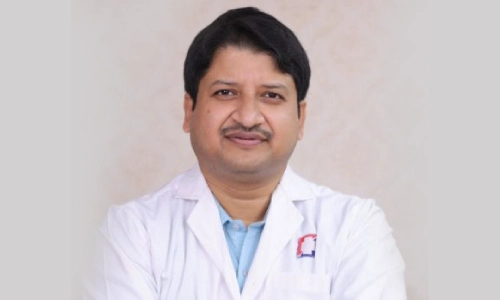
DR. SOMAK DAS
Qualifications: MBBS, MS(GEN.SURG.) DNB(GASTRO.SURG), MCH
Specialty: GASTRO SURGEON
Fees: Rs. 1,200.00
Available Days: MON, WED & FRI
Available Time: BY APPOINTMENT

DR. D. K. SARKAR
Qualifications: MBBSMS, DNB FRCS, (GOLD), FFSTED
Specialty: GENERAL SURGEON
Fees: Rs. 1,550.00
Available Days: MON, WED,THU & SAT
Available Time: MON WED,THU-16:00 & SAT-15:00

DR. RUDRADEEP BANERJEE
Qualifications: MS.(GEN.SURG), D.N. BMRCS
Specialty: GENERAL SURGEON
Fees: Rs. 1,000.00
Available Days: BY APPOINTMENT
Available Time: BY APPOINTMENT
DR. RANAJOY DUTTA
Qualifications: MBBS, M.S D.N.B
Specialty: GENERAL SURGEON
Fees: Rs. 1,200.00
Available Days: WED, SAT
Available Time: 17:00 - 18:00 PM
DR. ACHINTA KR DAS
Qualifications: MBBS, MS
Specialty: GENERAL SURGEON
Fees: Rs. 1,200.00
Available Days: BY APPOINTMENT
Available Time:BY APPOINTMENT
DR. SAMRIDDHI PODDAR
Qualifications: MBBS(HONS), MS(SURGERY), WBUHS NRSMCH
Specialty: GENERAL SURGEON
Fees: Rs. 1,000.00
Available Days: TUE & WED
Available Time: TUE 16:30-17:30 & WED 18:00-19:00
DR . B . B . BARAI
Qualifications: MBBS, DNB, PG DGM, CCEBDM
Specialty: GENERAL SURGEON
Fees: Rs. 1,200.00
Available Days: MON /FRIDAY
Available Time: 11:00-13:00
DR. SAPTARSHI KUNDU
Qualifications: MBBS, MS (GEN SUR)
Specialty: GENERAL SURGEON
Fees: Rs. 700.00
Available Days: BY APPOINTMENT
Available Time: BY APPOINTMENT
DR. MAINAK PAL
Qualifications: MBBS, MS, FMAS(GEN.SURG)
Specialty: GENERAL SURGEON
Fees: Rs. 1,000.00
Available Days: MON -FRI
Available Time: 17:00-18:00
DR. SUKANTA ROY
Qualifications: MBBS, MS(GASTO)
Specialty: GASTRO SURGEON
Fees: Rs. 1,000.00
Available Days: BY APPOINTMENT
Available Time: BY APPOINTMENT

DR. UDDIPTA DUTTA
Specialty: GASTRO SURGEON
Fees: Rs. 900.00
Available Days: BY APPOINTMENT
Available Time: BY APPOINTMENT
Hear From Our Happy Patients
Very good nursing home. All staff good.
A really good hospital with good critical and surgical care. Staffs are very cooperative..
Here the service are very good। Very good hospital
very good nursing home
Nurse didi gulo khub bhalo all staff bhalo 100.90% bhalo
Are good nursing hom varehalp pol anepplamkontak stap vare Good
Good experience All facilities is good
Best hospital Very good facility
Doctors, Nursing staff, other staff are very good, everything is good, only few accommodation issue is not adjustable.
Liked the place...staffs...sisters all helpful...and special thanks to my doctor..Doctor Sukanta Ray...he is next to God to me
Liked the place...staffs...sisters all helpful...and special thanks to my doctor..Doctor Sukanta Ray...he is next to God to me
Individuals at Higher Risk for Uterine Fibroids
| Woman Groups | Outcomes |
|---|---|
| Older reproductive-age women | Risk increases with age, particularly between 30 and 54 years. |
| Black women | Higher likelihood of developing fibroids, often at a younger age. |
| With family history | Having close relatives with fibroids increases the likelihood of developing them. |
| With obesity | Higher body weight is associated with a higher risk of fibroids. |
| With early menstruation | Earlier onset extends hormonal exposure and may increase risk. |
| With certain dietary or lifestyle factors | High red-meat intake, low green-vegetable intake, vitamin D deficiency, and high blood pressure are associated with higher risk. |
Fibroid Patterns, Diagnosis & Treatment Approach
| Pattern | Presentation | Diagnosis | Treatment | Outcome |
|---|---|---|---|---|
| Small Asymptomatic | Often no symptoms | Ultrasound | Monitoring | Usually remains stable |
| Submucosal | Heavy bleeding or cramping | Ultrasound and cavity assessment | Hysteroscopic removal or medication | Improved bleeding |
| Large Symptomatic | Pressure, pain, or frequent urination | Ultrasound and MRI | Embolisation, myomectomy, or hysterectomy | Reduced bulk symptoms |
| Multiple Fibroids | Bleeding and pressure symptoms | Ultrasound and MRI mapping | Embolisation or surgery | Relief varies by extent |
| Fertility-Impacted | Difficulty conceiving or pregnancy loss | Cavity and fertility assessment | Fertility-preserving myomectomy | Improved uterine architecture |
How Are Uterine Fibroids Evaluated?
- Pelvic examination
- Transabdominal ultrasound
- Transvaginal ultrasound
- Saline infusion sonography
- Magnetic resonance imaging (MRI)
- Hysterosalpingography (HSG)
- Hysteroscopy
- Complete blood count (CBC)
- Thyroid function tests
- Tests for bleeding disorders
What Treatments Are Available for Uterine Fibroids?
Non-Surgical and Minimally Invasive Procedures
- Uterine Fibroid Embolisation (UFE)
- Radiofrequency Ablation (RFA)
- MRI-Guided Focused Ultrasound (MRgFUS)
- Medications
- Endometrial Ablation
Surgical Procedures
- Myomectomy
- Hysterectomy
Uterus Fibroid Operation: What to Expect?
Before
- Blood tests and imaging
- Iron supplements for anaemia
- GnRH treatment if needed
- Stop blood thinners
- Fast for 6–8 hours
During
- General anaesthesia is given
- Hysteroscopic approach uses cervix
- Laparoscopic approach uses small cuts
- Open surgery uses a larger incision
- Fibroids are surgically removed
After
- Mild cramping may occur
- Light vaginal spotting
- Short walks are encouraged
- Helps prevent blood clots
Benefits of Uterus Fibroid Operation
- Reduces heavy menstrual bleeding
- Relieves pelvic pain and pressure
- Improves bladder and bowel function
- Eases painful intercourse
- Preserves the uterus when appropriate
- Removes cavity-distorting fibroids
- Enables faster recovery with minimally invasive surgery
- Prevents recurrence in the removed uterus
Uterine Fibroid Treatment Success Rate in India
| Procedure | Outcome |
|---|---|
| Hysterectomy | ~100% efficacy |
| Myomectomy | 85–90% efficacy |
| Uterine Fibroid Embolisation (UFE/UAE) | 85–95% efficacy |
| High-Intensity Focused Ultrasound (HIFU) | 81–98% efficacy |
Recovery After Uterus Fibroid Operation
First 1–2 days: Resume normal activities after hysteroscopic surgery.
Weeks 2–4: Recover after laparoscopic or robotic surgery.
Weeks 4–6: Complete recovery after open surgery.
First few days: Expect pain and light bleeding.
First week: Gradually increase physical activity.
Complications If Fibroids Are Left Untreated
- Severe anaemia from heavy bleeding
- Bladder and bowel pressure
- Persistent pelvic and back pain
- Rare torsion causing severe pain
- Difficulty conceiving with cavity distortion
- Increased risk of miscarriage
- Increased risk of preterm labour
- Increased risk of fetal growth restriction
- Increased likelihood of caesarean delivery
- Increasing uterine size
- Symptoms may progressively worsen
- More complex treatment may become necessary
Post Fibroids Operation-Treatment Daily Management & Prevention Tips
Management
- Rest and walk gently
- Avoid heavy lifting temporarily
- Keep incisions clean and dry
- Avoid soaking healing incisions
- Eat high-fibre foods
- Drink adequate fluids daily
- Include lean protein sources
- Take prescribed medicines as directed
- Avoid sexual activity until cleared
Prevention
- Eat fruits and vegetables
- Choose whole grains regularly
- Limit processed foods
- Reduce added sugar intake
- Maintain healthy blood pressure
- Maintain a healthy weight
- Stay physically active
- Practise regular stress management
Frequently Asked Questions
Can only older women develop fibroids?
No. These growths can develop during reproductive years, including the 20s, although they are more common among women in their 30s and 40s.
Can stress or lifestyle cause fibroids?
No. Their development is linked to genetic and hormonal factors rather than everyday habits or emotional strain.
Do fibroids disappear after menopause?
They usually shrink as hormone levels fall, but they may not disappear completely. Continued monitoring may still be appropriate in some cases.
Can home remedies cure fibroids?
No. No scientific evidence shows that natural diets, herbs, or household remedies can eliminate these uterine growths.
Can multiple pregnancies prevent fibroids?
No. Pregnancy history does not appear to change a person's biological likelihood of developing these benign uterine growths.