

Dental Implant in Kolkata
Home / Treatments / Maxillofacial Surgery / Dental implants
Quick Answers
What is a dental implant?
A dental implant is a titanium post placed into the jawbone to support a crown, bridge or implant-retained denture.
Can implants replace one tooth?
Yes. A single implant can support an individual crown without preparing neighbouring healthy teeth for a conventional bridge.
Are dental implants suitable for everyone?
Not always. Bone volume, gum health, oral hygiene, general health, smoking and remaining teeth influence suitability.
How long do implants take?
Treatment may take several months because the implant needs time to integrate with bone before final restoration.
What Is a Dental Implant?
Small, threaded metal posts that are surgically placed in the jawbone to replace missing tooth roots and provide a stable foundation for crowns, bridges, or dentures.
Key points:
- A titanium or zirconia screw replaces the root.
- Titanium bonds with bone through osseointegration.
- A connector attaches the crown to the implanted post.
- A custom crown matches the natural surrounding teeth.
Types of Dental Implant Treatment
Single-Tooth Replacement
One implant supports a crown, replacing a single missing tooth.
Implant Bridge
Two or more implants support three or more replacement teeth.
Full-Arch Restoration
4 to 6 implants support an entire upper or lower arch.
Problems & Symptoms Needing Dental Implants
Common Symptoms
- Missing teeth create visible gaps.
- Difficulty chewing harder foods comfortably.
- Loose dentures slip and cause soreness.
- Facial changes develop around the mouth.
- Severely damaged teeth remain unsalvageable.
Red Flags (Seek Immediate Medical Care)
- Implant movement requires prompt evaluation.
- Severe pain persists after placement.
- Pus or foul discharge develops.
- Persistent bleeding accompanies swollen gums.
- Fever or rapidly spreading swelling.
Why Choose Samaritan Medical Surgical & Critical Care?
At Samaritan Medical Surgical & Critical Care, we provide comprehensive healthcare solutions as per your needs. With a team of expert professionals, we focus on delivering compassionate, patient-centred care for optimal well-being.

NABH Certified
Accredited by NABH, ensuring the highest standards of healthcare quality and patient safety.

Surgical Excellence
Our skilled surgeons offer precision care for a wide range of surgical procedures.

Critical Care Support
Providing round-the-clock critical care with advanced equipment and expert medical teams.
Our Doctors
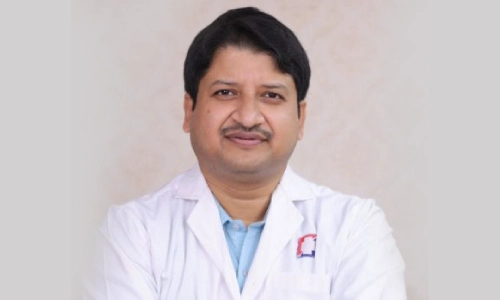
DR. SOMAK DAS
Qualifications: MBBS, MS(GEN.SURG.) DNB(GASTRO.SURG), MCH
Specialty: GASTRO SURGEON
Fees: Rs. 1,200.00
Available Days: MON, WED & FRI
Available Time: BY APPOINTMENT

DR. D. K. SARKAR
Qualifications: MBBSMS, DNB FRCS, (GOLD), FFSTED
Specialty: GENERAL SURGEON
Fees: Rs. 1,550.00
Available Days: MON, WED,THU & SAT
Available Time: MON WED,THU-16:00 & SAT-15:00

DR. RUDRADEEP BANERJEE
Qualifications: MS.(GEN.SURG), D.N. BMRCS
Specialty: GENERAL SURGEON
Fees: Rs. 1,000.00
Available Days: BY APPOINTMENT
Available Time: BY APPOINTMENT
DR. RANAJOY DUTTA
Qualifications: MBBS, M.S D.N.B
Specialty: GENERAL SURGEON
Fees: Rs. 1,200.00
Available Days: WED, SAT
Available Time: 17:00 - 18:00 PM
DR. ACHINTA KR DAS
Qualifications: MBBS, MS
Specialty: GENERAL SURGEON
Fees: Rs. 1,200.00
Available Days: BY APPOINTMENT
Available Time:BY APPOINTMENT
DR. SAMRIDDHI PODDAR
Qualifications: MBBS(HONS), MS(SURGERY), WBUHS NRSMCH
Specialty: GENERAL SURGEON
Fees: Rs. 1,000.00
Available Days: TUE & WED
Available Time: TUE 16:30-17:30 & WED 18:00-19:00
DR . B . B . BARAI
Qualifications: MBBS, DNB, PG DGM, CCEBDM
Specialty: GENERAL SURGEON
Fees: Rs. 1,200.00
Available Days: MON /FRIDAY
Available Time: 11:00-13:00
DR. SAPTARSHI KUNDU
Qualifications: MBBS, MS (GEN SUR)
Specialty: GENERAL SURGEON
Fees: Rs. 700.00
Available Days: BY APPOINTMENT
Available Time: BY APPOINTMENT
DR. MAINAK PAL
Qualifications: MBBS, MS, FMAS(GEN.SURG)
Specialty: GENERAL SURGEON
Fees: Rs. 1,000.00
Available Days: MON -FRI
Available Time: 17:00-18:00
DR. SUKANTA ROY
Qualifications: MBBS, MS(GASTO)
Specialty: GASTRO SURGEON
Fees: Rs. 1,000.00
Available Days: BY APPOINTMENT
Available Time: BY APPOINTMENT

DR. UDDIPTA DUTTA
Specialty: GASTRO SURGEON
Fees: Rs. 900.00
Available Days: BY APPOINTMENT
Available Time: BY APPOINTMENT
Hear From Our Happy Patients
Very good nursing home. All staff good.
A really good hospital with good critical and surgical care. Staffs are very cooperative..
Here the service are very good। Very good hospital
very good nursing home
Nurse didi gulo khub bhalo all staff bhalo 100.90% bhalo
Are good nursing hom varehalp pol anepplamkontak stap vare Good
Good experience All facilities is good
Best hospital Very good facility
Doctors, Nursing staff, other staff are very good, everything is good, only few accommodation issue is not adjustable.
Liked the place...staffs...sisters all helpful...and special thanks to my doctor..Doctor Sukanta Ray...he is next to God to me
Liked the place...staffs...sisters all helpful...and special thanks to my doctor..Doctor Sukanta Ray...he is next to God to me
Individuals at Higher Risk for Implant Problems
| Groups | Factors |
|---|---|
| Smokers | Delayed healing |
| Gum disease patients | Reduced implant stability |
| Poor oral hygiene | Infection risk |
| Poorly controlled diabetes | Healing concerns |
| Heavy teeth grinders | Excessive implant loading |
| Low bone volume | Limited implant support |
| Previous jaw radiation | Healing complications |
| Poor remaining dentition | Ongoing oral disease |
| Certain medication users | Healing considerations |
| Poor follow-up patients | Maintenance problems |
Major Tooth Problem Needing Implants
Severe tooth decay
Advanced gum disease
Cracked or broken tooth roots
Failed dental restorations
Congenital tooth absence
Certain medical conditions
Treatment-related tooth loss
Tooth Loss Patterns, Diagnosis & Treatment Approach
| Pattern | Condition | Initial Approach | Advanced Treatment Needed? | Expected Outcome |
|---|---|---|---|---|
| Single missing tooth | Tooth loss | Dental assessment | Implant restoration | Fixed tooth replacement |
| Multiple gaps | Multiple tooth loss | Prosthetic planning | Multiple implants | Improved chewing |
| Unstable denture | Poor denture retention | Implant assessment | Implant-supported denture | Better stability |
| Reduced bone | Bone deficiency | Imaging assessment | Bone grafting | Improved implant support |
| Gum disease | Periodontal disease | Gum treatment | Implant after stabilisation | Healthier foundation |
| Complete tooth loss | Edentulism | Full-mouth assessment | Full-arch restoration | Improved function |
How Are Dental Implants Evaluated?
Missing teeth clinical examination
Remaining teeth clinical assessment
Gum and periodontal examination
Oral hygiene examination
Bite and occlusion assessment
Implant space evaluation
Medical history review
Medication history review
Dental X-ray examination
Panoramic radiographic examination
CBCT three-dimensional imaging
Bone volume and density assessment
Digital impression scannin
Treatment goal discussion
Dental Implant Treatment: What to Expect?
Before
- Review your medical and oral health history.
- Complete jawbone scans before treatment.
- Extract damaged teeth when necessary.
- Consider bone grafting when required.
- Discuss suitable anaesthesia options beforehand.
During
- Numb the treatment area thoroughly.
- Place the implant post precisely.
- Close the gum tissue with stitches.
- Attach a temporary tooth when needed.
After
- Expect mild swelling and soreness.
- Manage discomfort with prescribed medication.
- Eat soft foods during healing.
- Avoid smoking and touching treated areas.
- Allow three to six months for healing.
- Attach the permanent crown after healing.
Benefits of Dental Implants
- Replaces missing teeth
- Provides stable support
- Improves chewing ability
- Supports natural appearance
- Avoids removable dentures
- Preserves available jawbone
- Supports fixed restorations
- Does not require neighbouring preparation
Dental Implant Success
| Outcome | Rate |
|---|---|
| Short-Term Success | 95%–98% |
| 10-Year Survival | 93%–96% |
| 20-Year Survival | Around 93% |
Recovery After Dental Implant Treatment
Days 1–3: Mild bleeding, stiffness, and swelling may occur.
Days 4–7: Pain and swelling gradually begin fading.
Weeks 2–4: Gums heal around the implant site.
Months 2–6: Jawbone gradually fuses with the titanium implant.
Complications If Dental Implants Are Not Placed
- Jawbone deterioration and resorption
- Facial collapse and premature wrinkles
- Shifting teeth and bite misalignment
- Temporomandibular joint strain and pain
- Excessive wear on remaining teeth
- Gum recession and bacterial accumulation
- Increased risk of periodontal disease
- Difficulty chewing and eating comfortably
- Speech and pronunciation difficulties
- Reduced confidence and self-esteem
Post-Treatment Daily Management & Prevention Tips
Daily Implant Management
- Brush gently using a soft toothbrush.
- Clean between teeth around implants.
- Rinse gently after the first day.
- Choose soft foods during initial healing.
- Avoid chewing directly over implants.
Prevention After Implant Treatment
- Avoid smoking and alcohol during healing.
- Avoid hard foods and excessive chewing.
- Manage underlying health conditions effectively.
- Schedule dental checkups every 3–6 months.
Frequently Asked Questions
Do dental implants look fake or obvious?
No. Custom-made crowns match surrounding teeth for colour, shape, size, and shine. Properly planned restorations blend naturally with your smile and stay securely in place.
Can older adults get dental implants?
No. There is generally no strict upper age limit. Suitability depends more on overall health, jawbone condition, healing capacity, and the absence of uncontrolled medical problems.
Do dental implants fail frequently?
No. They have a high long-term success rate when planned and maintained properly. Outcomes can be influenced by oral hygiene, smoking, bone quality, medical conditions, and professional care
Can patients get implants despite bone loss?
Yes. Reduced jawbone volume does not always prevent treatment. Bone augmentation procedures, including grafting or sinus elevation, may create adequate support before placement when clinically appropriate.
Do patients need one implant for each missing tooth?
No. Multiple absent teeth can sometimes be replaced using fewer strategically positioned fixtures. Full-arch solutions may use four or six supports to stabilise a complete restoration.