
Bladder Problems Treatment in Kolkata
Home / Treatments / Urology / Bladder Problems
Quick Answers
Can dehydration worsen bladder issues?
Yes. Low fluid intake concentrates urine, which can irritate the bladder lining and increase urgency or discomfort.
Is it safe to frequently delay urination?
No. Regularly holding urine can overstretch the bladder and disrupt normal control signals over time.
Do bladder problems affect sleep quality?
Yes. Frequent nighttime urination (nocturia) can interrupt sleep cycles, leading to fatigue and reduced daily functioning.
Can medications for other conditions impact bladder function?
Yes. Some medicines—such as diuretics, sedatives, or antihistamines—can alter urine production or bladder control and may worsen symptoms.
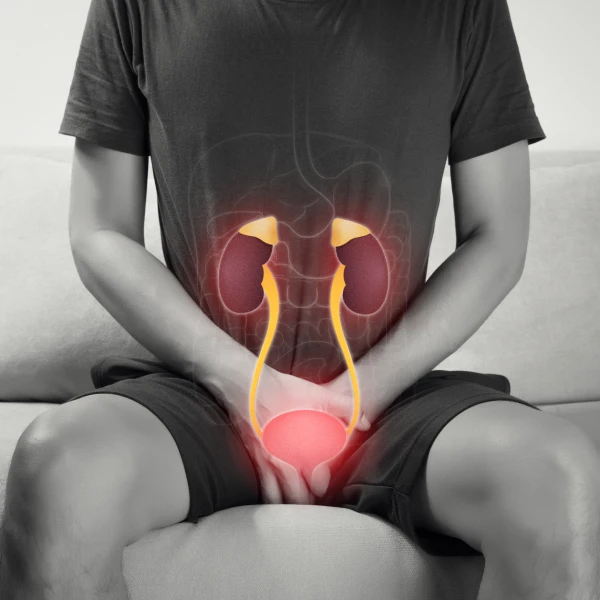
Struggling with Bladder Problems? Get the Right Treatment
Bladder problems such as frequent urination, sudden urgency, leakage, or discomfort can interfere with daily life. These symptoms may indicate an underlying issue that requires prompt medical attention.
At Samaritan Medical Surgical & Critical Care, care is focused on identifying the exact cause and restoring normal bladder function with a personalised approach guided by an experienced bladder specialist.
Types of Bladder Problems We Treat
Bladder Infections
Infections of the bladder can cause burning during urination, frequent urge, and discomfort in the lower abdomen. They may recur if not properly treated and often require prompt medical care.
Overactive Bladder
This condition is marked by a sudden, strong urge to urinate, often with increased frequency and possible leakage. It affects bladder control and can interfere with daily activities.
Chronic Bladder Pain
Persistent pain or pressure in the bladder region, often without a clear infection, may indicate a long-term condition that needs ongoing management.
Urinary Retention
This occurs when the bladder does not empty, leading to a weak urine stream, discomfort, or a feeling of fullness.
Specialised Bladder Problems
Certain bladder issues are more common in specific groups, such as women after menopause due to hormonal changes, or children who may have difficulty with bladder control.
Why Bladder Problems Develop?
Main Causes
- Infections that irritate the bladder lining and lead to repeated symptoms
- Weak bladder muscles or poor nerve control affecting urine storage and release
- Problems with pelvic floor muscles that support bladder control
- Prostate enlargement in men, which can block normal urine flow
- Hormonal changes and ageing that reduce bladder strength
Key symptoms
- Frequent urge to pass urine
- Difficulty holding urine or leakage
- Burning or pain while urinating
- Blood in urine
- Waking up multiple times at night to urinate
Why Choose Samaritan Medical Surgical & Critical Care?
At Samaritan Medical Surgical & Critical Care, we provide comprehensive healthcare solutions as per your needs. With a team of expert professionals, we focus on delivering compassionate, patient-centred care for optimal well-being.

NABH Certified
Accredited by NABH, ensuring the highest standards of healthcare quality and patient safety.

Surgical Excellence
Our skilled surgeons offer precision care for a wide range of surgical procedures.

Critical Care Support
Providing round-the-clock critical care with advanced equipment and expert medical teams.

Tests We Use to Diagnose Bladder Problems
Urine Tests
Urinalysis and urine culture check for infection, blood, or inflammation in the urinary tract.
Bladder Diary
A simple record of fluid intake, urination frequency, and leakage episodes to identify patterns and triggers.
Postvoid Residual Measurement
Measures how much urine remains in the bladder after urination to detect incomplete emptying.
Urodynamic Testing
Evaluates how well the bladder stores and releases urine, including flow, pressure, and muscle coordination.
Cystoscopy
Uses a thin camera to examine the inside of the bladder and detect abnormalities like stones, blockage, or growths.
Imaging Tests
Ultrasound, CT, or MRI scans help assess the bladder's structure and identify abnormalities or complications.
Our Doctors
DR. AMLAN CHAKRABORTY
Qualifications: MBBS, MS, FRCS (Urology)
Specialty: Urology
Experience: 23 years
Fees: Rs. 1,700.00
Available Days: TUE,THURS & SAT(BY APPOINTMENT)
Available Time: 12:00 - 13:00 (BY APPOINTMENT)

DR. PRAMOD KUMAR SHARMA
Qualifications: MBBS,MS
Specialty: Urology
Experience: 21 years
Fees: Rs. 1,200.00
Available Days: BY APPOINTMENT
Available Time: By Appointment

DR. NILANJAN MITRA
Qualifications: MBBS, MS (Gen. Surg.), MCh (Urology)
Specialty: Urology
Experience: 19 years
Fees: Rs. 1,200.00
Available Days:TUE & THURS
Available Time: 8:30 - 10:30

DR. SMARANJIT CHATTERJEE
Qualifications: MBBS, MS, DNB, Mch
Specialty: Urology
Experience: 18 years
Fees: Rs. 1,200.00
Available Days: BY APPOINTMENT
Available Time: BY APPOINTMENT

DR. SOUVIK CHATTERJEE
Qualifications: MBBS, MS (Gen. Surg.), DNB, MCh (Urology)
Specialty: Urology
Experience: 16 years
Fees: Rs. 1,000.00
Available Days: WED, SAT
Available Time: WED: 15:00 - 16:00, SAT: 09:30 - 10:30

DR. SUBHOJIT MALAKAR
Qualifications: MBBS, MS (Gen. Surg.), DNB, MCh (Urology)
Specialty: Urology
Experience: 15 years
Fees: Rs. 1,000.00
Available Days: BY APPOINTMENT
Available Time: BY APPOINTMENT
DR. SUNIRMAL CHOWDHURY
Qualifications: MBBS, MS, IPGMER (HOD)
Specialty: Urology
Experience: 20 years
Fees: Rs. 1,200.00
Available Days: BY APPOINTMENT
Available Time: By Appointment
Hear From Our Happy Patients
Very good nursing home.all staff best
I had Laproscopic surgery of gallbladder stone on 23/6/26 & Discharge on 25/6/26. I had wonderful experience in nursing home, Very cooperative staff. Particularly Ms Aditi (Head Sister charge) , she has cooperated very well with Smily face. OT is well equipped with high quality instruments, Dr Mukesh Karia has done wonderful operations.
Very good nursing home
Very Supportive Staff with 24*7 support. Along with Neat and Clean cloths and bed.
Great treatment and recuperation. Doctors nurses and support staff mase it feel like home .
Thakuuuu Samaritan nursing home........and Dr.babuuuu khubbbb valooooo..apnader sakoler babohar khub valo r porisheba khubbb khubbb valo sakol k. Ank ank ank dhannobad ......
Very good nursing home
Very good Treatment here and also staff behaviour has very good
I have admitted my father here twice under Dr Arindam Dutta sir for the DJ stenting and RIRS (Kidney stone) .The entire team of Samaritan was fantastic.Specially Ms Aditi Nandi was so humble and cooperative .She attended us every time and Given all facilities.Through out the admitting time and discharge,all the sisters,brothers,Housekeeping ,ward boy everyone was so polite and well mannered.
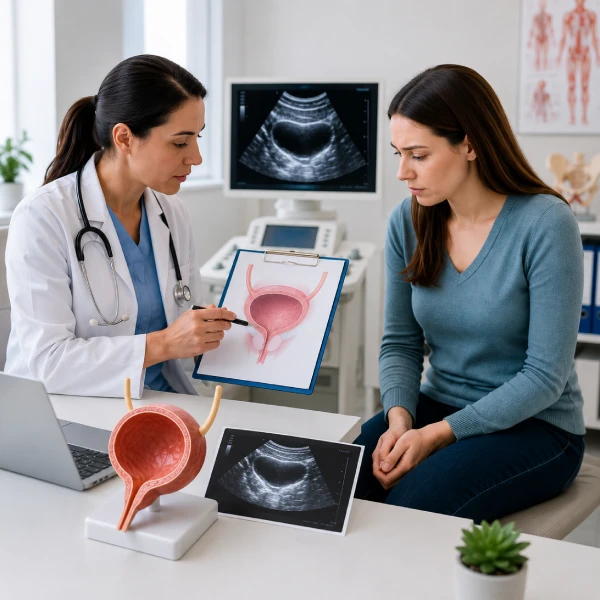
Surgeries We Provide For Bladder Problems
Bladder Suspension Surgery
Transurethral Resection of the Prostate (TURP)
Cystectomy
Bladder Augmentation
Artificial Urinary Sphincter (AUS) Implant
Urinary Diversion Surgery
Sacral Neuromodulation (SNS)
Perineal Prostatectomy
Urethral Sling Surgery
Bladder Neck Incision
Bladder Conditions, Diagnosis & Treatment Options
| Condition | Key Symptoms | Diagnosis | Treatment | Recovery |
|---|---|---|---|---|
| Bladder Infection | Burning, urgency | Urine test | Medication | Few days |
| Overactive Bladder | Frequent urge, leakage | Function test | Therapy/medication | Ongoing |
| Urinary Retention | Weak flow, incomplete emptying | Imaging | Procedure | Varies |
| Chronic Bladder Pain | Pelvic discomfort | Scope test | Long-term care | Ongoing |
| Bladder Tumour | Blood in urine | Imaging, biopsy | Surgery | Case-based |
Bladder Care Tips to Improve Control

Drink adequate fluids throughout the day

Avoid holding urine for long periods

Practice pelvic floor exercises regularly

Reduce intake of irritants such as caffeine and spicy foods
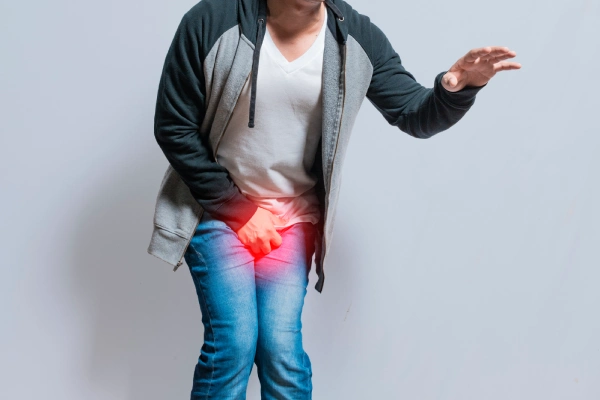
Seek early care for any urinary symptoms
Frequently Asked Questions
Find answers to common questions to help you better understand the condition and general concerns.
Can stress or anxiety affect bladder control?
Stress can affect nerve signals that control the bladder, leading to increased urgency or frequency in some individuals.
Is frequent urination always a serious problem?
Not always. It may be caused by infections or lifestyle factors, but persistent symptoms should be checked.
How long does bladder treatment usually take to work?
Bladder treatment timelines vary: simple infections improve in 1–2 days, while chronic conditions like OAB may take 4–12 weeks.
Are bladder problems a normal part of ageing?
Ageing can increase risk, but these problems are not considered normal and often need treatment.
Can lifestyle changes improve bladder control without treatment?
In early stages, lifestyle changes can help, but some conditions require medical care for proper management.