
Advanced UTI Treatment in Kolkata
Home / Treatments / Urology / UTI
Get Effective Treatment for Urinary Tract Infections (UTIs)
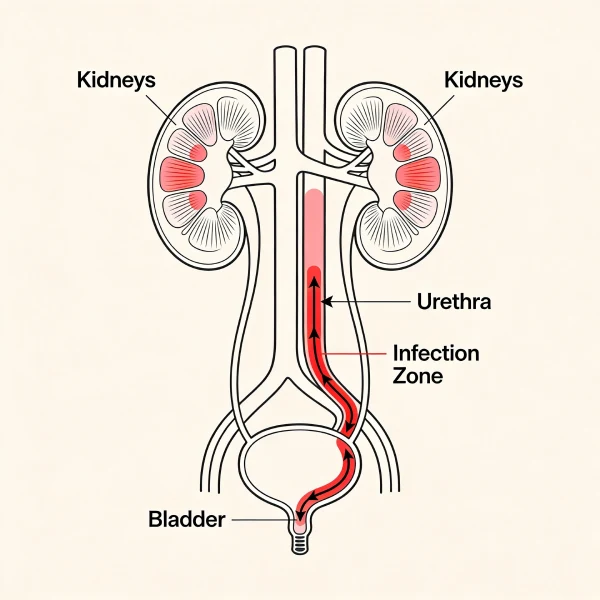
Urinary Tract Infections (UTIs) are bacterial infections that affect any part of the urinary system, including the kidneys, bladder, or urethra. They commonly cause pain, frequent urination, and discomfort, and can be easily treated with antibiotics.
If you're experiencing symptoms of a UTI, timely treatment is key to preventing complications. At Samaritan Medical Surgical & Critical Care, our expert team provides fast, reliable care to help you feel better quickly. Get in touch today.
Signs You Need to Consult a Doctor for
Urinary Tract Infection
Persistent pain or burning during urination
Blood in urine or cloudy, foul-smelling urine
Severe pelvic or lower abdominal pain
Fever or chills accompanying UTI symptoms
Frequent urge to urinate without producing much urine
Nausea or vomiting, especially with back pain

Why Choose Samaritan Medical Surgical & Critical Care?
At Samaritan Medical Surgical & Critical Care, we provide comprehensive healthcare solutions as per your needs. With a team of expert professionals, we focus on delivering compassionate, patient-centred care for optimal well-being.

NABH Certified
Accredited by NABH, ensuring the highest standards of healthcare quality and patient safety.

Surgical Excellence
Our skilled surgeons offer precision care for a wide range of surgical procedures.

Critical Care Support
Providing round-the-clock critical care with advanced equipment and expert medical teams.
Causes of Urinary Tract Infections (UTI)
Bacterial Infections
UTIs are most commonly caused by E. coli bacteria, which enter the urinary tract and multiply.
Sexual Activity
Sexual intercourse can push bacteria into the urethra, increasing the risk of infection.
Urinary Catheters
Catheters can introduce bacteria into the urinary tract, especially with prolonged use.
Pregnancy
Hormonal changes during pregnancy can affect the urinary tract, making it more vulnerable to infection.
Weakened Immune System
Conditions like diabetes or immunodeficiency can lower your body's ability to fight off infections.
Poor Hygiene
Improper hygiene, like wiping from back to front, can transfer bacteria into the urinary tract.
Kidney Stones or Obstructions
Blockages can hinder urine flow, leading to bacterial growth and increased infection risk.
Menopause
Lower estrogen levels during menopause can alter the urinary tract, making it more prone to infections.
Our Doctors

DR. AMLAN CHAKRABORTY
Qualifications: MBBS, MS, FRCS (Urology)
Specialty: Urology
Experience: 23 years
Fees: Rs. 1,700.00
Available Days: TUE,THURS & SAT(BY APPOINTMENT)
Available Time: 12:00 - 13:00 (BY APPOINTMENT)

DR. PRAMOD KUMAR SHARMA
Qualifications: MBBS,MS
Specialty: Urology
Experience: 21 years
Fees: Rs. 1,200.00
Available Days: BY APPOINTMENT
Available Time: By Appointment

DR. NILANJAN MITRA
Qualifications: MBBS, MS (Gen. Surg.), MCh (Urology)
Specialty: Urology
Experience: 19 years
Fees: Rs. 1,200.00
Available Days:TUE & THURS
Available Time: 8:30 - 10:30

DR. SMARANJIT CHATTERJEE
Qualifications: MBBS, MS, DNB, Mch
Specialty: Urology
Experience: 18 years
Fees: Rs. 1,200.00
Available Days: BY APPOINTMENT
Available Time: BY APPOINTMENT

DR. SOUVIK CHATTERJEE
Qualifications: MBBS, MS (Gen. Surg.), DNB, MCh (Urology)
Specialty: Urology
Experience: 16 years
Fees: Rs. 1,000.00
Available Days: WED, SAT
Available Time: WED: 15:00 - 16:00, SAT: 09:30 - 10:30

DR. SUBHOJIT MALAKAR
Qualifications: MBBS, MS (Gen. Surg.), DNB, MCh (Urology)
Specialty: Urology
Experience: 15 years
Fees: Rs. 1,000.00
Available Days: BY APPOINTMENT
Available Time: BY APPOINTMENT
DR. SUNIRMAL CHOWDHURY
Qualifications: MBBS, MS, IPGMER (HOD)
Specialty: Urology
Experience: 20 years
Fees: Rs. 1,200.00
Available Days: BY APPOINTMENT
Available Time: By Appointment
Hear From Our Happy Patients
Very good nursing home.all staff best
I had Laproscopic surgery of gallbladder stone on 23/6/26 & Discharge on 25/6/26. I had wonderful experience in nursing home, Very cooperative staff. Particularly Ms Aditi (Head Sister charge) , she has cooperated very well with Smily face. OT is well equipped with high quality instruments, Dr Mukesh Karia has done wonderful operations.
Very good nursing home
Very Supportive Staff with 24*7 support. Along with Neat and Clean cloths and bed.
Great treatment and recuperation. Doctors nurses and support staff mase it feel like home .
Thakuuuu Samaritan nursing home........and Dr.babuuuu khubbbb valooooo..apnader sakoler babohar khub valo r porisheba khubbb khubbb valo sakol k. Ank ank ank dhannobad ......
Very good nursing home
Very good Treatment here and also staff behaviour has very good
I have admitted my father here twice under Dr Arindam Dutta sir for the DJ stenting and RIRS (Kidney stone) .The entire team of Samaritan was fantastic.Specially Ms Aditi Nandi was so humble and cooperative .She attended us every time and Given all facilities.Through out the admitting time and discharge,all the sisters,brothers,Housekeeping ,ward boy everyone was so polite and well mannered.
Diagnosis of Urinary Tract Infections (UTI)
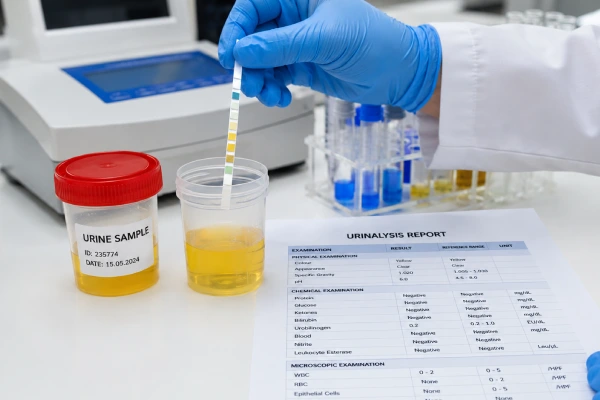
Urine Test (Urinalysis)
Detects bacteria, white blood cells, and blood in urine, enabling timely intervention.
Urine Culture
Identifies the specific bacteria causing the infection and determines the best antibiotic.
Blood Test
Checks for signs of infection in the bloodstream, used if the infection is severe.
Imaging Tests (Ultrasound/CT Scan)
Detects abnormalities in the urinary tract, such as kidney stones or blockages.
Cystoscopy
Examines the bladder with a camera, used for recurrent or complicated UTIs.
Treatments of Urinary Tract Infections (UTI)

Antibiotics
The primary treatment for UTIs, prescribed based on the bacteria causing the infection.

Pain Relievers
Medications like phenazopyridine help relieve pain and discomfort during urination.

Urinary Alkalinizers
These medications help neutralise urine acidity, reducing irritation.

Hospitalisation
In severe cases, intravenous antibiotics and fluids may be administered in a hospital setting.
Surgical Intervention
For UTIs caused by obstructions (e.g., kidney stones), surgery may be required.

Preventive Antibiotics
For recurrent UTIs, low-dose antibiotics may be prescribed as a preventive measure.
Recovery Timeline After Urinary Tract
Infections (UTI) Treatment

24-48 Hours
Most symptoms, like pain and frequent urination, start to improve within the first two days of antibiotic treatment.
3-5 Days
For mild UTIs, symptoms should significantly improve, but it's crucial to complete the full course of antibiotics.


7-10 Days
Severe UTIs require a full antibiotic course, and symptoms should fully resolve by the end of treatment.
2-4 Weeks
Follow-up visits may be necessary for complicated or recurrent UTIs to ensure full recovery and prevent reinfection.


Ongoing Care
Individuals with chronic UTIs may require long-term preventive measures and regular check-ups to manage recurrence.

24-48 Hours
Most symptoms, like pain and frequent urination, start to improve within the first two days of antibiotic treatment.

3-5 Days
For mild UTIs, symptoms should significantly improve, but it's crucial to complete the full course of antibiotics.

7-10 Days
Severe UTIs require a full antibiotic course, and symptoms should fully resolve by the end of treatment.

2-4 Weeks
Follow-up visits may be necessary for complicated or recurrent UTIs to ensure full recovery and prevent reinfection.

Ongoing Care
Individuals with chronic UTIs may require long-term preventive measures and regular check-ups to manage recurrence.

Complications of Untreated Urinary Tract Infections (UTI)
Kidney Damage
Recurrent Infections
Sepsis
Bladder Dysfunction
Pregnancy Risks
Scarring of the Urethra
Frequently Asked Questions
Find answers to common questions to help you better understand the condition and general concerns.
Can a UTI go away without antibiotics?
In some cases, mild UTIs may improve on their own, but untreated infections can lead to complications. It’s essential to see a doctor for proper treatment to prevent further issues.
Why are UTIs more common in women than in men?
Women are more prone to UTIs due to their shorter urethra, making it easier for bacteria to reach the bladder. Additionally, hormonal and anatomical factors contribute to a higher risk.
Are urinary tract infections contagious?
UTIs are not contagious in the traditional sense, but bacteria from an infected person can be transferred through sexual contact. Proper hygiene can help reduce the risk of transmission.
Can UTIs affect pregnancy outcomes?
Untreated UTIs during pregnancy can lead to complications like preterm labor or low birth weight. Early treatment is crucial to avoid these risks and ensure a healthy pregnancy.
Are pregnant women at higher risk for UTIs?
Pregnancy increases the risk of UTIs due to hormonal changes and pressure on the bladder. Pregnant women should seek medical attention if they experience any symptoms of a UTI.