

An umbilical hernia can look small at first. A soft bulge near the belly button may appear when you cough, bend, lift something, or strain. For some people, it does not cause much trouble in the beginning. For others, it can slowly become painful, larger, or uncomfortable during daily activities.
Once surgery is recommended, the first question is usually simple: what happens next?
This blog explains everything in simple words, from diagnosis and surgical options to recovery, cost, and aftercare.
What is an Umbilical Hernia?
An umbilical hernia happens when tissue, fat, or part of the intestine pushes through a weak spot near the belly button. This creates a visible swelling or bulge around the navel area.
In adults, this condition may not heal on its own. If the hernia grows or causes pain, surgery may be advised.
What Should You Expect Before Umbilical Hernia Surgery?

Before surgery, your doctor will explain the procedure, possible risks, benefits, and expected recovery. This helps you prepare both mentally and physically.
A proper pre-surgery evaluation is important because every patient is different. Your surgeon will check your symptoms, medical history, lifestyle, and overall fitness before choosing the safest surgical approach.
Consultation and Medical History Review
During consultation, the surgeon may ask about:
- Your symptoms
- Duration of the hernia
- Pain or discomfort level
- Work routine
- Lifting habits
- Previous surgery
- Current medicines
- Lifestyle habits
This helps the doctor decide whether open umbilical hernia repair or laparoscopic umbilical hernia surgery is more suitable for you.
Pre-Surgery Tests and Instructions
Pre-surgery tests are done to reduce risks during the operation. Your doctor may also give instructions about food, medicines, and hospital admission.
| Pre-Surgery Step | Purpose |
| Blood tests | To check infection, blood count, sugar levels, and general fitness |
| ECG or heart evaluation | To assess heart health before anaesthesia |
| Anaesthesia consultation | To decide the safest anaesthesia plan |
| Medicine review | To manage blood thinners, diabetes medicines, or other drugs |
| Fasting instructions | To keep the stomach empty before surgery |
| Hospital admission guidance | To prepare documents, clothes, and a support person |
What Happens During Umbilical Hernia Surgery?
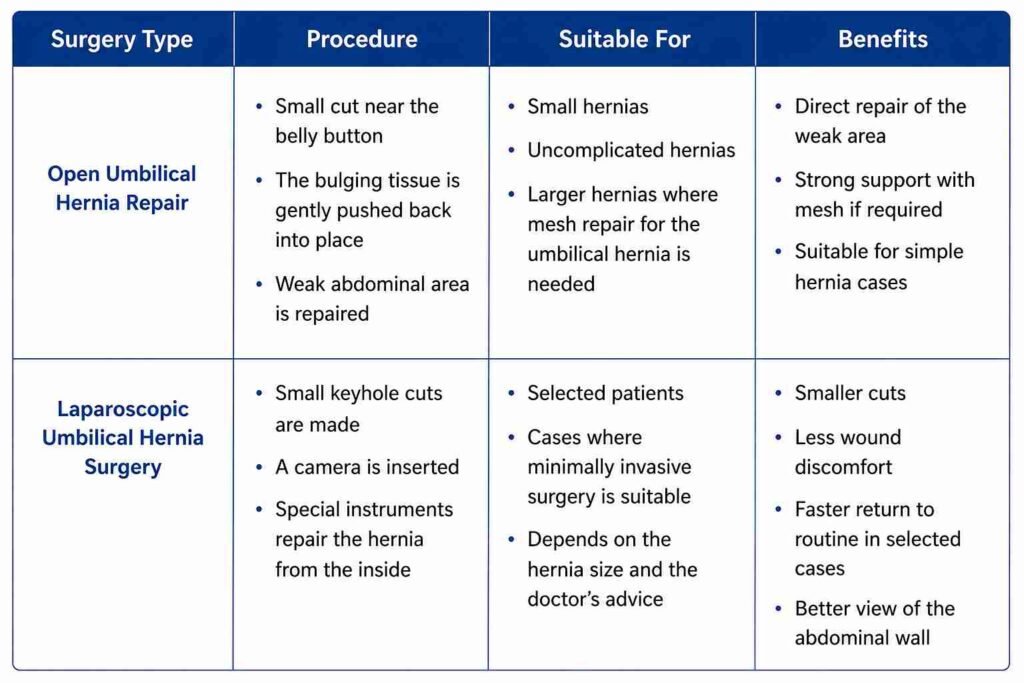
Umbilical hernia repair is done to push the herniated tissue back into place and close the weak opening in the abdominal wall.
The surgery may be done through an open or laparoscopic method. The right option depends on the size of the hernia, your symptoms, your health condition, and your surgeon’s advice.
Mesh Repair for Umbilical Hernia
A surgical mesh may be used to support the weak abdominal wall. It works like a reinforcement layer and may reduce the chance of recurrence.
Mesh may be suggested when:
- The hernia is large
- The abdominal wall is weak
- The patient has a higher recurrence risk
- The surgeon feels extra support is needed
What Should You Expect After Umbilical Hernia Surgery?
After surgery, mild pain, tightness, swelling, or pulling around the operated area is common. These symptoms usually improve with medicines, rest, and proper care.
Your doctor may prescribe pain medicines and antibiotics if needed.
Pain, Swelling, and Movement After Surgery
Mild pain and swelling are normal after the surgery. You should avoid sudden bending, heavy lifting, or pressure on the abdomen.
You should:
- Walk slowly
- Keep the wound clean
- Take medicines on time
- Avoid sudden movements
- Avoid pressure on the abdomen
- Follow wound care instructions
Pain should gradually reduce. If pain suddenly increases, or if there is fever, redness, pus, or severe swelling, contact your doctor.
Walking After Hernia Surgery
Most patients are encouraged to walk soon after surgery. Walking improves blood circulation, reduces stiffness, and supports recovery.
Start with short walks. Avoid climbing too many stairs in the beginning. Do not rush back into full activity just because you “feel fine.” Internal healing takes time.
Return to Work After Surgery
If you have a desk job, you may return to work within a few days to one or two weeks, depending on your recovery.
If your work involves lifting, bending, or physical labour, you may need more time. Always take clearance from your surgeon before returning to work.
For patients considering the surgery, Samaritan Hospital in Kolkata provides clear guidance, safe surgical care, and recovery support at every step.
What is the Umbilical Hernia Surgery Recovery Time?
The recovery time for the surgery depends on the type of surgery, your overall health, the size of the hernia, and how well you follow aftercare instructions.
First 24–48 Hours
You may feel soreness, mild swelling, tiredness, or tightness near the surgical area. Some patients may go home the same day, while others may need a short hospital stay.
Focus on:
- Rest
- Light walking
- Taking prescribed medicines
- Eating light food
- Avoiding strain
First Week After Surgery
Pain usually starts to reduce during the first week. You may be able to do a light household activity. Wound care is very important during this phase.
Avoid:
- Heavy lifting
- Driving without permission
- Straining during bowel movements
- Skipping follow-up visits
- Wearing tight clothes around the abdomen
Two to Six Weeks After Surgery
Most patients feel much better during this period. However, internal healing continues even if the outside wound looks fine.
Your doctor may slowly allow you to return to normal activities. Heavy gym workouts and weightlifting should only resume after medical clearance.
Final Takeaway: Treat the Bulge Before It Troubles You More
The surgery may look small, but it should not be ignored if it causes pain, swelling, or discomfort. In adults, it usually does not heal on its own and may need surgery when symptoms increase.
In selected cases, mesh repair for an umbilical hernia may be used for stronger support. With proper rest, wound care, walking, and follow-up, recovery becomes smoother.
For safe treatment guidance, consult experts at Samaritan Hospital in Kolkata for umbilical hernia surgery.
People Also Ask
Can an umbilical hernia heal without surgery in adults?
In adults, an umbilical hernia usually does not heal on its own. Surgery may be advised if it grows, causes pain, or has a risk of complications.
When is umbilical hernia surgery needed?
The surgery is needed when the bulge becomes painful, larger, hard, or does not go back in. It may also be needed if there is vomiting, redness, fever, or difficulty passing stool or gas.
How long does recovery take after umbilical hernia surgery?
Most patients can start light activity within a few days after surgery. Complete umbilical hernia surgery recovery may take a few weeks, especially if heavy work or lifting is involved.
Is mesh always needed for umbilical hernia repair?
Mesh is not always needed for every umbilical hernia repair. It may be used for larger hernias, weak abdominal walls, or cases where extra support is needed to reduce recurrence risk.
Is umbilical hernia surgery painful?
Mild pain, tightness, or swelling is common after the surgery. These usually improve with prescribed medicines, rest, and proper wound care.