
Bacteria leading to symptoms such as painful, frequent urination, pelvic discomfort, and cloudy or strongly odoured urine isn’t something to ignore—it could be the start of a urinary tract infection.
If left untreated, what starts as mild discomfort can quickly escalate into serious complications like kidney infections or even bloodstream infections.
At Samaritan Hospital, advanced diagnostics and experienced medical expertise come together to quickly identify the root cause of UTIs and treat them effectively.
From what causes UTIs and how they are treated today, this blog delves into it.
What is a Urinary Tract Infection (UTI)?
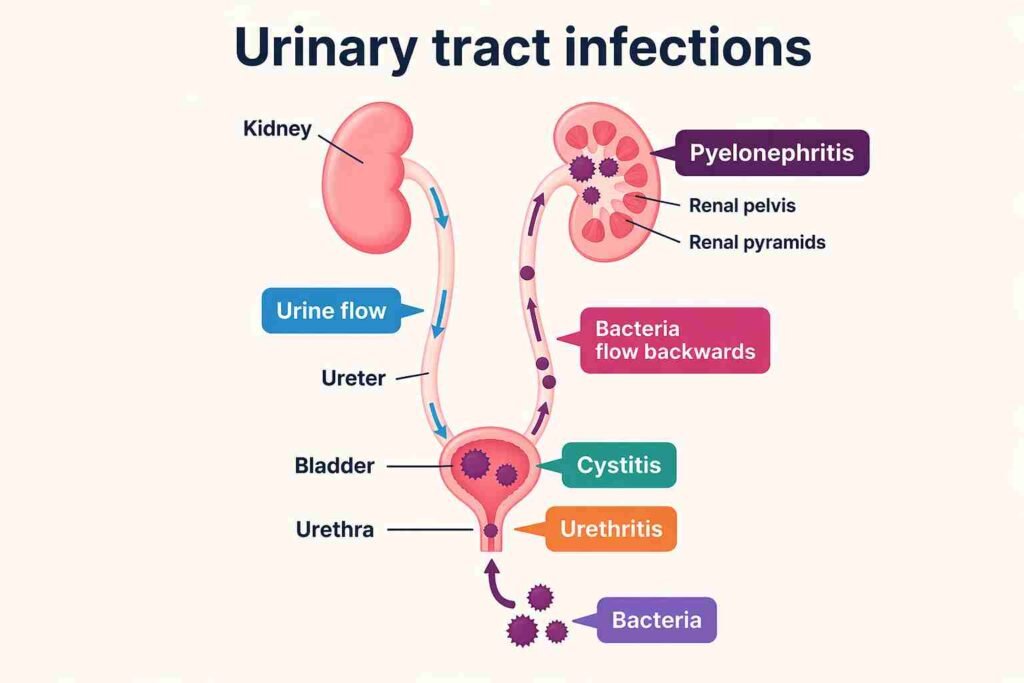
A urinary tract infection is a bacterial infection of the urinary system, including the kidneys, bladder, ureters, and urethra.
Most UTIs start in the lower urinary tract, particularly the bladder, which is why it’s often called a bladder infection.
Each type of UTI is different, which is why understanding the symptoms becomes important.
Types of UTIs
- Cystitis
This is the most common type of urinary tract infection, where bacteria settle in the bladder and cause irritation. You’ll usually notice frequent urination, a constant urge to go, and burning during urination. There may also be lower abdominal pain or discomfort. While it’s uncomfortable, it’s usually easy to treat if caught early.
- Urethritis
This type affects the urethra, the tube that carries urine out of the body. It often causes pain while urinating and a sharp burning sensation right at the start. Sometimes, there may be mild discharge or irritation. Since this is where bacteria often enter, treating it early can stop the infection from spreading further.
- Pyelonephritis
This is the more serious form of UTI, where the infection travels up to the kidneys. It doesn’t just stay uncomfortable—it can make you feel really unwell. Symptoms may include fever, chills, back pain, nausea, and signs of a kidney infection. This condition needs urgent medical care and stronger UTI treatment, often with antibiotics or hospital support.
Samaritan Hospital offers early diagnosis and effective care to help you recover quickly.
Common UTI Symptoms To Watch Out For
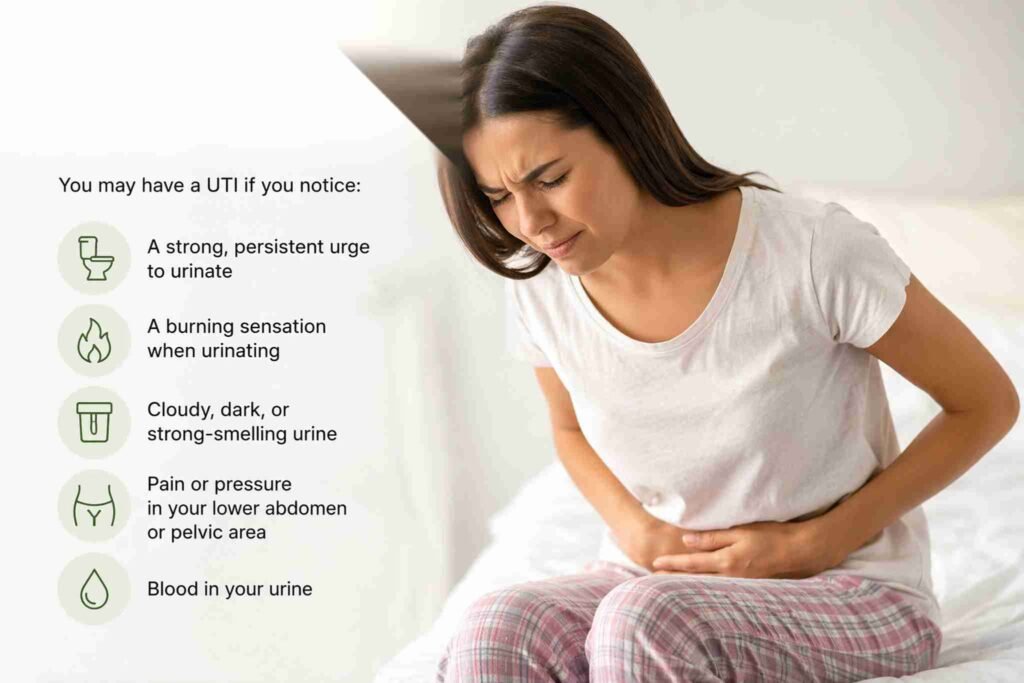
- Burning during urination
- Frequent urination with little output
- Pain while urinating
- Cloudy urine or strong-smelling urine
- Lower abdominal pain
- Pelvic pain, especially in women
- Feeling of incomplete bladder emptying
UTI symptoms can vary between men and women. Let’s give you a detailed answer for it:
Common Symptoms in Women
- Sharp pain while urinating
- Pelvic pressure
- Frequent urination urges
- Discomfort during sexual activity
Usual Symptoms in Men
- Burning during urination
- Weak urine stream
- Penile discharge
- Testicular discomfort
- Pain near the prostate area
What Causes UTIs?
While bacteria are the main cause, certain lifestyle and health factors significantly increase your risk.
Primary Cause: Bacterial Infection
Most UTIs are caused by E. coli infection, a bacterium commonly found in the digestive tract that can enter the urinary tract.
Other Risk Factors
- Poor hygiene practices
- Holding urine for long periods
- Dehydration
- Sexual activity
- Use of certain contraceptives
- Weakened immunity
Stages of UTI Development
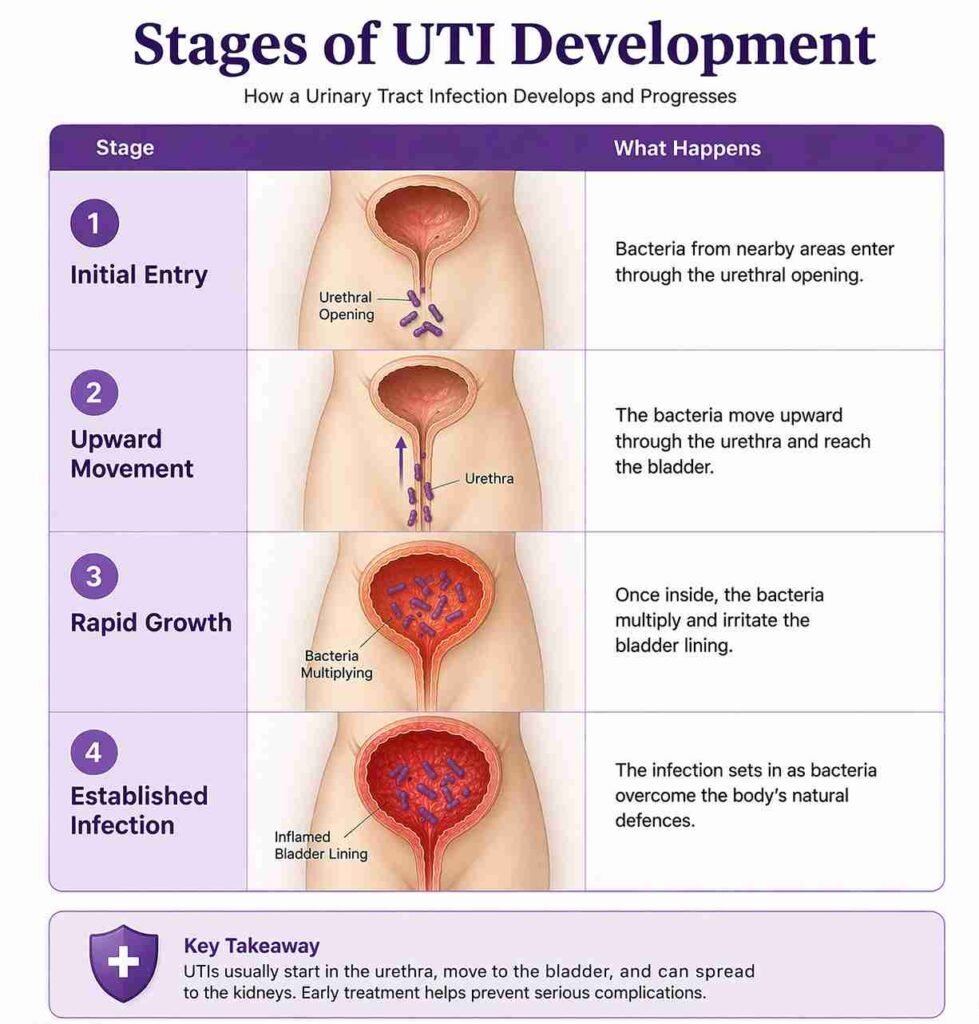
UTIs usually start in the bladder, causing mild symptoms like burning or frequent urination. If ignored, the infection can spread to the kidneys and lead to more serious complications.
The stages are explained for better understanding:
| Stage | What Happens |
| Initial Entry | Bacteria from nearby areas enter through the urethral opening. |
| Upward Movement | The bacteria move upward through the urethra and reach the bladder. |
| Rapid Growth | Once inside, the bacteria multiply and irritate the bladder lining. |
| Established Infection | The infection sets in as bacteria overcome the body’s natural defences. |
Who is at Higher Risk of UTIs?
While UTIs can affect anyone, certain groups are more vulnerable.
Such as:
- Women (shorter urethra)
- Elderly individuals
- Diabetic patients
- Pregnant women
- People with a recurrent UTI history
When Should You See a Doctor?
- Symptoms lasting more than 2 days
- Blood in urine
- Severe lower abdominal pain
- Repeated infections (recurrent UTI)
Diagnosis: How UTIs Are Confirmed
Diagnosing a UTI is usually quick and straightforward, based on your symptoms and simple tests. Doctors confirm it using urine analysis and, if needed, further tests to identify the exact cause.
Common Tests
- Urine Routine Test – Detects infection indicators
- Urine Culture Test – Identifies bacteria and the best antibiotics
- Imaging tests (in complicated cases)
For accurate diagnosis and effective UTI treatment, Samaritan Hospital in Kolkata offers advanced testing and expert care to support timely recovery.
Latest UTI Treatment Options Available in Kolkata
Treatment depends on the severity of the urinary infection.
Antibiotic Treatment for UTI
The most common approach is antibiotic treatment for UTI, which targets the bacteria causing infection.
- Short-term antibiotics for mild cases
- Longer courses for severe or recurrent UTI
Pain Management
- Medications to reduce pain while urinating
- Relief from lower abdominal pain
Advanced Care for Complications
If the infection spreads:
- Hospitalisation
- IV antibiotics for a kidney infection
At Samaritan Hospital, we provide comprehensive UTI treatment in Kolkata personalised to each patient’s needs.
Mild vs Severe UTI Treatment
UTIs can range from mild discomfort to serious infections if ignored. Understanding the differences in treatment helps you take timely, effective action.
| Condition | Treatment Approach | Recovery Time |
| Mild UTI | Oral antibiotics | 3–5 days |
| Moderate UTI | Extended antibiotics | 5–7 days |
| Severe UTI / Kidney Infection | IV antibiotics, hospital care | 7–14 days |
Home Care Tips Alongside Medical Treatment
- Drink plenty of water
- Avoid caffeine and alcohol
- Maintain hygiene
- Urinate frequently (don’t hold it in)
While home remedies may help manage mild UTI symptoms, it’s essential to follow the right steps to support proper recovery.
How to Prevent UTIs
Prevention is always better than cure, especially for those prone to recurrent UTI.
UTI Prevention Tips
- Stay hydrated
- Maintain proper hygiene
- Avoid holding urine
- Wear breathable cotton underwear
- Urinate after sexual activity
Recurrent UTIs: Why Do They Keep Coming Back?
A recurrent UTI means having multiple infections in a year.
Possible Reasons
- Incomplete treatment
- Antibiotic resistance
- Underlying health conditions
- Poor lifestyle habits
What You Should Do
- Follow the complete UTI treatment course
- Get a regular urine culture test
- Consult a specialist
Complications of Untreated UTIs
Ignoring a urinary tract infection can lead to serious health issues:
- Kidney infection (potentially life-threatening)
- Permanent kidney damage
- Spread of infection to the bloodstream
- Chronic urinary problems
Choosing the Right Care for UTI Treatment
When dealing with UTIs, expert care matters. A skilled urologist at Samaritan Hospital in Kolkata can:
- Identify the exact cause
- Recommend the right antibiotic treatment for UTI
- Prevent recurrence
- Provide long-term guidance
Let’s Recap
A urinary tract infection might seem minor, but the discomfort and risks it carries shouldn’t be ignored. From burning during urination to severe kidney infection, early action makes all the difference.
If you’re experiencing symptoms, don’t delay. The right diagnosis and timely UTI treatment can help you recover quickly and prevent future infections.
Don’t wait for the infection to worsen. Early treatment can save you from severe pain and complications. Consult a specialist at Samaritan Hospital for UTI treatment in Kolkata today.
For any queries, you can contact us at 9836292167.
People Also Ask
What are the first signs of a UTI?
Early signs include burning during urination, frequent urination, and cloudy urine.
Can a UTI go away on its own?
Mild cases may improve, but most require proper UTI treatment to prevent complications.
How long does a UTI last?
With treatment, symptoms improve within 2–3 days, but full recovery may take up to a week.
What is the best treatment for UTIs?
Antibiotic treatment for UTI is the most effective approach, guided by a urine culture.
How to prevent recurrent UTIs?
Follow hygiene practices, stay hydrated, and consult a doctor for long-term prevention strategies.