
24/7 Trauma Care and Emergency Services in Kolkata
Home / Treatments / Trauma

Severe injuries caused by road accidents, falls, burns, blunt impact, deep wounds, or industrial trauma require immediate medical attention, as delayed treatment can increase the risk of internal bleeding, infection, tissue damage, and life-threatening complications.
At Samaritan Medical Surgical & Critical Care, Kolkata, trauma treatment focuses on rapid injury assessment, acute trauma response, surgical intervention, critical care support, and structured recovery management, guided by evidence-based emergency care protocols.
The department manages high-impact injuries, trauma resuscitation, emergency surgical procedures, burn care, and intensive trauma supervision through coordinated multidisciplinary care.
Why Choose Samaritan Medical Surgical & Critical Care?
At Samaritan Medical Surgical & Critical Care, we provide comprehensive healthcare solutions as per your needs. With a team of expert professionals, we focus on delivering compassionate, patient-centred care for optimal well-being.

NABH Certified
Accredited by NABH, ensuring the highest standards of healthcare quality and patient safety.

Surgical Excellence
Our skilled surgeons offer precision care for a wide range of surgical procedures.

Critical Care Support
Providing round-the-clock critical care with advanced equipment and expert medical teams.
Our Doctors

DR. RANAJOY DUTTA
Qualifications: MBBS, MS, DNB
Specialty: GENERAL SURGEON
Fees: Rs. 1,200.00
Available Days: WED, SAT
Available Time: 17:00 - 18:00 PM
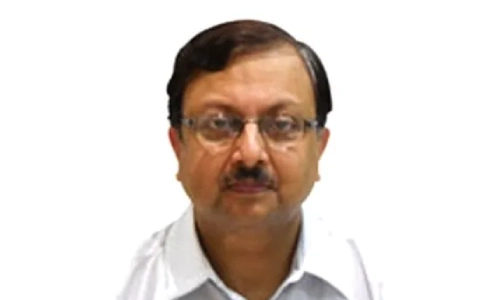
DR. ANJAN PAN
Qualifications: MBBS(CAL), DIPL. ORTHO TRAUMA(VIENNA)
Specialty: ORTHOPAEDICS
Experience: 42 years
Fees: Rs. 1,200.00
Available Days: MON, THU
Available Time: MON: 10:30 - 13:00, THU: 08:30 - 11:00

PROF. DR. MUKUL BHATTACHARYA
Qualifications: M.S(ORTHO) PROF.DEPT. OF ORTHO SURGEON, SSKM
Specialty: ORTHOPAEDICS
Experience: 37 years
Fees: Rs. 1,700.00
Available Days: TUE
Available Time: 14:00

DR. B. C. MOHANTI
Qualifications: BSC(MS, M.Ch (Neuro-Surgery), Specialist in Brain & Spinal surgery
Specialty: NEURO SURGERY
Experience: 28 years
Fees: Rs. 1,200.00
Available Days: WED & FRI
Available Time: 10:30

DR. SUBHAMITRA CHOWDHURY
Qualifications: BSC(MS, M.Ch (Neuro-Surgery), Specialist in Brain & Spinal surgery
Specialty: NEURO SURGERY
Experience: 15 years
Fees: Rs. 1,000.00
Available Days: WED & FRI
Available Time: 10:30
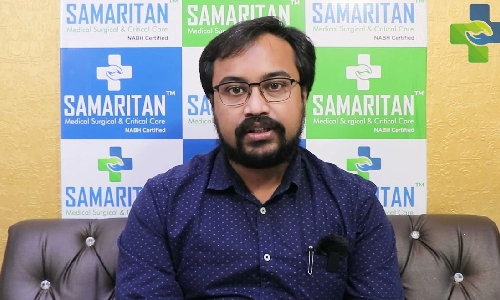
Dr. ANUPAM DAS
Qualifications: MBBS, MS ORTHO DNB, MNAMS AADO
Specialty: ORTHOPAEDICS
Experience: 14 years
Fees: Rs. 1,700.00
Available Days: TUE & THU
Available Time: 17:00-19:00

DR. TAMAJIT CHAKRABORTY
Qualifications: MBBS, DNB
Specialty: NEURO SURGERY
Experience: 13 years
Fees: Rs. 1,700.00
Available Days: THU
Available Time: 13:00 - 14:00
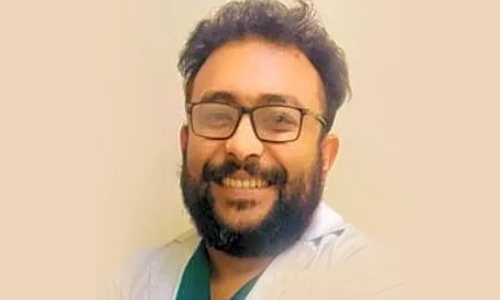
DR. GOURAB CHANDRA
Qualifications: M.B.B.S, MS, ORTHOPAEDICS
Specialty: ORTHOPAEDICS
Experience: 12 years
Fees: Rs. 1,200.00
Available Days: SAT
Available Time: 16:00-18:00

DR. KAUNTEYA GHOSH
Qualifications: MBBS(HONS), MS(ORTHO), DIP.SICOT
Specialty: ORTHOPAEDICS
Experience: 3 years
Fees: Rs. 1,200.00
Available Days: MON & WED
Available Time: 13:00-13:30

DR. D. K. SARKAR
Qualifications: MBBSMS, DNB FRCS, (GOLD), FFSTED
Specialty: GENERAL SURGEON
Fees: Rs. 1,550.00
Available Days: MON, WED, THURS & SAT
Available Time: MON, WED & THURS-16:00, SAT-15:00

DR. ALOK SHOVAN DUTTA
Qualifications: MBBS, MS ORTHO
Specialty: ORTHOPAEDICS
Experience: 38 years
Fees: Rs. 1,400.00
Available Days: TUES & SAT
Available Time: 12:30 - 14:00
DR. TAHA AHMED
Qualifications: MBBS, MS(ORTHO)
Specialty: ORTHOPAEDICS
Fees: Rs. 1,200.00
Available Days: MON TO SAT
Available Time: 12:00
DR. SUSHRUTA BHATTACHARYA
Qualifications: MBBS(HONS), DNB, MNAS
Specialty: ORTHOPAEDICS
Fees: Rs. 1,000.00
Available Days: BY APPOINTMENT
Available Time: BY APPOINTMENT
DR. A. PATHAK
Qualifications: MBBS(CAL), M.S.ORTHO(CAL)
Specialty: ORTHOPAEDICS
Fees: Rs. 1,200.00
Available Days: SAT
Available Time: 11:00-11:30
DR ANUVAB GOSWAMI
Qualifications: MBBS(Hons.)CAL, M.S. ORTHO, DNB, MRCS(ENGLAND)
Specialty: ORTHOPAEDICS
Fees: Rs. 800.00
Available Days: MON & TUE/FRI
Available Time: MON-13:00 & TUE/FRI-17:00
DR. ANISH HAZRA
Qualifications: ORTHO
Specialty: ORTHOPAEDICS
Fees: Rs. 800.00
Available Days: Wed
Available Time: 16:00
DR. ACHINTA KR DAS
Qualifications: MBBS, MS
Specialty: GENERAL SURGEON
Fees: Rs. 1,200.00
Available Days: BY APPOINTMENT
Available Time:BY APPOINTMENT
DR. SAPTARSHI KUNDU
Qualifications: MBBS, MS (GEN-SUR)
Specialty: GENERAL SURGEON
Fees: Rs. 700.00
Available Days: BY APPOINTMENT
Available Time: BY APPOINTMENT
DR. RUDRADEEP BANERJEE
Qualifications: MS (Gen. Surg.), DNB, MRCS
Specialty: GENERAL SURGEON
Fees: Rs. 1,000.00
Available Days: BY APPOINTMENT
Available Time: BY APPOINTMENT
DR. SAMRIDDHI PODDAR
Qualifications: MBBS(HONS), MS(SURGERY), WBUHS NRSMCH
Specialty: GENERAL SURGEON
Fees: Rs. 1,000.00
Available Days: TUE & WED
Available Time: TUE 16:30-17:30 & WED 18:00-19:00
DR . B . B . BARAI
Qualifications: MBBS, DNB, PG DGM, CCEBDM
Specialty: GENERAL SURGEON
Fees: Rs. 1,200.00
Available Days: MON /FRIDAY
Available Time: 11:00-13:00
DR. MAINAK PAL
Qualifications: MBBS, MS, FMAS(GEN.SURG)
Specialty: GENERAL SURGEON
Fees: Rs. 1,000.00
Available Days: MON -FRI
Available Time: 17:00-18:00
Hear From Our Happy Patients
Very good nursing home.all staff best
I had Laproscopic surgery of gallbladder stone on 23/6/26 & Discharge on 25/6/26. I had wonderful experience in nursing home, Very cooperative staff. Particularly Ms Aditi (Head Sister charge) , she has cooperated very well with Smily face. OT is well equipped with high quality instruments, Dr Mukesh Karia has done wonderful operations.
Very good nursing home
Very Supportive Staff with 24*7 support. Along with Neat and Clean cloths and bed.
Great treatment and recuperation. Doctors nurses and support staff mase it feel like home .
Thakuuuu Samaritan nursing home........and Dr.babuuuu khubbbb valooooo..apnader sakoler babohar khub valo r porisheba khubbb khubbb valo sakol k. Ank ank ank dhannobad ......
Very good nursing home
Very good Treatment here and also staff behaviour has very good
I have admitted my father here twice under Dr Arindam Dutta sir for the DJ stenting and RIRS (Kidney stone) .The entire team of Samaritan was fantastic.Specially Ms Aditi Nandi was so humble and cooperative .She attended us every time and Given all facilities.Through out the admitting time and discharge,all the sisters,brothers,Housekeeping ,ward boy everyone was so polite and well mannered.
Emergency Trauma Care & Rapid Injury Stabilisation
Polytrauma Management
Polytrauma involves multiple serious injuries occurring simultaneously after high-impact accidents, falls, industrial trauma, or severe physical impact. Patients may develop airway compromise, internal bleeding, tissue damage, circulatory instability, or organ dysfunction requiring urgent intervention.
Our trauma specialists perform a rapid assessment to identify life-threatening injuries and prioritise critical treatment pathways. Management may involve blood transfusion support, surgical intervention, airway protection, intensive observation, and coordinated trauma recovery care for complex injuries.
Critical Trauma Care Includes
- Multi-system injury assessment
- Trauma resuscitation protocols
- Airway and circulation support
- Intensive trauma observation


Road Traffic Accident Injuries
Road traffic accidents can result in high-impact trauma involving deep wounds, soft tissue injury, bleeding, and multiple collision-related complications. Acute trauma care focuses on rapid clinical assessment, airway protection, bleeding control, and physiological support immediately after the accident.
Our trauma teams evaluate the severity of injury and prioritise urgent surgical or critical intervention when necessary. Early trauma response plays an important role in reducing complications and supporting recovery after major accident-related injuries.
Road Accident Trauma Care Includes
- Collision-related injury assessment
- Bleeding and airway management
- High-impact trauma care
- Critical injury evaluation
Blunt Force Trauma
Blunt force trauma occurs when a strong physical impact damages tissues, blood vessels, or internal organs without penetrating the skin. Common causes include falls, collisions, workplace accidents, and physical assault. Patients may experience swelling, severe pain, breathing difficulties, bruising, or delayed internal complications, depending on the affected area.
Our trauma specialists perform emergency imaging and clinical evaluation to identify hidden injuries requiring observation, supportive care, or immediate surgical intervention.
Blunt Trauma Management Includes
- Internal injury evaluation
- Trauma imaging assessment
- Soft tissue impact care
- Observation for delayed complications
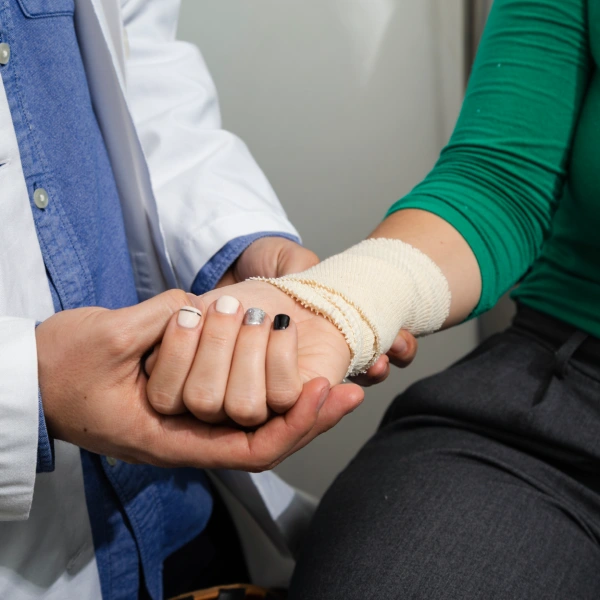
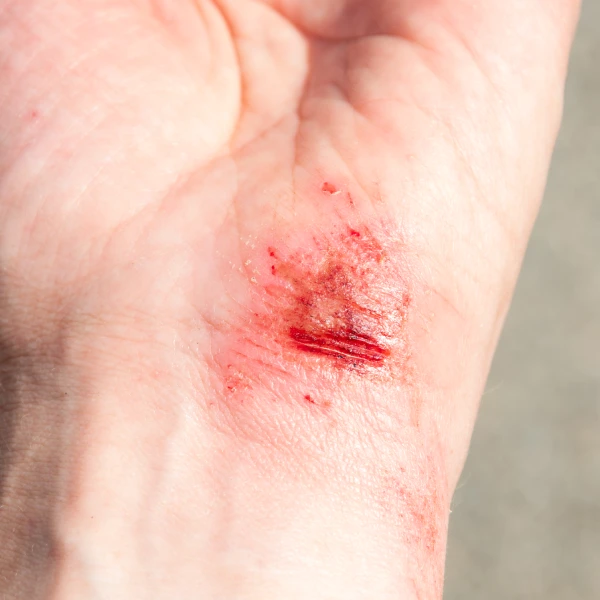
Penetrating Trauma Care
Penetrating trauma involves deep injuries caused by sharp objects, industrial accidents, or forceful puncture wounds affecting internal tissues and blood vessels. These injuries carry a high risk of haemorrhage, infection, organ damage, and trauma-related complications.
Our trauma care specialists assess wound depth, tissue involvement, and circulatory compromise to determine the need for urgent operative management. Treatment may involve wound exploration, bleeding control, surgical repair, and continuous post-traumatic observation.
Penetrating Injury Care Includes
- Deep wound assessment
- Haemorrhage control procedures
- Trauma-related surgical repair
- Post-injury clinical observation
Soft Tissue & Crush Injuries
Soft-tissue and crush injuries involve damage to muscles, tendons, ligaments, nerves, blood vessels, and surrounding tissues resulting from compression or severe physical force. These injuries may lead to circulation problems, swelling, tissue breakdown, restricted movement, or an increased risk of infection if not managed promptly.
Our trauma specialists assess tissue viability, pressure-related damage, and wound severity during acute evaluation. Treatment focuses on debridement, tissue preservation, swelling reduction, and support for functional recovery.
Soft Tissue Trauma Care Includes
- Crush injury treatment
- Tissue damage evaluation
- Swelling and pressure management
- Traumatic wound care support


Emergency Trauma Surgery
Emergency trauma surgery is performed for severe injuries involving uncontrolled bleeding, penetrating wounds, organ damage, or trauma-related structural disruption requiring immediate operative care. Our trauma surgeons prioritise haemorrhage control, surgical stabilisation, and preservation of vital organ function during critical emergencies. Depending on injury severity, procedures may include abdominal surgery, vascular repair, wound exploration, or damage-control surgery. Operative recovery support focuses on complication prevention and post-surgical critical supervision.
Emergency Surgical Intervention Includes
- Trauma-related operative procedures
- Haemorrhage control surgery
- Organ preservation support
- Post-surgical critical supervision
Trauma Resuscitation & Stabilisation
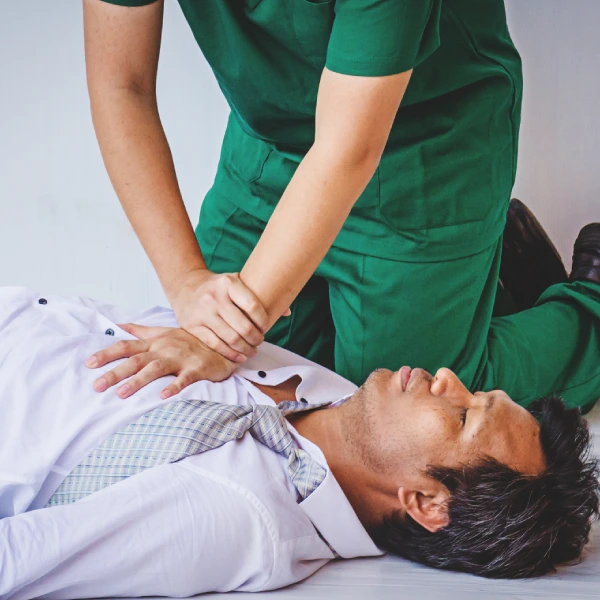
Trauma resuscitation and stabilisation are essential during the initial management of critically injured patients experiencing blood loss, breathing difficulty, shock, or reduced consciousness. Trauma response teams focus on airway protection, fluid replacement, circulation management, and rapid physiological support before definitive treatment begins.
Continuous clinical assessment helps identify complications requiring immediate intervention. Early trauma stabilisation improves survival outcomes and supports safer surgical and intensive care management.
Emergency Stabilisation Includes
- Airway and breathing support
- Fluid replacement management
- Shock response care
- Acute trauma assessment
Post-Traumatic Wound Care
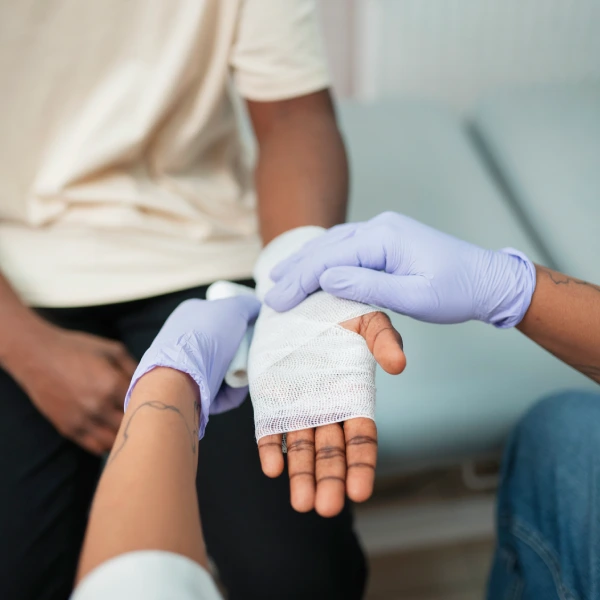
Post-traumatic wound care focuses on cleaning, dressing, protecting, and supervising injuries caused by accidents, burns, falls, or penetrating trauma. Untreated wounds may develop infection, tissue breakdown, delayed healing, or severe inflammatory complications.
Our trauma specialists assess wound depth, contamination risk, and the condition of surrounding tissues before treatment planning. Management may involve dressing changes, infection control, debridement procedures, and ongoing healing evaluation throughout trauma recovery.
Traumatic Wound Management Includes
- Emergency wound dressing care
- Infection control support
- Tissue healing evaluation
- Post-traumatic wound supervision
Burn & Thermal Injury Stabilisation
Burn & Thermal Injury Stabilisation
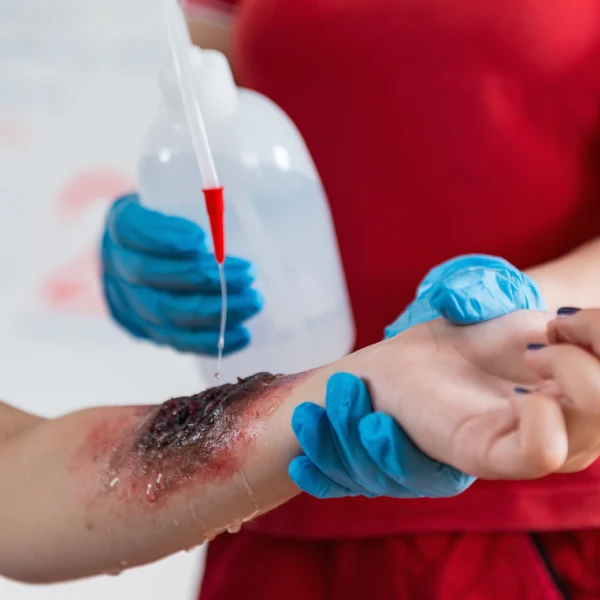
Burn and thermal injuries may occur due to fire exposure, chemicals, electricity, hot liquids, or industrial accidents. Severe burns can damage the skin barrier, disrupt fluid balance, and increase the risk of infection and systemic complications.
Trauma specialists assess burn depth, airway involvement, and body surface injury during acute evaluation. Burn care management focuses on fluid support, pain relief, wound protection, infection prevention, and thermal injury recovery care.
Burn Trauma Care Includes
- Thermal injury assessment
- Burn wound management
- Fluid balance support
- Infection prevention care
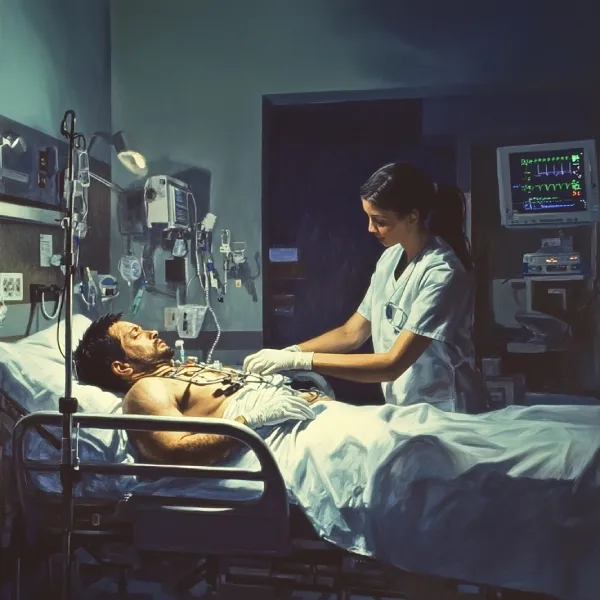
Trauma ICU & Emergency Monitoring
Trauma ICU and critical care support are essential for patients with severe injuries requiring ventilatory assistance, organ support, post-operative supervision, or intensive trauma recovery care. Critically injured patients may develop respiratory compromise, circulatory instability, shock, or multi-organ dysfunction following major trauma.
Critical care specialists closely evaluate vital functions and coordinate advanced supportive care throughout recovery. Trauma ICU management focuses on intensive observation, complication prevention, and structured critical injury recovery.
Critical Trauma Support Includes
- Intensive trauma observation
- Ventilator and organ support
- Post-operative critical care
- Advanced recovery supervision
Frequently Asked Questions
Find answers to common questions to help you better understand the condition and general concerns.
Can pain appear several hours after an accident?
Yes. Some trauma-related symptoms may develop gradually as inflammation, tissue strain, or internal damage becomes more noticeable after the initial injury.
Why can skin colour change after a severe impact injury?
Trauma may damage small blood vessels beneath the skin, leading to bruising, discolouration, or visible swelling around the injured area.
Can reduced movement after trauma occur without a fracture?
Yes. Muscle injury, ligament damage, soft tissue swelling, or nerve irritation may temporarily restrict normal movement after physical trauma.
Why do some trauma patients experience breathing discomfort after impact injuries?
A strong impact to the chest or surrounding muscles may disrupt normal breathing patterns and cause pain, tightness, or respiratory discomfort during movement.
Can traumatic wounds become infected even after basic first aid?
Yes. Dirt, debris, or damaged tissue within the wound may increase the risk of infection if proper cleaning, dressing care, and medical evaluation are delayed.